WAR DEPARTMENT, ADJUTANT-GENERAL'S OFFICE Whereas several commanders of military districts created by the acts of Congress known as the reconstruction acts have expressed. doubts as to the proper construction thereof and in respect to some of their powers and duties under said acts, and have applied to the Executive for information in relation thereto; and Whereas the said acts of Congress have been referred to the Attorney-General for his opinion thereon, and the said acts and the opinion of the Attorney-General have been fully and carefully considered by the President in conference with the heads of the respective Departments: The President accepts the following as a practical interpretation of the aforesaid acts of Congress on the points therein presented, and directs the same to be transmitted to the respective military commanders for their information, in order that there may be uniformity in the execution of said acts: 1. The oath prescribed in the supplemental act defines all the qualifications required, and every person who can take that oath is entitled to have his name entered upon the list of voters. 2. The board of registration have no authority to administer any other oath to the person applying for registration than this prescribed oath, nor to administer an oath to any other person touching the qualifications of the applicant or the falsity of the oath so taken by him. The act, to guard against falsity in the oath, provides that if false the person taking it shall be tried and punished for perjury. No provision is made for challenging the qualifications of the applicant or entering upon any trial or investigation of his qualifications, either by witnesses or any other form of proof. 3. As to citizenship and residence: The applicant for registration must be a citizen of the State and of the United States, and must be a resident of a county or parish included in the election district. He may be registered if he has been such citizen for a period less than twelve months at the time he applies for registration, but he can not vote at any election unless his citizenship has then extended to the full term of one year. As to such a person, the exact length of his citizenship should be noted opposite his name on the list, so that it may appear on the day of election, upon reference to the list, whether the full term has then been accomplished. 4. An unnaturalized person can not take this oath, but an alien who has been naturalized can take it, and no other proof of naturalization can be required from him. 5. No one who is not 21 years of age at the time of registration can take the oath, for he must swear that he has then attained that age. 6. No one who has been disfranchised for participation in any rebellion against the United States or for felony committed against the laws of any State or of the United States can take this oath. The actual participation in a rebellion or the actual commission of a felony does not amount to disfranchisement. The sort of disfranchisement here meant is that which is declared by law passed by competent authority, or which has been fixed upon the criminal by the sentence of the court which tried him for the crime. No law of the United States has declared the penalty of disfranchisement for participation in rebellion alone; nor is it known that any such law exists in either of these ten States, except, perhaps, Virginia, as to which State special instructions will be given. 7. As to disfranchisement arising from having held office followed by participation in rebellion: This is the most important part of the oath, and requires strict attention to arrive at its meaning. The applicant must swear or affirm as follows: That I have never been a member of any State legislature, nor held any executive or judicial office in any State, and afterwards engaged in an insurrection or rebellion against the United States or given aid or comfort to the enemies thereof; that I have never taken an oath as a member of Congress of the United States, or as an officer of the United States, or as a member of any State legislature, or as an executive or Judicial officer of any State, to support the Constitution of the United States, and afterwards engaged in insurrection or rebellion against the United States or given aid or comfort to the enemies thereof. Two elements must concur in order to disqualify a person under these clauses: First, the office and official oath to support the Constitution of the United States; second, engaging afterwards in rebellion. Both must exist to work disqualification, and must happen in the order of time mentioned. A person who has held an office and taken the oath to support the Federal Constitution and has not afterwards engaged in rebellion is not disqualified. So, too, a person who has engaged in rebellion, but has not theretofore held an office and taken that oath, is not disqualified. 8. Officers of the United States: As to these the language is without limitation. The person who has at any time prior to the rebellion held an office, civil or military, under the United States, and has taken an official oath to support the Constitution of the United States, is subject to disqualification. 9. Militia officers of any State prior to the rebellion are not subject to disqualification. 10. Municipal officers --that is to say, officers of incorporated cities, towns, and villages, such as mayors, aldermen, town council, police, and other city or town officers--are not subject to disqualification. 11. Persons who have prior to the rebellion been members of the Congress of the United States or members of a State legislature are subject to disqualification, but those who have been members of conventions framing or amending the Constitution of a State prior to the rebellion are not subject to disqualification. 12. All the executive or judicial officers of any State who took an oath to support the Constitution of the United States are subject to disqualification, including county officers. They are subject to disqualification if they were required to take as a part of their official oath the oath to support the Constitution of the United States. 13. Persons who exercised mere employment under State authority are not disqualified; such as commissioners to lay out roads, commissioners of public works, visitors of State institutions, directors of State institutions, examiners of banks, notaries public, and commissioners to take acknowledgments of deeds. ENGAGING IN REBELLION. Having specified what offices held by anyone prior to the rebellion come within the meaning of the law, it is necessary next to set forth what subsequent conduct fixes upon such person the offense of engaging in rebellion. Two things must exist as to any person to disqualify him from voting: First, the office held prior to the rebellion, and, afterwards, participation in the rebellion. 14. An act to fix upon a person the offense of engaging in the rebellion under this law must be an overt and voluntary act, done with the intent of aiding or furthering the common unlawful purpose. A person forced into the rebel service by conscription or under a paramount authority which he could not safely disobey, and who would not have entered such service if left to the free exercise of his own will, can not be held to be disqualified from voting. 15. Mere acts of charity, where the intent is to relieve the wants of the object of such charity, and not done in aid of the cause in which he may have been engaged, do not disqualify; but organized contributions of food and clothing for the general relief of persons engaged in the rebellion, and not of a merely sanitary character, but contributed to enable them to perform their unlawful object, may be classed with acts which do disqualify. Forced contributions to the rebel cause in the form of taxes or military assessments, which a person was compelled to pay or contribute, do not disqualify; but voluntary contributions to the rebel cause. even such indirect contributions as arise from the voluntary loan of money to rebel authorities or purchase of bonds or securities created to afford the means of carrying on the rebellion, will work disqualification. 16. All those who in legislative or other official capacity were engaged in the furtherance of the common unlawful purpose, where the duties of the office necessarily had relation to the support of the rebellion, such as members of the rebel conventions, congresses, and legislatures, diplomatic agents of the rebel Confederacy, and other officials whose offices were created for the purpose of more effectually carrying on hostilities or whose duties appertained to the support of the rebel cause, must be held to be disqualified. But officers who during the rebellion discharged official duties not incident to war, but only such duties as belong even to a state of peace and were necessary to the preservation of order and the administration of law, are not to be considered as thereby engaging in rebellion or as disqualified. Disloyal sentiments, opinions, or sympathies would not disqualify, but where a person has by speech or by writing incited others to engage in rebellion he must come under the disqualification. 17. The duties of the board appointed to superintend the elections : This board, having the custody of the list of registered voters in the district for which it is constituted, must see that the name of the person offering to vote is found upon the registration list, and if such proves to be the fact it is the duty of the board to receive his vote if then qualified by residence. They can not receive the vote of any person whose name is not upon the list, though he may be ready to take the registration oath, and although he may satisfy them that he was unable to have his name registered at the proper time, in consequence of absence, sickness, or other cause. The board can not enter into any inquiry as to the qualifications of any person whose name is not on the registration list, or as to the qualifications of any person whose name is on the list. 18. The mode of voting is provided in the act to be by ballot. The board will keep a record and poll book of the election, showing the votes, list of voters, and the persons elected by a plurality of the votes cast at the election, and make returns of these to the commanding general of the district. 19. The board appointed for registration and for superintending the elections must take the oath prescribed by the act of Congress approved July 2, 1862, entitled "An act to prescribe an oath of office." By order of the President: E.D. TOWNSEND, Assistant Adjutant-General.
Presidential Order
🏛️✅ Zone 1: Maximum Authority Constitutional Fidelity (+0.23)
📜 Art. II §2: Commander-in-Chief Supervisory Authority
Executive Order
Executive Brief • At a Glance
⏱️ 9 min read (1,826 words) •
● In Effect
🎯 Primary Mandate
Whereas several commanders of military districts created by the acts of Congress known as the reconstruction acts have expressed. doubts as to the proper construction thereof and in respect to some of their powers and duties under said acts, and have applied to the Executive for information in relation thereto; and Whereas the said acts of Congress have been referred to the Attorney-General for his opinion thereon, and the said acts and the opinion of the Attorney-General have been fully and carefully considered by the President in conference with the heads of the respective Departments: The President accepts the following as a practical interpretation of the aforesaid acts of Congress on the points therein presented, and directs the same…
⚖️ Constitutional Footing
🏛️✅ Zone 1: Maximum Authority
Express or Implied Congressional Authorization
📜 Art. II §2: Commander-in-Chief Supervisory Authority
🏛️ Scope & Affected Sectors
Armed Forces & Military Establishments Merchants, Importers & Commercial Enterprises Sovereign State Governments & Localities Executive Departments & Federal Civil Servants
Plain-English Translation & Framers' Constitutional Analysis
Early Statesman synthesis distilling legal jargon into practical meaning, statutory anchors, and structural constitutional impacts.
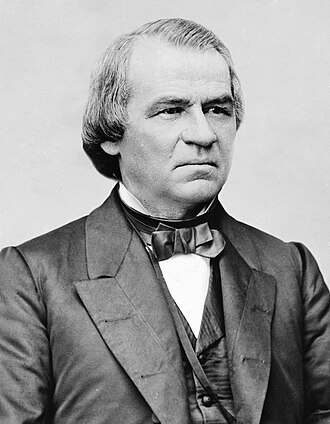
Signed by President Andrew Johnson on June 20, 1867, this order reads: Whereas several commanders of military districts created by the acts of Congress known as the reconstruction acts have expressed. doubts as to the proper construction thereof and in respect to some of their powers and duties under said acts, and have applied to the Executive for information in relation thereto; and Whereas the said acts of Congress have been referred to the Attorney-General for his opinion thereon…
Constitutional Assessment: Scrutinized through Article II, Section 2, this action exercises the President's constitutional role as Commander in Chief. Early Framers recognized broad executive discretion in commanding military forces during conflict, provided it remains bounded by congressional declarations and respects civilian domestic courts.
Key Directives & Operative Actions
▪
Whereas several commanders of military districts created by the acts of Congress known as the reconstruction acts have expressed. doubts as to the proper construction thereof and in respect to some of their powers and duties under said acts, and have applied to the Executive for information in relation thereto; and Whereas the said acts of Congress have been referred to the Attorney-General for his opinion thereon, and the said acts and the opinion of the Attorney-General have been fully and carefully considered by the President in conference with the heads of the respective Departments: The President accepts the following as a practical interpretation of the aforesaid acts of Congress on the points therein presented, and directs the same…
▪
The oath prescribed in the supplemental act defines all the qualifications required, and every person who can take that oath is entitled to have his name entered upon the list of voters. 2.
▪
The board of registration have no authority to administer any other oath to the person applying for registration than this prescribed oath, nor to administer an oath to any other person touching the qualifications of the applicant or the falsity of the oath so taken by him.
▪
The act, to guard against falsity in the oath, provides that if false the person taking it shall be tried and punished for perjury.
Constitutional & Societal Entities Impacted
🏛️ Armed Forces & Military Establishments
🏛️ Merchants, Importers & Commercial Enterprises
🏛️ Sovereign State Governments & Localities
🏛️ Executive Departments & Federal Civil Servants
🏛️ Private Citizens & Property Owners
🏛️
The Framers' Constitutional Council
1787 PrismEvaluating this order against the constitutional debates of 1787 and the limits of Article II executive power.
🏛️✅ Zone 1 (Maximum Authority)
§
"When the President acts pursuant to an express or implied authorization of Congress, his authority is at its maximum, for it includes all that he possesses in his own right plus all that Congress can delegate."
— Justice Robert H. Jackson, Youngstown Sheet & Tube Co. v. Sawyer (1952) Express or Implied Congressional Authorization
JM
James Madison
Separation of Powers & Legislative Primacy
"The constitutional magistracy was designed not to invent policy, but to be the faithful instrument of the laws passed by the people's representatives." — Speech in the First Congress (1789)
Madison would approve the structural posture of this order. The President acts strictly in subordination to statutory authority granted under Article II, Section 3 ("take Care that the Laws be faithfully executed"). The checks and balances hold firm because the policy origin remains with the legislature.
Madisonian Stance: Concurring (Statutory)
AH
Alexander Hamilton
The Energetic Executive & Unified Command
"The direction of war implies the direction of the common strength; and the power of directing and employing the common strength must be under the direction of the single hand of the Executive." — Federalist No. 74 (1788)
Hamilton would forcefully champion executive discretion here. For foreign entanglements, commerce defense, and national security, deliberative assemblies are too slow and faction-ridden. A unified, energetic Executive exercising swift command is precisely what the Philadelphia Convention intended for national preservation.
Hamiltonian Stance: Strong Prerogative Support
GM
George Mason
Bill of Rights, Due Process & 10th Amendment
"The president will be surrounded by flatterers and sycophants... and the great powers of the executive will gradually absorb the liberties of the people." — Cato IV (Anti-Federalist, 1787)
The Anti-Federalist prism advises continuous democratic vigilance. Even routine administrative directives aggregate centralized federal power away from town halls and state assemblies toward a distant executive apparatus.
Anti-Federalist Stance: Eternal Vigilance Required
📐
Five Measurable "Constitutional Friction" Dimensions
An objective audit measuring potential separation-of-powers tension against the United States Constitution and established Supreme Court doctrine.
⚖️ Discretionary Twilight Zone
41 / 100 friction index
Dimension 1 • Art. I, §1 & §8
Moderate Friction
Legislative Encroachment & Purse
Administers commerce or fiscal programs requiring ongoing statutory delegation and legislative oversight.
Benchmark: Power of the purse, taxes/tariffs, and rule of law reserved to Congress.
Dimension 2 • Art. II, §1 & §3
Low Friction
Executive Scope & Faithfulness
Exercises standard supervisory executive authority to faithfully execute existing statutes.
Benchmark: Faithfully execute laws enacted by Congress vs. unilateral decree.
Dimension 3 • 10th Amendment
High Friction
Federalism & State Sovereignty
Creates friction with the Tenth Amendment by conditioning state grants, mandating local compliance, or preempting state police powers.
Benchmark: Police powers and un-delegated responsibilities reserved to the States.
Dimension 4 • 5th & 14th Amendments
Moderate Friction
Due Process & Individual Rights
Applies regulatory or compliance standards to private contractors or commercial entities.
Benchmark: Protection of private property, contracts, liberty, and procedural justice.
Dimension 5 • Separation of Powers
Low Friction
Youngstown Jacksonian Tier
The President operates strictly as the constitutional Chief Executive, carrying out policy established by Congress with strong statutory backing.
Benchmark: Express or Implied Congressional Authorization
⚖️
Audit Synthesis
This order operates within Justice Jackson’s Zone of Twilight, resting upon concurrent presidential authority or congressional silence.
Weighted composite: Art. I (25%), Art. II (25%), Federalism (15%), Due Process (15%), Youngstown (20%).
ℹ️
How to read these dimensions: Executive power expands whenever an administration acts without explicit statutory authorization from Congress (Article I), touches upon police powers historically reserved to the states (Tenth Amendment), or limits private rights and property without judicial process. A low friction score indicates strict concordance with enacted law; a high friction score highlights orders testing the limits of presidential discretion.
Total Words
1,826
10,705 characters
Estimated Read Time
9 min
@ 200 words / min
Flesch-Kincaid
19.3
Post-Graduate Legal
Text size:
Related Executive Orders
Other executive actions signed by Andrew Johnson around this period.
Order
Aug 12, 1867
⚖️✨ Zone 2 (Zone of Twilight) Constitutional Neutral
Executive Order—Suspending from Office Edwin M. Stanton as Secretary of War
📜 Art. II §2: Commander-in-Chief Supervisory Authority
Hon. EDWIN M. STANTON, Secretary of War . Sir: By virtue of the power and authority vested in me as President by the Constitution and laws of the United States, you are hereby suspended from office as Secretary of War, and will cease to exercise any and all functions pertaining…
 Andrew Johnson
High School • 1m
Order
Aug 12, 1867
⚖️✨ Zone 2 (Zone of Twilight) Constitutional Neutral
Executive Order
📜 Art. II §2: Commander-in-Chief Supervisory Authority
General Ulysses S. Grant, Washington, D.C . Sir: The Hon. Edwin M. Stanton having been this day suspended as Secretary of War, you are hereby authorized and empowered to act as Secretary of War ad interim , and will at once enter upon the discharge of the duties of the office.
Andrew Johnson High School • 1m
Order
Aug 17, 1867
⚖️✨ Zone 2 (Zone of Twilight) Constitutional Neutral
Executive Order
📜 Art. II §2: Commander-in-Chief Supervisory Authority
Major-General George H. Thomas is hereby assigned to the command of the Fifth Military District, created by the act of Congress passed on the 2d day of March, 1867. Major-General P. H. Sheridan is hereby assigned to the command of the Department of the Missouri.
Andrew Johnson High School • 1m
Order
Aug 26, 1867
🏛️✅ Zone 1 (Maximum Authority) Fidelity (+0.38)
Executive Order
📜 Art. II §2: Commander-in-Chief Supervisory Authority
Brevet Major-General Edward R. S. Canby is hereby assigned to the command of the Second Military District, created by the act of Congress of March 2, 1867, and of the Military Department of the South, embracing the States of North Carolina and South Carolina.
Andrew Johnson High School • 1m
Order
Aug 26, 1867
🏛️✅ Zone 1 (Maximum Authority) Fidelity (+0.38)
Executive Order
📜 Art. II §2: Commander-in-Chief Supervisory Authority
General U. S. GRANT, Secretary of War ad interim. Sir: In consequence of the unfavorable condition of the health of Major-General George H. Thomas, as reported to you in Surgeon Hasson's dispatch of the 21st instant, my order dated August 17, 1867, is hereby modified so as to…
Andrew Johnson High School • 1m
Order
Sep 4, 1867
🏛️✅ Zone 1 (Maximum Authority) Fidelity (+0.38)
Executive Order
📜 Art. II §3: Faithful Execution of Statutory Law
The heads of the several Executive Departments of the Government are instructed to furnish each person holding an appointment in their respective Departments with an official copy of the proclamation of the President bearing date the 3d instant, with directions strictly to…
Andrew Johnson Post-Graduate Legal • 1m
📜
Scholarly & Legal Citations
Exec. Order (June 20, 1867), https://executiveordersarchive.org/orders/app-executive-order-436.
