★
Executive Orders Historical Archive
Cite
Executive Order 4476 🏛️✅ Zone 1: Maximum Authority Constitutional Fidelity (+0.23) 📜 Art. II §2: Commander-in-Chief Supervisory Authority

Executive Order 4476—Documents Required of Aliens Entering the United States

•
Monday, July 12, 1926
•
6 min read (1,237 words)

Executive Brief • At a Glance

⏱️ 6 min read (1,237 words) • ● In Effect
🎯 Primary Mandate

With reference to Section 28 (e) of the Immigration Act of 1924, the Executive Secretary of the Panama Canal, Balboa Heights, Canal Zone, is hereby authorized to issue immigration visas to aliens coming to the United States from the Canal Zone; the Collector of Customs of the Philippine Islands is hereby authorized to issue immigration visas to aliens coming to the United States from the Philippine Islands; the Governor of American Samoa is hereby authorized to issue immigration visas to aliens coming to the United States from American Samoa; and the Governor of Guam is hereby authorized to issue immigration visas to aliens coming to the United States from Guam.

⚖️ Constitutional Footing
🏛️✅ Zone 1: Maximum Authority
Express or Implied Congressional Authorization
📜 Art. II §2: Commander-in-Chief Supervisory Authority
🏛️ Scope & Affected Sectors
Merchants, Importers & Commercial Enterprises Sovereign State Governments & Localities Executive Departments & Federal Civil Servants Private Citizens & Property Owners

Plain-English Translation & Framers' Constitutional Analysis

Early Statesman synthesis distilling legal jargon into practical meaning, statutory anchors, and structural constitutional impacts.

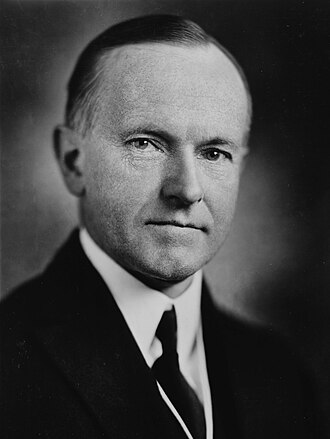
Signed by President Calvin Coolidge on July 12, 1926, this order concerns Documents Required of Aliens Entering the United States. By virtue of the authority vested in me by the Act of Congress approved May 22, 1918, entitled, "An Act to Prevent in Time of War Departure from and Entry into the United States Contrary to the Public Safety," as extended by the Act of Congress of March 2, 1921, entitled, "An Act making appropriations for the Diplomatic and Consular Service for the fiscal year ending June 30, 1922," and with reference to the Act of…

Constitutional Assessment: Scrutinized through Article II, Section 2, this action exercises the President's constitutional role as Commander in Chief. Early Framers recognized broad executive discretion in commanding military forces during conflict, provided it remains bounded by congressional declarations and respects civilian domestic courts.

Key Directives & Operative Actions

▪

With reference to Section 28 (e) of the Immigration Act of 1924, the Executive Secretary of the Panama Canal, Balboa Heights, Canal Zone, is hereby authorized to issue immigration visas to aliens coming to the United States from the Canal Zone; the Collector of Customs of the Philippine Islands is hereby authorized to issue immigration visas to aliens coming to the United States from the Philippine Islands; the Governor of American Samoa is hereby authorized to issue immigration visas to aliens coming to the United States from American Samoa; and the Governor of Guam is hereby authorized to issue immigration visas to aliens coming to the United States from Guam.

▪

They may present transit certificates according to regulations prescribed by the Secretary of State.

▪

They may land temporarily, under regulations prescribed by the Department of Labor, without documents of any kind.

▪

This does not refer to consular agents, who are not authorized to visa crew lists.

Constitutional & Societal Entities Impacted

🏛️ Merchants, Importers & Commercial Enterprises 🏛️ Sovereign State Governments & Localities 🏛️ Executive Departments & Federal Civil Servants 🏛️ Private Citizens & Property Owners 🏛️ Foreign Nations & International Entities
🏛️

The Framers' Constitutional Council

1787 Prism

Evaluating this order against the constitutional debates of 1787 and the limits of Article II executive power.

🏛️✅ Zone 1 (Maximum Authority)
§

"When the President acts pursuant to an express or implied authorization of Congress, his authority is at its maximum, for it includes all that he possesses in his own right plus all that Congress can delegate."

— Justice Robert H. Jackson, Youngstown Sheet & Tube Co. v. Sawyer (1952) Express or Implied Congressional Authorization
JM

James Madison

Separation of Powers & Legislative Primacy

"The constitutional magistracy was designed not to invent policy, but to be the faithful instrument of the laws passed by the people's representatives." — Speech in the First Congress (1789)

Madison would approve the structural posture of this order. The President acts strictly in subordination to statutory authority granted under Article II, Section 3 ("take Care that the Laws be faithfully executed"). The checks and balances hold firm because the policy origin remains with the legislature.

Madisonian Stance: Concurring (Statutory)
AH

Alexander Hamilton

The Energetic Executive & Unified Command

"The direction of war implies the direction of the common strength; and the power of directing and employing the common strength must be under the direction of the single hand of the Executive." — Federalist No. 74 (1788)

Hamilton would forcefully champion executive discretion here. For foreign entanglements, commerce defense, and national security, deliberative assemblies are too slow and faction-ridden. A unified, energetic Executive exercising swift command is precisely what the Philadelphia Convention intended for national preservation.

Hamiltonian Stance: Strong Prerogative Support
GM

George Mason

Bill of Rights, Due Process & 10th Amendment

"The president will be surrounded by flatterers and sycophants... and the great powers of the executive will gradually absorb the liberties of the people." — Cato IV (Anti-Federalist, 1787)

The Anti-Federalist prism advises continuous democratic vigilance. Even routine administrative directives aggregate centralized federal power away from town halls and state assemblies toward a distant executive apparatus.

Anti-Federalist Stance: Eternal Vigilance Required
📐

Five Measurable "Constitutional Friction" Dimensions

An objective audit measuring potential separation-of-powers tension against the United States Constitution and established Supreme Court doctrine.

⚖️ Discretionary Twilight Zone
41 / 100 friction index
Dimension 1 • Art. I, §1 & §8

Legislative Encroachment & Purse

Moderate Friction

Administers commerce or fiscal programs requiring ongoing statutory delegation and legislative oversight.

Benchmark: Power of the purse, taxes/tariffs, and rule of law reserved to Congress.
Dimension 2 • Art. II, §1 & §3

Executive Scope & Faithfulness

Low Friction

Exercises standard supervisory executive authority to faithfully execute existing statutes.

Benchmark: Faithfully execute laws enacted by Congress vs. unilateral decree.
Dimension 3 • 10th Amendment

Federalism & State Sovereignty

High Friction

Creates friction with the Tenth Amendment by conditioning state grants, mandating local compliance, or preempting state police powers.

Benchmark: Police powers and un-delegated responsibilities reserved to the States.
Dimension 4 • 5th & 14th Amendments

Due Process & Individual Rights

Moderate Friction

Applies regulatory or compliance standards to private contractors or commercial entities.

Benchmark: Protection of private property, contracts, liberty, and procedural justice.
Dimension 5 • Separation of Powers

Youngstown Jacksonian Tier

Low Friction

The President operates strictly as the constitutional Chief Executive, carrying out policy established by Congress with strong statutory backing.

Benchmark: Express or Implied Congressional Authorization
⚖️ Audit Synthesis

This order operates within Justice Jackson’s Zone of Twilight, resting upon concurrent presidential authority or congressional silence.

Weighted composite: Art. I (25%), Art. II (25%), Federalism (15%), Due Process (15%), Youngstown (20%).
ℹ️
How to read these dimensions: Executive power expands whenever an administration acts without explicit statutory authorization from Congress (Article I), touches upon police powers historically reserved to the states (Tenth Amendment), or limits private rights and property without judicial process. A low friction score indicates strict concordance with enacted law; a high friction score highlights orders testing the limits of presidential discretion.
Total Words
1,237
7,580 characters
Estimated Read Time
6 min
@ 200 words / min
Flesch-Kincaid
18.5
Post-Graduate Legal
Language Tone Score
+0.23
Constitutional Fidelity
How is this scored?
Text size:

Official Archival Text

View Source Document

By virtue of the authority vested in me by the Act of Congress approved May 22, 1918, entitled, "An Act to Prevent in Time of War Departure from and Entry into the United States Contrary to the Public Safety," as extended by the Act of Congress of March 2, 1921, entitled, "An Act making appropriations for the Diplomatic and Consular Service for the fiscal year ending June 30, 1922," and with reference to the Act of Congress of May 26, 1924, known as the "Immigration Act of 1924," I hereby prescribe the following regulations governing the entry of aliens into the United States: Immigrants: They must present immigration visas, quota or non-quota, in accordance with the requirements of the Immigration Act of 1924, except— (1) Children born subsequent to the issuance of the immigration visa of the accompanying parent. (Sec. 13 (a) (1), Immigration Act of 1924.) Such children are not required to present documents of any kind; (2) Aliens who have previously been admitted legally into the United States, have departed therefrom and returned within six months, not having proceeded to countries other than Canada, Newfoundland, St. Pierre, Miquelon, Bermuda, Mexico, Cuba, and other islands included in the Bahama and Greater Antilles groups, are not required to present passports, visas, or permits to reenter. (3) Aliens, other than those specified in (2) above, who have previously been admitted legally into the United States, have departed therefrom, and are returning from a temporary visit abroad, may present, in lieu of immigration visas, permits to reenter, issued pursuant to Section 10 of the Immigration Act of 1924. With reference to Section 28 (e) of the Immigration Act of 1924, the Executive Secretary of the Panama Canal, Balboa Heights, Canal Zone, is hereby authorized to issue immigration visas to aliens coming to the United States from the Canal Zone; the Collector of Customs of the Philippine Islands is hereby authorized to issue immigration visas to aliens coming to the United States from the Philippine Islands; the Governor of American Samoa is hereby authorized to issue immigration visas to aliens coming to the United States from American Samoa; and the Governor of Guam is hereby authorized to issue immigration visas to aliens coming to the United States from Guam. II Non-Immigrants: With the exceptions hereinafter specified, they must present passports or official documents in the nature of passports issued by the governments of the countries to which they owe allegiance, duly visaed by consular officers of the United States; Exceptions: (1) Persons in transit through the United States to a foreign destination. They may present transit certificates according to regulations prescribed by the Secretary of State. (2) Aliens who are through passengers on vessels touching at ports of the United States. In this connection the term "United States" is to be construed as in Section 1 of the Immigration Act of 1917. They may land temporarily, under regulations prescribed by the Department of Labor, without documents of any kind. (3) Wives and children under sixteen years of age accompanying their husbands or parents. They are not required to present separate passports if they are mentioned in the passports of their husbands or parents and their photographs are attached thereto. (4) Citizens of St. Pierre and Miquelon and French citizens domiciled therein; citizens of Canada, Newfoundland, Bermuda, the Bahamas, and British possessions in the Greater Antilles, and British subjects domiciled therein; citizens of Panama, Mexico, Cuba, Haiti, and the Dominican Republic. Such persons may pass in transit through the United States, or enter the United States temporarily, without passports or visas. (5) Seamen. Masters of vessels of all nationalities sailing for a port of the United States must submit for visa a list of all the alien members of the vessel's crew to the American consular officer at the port from which the vessel commences its voyage. If there is no American consular officer stationed at that port, the crew list should be submitted at the first port of call (if the vessel touches at any other port) where an American consular officer is located. This does not refer to consular agents, who are not authorized to visa crew lists. However, this paragraph has no application to members of crews of vessels sailing between ports of the United States and ports of Canada, Newfoundland, St. Pierre and Miquelon and not touching at ports of other countries. Such persons are not required to be documental. When a vessel sails from a port where no American Consul is stationed, but which is within a few hours reach by mail of an American Consulate, so that unreasonable delay and serious loss would not result from referring the crew list to such Consulate, it should be referred thereto for visa. The visa of a Shipping Commissioner in the Canal Zone shall be accepted as equivalent to the visa of an American Consul. If an alien seaman whose name is not included in a visaed crew list arrives at a port of the United States he shall not be allowed to land except upon the permission of the Secretary of State. (6) Aliens making round-trip cruises from American ports without transshipment from the original vessel to another one while en route, provided the original contract for passage calls for transportation from an American port to the ports included in the cruise, and return to either the original or another American port, require no visas for reentry into the United States. (7) Aliens of no nationality, and those who, when they apply for visas, are outside of the territories of the countries to which they owe allegiance and who, for any reason, are unable to obtain passports or documents in the nature of passports issued by the governments of such countries, and aliens bearing passports issued by governments not recognized by the United States. They may enter the United States with documents showing their origin and identity, visaed by consuls, under regulations prescribed by the Secretary of State. III (1) Aliens entering the Philippine Islands, except those referred to in II (2), must present passports or documents in the nature of passports, duly visaed by consular officers of the United States; but seamen on vessels of all nationalities touching at a port of the Philippine Islands are not required to be documented. Masters of such vessels are, therefore, not required to present visaed crew lists. (2) Aliens entering any other American possessions not included under Section 28 (a) of the Immigration Act of 1924, do not require documents of any kind. The definitions contained in Section 28 of the Immigration Act of 1924 shall be regarded as applicable to this order, except as herein otherwise specified. The Secretary of State and the Secretary of Labor are hereby authorized to make such additional rules and regulations, not inconsistent with this order, as may be deemed necessary for carrying out the provisions of this order and the statutes mentioned herein. This order shall take effect August 1, 1926, and shall supersede the Executive Order of January 12, 1925, entitled, "Documents Required of Aliens Entering the United States," and the Executive Order of March 31, 1925, entitled, "Documents Required of Aliens Entering the Philippine Islands, Guam and American Samoa," but shall not supersede the Executive Order of July 14, 1924, entitled "Documents Required of Aliens Entering the United States on Airships." CALVIN COOLIDGE

THE WHITE HOUSE, #signature

July 12, 1926 .

📜

Scholarly & Legal Citations

Exec. Order No. 4476 (July 12, 1926), https://executiveordersarchive.org/orders/app-executive-order-4476-documents-required-aliens-entering-the-united-states.