WAR DEPARTMENT, Ordered by the President of the United States , That Major-General Hooker be, and he is hereby, authorized to take military posession of all railroads, with their cars, locomotives, plants, and equipments, that may be necessary for the execution of the military operation committed to his charge; and all officers, agents, and employees of said roads are directed to render their aid and assistance therein and to respect and obey his commands, pursuant to the act of Congress in such case made and provided. EDWIN M. STANTON, Secretary of War.
Presidential Order
🏛️✅ Zone 1: Maximum Authority Constitutional Fidelity (+0.33)
📜 Wartime Infrastructure Seizure (Railways & Telegraph Act of 1862)
Executive Order — Military Seizure of Railroads for General Hooker's Operations
Executive Brief • At a Glance
⏱️ 1 min read (92 words) •
● In Effect
🎯 Primary Mandate
Authorizes Major-General Joseph Hooker to commandeer and take direct military possession of all commercial railroads, locomotives, rail cars, repair plants, and equipment required for military operations.
⚖️ Constitutional Footing
🏛️✅ Zone 1: Maximum Authority
Express or Implied Congressional Authorization
📜 Wartime Infrastructure Seizure (Railways & Telegraph Act of 1862)
🏛️ Scope & Affected Sectors
Commercial Railroad Companies & Rolling Stock Owners Railroad Executives, Conductors, Engineers & Operating Personnel Major-General Joseph Hooker & Army of the Potomac (XI & XII Corps) War Department Logistics & Union Forces Besieged at Chattanooga
Plain-English Translation & Framers' Constitutional Analysis
Early Statesman synthesis distilling legal jargon into practical meaning, statutory anchors, and structural constitutional impacts.
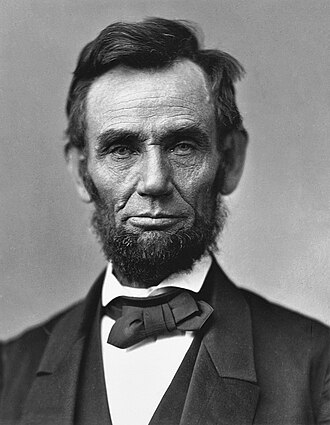
Signed by President Abraham Lincoln on September 24, 1863, during the height of the American Civil War, this emergency wartime order authorizes the War Department and Major-General Joseph Hooker to take forcible military possession of commercial railroads, locomotives, rolling stock, maintenance shops, and equipment.
Issued in the immediate aftermath of the Union defeat at the Battle of Chickamauga, this directive enabled the largest and fastest military logistical operation of the 19th century—transferring 25,000 Union soldiers of the XI and XII Army Corps over 1,200 miles from Virginia to relieve besieged Union forces in Chattanooga, Tennessee, in just 11 days. The order legally commandeers private transportation infrastructure and compels all civilian railroad officers, dispatchers, engineers, and workers to obey military commands under statutory authority delegated by Congress in the Railways and Telegraph Act of 1862.
Constitutional Assessment: Scrutinized through Article II, Section 2 (Commander-in-Chief Clause) and the Fifth Amendment (Takings Clause), presidential seizure of private industrial property represents an extraordinary exercise of executive authority. Because Lincoln acted pursuant to express statutory authorization—the Railways and Telegraph Act of January 31, 1862 (12 Stat. 334)—this order operated at the pinnacle of presidential power under Justice Jackson's Youngstown Zone 1 framework. While the Fifth Amendment protects private property, wartime military necessity coupled with congressional legislation empowered the Commander in Chief to commandeer critical transportation infrastructure to safeguard the Republic.
Key Directives & Operative Actions
▪
Forcible Military Seizure of Railroads & Rolling Stock
Authorizes Major-General Joseph Hooker to commandeer and take direct military possession of all commercial railroads, locomotives, rail cars, repair plants, and equipment required for military operations.
▪
Compulsory Civilian Obedience & Operational Control
Commands all civilian railroad officers, corporate agents, dispatchers, and employees to immediately render full assistance to Union forces and strictly obey General Hooker's military orders under federal authority.
▪
Execution of Statutory Authority (Railways & Telegraph Act)
Invokes express powers granted by Congress under the Railways and Telegraph Act of January 31, 1862 (12 Stat. 334), establishing statutory Youngstown Zone 1 authority for the wartime seizure of private transportation property.
Constitutional & Societal Entities Impacted
🏛️ Commercial Railroad Companies & Rolling Stock Owners
🏛️ Railroad Executives, Conductors, Engineers & Operating Personnel
🏛️ Major-General Joseph Hooker & Army of the Potomac (XI & XII Corps)
🏛️ War Department Logistics & Union Forces Besieged at Chattanooga
🏛️
The Framers' Constitutional Council
1787 PrismEvaluating this order against the constitutional debates of 1787 and the limits of Article II executive power.
🏛️✅ Zone 1 (Maximum Authority)
§
"When the President acts pursuant to an express or implied authorization of Congress, his authority is at its maximum, for it includes all that he possesses in his own right plus all that Congress can delegate."
— Justice Robert H. Jackson, Youngstown Sheet & Tube Co. v. Sawyer (1952) Express or Implied Congressional Authorization
JM
James Madison
Separation of Powers & Legislative Primacy
"The constitutional magistracy was designed not to invent policy, but to be the faithful instrument of the laws passed by the people's representatives." — Speech in the First Congress (1789)
Madison would approve the structural posture of this order. The President acts strictly in subordination to statutory authority granted under Article II, Section 3 ("take Care that the Laws be faithfully executed"). The checks and balances hold firm because the policy origin remains with the legislature.
Madisonian Stance: Concurring (Statutory)
AH
Alexander Hamilton
The Energetic Executive & Unified Command
"A feeble Executive implies a feeble execution of the government; and a government ill executed, whatever it may be in theory, must be, in practice, a bad government." — Federalist No. 70 (1788)
Hamilton would view this directive as the natural and indispensable functioning of administrative leadership. Without the power to coordinate agencies, manage personnel, and resolve operational ambiguities, the modern presidency would be reduced to an impotent figurehead.
Hamiltonian Stance: Supportive of Execution
GM
George Mason
Bill of Rights, Due Process & 10th Amendment
"The president will be surrounded by flatterers and sycophants... and the great powers of the executive will gradually absorb the liberties of the people." — Cato IV (Anti-Federalist, 1787)
The Anti-Federalist prism advises continuous democratic vigilance. Even routine administrative directives aggregate centralized federal power away from town halls and state assemblies toward a distant executive apparatus.
Anti-Federalist Stance: Eternal Vigilance Required
📐
Five Measurable "Constitutional Friction" Dimensions
An objective audit measuring potential separation-of-powers tension against the United States Constitution and established Supreme Court doctrine.
⚖️ Discretionary Twilight Zone
34 / 100 friction index
Dimension 1 • Art. I, §1 & §8
Low Friction
Legislative Encroachment & Purse
Operates within delegated statutory execution without modifying legislative appropriations or taxing powers.
Benchmark: Power of the purse, taxes/tariffs, and rule of law reserved to Congress.
Dimension 2 • Art. II, §1 & §3
Low Friction
Executive Scope & Faithfulness
Exercises standard supervisory executive authority to faithfully execute existing statutes.
Benchmark: Faithfully execute laws enacted by Congress vs. unilateral decree.
Dimension 3 • 10th Amendment
Moderate Friction
Federalism & State Sovereignty
Engages state and local partners in cooperative federalism programs.
Benchmark: Police powers and un-delegated responsibilities reserved to the States.
Dimension 4 • 5th & 14th Amendments
High Friction
Due Process & Individual Rights
Scrutinized under the Bill of Rights for potential impact on private contracts, property rights, or procedural due process.
Benchmark: Protection of private property, contracts, liberty, and procedural justice.
Dimension 5 • Separation of Powers
Low Friction
Youngstown Jacksonian Tier
The President operates strictly as the constitutional Chief Executive, carrying out policy established by Congress with strong statutory backing.
Benchmark: Express or Implied Congressional Authorization
⚖️
Audit Synthesis
This order operates within Justice Jackson’s Zone of Twilight, resting upon concurrent presidential authority or congressional silence.
Weighted composite: Art. I (25%), Art. II (25%), Federalism (15%), Due Process (15%), Youngstown (20%).
ℹ️
How to read these dimensions: Executive power expands whenever an administration acts without explicit statutory authorization from Congress (Article I), touches upon police powers historically reserved to the states (Tenth Amendment), or limits private rights and property without judicial process. A low friction score indicates strict concordance with enacted law; a high friction score highlights orders testing the limits of presidential discretion.
Total Words
92
560 characters
Estimated Read Time
1 min
@ 200 words / min
Flesch-Kincaid
22.1
Post-Graduate Legal
Text size:
Related Executive Orders
Other executive actions signed by Abraham Lincoln around this period.
Order
Sep 4, 1863
⚖️✨ Zone 2 (Zone of Twilight) Constitutional Neutral
Executive Order—Concerning Commercial Regulations
📜 Art. II §2: Commander-in-Chief Supervisory Authority
Ordered , That the Executive order dated November 21, 1862, prohibiting the exportation from the United States of arms, ammunition, or munitions of war, under which the commandants of departments were, by order of the Secretary of War dated May 13, 1863, directed to prohibit…
 Abraham Lincoln
Post-Graduate Legal • 1m
Order
Aug 31, 1863
⚖️✨ Zone 2 (Zone of Twilight) Constitutional Neutral
Executive Order
📜 Art. II §2: Commander-in-Chief Supervisory Authority
Ordered . That the Executive order of November 21, 1862, prohibiting the exportation of arms, ammunition, or munitions of war from the United States, be, and the same hereby is. modified so far as to permit the exportation of imported arms, ammunition, and munitions of war to…
Abraham Lincoln High School • 1m
Order
Aug 25, 1863
⚖️✨ Zone 2 (Zone of Twilight) Constitutional Neutral
Executive Order
📜 Art. II §2: Commander-in-Chief Supervisory Authority
Ordered , first. That clearances issued by the Treasury Department for vessels or merchandise bound for the port of New Orleans for the military necessities of the department, certified by Brigadier-General Shepley, the military governor of Louisiana, shall be allowed to enter…
Abraham Lincoln Post-Graduate Legal • 1m
Order
Nov 10, 1863
🏛️✅ Zone 1 (Maximum Authority) Constitutional Neutral
Executive Order—Export of Tobacco Purchased by Foreign Nations
📜 10th Amend: Intergovernmental Federalism Cooperation
In consideration of the peculiar circumstances and pursuant to the comity deemed to be due to friendly powers, any tobacco in the United States belonging to the government either of France, Austria, or any other state with which this country is at peace, and which tobacco was…
Abraham Lincoln Post-Graduate Legal • 1m
Order
Jul 30, 1863
⚖️✨ Zone 2 (Zone of Twilight) Constitutional Neutral
Executive Order—Retaliation
📜 Art. II §2: Commander-in-Chief Supervisory Authority
It is the duty of every government to give protection to its citizens, of whatever class, color, or condition, and especially to those who are duly organized as soldiers in the public service.
Abraham Lincoln Post-Graduate Legal • 1m
Order
Jul 25, 1863
⚖️✨ Zone 2 (Zone of Twilight) Constitutional Neutral
Executive Order
📜 Art. II §2: Commander-in-Chief Supervisory Authority
Hon. SECRETARY OF THE NAVY. SIR: Certain matters have come to my notice, and considered by me, which induce me to believe that it will conduce to the public interest for you to add to the general instructions given to our naval commanders in relation to contraband trade…
Abraham Lincoln College Level • 2m
📜
Scholarly & Legal Citations
Exec. Order, Military Seizure of Railroads for General Hooker's Operations (Sept. 24, 1863), https://executiveordersarchive.org/orders/app-executive-order-489.
