Paragraph 5 of Chapter VI of the Instructions to Diplomatic Officers of the United States, 1927, "Leaves of absence" is hereby amended to read as follows: VI-5. Conditions under which leaves of absence are granted .—Leave of absence is granted, within statutory limitations, at the discretion of the President, acting through the Secretary of State. Leaves of absence are of two kinds, simple leave, and leave with permission to visit the United States. The granting of a simple leave of absence does not carry with it permission to return to the United States A diplomatic officer must receive express permission to return, in order that he may be entitled to the benefit of the statutory allowance of salary in transit. Simple leave of absence with salary may be granted for not more than thirty days in any one year, except in the case of Ambassadors and Ministers, who may have sixty days leave each year, and except (1) in the case of illness on the part of the officer or a member of his family, (2) in the event of service at a post designated as unhealthy under Section 18K of the Act of May 24, 1924, (3) in the event of service at a post, other than those indicated in (2), designated by the Secretary of State as tropical, but not merely remote or (4) in other exceptional circumstances, when simple leave with pay may be extended to a total of sixty days in one year, but no longer. Leave of absence with permission to visit the United States, for not to exceed sixty days in each calendar year, may be granted with salary to all Ambassadors and Ministers and for not to exceed sixty days in any calendar year to other diplomatic officers not more often than once in every two calendar years except in cases where the health of officers requires that they should be absent from their posts, when continuous leave not to exceed sixty days in either year may be granted covering parts of two successive years. Leave is granted for a calendar year and, whether used or not, expires on December thirty-first of that year. When leave with permission to visit the United States (other than by reason of the health of officers) is completed in the United States at the end of a calendar year or expires by reason of the above limitation, the officer may be granted so much of the leave to which he would be entitled, under the foregoing provisions, in the succeeding calendar year as will bring his aggregate leave for the two years to the following amounts subject to the law that the maximum period during which salary may be paid in any one year is sixty days: (1) Not to exceed ninety days for officers at posts other than those designated as tropical or unhealthy; (2) Not to exceed one hundred twenty days for officers at posts designated as tropical or unhealthy; (3) Not to exceed one hundred twenty days in exceptional circumstances other than service in remote places. In any case in which leave of absence in one calendar year is to be extended to cover continuously all or a portion of the leave for the ensuing year, the absence in the first year may be supplemented in the discretion of the Department by leave without salary in sufficient amount to cover the absence to the end of that calendar year, in order that the leave with pay in the following year may be available. Whenever leave of absence is claimed to be necessary on account of illness it is desirable that a certificate of the physician in attendance be forwarded to the Secretary of State.—R.S. Secs. 1740, 1742. Leave of absence with permission to visit the United States is granted exclusive of the time actually and necessarily occupied in transit by the most direct route from the officer's post to his residence in the United States and return to his post. Salary for said transit period will be paid in addition to the salary for the duration of the leave of absence.—R.S. Sec. 1742; 14 Comp. Dec. 61. Salary will not be paid for more than one transit period in any one year (10 Comp. Dec. 465; 11 Comp. Dec. 123) except that when all or part of a transit period occurs in a calendar year other than that in which the leave of absence was taken it will not impair the right of the diplomatic officer to another transit period during that calendar year if leave should be granted.—14 Comp. Dec. 61. If consistent with the public interest leave of absence, for good reason, may be granted for a longer time than that stipulated in the foregoing, but without compensation—R.S. Sec. 1742; E.O. Sept. 11, 1923. HERBERT HOOVER The White House, May 24, 1929.
Executive Order 5126 🏛️✅ Zone 1: Maximum Authority Constitutional Fidelity (+0.60)
📜 5th Amend: Regulatory Execution with Due Process
Executive Order 5126—Amendment to the Instructions to Diplomatic Officers of 1927 Pertaining to Leave of Absence
Executive Brief • At a Glance
⏱️ 4 min read (810 words) •
● In Effect
🎯 Primary Mandate
Paragraph 5 of Chapter VI of the Instructions to Diplomatic Officers of the United States, 1927, "Leaves of absence" is hereby amended to read as follows: VI-5.
⚖️ Constitutional Footing
🏛️✅ Zone 1: Maximum Authority
Express or Implied Congressional Authorization
📜 5th Amend: Regulatory Execution with Due Process
🏛️ Scope & Affected Sectors
Sovereign State Governments & Localities Executive Departments & Federal Civil Servants Private Citizens & Property Owners
Plain-English Translation & Framers' Constitutional Analysis
Early Statesman synthesis distilling legal jargon into practical meaning, statutory anchors, and structural constitutional impacts.
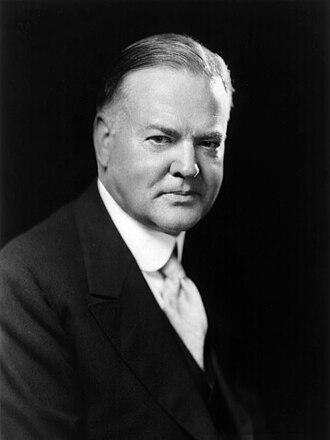
Signed by President Herbert Hoover on May 24, 1929, this order concerns Amendment to the Instructions to Diplomatic Officers of 1927 Pertaining to Leave of Absence. Paragraph 5 of Chapter VI of the Instructions to Diplomatic Officers of the United States, 1927, "Leaves of absence" is hereby amended to read as follows: VI-5. Conditions under which leaves of absence are granted .—Leave of absence is granted, within statutory limitations, at the discretion of the President, acting through the Secretary of State.
Constitutional Assessment: Evaluated against the Fifth Amendment, this action touches upon property or economic rights. An early statesman would insist upon strict adherence to due process of law and the constitutional guarantee that private holdings shall not be encumbered or taken for public purposes without just compensation and lawful process.
Key Directives & Operative Actions
▪
Paragraph 5 of Chapter VI of the Instructions to Diplomatic Officers of the United States, 1927, "Leaves of absence" is hereby amended to read as follows: VI-5.
▪
Simple leave of absence with salary may be granted for not more than thirty days in any one year, except in the case of Ambassadors and Ministers, who may have sixty days leave each year, and except (1) in the case of illness on the part of the officer or a member of his family, (2) in the event of service at a post designated as unhealthy under Section 18K of the Act of May 24, 1924, (3) in the event of service at a post, other than those indicated in (2), designated by the Secretary of State as tropical, but not merely remote or (4) in other exceptional circumstances, when simple leave with pay may be extended to a total of sixty days in one year, but no longer.
▪
Leave of absence with permission to visit the United States, for not to exceed sixty days in each calendar year, may be granted with salary to all Ambassadors and Ministers and for not to exceed sixty days in any calendar year to other diplomatic officers not more often than once in every two calendar years except in cases where the health of officers requires that they should be absent from their posts, when continuous leave not to exceed sixty days in either year may be granted covering parts of two successive years.
▪
When leave with permission to visit the United States (other than by reason of the health of officers) is completed in the United States at the end of a calendar year or expires by reason of the above limitation, the officer may be granted so much of the leave to which he would be entitled, under the foregoing provisions, in the succeeding calendar year as will bring his aggregate leave for the two years to the following amounts subject to the law that the maximum period during which salary may be paid in any one year is sixty days: (1) Not to exceed ninety days for officers at posts other than those designated as tropical or unhealthy; (2) Not to exceed one hundred twenty days for officers at posts designated as tropical or unhealthy…
Constitutional & Societal Entities Impacted
🏛️ Sovereign State Governments & Localities
🏛️ Executive Departments & Federal Civil Servants
🏛️ Private Citizens & Property Owners
Policy Areas & Topics
🏛️
The Framers' Constitutional Council
1787 PrismEvaluating this order against the constitutional debates of 1787 and the limits of Article II executive power.
🏛️✅ Zone 1 (Maximum Authority)
§
"When the President acts pursuant to an express or implied authorization of Congress, his authority is at its maximum, for it includes all that he possesses in his own right plus all that Congress can delegate."
— Justice Robert H. Jackson, Youngstown Sheet & Tube Co. v. Sawyer (1952) Express or Implied Congressional Authorization
JM
James Madison
Separation of Powers & Legislative Primacy
"The constitutional magistracy was designed not to invent policy, but to be the faithful instrument of the laws passed by the people's representatives." — Speech in the First Congress (1789)
Madison would approve the structural posture of this order. The President acts strictly in subordination to statutory authority granted under Article II, Section 3 ("take Care that the Laws be faithfully executed"). The checks and balances hold firm because the policy origin remains with the legislature.
Madisonian Stance: Concurring (Statutory)
AH
Alexander Hamilton
The Energetic Executive & Unified Command
"A feeble Executive implies a feeble execution of the government; and a government ill executed, whatever it may be in theory, must be, in practice, a bad government." — Federalist No. 70 (1788)
Hamilton would view this directive as the natural and indispensable functioning of administrative leadership. Without the power to coordinate agencies, manage personnel, and resolve operational ambiguities, the modern presidency would be reduced to an impotent figurehead.
Hamiltonian Stance: Supportive of Execution
GM
George Mason
Bill of Rights, Due Process & 10th Amendment
"The purse and the sword ought never to be in the same hands... nor the liberties of the citizen placed at the pleasure of a single magistrate." — Virginia Ratifying Convention (1788)
George Mason and the Anti-Federalists would sound a fierce warning. They feared that Article II would inevitably evolve into an elective monarchy. When an executive order impacts private rights, property, or civil liberties without individualized judicial process, Mason would see their darkest predictions verified.
Anti-Federalist Stance: High Bill of Rights Scrutiny
📐
Five Measurable "Constitutional Friction" Dimensions
An objective audit measuring potential separation-of-powers tension against the United States Constitution and established Supreme Court doctrine.
⚖️ Discretionary Twilight Zone
31 / 100 friction index
Dimension 1 • Art. I, §1 & §8
Moderate Friction
Legislative Encroachment & Purse
Administers commerce or fiscal programs requiring ongoing statutory delegation and legislative oversight.
Benchmark: Power of the purse, taxes/tariffs, and rule of law reserved to Congress.
Dimension 2 • Art. II, §1 & §3
Low Friction
Executive Scope & Faithfulness
Exercises standard supervisory executive authority to faithfully execute existing statutes.
Benchmark: Faithfully execute laws enacted by Congress vs. unilateral decree.
Dimension 3 • 10th Amendment
Moderate Friction
Federalism & State Sovereignty
Engages state and local partners in cooperative federalism programs.
Benchmark: Police powers and un-delegated responsibilities reserved to the States.
Dimension 4 • 5th & 14th Amendments
Low Friction
Due Process & Individual Rights
Focuses on internal governmental operations with no direct impairment of private rights or property.
Benchmark: Protection of private property, contracts, liberty, and procedural justice.
Dimension 5 • Separation of Powers
Low Friction
Youngstown Jacksonian Tier
The President operates strictly as the constitutional Chief Executive, carrying out policy established by Congress with strong statutory backing.
Benchmark: Express or Implied Congressional Authorization
⚖️
Audit Synthesis
This order operates within Justice Jackson’s Zone of Twilight, resting upon concurrent presidential authority or congressional silence.
Weighted composite: Art. I (25%), Art. II (25%), Federalism (15%), Due Process (15%), Youngstown (20%).
ℹ️
How to read these dimensions: Executive power expands whenever an administration acts without explicit statutory authorization from Congress (Article I), touches upon police powers historically reserved to the states (Tenth Amendment), or limits private rights and property without judicial process. A low friction score indicates strict concordance with enacted law; a high friction score highlights orders testing the limits of presidential discretion.
Total Words
810
4,542 characters
Estimated Read Time
4 min
@ 200 words / min
Flesch-Kincaid
19.2
Post-Graduate Legal
Text size:
Related Executive Orders
Other executive actions signed by Herbert Hoover around this period.
EO 5127 May 24, 1929
⚖️✨ Zone 2 (Zone of Twilight) Constitutional Neutral
Executive Order 5127—Amendment to the Consular Regulations
📜 5th Amend: Regulatory Execution with Due Process
Article XXIV of the Consular Regulations, 1896, "Miscellaneous services", is hereby amended in part to read as follows: XXIV 465. Absence must be reported .—All absences of consular officers from their posts, whether by leave or otherwise, must be reported to the Secretary of…
 Herbert Hoover
Post-Graduate Legal • 4m
EO 5125 May 23, 1929
⚖️✨ Zone 2 (Zone of Twilight) Constitutional Neutral
Executive Order 5125—Reserving Certain Described Lands for Railroad Purposes, Alaska
📜 Art. II §1: Executive Discretion & Internal Operations
Pursuant to the provisions of the act of Congress approved March 12, 1914 (38 Stat. 305), that the S½ SW¼ NE¼ and S½ SE¼ NW¼ Sec. 4, T. 14 S., R. 7 W., F.M., Alaska, be and the same are hereby withdrawn from settlement, location, sale, entry or other disposition and reserved…
Herbert Hoover High School • 1m
EO 5124 May 23, 1929
⚖️✨ Zone 2 (Zone of Twilight) Constitutional Neutral
Executive Order 5124—Amending Civil Service Rules, Schedule A, Subdivision I, Paragraph 6
📜 5th Amend: Regulatory Execution with Due Process
Schedule A, Subdivision I, paragraph 6, of the Civil Service Rules, is hereby amended by striking out $480 and inserting $540 in lieu thereof. As amended, the paragraph will read as follows: 6.
Herbert Hoover Post-Graduate Legal • 1m
EO 5128 May 27, 1929
⚖️✨ Zone 2 (Zone of Twilight) Constitutional Neutral
Executive Order 5128—Authorizing the Appointment of Joseph B. White Without Regard to Civil Service Rules
📜 Art. II §2: Commander-in-Chief Supervisory Authority
Mr. Joseph B. White may be appointed to an appropriate position in the classified service without regard to the requirements of the civil service rules.
Herbert Hoover College Level • 1m
EO 5123 May 21, 1929
⚖️✨ Zone 2 (Zone of Twilight) Constitutional Neutral
Executive Order 5123—Amending Schedule A, Subdivision IX of the Civil Service Rules
📜 5th Amend: Regulatory Execution with Due Process
Schedule A, Subdivision IX, Department of Agriculture, Section 1, is amended by the addition of a paragraph (h), to read as follows: (h) Agents employed to take and transmit meteorological observations in connection with airways, whose duties require only a part of their time…
Herbert Hoover Post-Graduate Legal • 1m
EO 5129 May 28, 1929
⚖️✨ Zone 2 (Zone of Twilight) Constitutional Neutral
Executive Order 5129—Reserving Certain Described Lands in the Philippine Islands for Military Purposes
📜 Art. II §2: Commander-in-Chief Supervisory Authority
The following tracts of public lands, property of the United States, in the Philippine Islands, are hereby reserved and set apart for military purposes, subject to private rights if any there be: I. All that certain tract of land situated in the City of Zamboanga, Province of…
Herbert Hoover Grade 5 • 4m
📜
Scholarly & Legal Citations
Exec. Order No. 5126 (May 24, 1929), https://executiveordersarchive.org/orders/app-executive-order-5126-amendment-the-instructions-diplomatic-officers-1927-pertaining-leave.
