It is hereby ordered, under authority contained in section 5 of the act of February 8, 1887 (24 Stat. 388-389), that the trust period on allotments made to members of the Seneca Tribe in Oklahoma, upon which the trust period will expire during the calendar year 1930, be, and is hereby, extended for a period of ten years from the date of expiration, with the exception of the following: ALLOTMENT NUMBER NAME OF ALLOTTEE 1 James O'Hardy 2 Valentine Hardy 4 Lillian Choteau 5 Esther Spicer 6 Hattie Spicer 10 Sophrina Mingo 13 Mary E. Winney 17 Noah J. Spicer 23 Sidney Choteau 27 Edna Layne 29 Lena Bearskin 30 Maggie C. Bearskin 31 Leslie Bearskin 32 John W. Bearskin 33 Eva Fisher 34 Lena Fisher 35 Alfred Fisher 36 Minerva Fisher 37 Bertha Captain 38 Ray Whitetree 39 Alva Whitetree 40 Jessie Whitetree 43 Ruth Kariho 47 Carrie B. Splitlog 54 Dorcas Johnson Girgam 55 Robert A. Johnson 60 Jasper L. Spicer 61 Georgia Spicer 64 Chester A. Hubbard 69 Sherman Spicer 70 Lavina Darity 71 Harry Whitetree 72 Opal Whitetree 73 Claude Finley 74 Beatrice Finley 76 Howard Brown 77 Rosanna J. Brown 82 David Cherloe 84 Downing Young 86 Solorena Young 88 Jennie Crow 89 Angeline Crow (deceased) 90 Gertrude Washington 91 Ora B. Spicer 93 Reo A. Spicer 94 Mildred Bearskin 96 Gladys Bearskin 97 Lillian Johnson 100 Ida Schrimpsher 106 Flora Dick 109 Curtle Evans 114 Jackson Johnson 116 Ernest Whitetree 117 Rena Whitetree 120 Walter Whitecrow HERBERT HOOVER The White House, March 18, 1930.
Executive Order 5306 ⚖️✨ Zone 2: Zone of Twilight Constitutional Neutral (+0.02)
📜 Art. II §1: Executive Discretion & Internal Operations
Executive Order 5306—Extension of Trust Period on Certain Allotments Made to Indians of the Seneca Tribe, Oklahoma
Executive Brief • At a Glance
⏱️ 1 min read (260 words) •
● In Effect
🎯 Primary Mandate
Under authority contained in section 5 of the act of February 8, 1887 (24 Stat. 388-389), that the trust period on allotments made to members of the Seneca Tribe in Oklahoma, upon which the trust period will expire during the calendar year 1930, be, and is hereby, extended for a period of ten years from the date of expiration, with the exception of the following: ALLOTMENT NUMBER NAME OF ALLOTTEE 1 James O'Hardy 2 Valentine Hardy 4 Lillian Choteau 5 Esther Spicer 6 Hattie Spicer 10 Sophrina Mingo 13 Mary E. Winney 17 Noah J. Spicer 23 Sidney Choteau 27 Edna Layne 29 Lena Bearskin 30 Maggie C. Bearskin 31 Leslie Bearskin 32 John W. Bearskin 33 Eva Fisher 34 Lena Fisher 35 Alfred Fisher 36 Minerva Fisher 37 Bertha Captain 38 Ray Whitetree…
⚖️ Constitutional Footing
⚖️✨ Zone 2: Zone of Twilight
Concurrent Authority / Congressional Silence
📜 Art. II §1: Executive Discretion & Internal Operations
🏛️ Scope & Affected Sectors
Executive Branch Departments General Body of the People
Plain-English Translation & Framers' Constitutional Analysis
Early Statesman synthesis distilling legal jargon into practical meaning, statutory anchors, and structural constitutional impacts.
Signed by President Herbert Hoover on March 18, 1930, this order concerns Extension of Trust Period on Certain Allotments Made to Indians of the Seneca Tribe, Oklahoma. Under authority contained in section 5 of the act of February 8, 1887 (24 Stat. 388-389), that the trust period on allotments made to members of the Seneca Tribe in Oklahoma, upon which the trust period will expire during the calendar year 1930, be, and is hereby, extended for a period of ten years from the date of expiration, with the exception of the following: ALLOTMENT NUMBER NAME OF ALLOTTEE 1 James O'Hardy 2…
Constitutional Assessment: This action represents an orderly exercise of Article II administrative discretion, managing the internal machinery and personnel of the executive branch without abridging the ancient liberties of the people.
Key Directives & Operative Actions
▪
Under authority contained in section 5 of the act of February 8, 1887 (24 Stat. 388-389), that the trust period on allotments made to members of the Seneca Tribe in Oklahoma, upon which the trust period will expire during the calendar year 1930, be, and is hereby, extended for a period of ten years from the date of expiration, with the exception of the following: ALLOTMENT NUMBER NAME OF ALLOTTEE 1 James O'Hardy 2 Valentine Hardy 4 Lillian Choteau 5 Esther Spicer 6 Hattie Spicer 10 Sophrina Mingo 13 Mary E. Winney 17 Noah J. Spicer 23 Sidney Choteau 27 Edna Layne 29 Lena Bearskin 30 Maggie C. Bearskin 31 Leslie Bearskin 32 John W. Bearskin 33 Eva Fisher 34 Lena Fisher 35 Alfred Fisher 36 Minerva Fisher 37 Bertha Captain 38 Ray Whitetree…
Constitutional & Societal Entities Impacted
🏛️ Executive Branch Departments
🏛️ General Body of the People
Policy Areas & Topics
🏛️
The Framers' Constitutional Council
1787 PrismEvaluating this order against the constitutional debates of 1787 and the limits of Article II executive power.
⚖️✨ Zone 2 (Zone of Twilight)
§
"When the President acts in absence of either a congressional grant or denial of authority, he can only rely upon his own independent powers, but there is a zone of twilight in which he and Congress may have concurrent authority."
— Justice Robert H. Jackson, Youngstown Sheet & Tube Co. v. Sawyer (1952) Concurrent Authority / Congressional Silence
JM
James Madison
Separation of Powers & Legislative Primacy
"Power is of an encroaching nature, and it ought to be effectually restrained from passing the limits assigned to it." — Federalist No. 48 (1788)
Madison would view this order with watchful scrutiny. Operating in the 'Zone of Twilight' where Congress is silent, each such directive establishes an administrative precedent that steadily expands the executive perimeter at the expense of legislative primacy.
Madisonian Stance: Vigilant / Cautionary
AH
Alexander Hamilton
The Energetic Executive & Unified Command
"A feeble Executive implies a feeble execution of the government; and a government ill executed, whatever it may be in theory, must be, in practice, a bad government." — Federalist No. 70 (1788)
Hamilton would view this directive as the natural and indispensable functioning of administrative leadership. Without the power to coordinate agencies, manage personnel, and resolve operational ambiguities, the modern presidency would be reduced to an impotent figurehead.
Hamiltonian Stance: Defends Vigor & Dispatch
GM
George Mason
Bill of Rights, Due Process & 10th Amendment
"The president will be surrounded by flatterers and sycophants... and the great powers of the executive will gradually absorb the liberties of the people." — Cato IV (Anti-Federalist, 1787)
The Anti-Federalist prism advises continuous democratic vigilance. Even routine administrative directives aggregate centralized federal power away from town halls and state assemblies toward a distant executive apparatus.
Anti-Federalist Stance: Eternal Vigilance Required
📐
Five Measurable "Constitutional Friction" Dimensions
An objective audit measuring potential separation-of-powers tension against the United States Constitution and established Supreme Court doctrine.
⚖️ Discretionary Twilight Zone
26 / 100 friction index
Dimension 1 • Art. I, §1 & §8
Low Friction
Legislative Encroachment & Purse
Operates within delegated statutory execution without modifying legislative appropriations or taxing powers.
Benchmark: Power of the purse, taxes/tariffs, and rule of law reserved to Congress.
Dimension 2 • Art. II, §1 & §3
Low Friction
Executive Scope & Faithfulness
Exercises standard supervisory executive authority to faithfully execute existing statutes.
Benchmark: Faithfully execute laws enacted by Congress vs. unilateral decree.
Dimension 3 • 10th Amendment
Low Friction
Federalism & State Sovereignty
Confined strictly to internal federal jurisdiction, federal property, or direct military command.
Benchmark: Police powers and un-delegated responsibilities reserved to the States.
Dimension 4 • 5th & 14th Amendments
Low Friction
Due Process & Individual Rights
Focuses on internal governmental operations with no direct impairment of private rights or property.
Benchmark: Protection of private property, contracts, liberty, and procedural justice.
Dimension 5 • Separation of Powers
Moderate Friction
Youngstown Jacksonian Tier
The order relies on inherent Article II executive discretion, civil service management, or foreign diplomacy where Congress has neither expressly approved nor prohibited action.
Benchmark: Concurrent Authority / Congressional Silence
⚖️
Audit Synthesis
This order operates within Justice Jackson’s Zone of Twilight, resting upon concurrent presidential authority or congressional silence.
Weighted composite: Art. I (25%), Art. II (25%), Federalism (15%), Due Process (15%), Youngstown (20%).
ℹ️
How to read these dimensions: Executive power expands whenever an administration acts without explicit statutory authorization from Congress (Article I), touches upon police powers historically reserved to the states (Tenth Amendment), or limits private rights and property without judicial process. A low friction score indicates strict concordance with enacted law; a high friction score highlights orders testing the limits of presidential discretion.
Total Words
260
1,484 characters
Estimated Read Time
1 min
@ 200 words / min
Flesch-Kincaid
10.9
High School
Text size:
Related Executive Orders
Other executive actions signed by Herbert Hoover around this period.
EO 5305 Mar 18, 1930
⚖️✨ Zone 2 (Zone of Twilight) Constitutional Neutral
Executive Order 5305—Extension of Trust Period on Certain Allotments Made to Indians of the Nez Perce Tribe, Idaho
📜 Art. II §1: Executive Discretion & Internal Operations
Under authority contained in section 5 of the act of February 8, 1887 (24 Stat. 388-389), that the trust period on allotments made to Indians on the Nez Perce Reservation in Idaho, which trust period expires during the calendar year 1930, be, and is hereby, extended for a…
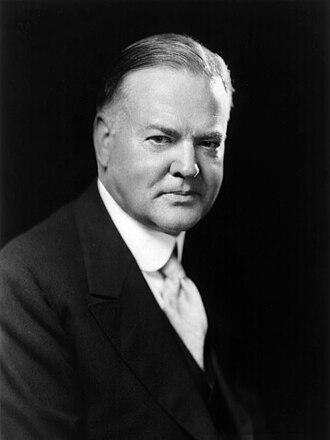 Herbert Hoover
Post-Graduate Legal • 1m
EO 5308 Mar 20, 1930
⚖️✨ Zone 2 (Zone of Twilight) Constitutional Neutral
Executive Order 5308—Lands Reserved for Military Purposes in Municipality of Malabang, Province of Lanao, Philippine Islands
📜 Art. II §2: Commander-in-Chief Supervisory Authority
Pursuant to section 9 of the act of Congress approved August 29, 1916 (39 Stat. 545, 547; title 48 U.S.C. secs. 1221, 1222), entitled "An act to declare the purpose of the people of the United States as to the future political status of the people of the Philippine Islands, and…
Herbert Hoover High School • 2m
EO 5307 Mar 20, 1930
⚖️✨ Zone 2 (Zone of Twilight) Constitutional Neutral
Executive Order 5307—Fishlake National Forest Enlarged
📜 Art. II §1: Executive Discretion & Internal Operations
The public lands within the following described areas in Utah be and the same are hereby included in and made a part of the Fishlake National Forest: SALT LAKE MERIDIAN In T. 14 S., R. 3 W., secs. 33 and 34; In T. 18 S., R. 3 W., secs. 28 to 32, inclusive, and W. ½ sec. 33; In…
Herbert Hoover Grade 6 • 1m
EO 5304 Mar 14, 1930
⚖️✨ Zone 2 (Zone of Twilight) Constitutional Neutral
Executive Order 5304—Withdrawal of Public Lands for Resurvey
📜 Art. II §1: Executive Discretion & Internal Operations
The public lands in T. 50 N., R. 11 E., New Mexico principal meridian, Colorado, be, and the same are hereby withdrawn from settlement, location, sale, entry, and all forms of appropriation, pending a resurvey of said township under the act of March 3, 1909 (35 Stat. 845).
Herbert Hoover High School • 1m
EO 5309 Mar 24, 1930
⚖️✨ Zone 2 (Zone of Twilight) Constitutional Neutral
Executive Order 5309—Withdrawal of Public Lands for Resurvey
📜 Art. II §1: Executive Discretion & Internal Operations
The public lands in T. 62 N., R. 2. E. of the fourth principal meridian, Minnesota, be and the same are hereby withdrawn from settlement, location, sale, entry, and all forms of appropriation, pending a resurvey of said township under the act of March 3, 1909 (35 Stat. 845).
Herbert Hoover High School • 1m
EO 5303 Mar 12, 1930
⚖️✨ Zone 2 (Zone of Twilight) Constitutional Neutral
Executive Order 5303—Extension of Trust Period on Certain Allotments Made to Indians of the Devils Lake Reservation, North Dakota
📜 Art. II §1: Executive Discretion & Internal Operations
Under authority contained in section 5 of the act of February 8, 1887 (24 Stat. 388-389), that the trust period on allotments on the Devils Lake Reservation, North Dakota, which trust expires during the calendar year 1930, be, and is hereby extended for a period of ten years…
Herbert Hoover Post-Graduate Legal • 1m
📜
Scholarly & Legal Citations
Exec. Order No. 5306 (Mar. 18, 1930), https://executiveordersarchive.org/orders/app-executive-order-5306-extension-trust-period-certain-allotments-made-indians-the-seneca.
