The civil-service rules are hereby amended as indicated below. Rule VI, paragraph 1, is amended to read as follows by eliminating the sentence "Applicants for entrance examination who, because of disability, are entitled either to a pension by authorization of the Bureau of Pensions or to compensation or training by the Veterans' Bureau, and widows of honorably discharged soldiers, sailors, and marines, and wives of injured soldiers, sailors, and marines who themselves are not qualified, but whose wives are qualified for appointment, shall have ten points added to their earned ratings," and substituting therefor the sentence "Applicants for entrance examination who are honorably discharged and who establish by official records the present existence of a service-connected disability, and widows of honorably discharged soldiers, sailors, and marines, and wives of honorably discharged soldiers, sailors, and marines who because of service-connected disability are themselves not qualified but whose wives are qualified for appointment, shall have ten points added to their earned ratings; and this shall also apply to retired officers and enlisted men who establish through official sources the present existence of a service- connected disability in the same manner as is required of others who are granted disability preference": Examination papers shall be rated on a scale of 100, and the subjects therein shall be given such relative weights as the commission may prescribe. Honorably discharged soldiers, sailors, and marines shall have five points added to their earned ratings in examinations for entrance to the classified service. Applicants for entrance examination who are honorably discharged and who establish by official records the present existence of a service-connected disability, and widows of honorably discharged soldiers, sailors, and marines, and wives of honorably discharged soldiers, sailors, and marines who because of service-connected disability are themselves not qualified but whose wives are qualified for appointment, shall have ten points added to their earned ratings; and this shall also apply to retired officers and enlisted men who establish through official sources the present existence of a service-connected disability in the same manner as is required of others who are granted disability preference. In examinations where experience is an element of qualifications, time spent in the military or naval service of the United States during the World War or the war with Spain shall be credited in an applicant's ratings where the applicant's actual employment in a similar vocation to that for which he applies was temporarily interrupted by such military or naval service but was resumed after his discharge. Competitors shall be duly notified of their ratings. Rule VI, paragraph 2, is amended to read as follows by eliminating the clause "but the names of disabled veterans, their wives, and the widows of honorably discharged soldiers, sailors, and marines shall be placed above all others," and substituting therefor the clause "but the names of persons entitled to disability preference as defined in paragraph 1 of this rule shall be placed above all others": All competitors rated at 70 or more shall be eligible for appointment, and their names shall be placed on the proper register according to their ratings; but the names of persons entitled to disability preference as defined in paragraph 1 of this rule shall be placed above all others. The foregoing amendments to Civil-Service Rule VI will apply to future examinations conducted by the Civil Service Commission. Rule VII, paragraph 1(6), is amended to read as follows by eliminating the sentence "An appointing officer who passes over a veteran eligible and selects a nonveteran with the same or lower rating shall place in the records of the department his reasons for so doing," and substituting therefor the sentence "An appointing officer who passes over a veteran eligible and selects a non veteran with the same or lower rating shall file with the Civil Service Commission the reasons for so doing, which reasons will become a part of the veteran's record but will not be made available to the veteran or to anyone else except in the discretion of the appointing officer": The nominating or appointing officer shall make selections for the first vacancy from not more than the highest three names certified, or on the register, with sole reference to merit and fitness, unless objection shall be made and sustained by the commission, to one or more of the persons certified, for any of the reasons stated in Rule V, section 4. For the second vacancy he shall make selection from not more than the highest three remaining, who have not been within his reach for three separate vacancies, or against whom objection has not been made and sustained in the manner indicated. The third and any additional vacancies shall be filled in like manner. More than one selection may be made from the three names next in order for appointment, or from two names if the register contains only two, subject to the requirements of section 2 of this rule as to the apportionment. An appointing officer who passes over a veteran eligible and selects a nonveteran with the same or lower rating shall file with the Civil Service Commission the reasons for so doing, which reasons will become a part of the veteran's record but will not be made available to the veteran or to anyone else except in the discretion of the appointing officer. Any eligible who has been within reach for three separate vacancies in his turn may be subsequently selected, subject to the approval of the commission from the certificate on which liis name last appeared, if the condition of the register has not so changed as to place him in other respects beyond reach of certification. The Civil Service Commission is authorized to hold quarterly examinations for positions for which there are existing registers of eligibles, such examinations to be open only to the men and women entitled to disability preference as herein provided, the names of the resulting eligibles to be entered at the head of the existing registers in the order of ratings attained in competition with the disability-preference eligibles, if any, whose names may already appear at the head of such registers. HERBERT HOOVER The White House, April 24, 1931.
Executive Order 5610 ⚖️✨ Zone 2: Zone of Twilight Constitutional Neutral (+0.02)
📜 Art. II §2: Commander-in-Chief Supervisory Authority
Executive Order 5610—Amendment of the Civil-Service Rules Relating to Veterans' Preference
Executive Brief • At a Glance
⏱️ 5 min read (1,027 words) •
● In Effect
🎯 Primary Mandate
The civil-service rules are hereby amended as indicated below.
⚖️ Constitutional Footing
⚖️✨ Zone 2: Zone of Twilight
Concurrent Authority / Congressional Silence
📜 Art. II §2: Commander-in-Chief Supervisory Authority
🏛️ Scope & Affected Sectors
Armed Forces & Military Establishments Executive Departments & Federal Civil Servants
Plain-English Translation & Framers' Constitutional Analysis
Early Statesman synthesis distilling legal jargon into practical meaning, statutory anchors, and structural constitutional impacts.
Signed by President Herbert Hoover on April 24, 1931, this order concerns Amendment of the Civil-Service Rules Relating to Veterans' Preference. The civil-service rules are hereby amended as indicated below. Rule VI, paragraph 1, is amended to read as follows by eliminating the sentence "Applicants for entrance examination who, because of disability, are entitled either to a pension by authorization of the Bureau of Pensions or to compensation or training by the Veterans' Bureau, and widows of honorably discharged soldiers, sailors, and marines, and wives…
Constitutional Assessment: Scrutinized through Article II, Section 2, this action exercises the President's constitutional role as Commander in Chief. Early Framers recognized broad executive discretion in commanding military forces during conflict, provided it remains bounded by congressional declarations and respects civilian domestic courts.
Key Directives & Operative Actions
▪
The civil-service rules are hereby amended as indicated below.
▪
Rule VI, paragraph 1, is amended to read as follows by eliminating the sentence "Applicants for entrance examination who, because of disability, are entitled either to a pension by authorization of the Bureau of Pensions or to compensation or training by the Veterans' Bureau, and widows of honorably discharged soldiers, sailors, and marines, and wives of injured soldiers, sailors, and marines who themselves are not qualified, but whose wives are qualified for appointment, shall have ten points added to their earned ratings," and substituting therefor the sentence "Applicants for entrance examination who are honorably discharged and who establish by official records the present existence of a service-connected disability, and widows of…
▪
Honorably discharged soldiers, sailors, and marines shall have five points added to their earned ratings in examinations for entrance to the classified service.
▪
Applicants for entrance examination who are honorably discharged and who establish by official records the present existence of a service-connected disability, and widows of honorably discharged soldiers, sailors, and marines, and wives of honorably discharged soldiers, sailors, and marines who because of service-connected disability are themselves not qualified but whose wives are qualified for appointment, shall have ten points added to their earned ratings; and this shall also apply to retired officers and enlisted men who establish through official sources the present existence of a service-connected disability in the same manner as is required of others who are granted disability preference.
Constitutional & Societal Entities Impacted
🏛️ Armed Forces & Military Establishments
🏛️ Executive Departments & Federal Civil Servants
🏛️
The Framers' Constitutional Council
1787 PrismEvaluating this order against the constitutional debates of 1787 and the limits of Article II executive power.
⚖️✨ Zone 2 (Zone of Twilight)
§
"When the President acts in absence of either a congressional grant or denial of authority, he can only rely upon his own independent powers, but there is a zone of twilight in which he and Congress may have concurrent authority."
— Justice Robert H. Jackson, Youngstown Sheet & Tube Co. v. Sawyer (1952) Concurrent Authority / Congressional Silence
JM
James Madison
Separation of Powers & Legislative Primacy
"Power is of an encroaching nature, and it ought to be effectually restrained from passing the limits assigned to it." — Federalist No. 48 (1788)
Madison would view this order with watchful scrutiny. Operating in the 'Zone of Twilight' where Congress is silent, each such directive establishes an administrative precedent that steadily expands the executive perimeter at the expense of legislative primacy.
Madisonian Stance: Vigilant / Cautionary
AH
Alexander Hamilton
The Energetic Executive & Unified Command
"The direction of war implies the direction of the common strength; and the power of directing and employing the common strength must be under the direction of the single hand of the Executive." — Federalist No. 74 (1788)
Hamilton would forcefully champion executive discretion here. For foreign entanglements, commerce defense, and national security, deliberative assemblies are too slow and faction-ridden. A unified, energetic Executive exercising swift command is precisely what the Philadelphia Convention intended for national preservation.
Hamiltonian Stance: Strong Prerogative Support
GM
George Mason
Bill of Rights, Due Process & 10th Amendment
"The president will be surrounded by flatterers and sycophants... and the great powers of the executive will gradually absorb the liberties of the people." — Cato IV (Anti-Federalist, 1787)
The Anti-Federalist prism advises continuous democratic vigilance. Even routine administrative directives aggregate centralized federal power away from town halls and state assemblies toward a distant executive apparatus.
Anti-Federalist Stance: Eternal Vigilance Required
📐
Five Measurable "Constitutional Friction" Dimensions
An objective audit measuring potential separation-of-powers tension against the United States Constitution and established Supreme Court doctrine.
⚖️ Discretionary Twilight Zone
43 / 100 friction index
Dimension 1 • Art. I, §1 & §8
Moderate Friction
Legislative Encroachment & Purse
Administers commerce or fiscal programs requiring ongoing statutory delegation and legislative oversight.
Benchmark: Power of the purse, taxes/tariffs, and rule of law reserved to Congress.
Dimension 2 • Art. II, §1 & §3
Moderate Friction
Executive Scope & Faithfulness
Directs internal executive branch machinery, agency workflows, and federal personnel.
Benchmark: Faithfully execute laws enacted by Congress vs. unilateral decree.
Dimension 3 • 10th Amendment
Moderate Friction
Federalism & State Sovereignty
Engages state and local partners in cooperative federalism programs.
Benchmark: Police powers and un-delegated responsibilities reserved to the States.
Dimension 4 • 5th & 14th Amendments
Low Friction
Due Process & Individual Rights
Focuses on internal governmental operations with no direct impairment of private rights or property.
Benchmark: Protection of private property, contracts, liberty, and procedural justice.
Dimension 5 • Separation of Powers
Moderate Friction
Youngstown Jacksonian Tier
The order relies on inherent Article II executive discretion, civil service management, or foreign diplomacy where Congress has neither expressly approved nor prohibited action.
Benchmark: Concurrent Authority / Congressional Silence
⚖️
Audit Synthesis
This order operates within Justice Jackson’s Zone of Twilight, resting upon concurrent presidential authority or congressional silence.
Weighted composite: Art. I (25%), Art. II (25%), Federalism (15%), Due Process (15%), Youngstown (20%).
ℹ️
How to read these dimensions: Executive power expands whenever an administration acts without explicit statutory authorization from Congress (Article I), touches upon police powers historically reserved to the states (Tenth Amendment), or limits private rights and property without judicial process. A low friction score indicates strict concordance with enacted law; a high friction score highlights orders testing the limits of presidential discretion.
Total Words
1,027
6,416 characters
Estimated Read Time
5 min
@ 200 words / min
Flesch-Kincaid
29.8
Post-Graduate Legal
Text size:
Related Executive Orders
Other executive actions signed by Herbert Hoover around this period.
EO 5611 Apr 24, 1931
⚖️✨ Zone 2 (Zone of Twilight) Constitutional Neutral
Executive Order 5611—Withdrawal of Public Lands for Use in Connection with San Carlos Indian Irrigation Project, Arizona
📜 Art. II §1: Executive Discretion & Internal Operations
The following described tracts of public lands in Arizona be, and they are hereby, withdrawn from settlement, location, sale, or entry, except as provided in said acts, for use in connection with the San Carlos Indian Irrigation Project, subject to any valid rights or claims…
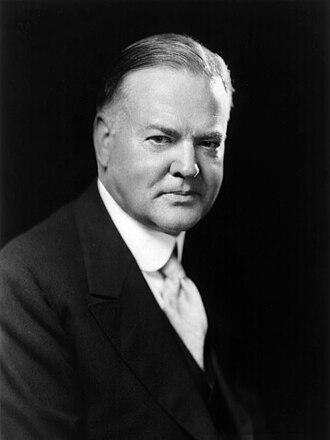 Herbert Hoover
Grade 5 • 1m
EO 5612 Apr 25, 1931
⚖️✨ Zone 2 (Zone of Twilight) Constitutional Neutral
Executive Order 5612—Establishing a Council of Personnel Administration
📜 Art. II §3: Administrative Management & Civil Service
To the Heads of Departments and Independent Establishments: 1. For the purpose of developing in the Federal Government a more effective and economical system of employment and personnel management, and to promote the general welfare of the employees of the National Government…
Herbert Hoover Post-Graduate Legal • 3m
EO 5609 Apr 23, 1931
⚖️✨ Zone 2 (Zone of Twilight) Constitutional Neutral
Executive Order 5609—Civil-Service Status for Former Employees of the National Home for Disabled Volunteer Soldiers, Now Employees of the Veterans' Administration
📜 Art. II §2: Commander-in-Chief Supervisory Authority
I hereby direct that employees of the Bureau of National Homes of the Veterans' Administration, who are not inmates, be included, with their positions, in the classified civil service upon receipt by the Civil Service Commission of general certification by the Administrator of…
Herbert Hoover Post-Graduate Legal • 1m
EO 5608 Apr 22, 1931
🏛️✅ Zone 1 (Maximum Authority) Constitutional Neutral
Executive Order 5608—Designation of Sasabe, Arizona, as a Customs Port of Entry
📜 Art. I §8: Delegated Tariff & Commerce Execution
The customs station of Sasabe, Ariz., is hereby designated a customs port of entry in Customs Collection District No. 26 (Arizona) with headquarters at Nogales, Ariz., effective 30 days from the date of this order.
Herbert Hoover Grade 8 • 1m
EO 5607 Apr 22, 1931
⚖️✨ Zone 2 (Zone of Twilight) Constitutional Neutral
Executive Order 5607—Correction in Description of Land Restored to the Territory of Hawaii
📜 Art. II §2: Commander-in-Chief Supervisory Authority
The description of those portions of the Kahauiki Military Reservation (Fort Shafter) and the Hawaii Arsenal Military Reservation, contained in said Executive Order No. 5132, dated June 6, 1929, be, and the same is hereby, amended to read as follows: Parcel 1 , being a portion…
Herbert Hoover Grade 8 • 6m
EO 5606 Apr 22, 1931
⚖️✨ Zone 2 (Zone of Twilight) Constitutional Neutral
Executive Order 5606—Establishing the Fallon Wild-Life Refuge
📜 5th Amend: Regulatory Execution with Due Process
The public lands within the following described area in Churchill County, Nev., be, and the same are hereby, reserved and set apart for the use of the Department of Agriculture as a refuge and breeding ground for birds and wild animals, subject to existing valid rights: Mount…
Herbert Hoover College Level • 2m
📜
Scholarly & Legal Citations
Exec. Order No. 5610 (Apr. 24, 1931), https://executiveordersarchive.org/orders/app-executive-order-5610-amendment-the-civil-service-rules-relating-veterans-preference.
