Under and pursuant to the provisions of section 26, paragraph (k), of the act of Congress approved February 23, 1931 (46 Stat. 1212), which paragraph reads as follows: "(k) The President is authorized from time to time to establish, by Executive order, a list of places which by reason of climatic or other extreme conditions are to be classed as unhealthful posts, and each year of duty subsequent to January 1, 1900, at such posts inclusive of regular leaves of absence, of officers already retired or hereafter retired, shall be counted as one year and a half, and so on in like proportion in reckoning the length of service for the purpose of retirement, fractional months being considered as full months in computing such service: Provided, however , That the President may at any time cancel the designation of any places as unhealthful without affecting any credit which has accrued for service at such posts prior to the date of the cancellation." the following places, which include those heretofore established as unhealthful posts for the purpose of retirement, under the act of May 24, 1924, by Executive orders dated April 1, 1925, October 20, 1927, November 28, 1927, and April 10, 1930, which Executive orders are hereby canceled, such cancellation to be effective July 1, 1931, are hereby established as unhealthful posts for the purposes of retirement within the meaning of the law above quoted, which supersedes the act of May 24, 1924: Acapulco, Mexico La Guaira, Venezuela Aden, Arabia La Paz, Bolivia Alvaro Obregon (Frontera), Mexico Léopoldville, Belgian Congo Amoy, China Loanda, Angola Antilla, Cuba Lourenço Marques, East Africa Asunci6n, Paraguay Madras, India Baghdad, Iraq Managua, Nicaragua Bahia, Brazil Manaos, Brazil Bangkok, Siam Manzanillo, Cuba Barranquilla, Colombia Manzanillo, Mexico Batavia, Java Maracaibo, Venezuela Belize, British Honduras Martinique, French Bluefields, Nicaragua West Indies Bombay, India Matanzas, Cuba Buenaventura, Colombia Maza tian, Mexico Caibarien, Cuba Medan, Sumatra Calcutta, India Monrovia, Liberia Canton, China Nanking, China Cartagena, Colombia Nuevitas, Cuba Ceiba, Honduras Para, Brazil Changsha, China Penang, Straits Settlements Chungldng, China Pernambuco, Brazil Cienfuegos, Cuba Port Limon, Costa Rica Colombo, Ceylon Progreso, Mexico Corinto, Nicaragua Puerto Barrios, Guatemala Dakar, Senegal Puerto Cabello, Venezuela Foochow, China Puerto Castilla, Honduras Georgetown, British Guiana Puerto Cortes, Honduras Guayaquil, Ecuador Puerto Plata, Dominican Guaymas, Mexico Republic Habana, Cuba Rangoon, India Hankow, China Sagua la Grande, Cuba Hong Kong Saigon, French Indo-China Karachi, India Salina Cruz, Mexico Lagos, Nigeria Santa Marta, Colombia Santiago, Cuba Swatow, China Santo Domingo, Dominican Taihoku, Taiwan Republic Tampico, Mexico Shanghai, China Tananarive, Madagascar Singapore, Straits Tela, Honduras Settlements Vera Cruz, Mexico Surabaya, Java This order shall become effective July 1, 1931. HERBERT HOOVER The White House, June 8, 1931.
Executive Order 5644 🏛️✅ Zone 1: Maximum Authority Constitutional Neutral (+0.02)
📜 Art. I §8: Delegated Tariff & Commerce Execution
Executive Order 5644—Designation of Unhealthful Posts in the Foreign Service
Executive Brief • At a Glance
⏱️ 2 min read (447 words) •
● In Effect
🎯 Primary Mandate
Under and pursuant to the provisions of section 26, paragraph (k), of the act of Congress approved February 23, 1931 (46 Stat. 1212), which paragraph reads as follows: "(k) The President is authorized from time to time to establish, by Executive order, a list of places which by reason of climatic or other extreme conditions are to be classed as unhealthful posts, and each year of duty subsequent to January 1, 1900, at such posts inclusive of regular leaves of absence, of officers already retired or hereafter retired, shall be counted as one year and a half, and so on in like proportion in reckoning the length of service for the purpose of retirement, fractional months being considered as full months in computing such service: Provided…
⚖️ Constitutional Footing
🏛️✅ Zone 1: Maximum Authority
Express or Implied Congressional Authorization
📜 Art. I §8: Delegated Tariff & Commerce Execution
🏛️ Scope & Affected Sectors
Executive Departments & Federal Civil Servants
Plain-English Translation & Framers' Constitutional Analysis
Early Statesman synthesis distilling legal jargon into practical meaning, statutory anchors, and structural constitutional impacts.
Signed by President Herbert Hoover on June 8, 1931, this order concerns Designation of Unhealthful Posts in the Foreign Service. Under and pursuant to the provisions of section 26, paragraph (k), of the act of Congress approved February 23, 1931 (46 Stat. 1212), which paragraph reads as follows: "(k) The President is authorized from time to time to establish, by Executive order, a list of places which by reason of climatic or other extreme conditions are to be classed as unhealthful posts, and each year of duty subsequent to January 1, 1900…
Constitutional Assessment: This action represents an orderly exercise of Article II administrative discretion, managing the internal machinery and personnel of the executive branch without abridging the ancient liberties of the people.
Key Directives & Operative Actions
▪
Under and pursuant to the provisions of section 26, paragraph (k), of the act of Congress approved February 23, 1931 (46 Stat. 1212), which paragraph reads as follows: "(k) The President is authorized from time to time to establish, by Executive order, a list of places which by reason of climatic or other extreme conditions are to be classed as unhealthful posts, and each year of duty subsequent to January 1, 1900, at such posts inclusive of regular leaves of absence, of officers already retired or hereafter retired, shall be counted as one year and a half, and so on in like proportion in reckoning the length of service for the purpose of retirement, fractional months being considered as full months in computing such service: Provided…
Constitutional & Societal Entities Impacted
🏛️ Executive Departments & Federal Civil Servants
Policy Areas & Topics
🏛️
The Framers' Constitutional Council
1787 PrismEvaluating this order against the constitutional debates of 1787 and the limits of Article II executive power.
🏛️✅ Zone 1 (Maximum Authority)
§
"When the President acts pursuant to an express or implied authorization of Congress, his authority is at its maximum, for it includes all that he possesses in his own right plus all that Congress can delegate."
— Justice Robert H. Jackson, Youngstown Sheet & Tube Co. v. Sawyer (1952) Express or Implied Congressional Authorization
JM
James Madison
Separation of Powers & Legislative Primacy
"The constitutional magistracy was designed not to invent policy, but to be the faithful instrument of the laws passed by the people's representatives." — Speech in the First Congress (1789)
Madison would approve the structural posture of this order. The President acts strictly in subordination to statutory authority granted under Article II, Section 3 ("take Care that the Laws be faithfully executed"). The checks and balances hold firm because the policy origin remains with the legislature.
Madisonian Stance: Concurring (Statutory)
AH
Alexander Hamilton
The Energetic Executive & Unified Command
"The direction of war implies the direction of the common strength; and the power of directing and employing the common strength must be under the direction of the single hand of the Executive." — Federalist No. 74 (1788)
Hamilton would forcefully champion executive discretion here. For foreign entanglements, commerce defense, and national security, deliberative assemblies are too slow and faction-ridden. A unified, energetic Executive exercising swift command is precisely what the Philadelphia Convention intended for national preservation.
Hamiltonian Stance: Supportive of Execution
GM
George Mason
Bill of Rights, Due Process & 10th Amendment
"The president will be surrounded by flatterers and sycophants... and the great powers of the executive will gradually absorb the liberties of the people." — Cato IV (Anti-Federalist, 1787)
The Anti-Federalist prism advises continuous democratic vigilance. Even routine administrative directives aggregate centralized federal power away from town halls and state assemblies toward a distant executive apparatus.
Anti-Federalist Stance: Eternal Vigilance Required
📐
Five Measurable "Constitutional Friction" Dimensions
An objective audit measuring potential separation-of-powers tension against the United States Constitution and established Supreme Court doctrine.
🛡️ High Constitutional Concordance
26 / 100 friction index
Dimension 1 • Art. I, §1 & §8
Moderate Friction
Legislative Encroachment & Purse
Administers commerce or fiscal programs requiring ongoing statutory delegation and legislative oversight.
Benchmark: Power of the purse, taxes/tariffs, and rule of law reserved to Congress.
Dimension 2 • Art. II, §1 & §3
Low Friction
Executive Scope & Faithfulness
Exercises standard supervisory executive authority to faithfully execute existing statutes.
Benchmark: Faithfully execute laws enacted by Congress vs. unilateral decree.
Dimension 3 • 10th Amendment
Low Friction
Federalism & State Sovereignty
Confined strictly to internal federal jurisdiction, federal property, or direct military command.
Benchmark: Police powers and un-delegated responsibilities reserved to the States.
Dimension 4 • 5th & 14th Amendments
Low Friction
Due Process & Individual Rights
Focuses on internal governmental operations with no direct impairment of private rights or property.
Benchmark: Protection of private property, contracts, liberty, and procedural justice.
Dimension 5 • Separation of Powers
Low Friction
Youngstown Jacksonian Tier
The President operates strictly as the constitutional Chief Executive, carrying out policy established by Congress with strong statutory backing.
Benchmark: Express or Implied Congressional Authorization
⚖️
Audit Synthesis
This order operates in close harmony with statutory authority and standard Article II supervisory execution.
Weighted composite: Art. I (25%), Art. II (25%), Federalism (15%), Due Process (15%), Youngstown (20%).
ℹ️
How to read these dimensions: Executive power expands whenever an administration acts without explicit statutory authorization from Congress (Article I), touches upon police powers historically reserved to the states (Tenth Amendment), or limits private rights and property without judicial process. A low friction score indicates strict concordance with enacted law; a high friction score highlights orders testing the limits of presidential discretion.
Total Words
447
3,041 characters
Estimated Read Time
2 min
@ 200 words / min
Flesch-Kincaid
51
Post-Graduate Legal
Text size:
🔗
Referenced By Later Executive Orders (3)
Subsequent presidents who cited, amended, continued, or revoked this directive in later orders.
Harry S Truman • 1948-09-16
Amends Executive Order 7062—Designation as Unhealthful of Certain Closed Posts in the Foreign Service
Franklin D. Roosevelt • 1935-06-05
Franklin D. Roosevelt • 1935-01-08
Related Executive Orders
Other executive actions signed by Herbert Hoover around this period.
EO 5645 Jun 8, 1931
⚖️✨ Zone 2 (Zone of Twilight) Constitutional Neutral
Executive Order 5645—Vesting Certain Power and Authority in the Alien Property Custodian
📜 5th Amend: Regulatory Execution with Due Process
I hereby make the following order, rule, and regulation: I hereby vest in the Alien Property Custodian, and in the event of his death, resignation, absence, or disability, in the General Counsel, and in the event of his death, resignation, absence, or disability during his…
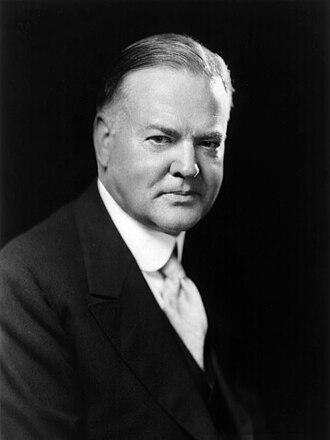 Herbert Hoover
Post-Graduate Legal • 1m
EO 5643 Jun 8, 1931
🏛️✅ Zone 1 (Maximum Authority) Fidelity (+0.47)
Executive Order 5643—Regulations Governing Representation and Post Allowances in the Foreign Service
📜 10th Amend: Intergovernmental Federalism Cooperation
In pursuance of the authorization contained in section 19 of the act of February 23, 1931 (46 Stat. 1209), which reads as follows: "Sec. 19.
Herbert Hoover Post-Graduate Legal • 6m
EO 5642 Jun 8, 1931
🏛️✅ Zone 1 (Maximum Authority) Fidelity (+0.90)
Executive Order 5642—Administration of the Foreign Service
📜 Art. I §8: Delegated Tariff & Commerce Execution
The regulations established in this Executive order shall be effective and binding not only as Consular Regulations, but they shall be equally effective and binding for the following purposes: (1) These rules and regulations shall constitute the regulations of the Department of…
Herbert Hoover Post-Graduate Legal • 62m
EO 5641 Jun 8, 1931
⚖️✨ Zone 2 (Zone of Twilight) Constitutional Neutral
Executive Order 5641—Restoration of Certain Lands from Salmon Hatchery Reservation, Alaska
📜 Art. II §1: Executive Discretion & Internal Operations
Executive order of February 1, 1906, reserving certain lands on Yes Lake in the Cleveland Peninsula in southeastern Alaska as a site for a salmon hatchery be, and the same is hereby, revoked as to the tract of land now identified as United States Survey No. 1981, comprising…
Herbert Hoover High School • 1m
EO 5640 Jun 8, 1931
⚖️✨ Zone 2 (Zone of Twilight) Constitutional Neutral
Executive Order 5640—Withdrawal of Public Lands for Resurvey, California
📜 Art. II §1: Executive Discretion & Internal Operations
The public lands in T. 15 N., R. 15 E., Mount Diablo meridian, California, be, and the same are hereby, withdrawn from settlement, location, sale, entry, and all forms of appropriation, pending a resurvey of said township under the act of March 3, 1909 (35 Stat. 845).
Herbert Hoover High School • 1m
EO 5639 Jun 8, 1931
⚖️✨ Zone 2 (Zone of Twilight) Constitutional Neutral
Executive Order 5639—Transfer of Land for Aviation Field, Wyoming
📜 Art. II §1: Executive Discretion & Internal Operations
Executive order of July 13, 1910, effecting Coal Withdrawal Wyoming No. 1, under the provisions of the act approved June 25, 1910 (36 Stat. 847), is hereby modified to permit the withdrawal and use of the following described land as an aviation field under the provisions of the…
Herbert Hoover Grade 8 • 1m
📜
Scholarly & Legal Citations
Exec. Order No. 5644 (June 8, 1931), https://executiveordersarchive.org/orders/app-executive-order-5644-designation-unhealthful-posts-the-foreign-service.
