Whereas it is provided by the act of Congress entitled "AN ACT For the relief of unemployment through the performance of useful public work, and for other purposes", approved March 31, 1933 (Public, No. 5, 73d Cong.), that "the President is authorized, under such rules and regulations as he may prescribe and by utilizing such existing departments or agencies as he may designate, to provide for employing citizens of the United States who are unemployed, in the construction, maintenance and carrying on of works of a public nature * * * ", and Whereas the said act also provides as follows: "The President is further authorized, by regulation, to provide for housing the persons so employed and for furnishing them with such subsistence, clothing, medical attendance and hospitalization, and cash allowance, as may be necessary, during the period they are so employed", and Whereas I am advised by the Secretary of the Navy that, as a result of action taken by the Administrator of the Veterans' Administration under the provisions of the act of Congress approved March 20, 1933 (Public, No. 2, 73d Cong.), naval medical and dental officers are available for furnishing medical and dental attendance to citizens provided with employment by the Director of Emergency Conservation Work, and Whereas the responsibility for the hospitalization and medical attendance for the Civilian Conservation Corps has been assigned to the War Department, Now, Therefore , by virtue of the authority vested in me by said acts of Congress or otherwise, it is hereby ordered that the following naval medical and dental officers are hereby attached to the War Department for duty with the Civilian Conservation Corps and ordered to report to the Secretary of War for duty upon receipt of written orders from the Secretary of War: FIRST CORPS AREA, BOSTON, MASS. Navy Yard, Boston, Mass. Lieut. John R. Smith, MC, U.S.N. Naval Hospital, Boston, Mass. Lieut. Peter C. Supan, MC, U.S.N. Naval Training Station, Newport, R.I. Lieut. Harry L. Goff, MC, U.S.N. Naval Hospital, Newport, R.I. Lieut. Navy F. X. Banvard, MC, U.S.N. Marine Recruiting Station, Boston, Mass. Comdr. John T. Kennedy, MC, U.S.N. Navy Recruiting Station, Springfield, Mass. Comdr. Paul T. Dessez, MC, U.S.N. Naval Ammunition Depot, Hingham, Mass. Lieut. Comdr. Harry Shaw, MC, U.S.N. Navy Yard, Portsmouth, N.H. Lieut. (jg) James A. Morton, DC, U.S.N. Naval Hospital, Newport, R.I. Lieut. (jg) Lauro J. Turbini, DC, U.S.N. SECOND CORPS AREA, GOVERNOR'S ISLAND, N.Y. Navy Yard, New York, N.Y. Lieut. Walter L. Bach, MC, U.S.N. Naval Hospital, New York, N.Y. Lieut. William R. Manlove, MC, U.S.N. Lieut. Bernard S. Pupek, MC, U.S.N. Navy Recruiting Station, Brooklyn, N.Y. Comdr. Frederick W. S. Dean, MC, U.S.N. Navy Yard, New York, N.Y. Comdr. George L. Wickes, MC, U.S.N. Marine Recruiting Station, New York, N.Y. Lieut. Comdr. Condie K. Winn, MC, U.S.N. Third Naval District, 641 Washington St., New York, N.Y. Lieut. Comdr. Earle P. Huff, MC, U.S.N. Navy Yard, New York, N.Y. Lieut. (jg) Max W. Kleinman, DC, U.S.N. THIRD CORPS AREA, BALTIMORE, MD. U.S. Naval Academy, Annapolis, Md. Lieut. Harvey E. Robins, MC, U.S.N. Navy Yard, Philadelphia, Pa. Lieut. Jerome Braun, MC, U.S.N. Naval Hospital, League Island, Pa. Lieut. Herman Seal, MC, U.S.N. Lieut. Harry D. Templeton, MC, U.S.N. Lieut. Henry M. Weber, MC, U.S.N. Lieut. Arthur P. Morton, MC, U.S.N. Norfolk Naval Hospital, Portsmouth, Va. Lieut. Ralph H. Hofler, MC, U.S.N. U.S.S. New Mexico, Navy Yard, Philadelphia, Pa. Lieut. (jg) Albert H. Staderman, MC, U.S.N. Navy Recruiting Station, Pittsburgh, Pa. Comdr. Frederick G. Abeken, MC, U.S.N. Navy Yard, Philadelphia, Pa. Lieut. Comdr. Clarence C. Kress, MC, U.S.N. Norfolk Naval Hospital, Portsmouth, Va. Lieut. Comdr. Arthur E. Beddoe, MC, U.S.N. Naval Home, Philadelphia, Pa. Lieut. Comdr. Horace V. Cornett, MC, U.S.N. U.S. Navy Yard, Norfolk, Va. Lieut. Comdr. Henry M. Stenhouse, MC, U.S.N. Norfolk Naval Hospital, Portsmouth, Va. Lieut. (jg) Robert W. Moss, DC, U.S.N. FOURTH CORPS AREA, ATLANTA, GA. Naval Air Station, Pensacola, Fla. Lieut. Frederick G. Merrill, MC, U.S.N. Naval Hospital, Pensacola, Fla. Lieut. George W. Cooper, MC, U.S.N. Navy Recruiting Station, Nashville, Tenn. Lieut. Comdr. Heber Butts, MC, U.S.N. Navy Recruiting Station, Birmingham, Ala. Lieut. Comdr. William E. Findeisen, MC, U.S.N. FIFTH CORPS AREA, COLUMBUS, OHIO Navy Recruiting Station, Cleveland, Ohio Lieut. Comdr. Talmadge Wilson, MC, U.S.N. SIXTH CORPS AREA, CHICAGO, ILL. U.S. Naval Training Station, Great Lakes, Ill. Lieut. (jg) Richard M. Bear, DC, U.S.N. Naval Hospital, Great Lakes, Ill. Lieut. (jg) Erwin J. Shields, DC, U.S.N. SEVENTH CORPS AREA, OMAHA, NEBR. Navy Recruiting Station, Kansas City, Mo. Lieut. Comdr. Charles L. Beeching, MC, U.S.N. NINTH CORPS AREA, SAN FRANCISCO, CALIF. Naval Hospital, Mare Island, Calif. Lieut. John M. Woodard, MC, U.S.N. Lieut. Arthur W. Loy, MC, U.S.N. Naval Hospital, Puget Sound, Wash. Lieut. Albert Ickstadt, MC, U.S.N. Navy Yard, Mare Island, Calif. Comdr. Royall R. Richardson, MC, U.S.N. Marine Recruiting Station, Los Angeles, Calif. Comdr. Renier J. Straeten, MC, U.S.N. 13th Naval District, Seattle, Wash. Lieut. Comdr. Andre E. Lee, MC, U.S.N. Navy Recruiting Station, Salt Lake City, Utah Lieut. Comdr. Dow H. Casto, MC, U.S.N. Marine Corps Base, San Diego, Calif. Lieut. Comdr. William B. Hetfield, MC, U.S.N. Naval Training Station, San Diego, Calif. Lieut. Comdr. John Buckley, MC, U.S.N. Naval Air Station, Sunnyvale, Calif. Lieut. (jg) Walter H. Schwartz, MC, U.S.N. Naval Hospital, San Diego, Calif. Lieut. Comdr. Roscoe M. Waterhouse, MC, U.S.N. These officers shall be called by the Secretary of War in accordance with the needs for hospitalization and medical attendance of the Civilian Conservation Corps. In the issuance of orders to report for duty, naval medical and dental officers shall be given priority over members of the Army Medical Corps Reserve, the Army Dental Corps Reserve, the Navy Medical Corps Reserve, the Navy Dental Corps Reserve, and contract physicians and dentists. When these officers report for duty, they shall be placed upon the payrolls of the Civilian Conservation Corps and shall be paid from funds allocated to the Director of Emergency Conservation Work by Executive Order No. 6101 dated April 5, 1933. FRANKLIN D ROOSEVELT The White House, May 31, 1933.
Executive Order 6148 ⚖️✨ Zone 2: Zone of Twilight Constitutional Neutral (+0.02)
📜 Art. II §2: Commander-in-Chief Supervisory Authority
Executive Order 6148—Relief of Unemployment Through the Performance of Useful Public Work
Executive Brief • At a Glance
⏱️ 5 min read (1,009 words) •
● In Effect
🎯 Primary Mandate
The following naval medical and dental officers are hereby attached to the War Department for duty with the Civilian Conservation Corps and ordered to report to the Secretary of War for duty upon receipt of written orders from the Secretary of War: FIRST CORPS AREA, BOSTON, MASS.
⚖️ Constitutional Footing
⚖️✨ Zone 2: Zone of Twilight
Concurrent Authority / Congressional Silence
📜 Art. II §2: Commander-in-Chief Supervisory Authority
🏛️ Scope & Affected Sectors
Armed Forces & Military Establishments Sovereign State Governments & Localities Executive Departments & Federal Civil Servants Private Citizens & Property Owners
Plain-English Translation & Framers' Constitutional Analysis
Early Statesman synthesis distilling legal jargon into practical meaning, statutory anchors, and structural constitutional impacts.
Signed by President Franklin D. Roosevelt on May 31, 1933, this order concerns Relief of Unemployment Through the Performance of Useful Public Work. The following naval medical and dental officers are hereby attached to the War Department for duty with the Civilian Conservation Corps and ordered to report to the Secretary of War for duty upon receipt of written orders from the Secretary of War: FIRST CORPS AREA, BOSTON, MASS. Navy Yard, Boston, Mass. Lieut. John R. Smith, MC, U.S.N. Naval Hospital, Boston, Mass. Lieut.
Constitutional Assessment: Scrutinized through Article II, Section 2, this action exercises the President's constitutional role as Commander in Chief. Early Framers recognized broad executive discretion in commanding military forces during conflict, provided it remains bounded by congressional declarations and respects civilian domestic courts.
Key Directives & Operative Actions
▪
The following naval medical and dental officers are hereby attached to the War Department for duty with the Civilian Conservation Corps and ordered to report to the Secretary of War for duty upon receipt of written orders from the Secretary of War: FIRST CORPS AREA, BOSTON, MASS.
▪
Roscoe M. Waterhouse, MC, U.S.N. These officers shall be called by the Secretary of War in accordance with the needs for hospitalization and medical attendance of the Civilian Conservation Corps.
▪
In the issuance of orders to report for duty, naval medical and dental officers shall be given priority over members of the Army Medical Corps Reserve, the Army Dental Corps Reserve, the Navy Medical Corps Reserve, the Navy Dental Corps Reserve, and contract physicians and dentists.
▪
When these officers report for duty, they shall be placed upon the payrolls of the Civilian Conservation Corps and shall be paid from funds allocated to the Director of Emergency Conservation Work by Executive Order No. 6101 dated April 5, 1933.
Constitutional & Societal Entities Impacted
🏛️ Armed Forces & Military Establishments
🏛️ Sovereign State Governments & Localities
🏛️ Executive Departments & Federal Civil Servants
🏛️ Private Citizens & Property Owners
🏛️ Public Health & Medical Institutions
Policy Areas & Topics
🏛️
The Framers' Constitutional Council
1787 PrismEvaluating this order against the constitutional debates of 1787 and the limits of Article II executive power.
⚖️✨ Zone 2 (Zone of Twilight)
§
"When the President acts in absence of either a congressional grant or denial of authority, he can only rely upon his own independent powers, but there is a zone of twilight in which he and Congress may have concurrent authority."
— Justice Robert H. Jackson, Youngstown Sheet & Tube Co. v. Sawyer (1952) Concurrent Authority / Congressional Silence
JM
James Madison
Separation of Powers & Legislative Primacy
"Power is of an encroaching nature, and it ought to be effectually restrained from passing the limits assigned to it." — Federalist No. 48 (1788)
Madison would view this order with watchful scrutiny. Operating in the 'Zone of Twilight' where Congress is silent, each such directive establishes an administrative precedent that steadily expands the executive perimeter at the expense of legislative primacy.
Madisonian Stance: Vigilant / Cautionary
AH
Alexander Hamilton
The Energetic Executive & Unified Command
"The direction of war implies the direction of the common strength; and the power of directing and employing the common strength must be under the direction of the single hand of the Executive." — Federalist No. 74 (1788)
Hamilton would forcefully champion executive discretion here. For foreign entanglements, commerce defense, and national security, deliberative assemblies are too slow and faction-ridden. A unified, energetic Executive exercising swift command is precisely what the Philadelphia Convention intended for national preservation.
Hamiltonian Stance: Strong Prerogative Support
GM
George Mason
Bill of Rights, Due Process & 10th Amendment
"The president will be surrounded by flatterers and sycophants... and the great powers of the executive will gradually absorb the liberties of the people." — Cato IV (Anti-Federalist, 1787)
The Anti-Federalist prism advises continuous democratic vigilance. Even routine administrative directives aggregate centralized federal power away from town halls and state assemblies toward a distant executive apparatus.
Anti-Federalist Stance: Eternal Vigilance Required
📐
Five Measurable "Constitutional Friction" Dimensions
An objective audit measuring potential separation-of-powers tension against the United States Constitution and established Supreme Court doctrine.
⚖️ Discretionary Twilight Zone
42 / 100 friction index
Dimension 1 • Art. I, §1 & §8
Moderate Friction
Legislative Encroachment & Purse
Administers commerce or fiscal programs requiring ongoing statutory delegation and legislative oversight.
Benchmark: Power of the purse, taxes/tariffs, and rule of law reserved to Congress.
Dimension 2 • Art. II, §1 & §3
Low Friction
Executive Scope & Faithfulness
Exercises standard supervisory executive authority to faithfully execute existing statutes.
Benchmark: Faithfully execute laws enacted by Congress vs. unilateral decree.
Dimension 3 • 10th Amendment
Moderate Friction
Federalism & State Sovereignty
Engages state and local partners in cooperative federalism programs.
Benchmark: Police powers and un-delegated responsibilities reserved to the States.
Dimension 4 • 5th & 14th Amendments
Moderate Friction
Due Process & Individual Rights
Applies regulatory or compliance standards to private contractors or commercial entities.
Benchmark: Protection of private property, contracts, liberty, and procedural justice.
Dimension 5 • Separation of Powers
Moderate Friction
Youngstown Jacksonian Tier
The order relies on inherent Article II executive discretion, civil service management, or foreign diplomacy where Congress has neither expressly approved nor prohibited action.
Benchmark: Concurrent Authority / Congressional Silence
⚖️
Audit Synthesis
This order operates within Justice Jackson’s Zone of Twilight, resting upon concurrent presidential authority or congressional silence.
Weighted composite: Art. I (25%), Art. II (25%), Federalism (15%), Due Process (15%), Youngstown (20%).
ℹ️
How to read these dimensions: Executive power expands whenever an administration acts without explicit statutory authorization from Congress (Article I), touches upon police powers historically reserved to the states (Tenth Amendment), or limits private rights and property without judicial process. A low friction score indicates strict concordance with enacted law; a high friction score highlights orders testing the limits of presidential discretion.
Total Words
1,009
6,415 characters
Estimated Read Time
5 min
@ 200 words / min
Flesch-Kincaid
7.3
Grade 7
Text size:
Related Executive Orders
1 order cited directly in this text, plus related actions from this administration.
EO 6101 Apr 5, 1933
⚖️✨ Zone 2 (Zone of Twilight) Constitutional Neutral
Executive Order 6101—Relief of Unemployment Through the Performance of Useful Public Work
📜 Art. II §2: Commander-in-Chief Supervisory Authority
(1) For the purpose of carrying out the provisions of said Act Robert Fechner is hereby appointed Director of Emergency Conservation Work at an annual rate of compensation of $12,000, less the reduction prescribed in subparagraph (b), Section 2, Title II, of the Act of Congress…
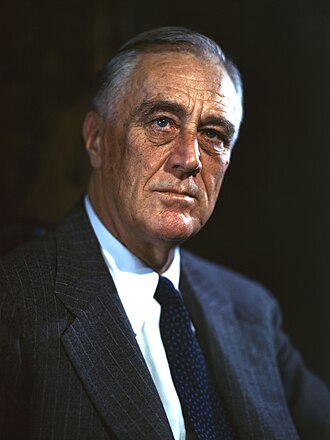 Franklin D. Roosevelt
Post-Graduate Legal • 2m
EO 6150 May 31, 1933
⚖️✨ Zone 2 (Zone of Twilight) Constitutional Neutral
Executive Order 6150—Revocation of Withdrawal of Public Lands Pending Resurvey
📜 Art. II §1: Executive Discretion & Internal Operations
Executive Order No. 5551, dated February 7, 1931, which withdrew the public lands in T. 11 S., R. 5 W., and T. 12 S., R. 6 W. of the New Mexico principal meridian, New Mexico, pending resurvey, be, and the same is hereby, revoked.
Franklin D. Roosevelt College Level • 1m
EO 6149 May 31, 1933
⚖️✨ Zone 2 (Zone of Twilight) Constitutional Neutral
Executive Order 6149—Revocation of Withdrawal of Public Lands Pending Resurvey
📜 Art. II §1: Executive Discretion & Internal Operations
Executive Order No. 5547, dated January 31, 1931, which withdrew the public lands in T. 3 S., R. 11 E. of the New Mexico principal meridian, New Mexico, pending resurvey, be, and the same is hereby, revoked.
Franklin D. Roosevelt College Level • 1m
EO 6152 Jun 1, 1933
🏛️✅ Zone 1 (Maximum Authority) Constitutional Neutral
Executive Order 6152—Withdrawal of Public Lands for Classification
📜 10th Amend: Intergovernmental Federalism Cooperation
The public lands within the following-described area in the State of Oregon be, and the same are hereby, temporarily withdrawn for classification as to their suitability for migratory bird refuge purposes: WILLAMETTE MERIDIAN T. 25 S., R. 27 E., secs. 25, 26, and 35; also all…
Franklin D. Roosevelt Grade 4 • 2m
EO 6151 Jun 1, 1933
⚖️✨ Zone 2 (Zone of Twilight) Constitutional Neutral
Executive Order 6151—Revocation of Withdrawal of Public Lands Pending Resurvey
📜 Art. II §1: Executive Discretion & Internal Operations
Executive Order No. 5261, dated January 20, 1930, which withdrew the public lands in Tps. 11 S., Rs. 14 and 15 E. of the New Mexico principal meridian, New Mexico, pending a resurvey, be, and the same is hereby, revoked.
Franklin D. Roosevelt Grade 7 • 1m
EO 6153 Jun 3, 1933
⚖️✨ Zone 2 (Zone of Twilight) Constitutional Neutral
Executive Order 6153—Withdrawal of Public Lands for Resurvey
📜 Art. II §1: Executive Discretion & Internal Operations
The public lands in T. 6 S., R. 80 W., and T. 7 S., R. 81 W. of the sixth principal meridian, Colorado, be, and the same are hereby, withdrawn from settlement, location, sale, entry, and all forms of appropriation, pending a resurvey of said townships under the act of March 3…
Franklin D. Roosevelt High School • 1m
📜
Scholarly & Legal Citations
Exec. Order No. 6148 (May 31, 1933), https://executiveordersarchive.org/orders/app-executive-order-6148-relief-unemployment-through-the-performance-useful-public-work.
