Early Statesman synthesis distilling legal jargon into practical meaning, statutory anchors, and structural constitutional impacts.
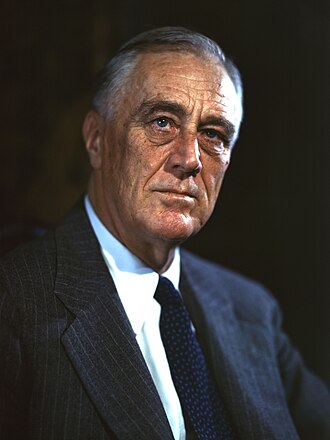
This executive order, signed by President Franklin D. Roosevelt on 1933-07-26, establishes federal administrative policy concerning "Appointment of David A. Gates." It is a direct, concise executive instruction delivering focused administrative or military commands to department leadership.
Constitutional Assessment: This action represents an orderly exercise of Article II administrative discretion, managing the internal machinery and personnel of the executive branch without abridging the ancient liberties of the people.
Key Directives & Operative Actions
▪Formal executive instruction issued by the President establishing official administrative policy on Appointment of David A. Gates.
Constitutional & Societal Entities Impacted
🏛️ Sovereign State Governments & Localities
🏛️ Executive Departments & Federal Civil Servants
🏛️ Financial Institutions & Monetary Authorities
Total Words
238
1,446 characters
Estimated Read Time
1 min
@ 200 words / min
Flesch-Kincaid
13.9
Post-Grad reading level
Constitutional Polarity
+0.02
Framers' Alignment index
📜
Scholarly & Legal Citations
Exec. Order No. 6218, Franklin D. Roosevelt (Jul 26, 1933). Available at https://executiveordersarchive.org/orders/app-executive-order-6218-appointment-david-gates.
Official Document Text
Source: The American Presidency Project (UCSB Archive)
Mr. David A. Gates may be appointed as an Internal Revenue Agent in the Internal Revenue Service, Treasury Department, without regard to the requirements of the civil-service rules for a period of one year from the date of this order. Mr. Gates was employed under the Bureau of Internal Revenue for more than twenty years, and the Commissioner of Internal Revenue states that during this time he rendered outstanding service on the field force and in the Bureau at Washington. Among the field positions filled by him were Internal Revenue Agent, Internal Revenue Agent in Charge, and Supervising Federal Prohibition Agent. In Washington he w as Chief of Revenue Agents during the years 1906 to 1908, and for more than three years he occupied the important position of senior Deputy Commissioner, in which capacity he was the principal administrative assistant to the Commissioner. His interests since leaving the Service have kept him in close touch with tax matters, both Federal and State. By reason of his wide experience and special qualifications it is desired to utilize his services as an Internal Revenue Agent. The particular position of Internal Revenue Agent to be occupied by Mr. Gates is withdrawn from the provisions of the civil-service rules during the period of his incumbency. This order is recommended by the Secretary of the Treasury and is in the interest of the Service. FRANKLIN D. ROOSEVELT The White House, July 26, 1933.