By virtue of the authority vested in me by section 5(b) of the act of October 6, 1917, as amended by section 2 of the act of March 9, 1933, entitled "An act to provide relief in the existing national emergency in banking and for other purposes", I, Franklin D. Roosevelt, President of the United States of America , do declare that a period of national emergency exists, and by virtue of said authority and of all other authority vested in me, do hereby issue the following Executive order: The Secretary of the Treasury is hereby authorized to receive on consignment for sale, subject to such rules and regulations and upon such conditions as he shall prescribe, gold recovered from natural deposits in the United States or any place subject to the jurisdiction thereof. Sales may be made: (a) To persons licensed to acquire gold for use in the arts, industries, or professions, or (b) By export to foreign purchasers. Such sales shall be made at a price which the Secretary shall determine to be equal to the best price obtainable in the free gold markets of the world after taking into consideration any incidental expenses such as shipping costs and insurance. Such sales may be made through the Federal Reserve banks or such other agents as the Secretary may from time to time designate and shall be subject to such charges as the Secretary may from time to time in his judgment determine. Every person depositing gold for sale as provided herein shall be deemed to have agreed to accept as conclusive without any right of recourse or review, the determination of the Secretary or his duly authorized agent as to the amount due such person as a result of any sale. Consignments shall be sold as nearly as may be in the order of their receipt. The Secretary of the Treasury, in his discretion and subject to such regulations as he may prescribe, is hereby authorized to issue licenses permitting the export of articles fabricated from gold sold pursuant to this Executive order. ————— This Executive order may be modified or revoked at any time. FRANKLIN D. ROOSEVELT The White House, August 29, 1933.
Executive Order 6261 ⚖️⚠️ Zone 3: Lowest Ebb Constitutional Friction / Overreach (-0.19)
📜 Art. I §8: Legislative Prerogative Tension (Purse & Commerce)
Executive Order 6261—Relating to the Sale and Export of Gold Recovered from Natural Deposits
Executive Brief • At a Glance
⏱️ 2 min read (366 words) •
● In Effect
🎯 Primary Mandate
I, Franklin D. Roosevelt, President of the United States of America , do declare that a period of national emergency exists, and by virtue of said authority and of all other authority vested in me, do hereby issue the following Executive order: The Secretary of the Treasury is hereby authorized to receive on consignment for sale, subject to such rules and regulations and upon such conditions as he shall prescribe, gold recovered from natural deposits in the United States or any place subject to the jurisdiction thereof.
⚖️ Constitutional Footing
⚖️⚠️ Zone 3: Lowest Ebb
Incompatible with Expressed Will of Congress or High Friction
📜 Art. I §8: Legislative Prerogative Tension (Purse & Commerce)
🏛️ Scope & Affected Sectors
Foreign Nations & International Entities Public Health & Medical Institutions Financial Institutions & Monetary Authorities
Plain-English Translation & Framers' Constitutional Analysis
Early Statesman synthesis distilling legal jargon into practical meaning, statutory anchors, and structural constitutional impacts.
Signed by President Franklin D. Roosevelt on August 29, 1933, this order concerns Relating to the Sale and Export of Gold Recovered from Natural Deposits. I, Franklin D. Roosevelt, President of the United States of America , do declare that a period of national emergency exists, and by virtue of said authority and of all other authority vested in me, do hereby issue the following Executive order: The Secretary of the Treasury is hereby authorized to receive on consignment for sale, subject to such rules and regulations and upon such conditions as he shall prescribe…
Constitutional Assessment: An early statesman would subject this decree to rigorous scrutiny under Article I, Section 8. The Framers deliberately committed commerce, taxation, tariffs, and revenue to Congress alone. To the extent this order imposes duties or financial burdens without explicit statutory pre-authorization, it creates friction with the separation of powers.
Key Directives & Operative Actions
▪
I, Franklin D. Roosevelt, President of the United States of America , do declare that a period of national emergency exists, and by virtue of said authority and of all other authority vested in me, do hereby issue the following Executive order: The Secretary of the Treasury is hereby authorized to receive on consignment for sale, subject to such rules and regulations and upon such conditions as he shall prescribe, gold recovered from natural deposits in the United States or any place subject to the jurisdiction thereof.
▪
Such sales shall be made at a price which the Secretary shall determine to be equal to the best price obtainable in the free gold markets of the world after taking into consideration any incidental expenses such as shipping costs and insurance.
▪
Such sales may be made through the Federal Reserve banks or such other agents as the Secretary may from time to time designate and shall be subject to such charges as the Secretary may from time to time in his judgment determine.
▪
Every person depositing gold for sale as provided herein shall be deemed to have agreed to accept as conclusive without any right of recourse or review, the determination of the Secretary or his duly authorized agent as to the amount due such person as a result of any sale.
Constitutional & Societal Entities Impacted
🏛️ Foreign Nations & International Entities
🏛️ Public Health & Medical Institutions
🏛️ Financial Institutions & Monetary Authorities
Policy Areas & Topics
🏛️
The Framers' Constitutional Council
1787 PrismEvaluating this order against the constitutional debates of 1787 and the limits of Article II executive power.
⚖️⚠️ Zone 3 (Lowest Ebb)
§
"When the President takes measures incompatible with the expressed or implied will of Congress, his power is at its lowest ebb."
— Justice Robert H. Jackson, Youngstown Sheet & Tube Co. v. Sawyer (1952) Incompatible with Expressed Will of Congress or High Friction
JM
James Madison
Separation of Powers & Legislative Primacy
"The accumulation of all powers, legislative, executive, and judiciary, in the same hands... may justly be pronounced the very definition of tyranny." — Federalist No. 47 (1788)
Madison would express grave alarm over this order. By asserting independent authority in tension with legislative limits or the Bill of Rights, the Executive risks collapsing the separation of powers into unilateral rule. Under the Madisonian model, no emergency justifies the Executive substituting its decree for a deliberative Act of Congress.
Madisonian Stance: Strict Dissent (Overreach)
AH
Alexander Hamilton
The Energetic Executive & Unified Command
"The direction of war implies the direction of the common strength; and the power of directing and employing the common strength must be under the direction of the single hand of the Executive." — Federalist No. 74 (1788)
Hamilton would forcefully champion executive discretion here. For foreign entanglements, commerce defense, and national security, deliberative assemblies are too slow and faction-ridden. A unified, energetic Executive exercising swift command is precisely what the Philadelphia Convention intended for national preservation.
Hamiltonian Stance: Qualified Caution
GM
George Mason
Bill of Rights, Due Process & 10th Amendment
"The purse and the sword ought never to be in the same hands... nor the liberties of the citizen placed at the pleasure of a single magistrate." — Virginia Ratifying Convention (1788)
George Mason and the Anti-Federalists would sound a fierce warning. They feared that Article II would inevitably evolve into an elective monarchy. When an executive order impacts private rights, property, or civil liberties without individualized judicial process, Mason would see their darkest predictions verified.
Anti-Federalist Stance: Vehement Objection
📐
Five Measurable "Constitutional Friction" Dimensions
An objective audit measuring potential separation-of-powers tension against the United States Constitution and established Supreme Court doctrine.
⚠️ Elevated Constitutional Friction
72 / 100 friction index
Dimension 1 • Art. I, §1 & §8
High Friction
Legislative Encroachment & Purse
Touches upon core congressional prerogatives: raises appropriations reallocation, tariff imposition, or statutory preemption questions.
Benchmark: Power of the purse, taxes/tariffs, and rule of law reserved to Congress.
Dimension 2 • Art. II, §1 & §3
High Friction
Executive Scope & Faithfulness
Invokes broad unilateral or emergency executive authorities that test the constitutional boundary of the Take Care Clause.
Benchmark: Faithfully execute laws enacted by Congress vs. unilateral decree.
Dimension 3 • 10th Amendment
Moderate Friction
Federalism & State Sovereignty
Engages state and local partners in cooperative federalism programs.
Benchmark: Police powers and un-delegated responsibilities reserved to the States.
Dimension 4 • 5th & 14th Amendments
Moderate Friction
Due Process & Individual Rights
Applies regulatory or compliance standards to private contractors or commercial entities.
Benchmark: Protection of private property, contracts, liberty, and procedural justice.
Dimension 5 • Separation of Powers
High Friction
Youngstown Jacksonian Tier
The order asserts independent Article II prerogative against statutory constraints, reallocates funds without explicit appropriation, or stretches executive power into realms constitutionally reserved to the legislature or judiciary.
Benchmark: Incompatible with Expressed Will of Congress or High Friction
⚖️
Audit Synthesis
This directive engages significant constitutional friction across statutory authorization, legislative prerogatives, or individual liberties.
Weighted composite: Art. I (25%), Art. II (25%), Federalism (15%), Due Process (15%), Youngstown (20%).
ℹ️
How to read these dimensions: Executive power expands whenever an administration acts without explicit statutory authorization from Congress (Article I), touches upon police powers historically reserved to the states (Tenth Amendment), or limits private rights and property without judicial process. A low friction score indicates strict concordance with enacted law; a high friction score highlights orders testing the limits of presidential discretion.
Total Words
366
2,105 characters
Estimated Read Time
2 min
@ 200 words / min
Flesch-Kincaid
17.9
Post-Graduate Legal
Text size:
Related Executive Orders
Other executive actions signed by Franklin D. Roosevelt around this period.
EO 6262 Aug 29, 1933
🏛️✅ Zone 1 (Maximum Authority) Fidelity (+0.23)
Executive Order 6262—Amendments to Regulations Governing Foreign Service Accounting
📜 10th Amend: Intergovernmental Federalism Cooperation
Section 565½ is established in the Consular Regulations as follows: 565½. When fees may be remitted in full .—The Secretary of State may waive, in his discretion, the requirements of sections 564 and 565 and other parts of the Regulations consistent therewith, and may authorize…
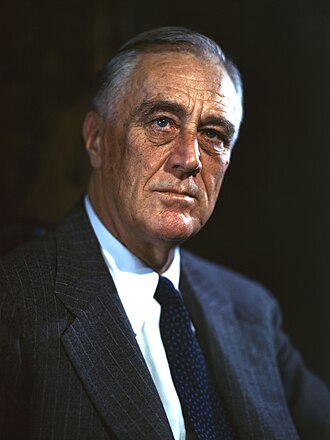 Franklin D. Roosevelt
High School • 1m
EO 6263 Aug 30, 1933
🏛️✅ Zone 1 (Maximum Authority) Constitutional Neutral
Executive Order 6263—Exemption of Joe Smith from Compulsory Retirement for Age
📜 10th Amend: Intergovernmental Federalism Cooperation
Exempt Joe Smith from the provisions thereof and continue him in the service until August 31, 1935.
Franklin D. Roosevelt Post-Graduate Legal • 1m
EO 6260 Aug 28, 1933
⚖️⚠️ Zone 3 (Lowest Ebb) Friction (-0.19)
Executive Order 6260—Relating to the Hoarding, Export, and Earmarking of Gold Coin, Bullion, or Currency and to Transactions in Foreign Exchange
📜 Art. I §8: Legislative Prerogative Tension (Purse & Commerce)
By Virtue of the authority vested in me by Section 5(b) of the Act of October 6, 1917, as amended by Section 2 of the Act of March 9, 1933, entitled "An Act to Provide Relief in the Existing National Emergency in Banking and for other Purposes," I, Franklin D. Roosevelt…
Franklin D. Roosevelt Post-Graduate Legal • 11m
EO 6260 Aug 28, 1933
⚖️✨ Zone 2 (Zone of Twilight) Constitutional Neutral
Executive Order 6260-A—Administration of the Petroleum Industry
📜 Art. II §1: Executive Discretion & Internal Operations
I hereby designate and appoint, for the petroleum industry, the Secretary of the Interior to be Administrator and the Department of the Interior to be the Federal agency, as provided by the aforesaid act and Code of Fair Competition, to exercise on my behalf and in my stead all…
Franklin D. Roosevelt Post-Graduate Legal • 1m
EO 6264 Aug 31, 1933
🏛️✅ Zone 1 (Maximum Authority) Constitutional Neutral
Executive Order 6264—Exemption of George P. Metzger from Compulsory Retirement for Age
📜 Art. I §8: Delegated Tariff & Commerce Execution
By virtue of the authority vested in me by section 204, part 2, of the act entitled "An act making appropriations for the legislative branch of the Government for the fiscal year ending June 30, 1933, and for other purposes.", approved June 30, 1932, George P. Metzger, deputy…
Franklin D. Roosevelt College Level • 1m
EO 6259 Aug 27, 1933
⚖️✨ Zone 2 (Zone of Twilight) Constitutional Neutral
Executive Order 6259—Amendment of Executive Order of January 28, 1873, Relating to the Holding of State, Municipal, or Other Local Office by Federal Officers and Employees
📜 Art. II §2: Commander-in-Chief Supervisory Authority
The Executive order of January 28, 1873, is hereby amended by striking out the last two sentences and substituting the following in lieu thereof: Mechanics and laborers employed by the day in armories, arsenals, navy yards, etc., and master workmen and others who hold…
Franklin D. Roosevelt College Level • 1m
📜
Scholarly & Legal Citations
Exec. Order No. 6261 (Aug. 29, 1933), https://executiveordersarchive.org/orders/app-executive-order-6261-relating-the-sale-and-export-gold-recovered-from-natural-deposits.
