★
Executive Orders Historical Archive
Cite
Executive Order 7130 🏛️✅ Zone 1: Maximum Authority Constitutional Neutral (+0.02) 📜 10th Amend: Intergovernmental Federalism Cooperation

Executive Order 7130—Prescribing Rules and Regulations Relating to Approved Projects Administered and Supervised by the Rural Electrification Administration Under the Emergency Relief Appropriation Act of 1935

•
Wednesday, August 7, 1935
•
5 min read (949 words)

Executive Brief • At a Glance

⏱️ 5 min read (949 words) • ● In Effect
🎯 Primary Mandate

By virtue of and pursuant to the authority vested in me by the Emergency Relief Appropriation Act of 1935, approved April 8, 1935 (Public Resolution No. 11, 74th Congress), I hereby prescribe the following rules and regulations:

⚖️ Constitutional Footing
🏛️✅ Zone 1: Maximum Authority
Express or Implied Congressional Authorization
📜 10th Amend: Intergovernmental Federalism Cooperation
🏛️ Scope & Affected Sectors
Merchants, Importers & Commercial Enterprises Sovereign State Governments & Localities Private Citizens & Property Owners Public Health & Medical Institutions

Plain-English Translation & Framers' Constitutional Analysis

Early Statesman synthesis distilling legal jargon into practical meaning, statutory anchors, and structural constitutional impacts.

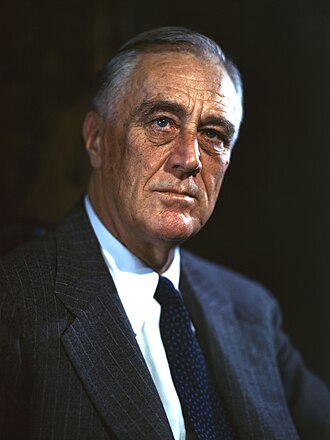
Signed by President Franklin D. Roosevelt on August 7, 1935, this order concerns Prescribing Rules and Regulations Relating to Approved Projects Administered and Supervised by the Rural Electrification Administration Under the Emergency Relief Appropriation Act of 1935. By virtue of and pursuant to the authority vested in me by the Emergency Relief Appropriation Act of 1935, approved April 8, 1935 (Public Resolution No. 11, 74th Congress), I hereby prescribe the following rules and regulations: Section 1. Definitions .

Constitutional Assessment: Reviewed under the Tenth Amendment and the principle of dual federalism, this order touches upon domains traditionally reserved to the sovereign States. The Framers would caution against any attempt to commandeer state officers or displace local police powers through federal executive fiat.

Key Directives & Operative Actions

▪

By virtue of and pursuant to the authority vested in me by the Emergency Relief Appropriation Act of 1935, approved April 8, 1935 (Public Resolution No. 11, 74th Congress), I hereby prescribe the following rules and regulations:

Constitutional & Societal Entities Impacted

🏛️ Merchants, Importers & Commercial Enterprises 🏛️ Sovereign State Governments & Localities 🏛️ Private Citizens & Property Owners 🏛️ Public Health & Medical Institutions
🏛️

The Framers' Constitutional Council

1787 Prism

Evaluating this order against the constitutional debates of 1787 and the limits of Article II executive power.

🏛️✅ Zone 1 (Maximum Authority)
§

"When the President acts pursuant to an express or implied authorization of Congress, his authority is at its maximum, for it includes all that he possesses in his own right plus all that Congress can delegate."

— Justice Robert H. Jackson, Youngstown Sheet & Tube Co. v. Sawyer (1952) Express or Implied Congressional Authorization
JM

James Madison

Separation of Powers & Legislative Primacy

"The constitutional magistracy was designed not to invent policy, but to be the faithful instrument of the laws passed by the people's representatives." — Speech in the First Congress (1789)

Madison would approve the structural posture of this order. The President acts strictly in subordination to statutory authority granted under Article II, Section 3 ("take Care that the Laws be faithfully executed"). The checks and balances hold firm because the policy origin remains with the legislature.

Madisonian Stance: Concurring (Statutory)
AH

Alexander Hamilton

The Energetic Executive & Unified Command

"A feeble Executive implies a feeble execution of the government; and a government ill executed, whatever it may be in theory, must be, in practice, a bad government." — Federalist No. 70 (1788)

Hamilton would view this directive as the natural and indispensable functioning of administrative leadership. Without the power to coordinate agencies, manage personnel, and resolve operational ambiguities, the modern presidency would be reduced to an impotent figurehead.

Hamiltonian Stance: Supportive of Execution
GM

George Mason

Bill of Rights, Due Process & 10th Amendment

"The powers not delegated to the United States by the Constitution, nor prohibited by it to the States, are reserved to the States respectively, or to the people." — 10th Amendment to the US Constitution (1791)

Mason would scrutinize whether this federal directive intrudes into police powers, land stewardship, or municipal domains historically reserved to local citizens. The Anti-Federalist demand is that federal administration must never supplant state self-governance.

Anti-Federalist Stance: Eternal Vigilance Required
📐

Five Measurable "Constitutional Friction" Dimensions

An objective audit measuring potential separation-of-powers tension against the United States Constitution and established Supreme Court doctrine.

⚖️ Discretionary Twilight Zone
40 / 100 friction index
Dimension 1 • Art. I, §1 & §8

Legislative Encroachment & Purse

High Friction

Touches upon core congressional prerogatives: raises appropriations reallocation, tariff imposition, or statutory preemption questions.

Benchmark: Power of the purse, taxes/tariffs, and rule of law reserved to Congress.
Dimension 2 • Art. II, §1 & §3

Executive Scope & Faithfulness

Low Friction

Exercises standard supervisory executive authority to faithfully execute existing statutes.

Benchmark: Faithfully execute laws enacted by Congress vs. unilateral decree.
Dimension 3 • 10th Amendment

Federalism & State Sovereignty

Moderate Friction

Engages state and local partners in cooperative federalism programs.

Benchmark: Police powers and un-delegated responsibilities reserved to the States.
Dimension 4 • 5th & 14th Amendments

Due Process & Individual Rights

Low Friction

Focuses on internal governmental operations with no direct impairment of private rights or property.

Benchmark: Protection of private property, contracts, liberty, and procedural justice.
Dimension 5 • Separation of Powers

Youngstown Jacksonian Tier

Low Friction

The President operates strictly as the constitutional Chief Executive, carrying out policy established by Congress with strong statutory backing.

Benchmark: Express or Implied Congressional Authorization
⚖️ Audit Synthesis

This order operates within Justice Jackson’s Zone of Twilight, resting upon concurrent presidential authority or congressional silence.

Weighted composite: Art. I (25%), Art. II (25%), Federalism (15%), Due Process (15%), Youngstown (20%).
ℹ️
How to read these dimensions: Executive power expands whenever an administration acts without explicit statutory authorization from Congress (Article I), touches upon police powers historically reserved to the states (Tenth Amendment), or limits private rights and property without judicial process. A low friction score indicates strict concordance with enacted law; a high friction score highlights orders testing the limits of presidential discretion.
Total Words
949
5,990 characters
Estimated Read Time
5 min
@ 200 words / min
Flesch-Kincaid
19.6
Post-Graduate Legal
Language Tone Score
+0.02
Constitutional Neutral
How is this scored?
Text size:

Official Archival Text

View Source Document

REGULATION NO. 4 By virtue of and pursuant to the authority vested in me by the Emergency Relief Appropriation Act of 1935, approved April 8, 1935 (Public Resolution No. 11, 74th Congress), I hereby prescribe the following rules and regulations:

Section 1. #sec-1

Definitions . ( a ) The term "project" as used herein shall mean any project which is financed in whole or in part from funds appropriated by the Emergency Relief Appropriation Act of 1935 and which has been approved for inclusion in the program to be administered by the Rural Electrification Administration pursuant to Executive Order No. 7037 of May 11, 1935. ( b ) The term "Administrator" as used herein shall mean the Administrator of the Rural Electrification Administration. ( c ) The term "borrowing agency" as used herein shall mean any State, Territory, Possession, including any sub-division or agency thereof, municipality, and the District of Columbia, and any private corporation or association to which a loan is made for a project as herein defined.

Section 2. #sec-2

Funds allocated for projects as herein defined shall be available for use by the Rural Electrification Administration: ( a ) For loans to private corporations, associations, and cooperative associations existing under and by virtue of the laws of the several States, for financing the construction of such projects. ( b ) For loans for projects of States, Territories, Possessions, including subdivisions and agencies thereof, municipalities and the District of Columbia and self liquidating projects of public bodies thereof, where, in the determination of the President, not less than twenty-five per centum of the loan is to be expended for work under each particular project.

Section 3. #sec-3

( a ) Wage rates for persons employed on projects (except in executive, administrative, supervisory, and highly skilled positions) shall be subject exclusively to the determination or the approval of the Rural Electrification Administration but in accordance with local wage conditions. ( b ) The maximum hours of work for persons employed on projects (except in executive, administrative, supervisory, and highly skilled positions) shall be determined by the Rural Electrification Administration, but shall not be in excess of eight hours per day and forty hours per week, except in special or unusual circumstances when the above limitations are not feasible or practicable.

Section 4. #sec-4

Preference in the employment of workers shall be given to persons from the public relief rolls, and except with the specific authorization of the Rural Electrification Administration at least 90 per cent of all persons working on a work project shall have been taken from the public relief rolls.

Section 5. #sec-5

Only persons certified for assignment to work by the United States Employment Service or persons specifically authorized by the Rural Electrification Administration shall be employed on projects.

Section 6. #sec-6

For the prosecution of each project the Administrator is given exclusive authority to approve and to execute with the borrowing agency a loan contract under the terms of which the borrowing agency agrees to construct or cause to be constructed the project according to specifications determined or approved by the Rural Electrification Administration, and the Administrator agrees to loan a sum or sums not greater than the sum or sums approved for such project. Such loan contract shall authorize the borrowing agency to prosecute the project either ( a ) on force account or ( b ) by contract, with or without competitive bids. The term "force account" as used herein shall mean the employment by the borrowing agency of the persons working on the project and the construction of the project by the borrowing agency. The method by which any project shall be prosecuted shall be determined exclusively by the Administrator, and in the event that a given project is to be prosecuted by contract, all contracts entered into by the borrowing agency for the prosecution of the projects or any portion thereof shall be subject exclusively to the approval of the Rural Electrification Administration. The loan contract shall provide for supervision of the project by the Rural Electrification Administration, and shall contain such provisions as the Administrator may determine for effectuating the purposes of the Emergency Relief Appropriation Act of 1935, the applicable provisions of the Executive Orders, Rules and Regulations issued thereunder, and the policies of the Rural Electrification Administration.

Section 7. #sec-7

Any provisions of the Executive Orders and Rules and Regulations heretofore issued under the Emergency Relief Appropriation Act of 1935 that are inconsistent with the several provisions of this Executive Order are hereby modified to the extent that they shall be inapplicable to projects as herein defined, and without limiting the generality of the foregoing, it is hereby specifically prescribed that the following provisions of the Rules and Regulations heretofore issued shall be inapplicable to projects as herein defined: Part I, Part II, and paragraph ( c ) of Part III of Regulation No. 1 (Executive Order No. 7046 of May 20, 1935); Section 5 of Regulation No. 2 (Executive Order No. 7060 of June 5, 1935); and of Regulation No. 3 (Executive Order No. 7083 of June 24, 1935), Sections 2 to 6 inclusive, Section 8, and those portions of Section 9 which relate to the matters included in Sections 4 and 5 of this Executive Order.

Section 8. #sec-8

The Administrator is hereby authorized to prescribe such rules and regulations and to delegate to agents and representatives such powers as, in his discretion, shall be necessary and proper for the performance of the duties and functions of the Rural Electrification Administration and for effectuating the purposes of this Executive Order and Executive Order No. 7037 of May 11, 1935, establishing the Rural Electrification Administration. FRANKLIN D. ROOSEVELT The White House, August 7, 1935.

📜

Scholarly & Legal Citations

Exec. Order No. 7130 (Aug. 7, 1935), https://executiveordersarchive.org/orders/app-executive-order-7130-prescribing-rules-and-regulations-relating-approved-projects.