By virtue of the authority vested in me by section 9 of the act of June 30, 1906, 34 Stat. 816 (U. S. C., title 22, sec. 202), I hereby prescribe, in terms of the American dollar, the following tariff of fees to be charged and collected by officers of the United States Court of China: FEES OF CLERK 1. Upon the institution of any suit or proceeding in the United States Court for China, the Clerk of the Court shall collect from the party or parties instituting such suit or proceeding, as a fee for all services to be performed by the Clerk therein, except as hereinafter provided, the sum of $5.00. 2. Upon the filing of any answer or paper joining issue or the entering of an order for trial, the Clerk shall collect from the party or parties filing such answer or paper, as an additional fee for services performed and to be performed by the Clerk in such suit or proceeding, the sum of $5.00: Provided , that after one fee, as hereinbefore provided in this paragraph, has been paid by any defendant, cross-petitioner, intervenor, or party, other defendants, cross-petitioners, intervenors, or parties, separately appearing or filing any answer or paper in such suit or proceeding, shall pay a further fee of $2.00 for each answer or paper so filed: And provided further , that upon a plea of guilty in any criminal case there shall be charged in the costs the sum of $5.00, which, however, shall not be demanded of any such defendant unless and until by order, judgment, or decree of the Court the costs in the case are taxed and assessed against him. 3. Upon the entry of any judgment, decree, or final order of the Court in any suit or proceeding, the Clerk shall collect from the prevailing party or parties, as an additional fee for services performed and to be performed in such suit or proceeding, the sum of $5.00. In any criminal case the Clerk shall not be required to account for any such fee not collected by him. 4. Upon the filing of any petition for appeal to any Circuit Court of Appeals or the Supreme Court of the United States, the Clerk shall collect from the party or parties prosecuting such appeal, as an additional fee in such suit or proceeding, the sum of $5.00. 5. Upon the filing of any petition or application for a writ of habeas corpus the Clerk shall collect from the petitioner or applicant as full payment for all services performed or to be performed by him in such proceeding, the sum of $5.00. If an appeal is prosecuted from the order of the Court in such proceeding, the Clerk shall collect an additional sum of $5.00, as provided in paragraph 4 hereof. 6. For each additional trial or final hearing, upon a reversal by a Circuit Court of Appeals or the Supreme Court of the United States, or the granting of a new trial or rehearing by the Court, the Clerk shall collect from the party or parties securing such reversal, new trial, or rehearing, the sum of $5.00. The Clerk shall not be required to account for any such fee not collected by him in any criminal case. 7. In probate matters, the Clerk shall collect an inclusive fee for all services to be performed by him as follows: $10.00 in case the inventory is less than $2,500.00; $20.00 in case the inventory is more than $2,500.00 but less than $10,000.00; and $50.00 in case the inventory exceeds $10,000.00: Provided , that in case any claimant, intervenor, or other party files a caveat to the will or objection to probate, or objection to the disallowance of a claim by the executor or administrator, or objection to the executor's or administrator's report, or any other petition, motion, or pleading of a controversial nature which requires a hearing and determination by the Court, the Clerk shall collect from the party or parties filing such caveat, etc., the sum of $5.00. 8. For performance of the marriage ceremony (by the Judge), the Clerk shall collect the sum of $10.00. 9. For the docketing of an appeal from a consular court, the Clerk shall collect from the appellant or appellants, the sum of $15.00. 10. In addition to the fees for services rendered in cases hereinbefore enumerated, the Clerk shall collect for miscellaneous services performed by him and his assistants, except when on behalf of the United States, the following fees: (a) For issuing any writ or subpoena for a witness not in a case instituted or pending in the Court, and filing and entering the return of the Marshal thereon, 50 cents. (b) For filing and indexing any paper not in a case or proceeding, 25 cents. (c) For administering an oath or affirmation not in a case or proceeding pending in the Court, 10 cents. (d) For an acknowledgment, certificate, affidavit, or counter-signature with seal, 50 cents. (e) For taking depositions, or executing commissions or letters rogatory, where the record of testimony including caption and certificate does not exceed 500 words, $10.00, and for each additional 100 words or fraction thereof, 50 cents. Such fees shall cover the administration of oaths and all services of the Clerk as Commissioner, but shall not include the services of stenographers, who shall receive 15 cents per folio of 100 words, and 5 cents per folio for each carbon copy. (f) For a copy of any record, entry, or other paper, and the comparison thereof, 15 cents for each folio of 100 words. (g) For searching the records of the Court for judgments, decrees, suits pending, or bankruptcy proceedings, including the certifying of the results of such search, 60 cents for the first name and 25 cents for each additional name embraced in the certificate. (h) For receiving, keeping, and paying out money in pursuance of any statute or order of the Court, including cash bail, or bonds or securities authorized by law to be deposited in lieu of other security, 1% of the amount so received, kept, and paid out, or of the face value of such bonds or securities. (i) For preparing and mailing notices in bankruptcy, 10 cents each for the first 20 notices and 5 cents for each additional notice, which fees shall cover and include all services and expenses in connection therewith, and shall not be deemed to be included in any other fees for services in bankruptcy proceedings. (j) For all service to each estate, a fee of $10.00 on the filing of a voluntary petition in bankruptcy. (k) For making and comparing a transcript of record on appeal when required or requested, 15 cents for each folio of 100 words. (l) For comparing any transcript, copy of record, or other paper not made by the Clerk, with the original thereof, 5 cents for each folio of 100 words. (m) For admission of attorneys to practice, $10.00 each; and for certificate of admission to be furnished upon request, $5.00 additional. (n) For making any record not in a case and not provided for above, 15 cents for each folio of 100 words. FEES OF MARSHAL The Marshal for the United States Court for China shall collect fees as follows: 1. For service of any warrant, attachment, summons, capias, or other writ, except execution or a subpoena for a witness, $2.00 for each person on whom service is made. 2. For returning all writs, summonses, etc., 50 cents. 3. For serving a writ of subpoena on a witness, 50 cents. 4. For returning a subpoena, 25 cents. 5. For levying execution, $1.00. 6. For advertising property for sale, $2.00. 7. For releasing property under execution by order of plaintiff, $3.00. 8. For selling property under execution or attachment: 5% of the amount collected not in excess of $500.00; 2½% of the amount collected in excess of $500.00 and not more than $5,000.00; 1¼% of the amount collected in excess of $5,000.00. 9. For traveling fees in serving all process where transportation is required, for each mile, 15 cents. 10. For levy on property under execution which is paid and satisfied while in the hands of the Marshal, one-half the fees fixed for selling property under execution or attachment. 11. For executing a deed prepared by a party or his attorney, $1.00. 12. For drawing and executing a deed, $5.00. 13. For copies of writs or papers furnished at the request of any party, 10 cents per folio of 100 words. 14. For every proclamation in admiralty, 30 cents. 15. For serving an attachment in rem or a libel in admiralty, $2.00. 16. For the necessary expenses of keeping boats, vessels, or other property attached or libeled in admiralty, not exceeding $2.50 a day. 17. In admiralty cases in which the debt or claim is settled by the parties without a sale of the property, 1% on the first $500.00 of the claim or decree, and one-half of 1% on the excess of any sum over $500.00; provided, that when the value of the property is less than the claim, such fee shall be allowed only on the appraised value thereof. 18. For sale of vessels or other property under process in admiralty or under the order of a court of admiralty, and for receiving and paying over the money 2½% of any sum not more than $500.00 and 1½% on the excess of any sum over $500.00. The tariff of fees prescribed by this order supersedes the tariff of fees made applicable to officers of the United States Court for China by the above- mentioned act of June 30, 1906, and amended by Executive Order No. 3572 of November 1, 1921. FRANKLIN D ROOSEVELT The White House, March 7, 1939.
Executive Order 8062 🏛️✅ Zone 1: Maximum Authority Constitutional Neutral (+0.02)
📜 Art. I §8: Delegated Tariff & Commerce Execution
Executive Order 8062—Tariff of Fees of Officers of United States Court for China
Executive Brief • At a Glance
⏱️ 8 min read (1,639 words) •
● In Effect
🎯 Primary Mandate
I hereby prescribe, in terms of the American dollar, the following tariff of fees to be charged and collected by officers of the United States Court of China: FEES OF CLERK 1.
⚖️ Constitutional Footing
🏛️✅ Zone 1: Maximum Authority
Express or Implied Congressional Authorization
📜 Art. I §8: Delegated Tariff & Commerce Execution
🏛️ Scope & Affected Sectors
Merchants, Importers & Commercial Enterprises Executive Departments & Federal Civil Servants Financial Institutions & Monetary Authorities
Plain-English Translation & Framers' Constitutional Analysis
Early Statesman synthesis distilling legal jargon into practical meaning, statutory anchors, and structural constitutional impacts.
Signed by President Franklin D. Roosevelt on March 7, 1939, this order concerns Tariff of Fees of Officers of United States Court for China. I hereby prescribe, in terms of the American dollar, the following tariff of fees to be charged and collected by officers of the United States Court of China: FEES OF CLERK 1. Upon the institution of any suit or proceeding in the United States Court for China, the Clerk of the Court shall collect from the party or parties instituting such suit or proceeding, as a fee for all services to be performed by the Clerk…
Constitutional Assessment: This action represents an orderly exercise of Article II administrative discretion, managing the internal machinery and personnel of the executive branch without abridging the ancient liberties of the people.
Key Directives & Operative Actions
▪
I hereby prescribe, in terms of the American dollar, the following tariff of fees to be charged and collected by officers of the United States Court of China: FEES OF CLERK 1.
▪
Upon the institution of any suit or proceeding in the United States Court for China, the Clerk of the Court shall collect from the party or parties instituting such suit or proceeding, as a fee for all services to be performed by the Clerk therein, except as hereinafter provided, the sum of $5.00. 2.
▪
Upon the filing of any answer or paper joining issue or the entering of an order for trial, the Clerk shall collect from the party or parties filing such answer or paper, as an additional fee for services performed and to be performed by the Clerk in such suit or proceeding, the sum of $5.00: Provided , that after one fee, as hereinbefore provided in this paragraph, has been paid by any defendant, cross-petitioner, intervenor, or party, other defendants, cross-petitioners, intervenors, or parties, separately appearing or filing any answer or paper in such suit or proceeding, shall pay a further fee of $2.00 for each answer or paper so filed: And provided further , that upon a plea of guilty in any criminal case there shall be charged in…
▪
Upon the entry of any judgment, decree, or final order of the Court in any suit or proceeding, the Clerk shall collect from the prevailing party or parties, as an additional fee for services performed and to be performed in such suit or proceeding, the sum of $5.00.
Constitutional & Societal Entities Impacted
🏛️ Merchants, Importers & Commercial Enterprises
🏛️ Executive Departments & Federal Civil Servants
🏛️ Financial Institutions & Monetary Authorities
Policy Areas & Topics
🏛️
The Framers' Constitutional Council
1787 PrismEvaluating this order against the constitutional debates of 1787 and the limits of Article II executive power.
🏛️✅ Zone 1 (Maximum Authority)
§
"When the President acts pursuant to an express or implied authorization of Congress, his authority is at its maximum, for it includes all that he possesses in his own right plus all that Congress can delegate."
— Justice Robert H. Jackson, Youngstown Sheet & Tube Co. v. Sawyer (1952) Express or Implied Congressional Authorization
JM
James Madison
Separation of Powers & Legislative Primacy
"The constitutional magistracy was designed not to invent policy, but to be the faithful instrument of the laws passed by the people's representatives." — Speech in the First Congress (1789)
Madison would approve the structural posture of this order. The President acts strictly in subordination to statutory authority granted under Article II, Section 3 ("take Care that the Laws be faithfully executed"). The checks and balances hold firm because the policy origin remains with the legislature.
Madisonian Stance: Concurring (Statutory)
AH
Alexander Hamilton
The Energetic Executive & Unified Command
"The direction of war implies the direction of the common strength; and the power of directing and employing the common strength must be under the direction of the single hand of the Executive." — Federalist No. 74 (1788)
Hamilton would forcefully champion executive discretion here. For foreign entanglements, commerce defense, and national security, deliberative assemblies are too slow and faction-ridden. A unified, energetic Executive exercising swift command is precisely what the Philadelphia Convention intended for national preservation.
Hamiltonian Stance: Supportive of Execution
GM
George Mason
Bill of Rights, Due Process & 10th Amendment
"The president will be surrounded by flatterers and sycophants... and the great powers of the executive will gradually absorb the liberties of the people." — Cato IV (Anti-Federalist, 1787)
The Anti-Federalist prism advises continuous democratic vigilance. Even routine administrative directives aggregate centralized federal power away from town halls and state assemblies toward a distant executive apparatus.
Anti-Federalist Stance: Eternal Vigilance Required
📐
Five Measurable "Constitutional Friction" Dimensions
An objective audit measuring potential separation-of-powers tension against the United States Constitution and established Supreme Court doctrine.
⚖️ Discretionary Twilight Zone
41 / 100 friction index
Dimension 1 • Art. I, §1 & §8
Moderate Friction
Legislative Encroachment & Purse
Administers commerce or fiscal programs requiring ongoing statutory delegation and legislative oversight.
Benchmark: Power of the purse, taxes/tariffs, and rule of law reserved to Congress.
Dimension 2 • Art. II, §1 & §3
Low Friction
Executive Scope & Faithfulness
Exercises standard supervisory executive authority to faithfully execute existing statutes.
Benchmark: Faithfully execute laws enacted by Congress vs. unilateral decree.
Dimension 3 • 10th Amendment
Moderate Friction
Federalism & State Sovereignty
Engages state and local partners in cooperative federalism programs.
Benchmark: Police powers and un-delegated responsibilities reserved to the States.
Dimension 4 • 5th & 14th Amendments
High Friction
Due Process & Individual Rights
Scrutinized under the Bill of Rights for potential impact on private contracts, property rights, or procedural due process.
Benchmark: Protection of private property, contracts, liberty, and procedural justice.
Dimension 5 • Separation of Powers
Low Friction
Youngstown Jacksonian Tier
The President operates strictly as the constitutional Chief Executive, carrying out policy established by Congress with strong statutory backing.
Benchmark: Express or Implied Congressional Authorization
⚖️
Audit Synthesis
This order operates within Justice Jackson’s Zone of Twilight, resting upon concurrent presidential authority or congressional silence.
Weighted composite: Art. I (25%), Art. II (25%), Federalism (15%), Due Process (15%), Youngstown (20%).
ℹ️
How to read these dimensions: Executive power expands whenever an administration acts without explicit statutory authorization from Congress (Article I), touches upon police powers historically reserved to the states (Tenth Amendment), or limits private rights and property without judicial process. A low friction score indicates strict concordance with enacted law; a high friction score highlights orders testing the limits of presidential discretion.
Total Words
1,639
9,266 characters
Estimated Read Time
8 min
@ 200 words / min
Flesch-Kincaid
11.2
High School
Text size:
Related Executive Orders
Other executive actions signed by Franklin D. Roosevelt around this period.
EO 8061 Mar 7, 1939
🏛️✅ Zone 1 (Maximum Authority) Constitutional Neutral
Executive Order 8061—Transferring Certain Land to the Control and Jurisdiction of the Treasury Department
📜 Art. I §8: Delegated Tariff & Commerce Execution
By virtue of and pursuant to the authority vested in me by the act of March 3, 1917, c. 171, 39 Stat. 1132 (U.S.C., title 48, sec. 1391), and as President of the United States, I hereby transfer the following-described property from the control and jurisdiction of the…
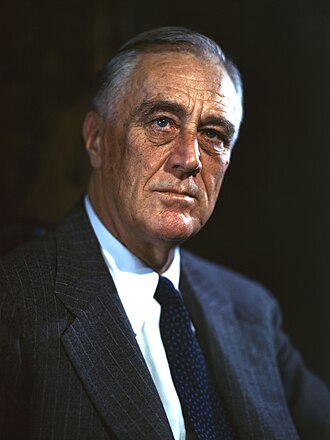 Franklin D. Roosevelt
High School • 2m
EO 8060 Mar 7, 1939
⚖️✨ Zone 2 (Zone of Twilight) Constitutional Neutral
Executive Order 8060—Exemption of Fred C. Bailey From Compulsory Retirement for Age
📜 Art. II §1: Executive Discretion & Internal Operations
I hereby exempt the said Fred C. Bailey from compulsory retirement for age for a period of one year ending March 31, 1940.
Franklin D. Roosevelt High School • 1m
EO 8064 Mar 9, 1939
🏛️✅ Zone 1 (Maximum Authority) Constitutional Neutral
Executive Order 8064—Designating Fairbanks, Alaska, as a Customs Port of Entry, and Discontinuing Seward, Alaska, as a Customs Port of Entry
📜 Art. I §8: Delegated Tariff & Commerce Execution
Fairbanks, Alaska, is hereby designated as a customs port of entry in Customs Collection District No. 31 (Alaska), with headquarters at Juneau, Alaska. 2. Seward, Alaska, is hereby discontinued as a customs port of entry in Customs Collection District No. 31 (Alaska). 3.
Franklin D. Roosevelt Grade 7 • 1m
EO 8059 Mar 3, 1939
⚖️✨ Zone 2 (Zone of Twilight) Constitutional Neutral
Executive Order 8059—Transferring the Use, Possession, and Control of Certain Lands to the Tennessee Valley Authority
📜 Art. II §2: Commander-in-Chief Supervisory Authority
The use, possession, and control of (1) all public lands within the following-described areas (in part temporarily withdrawn and reserved by Executive Order No. 2246 of September 17, 1915, for use of the War Department, and in part temporarily withdrawn and reserved by…
Franklin D. Roosevelt Grade 8 • 2m
EO 8065 Mar 14, 1939
🏛️✅ Zone 1 (Maximum Authority) Constitutional Neutral
Executive Order 8065—Establishing the Necedah Migratory Waterfowl Refuge
📜 10th Amend: Intergovernmental Federalism Cooperation
The lands acquired by the United States and the intermingled public lands within the following-described area, be, and they are hereby, reserved and set apart, subject to valid existing rights, for the use of the Department of Agriculture, as a refuge and breeding ground for…
Franklin D. Roosevelt Grade 8 • 4m
EO 8067 Mar 17, 1939
🏛️✅ Zone 1 (Maximum Authority) Constitutional Neutral
Executive Order 8067—Establishing the Carolina Sandhills Wildlife Refuge
📜 10th Amend: Intergovernmental Federalism Cooperation
The lands acquired by the United States within the areas delineated on the diagram attached hereto and made a part hereof, in Chesterfield County, South Carolina, be, and they are hereby, reserved and set apart, subject to valid rights, for the use of the Department of…
Franklin D. Roosevelt Post-Graduate Legal • 2m
📜
Scholarly & Legal Citations
Exec. Order No. 8062 (Mar. 7, 1939), https://executiveordersarchive.org/orders/app-executive-order-8062-tariff-fees-officers-united-states-court-for-china.
