Whereas section 1, of the act of January 12, 1938, 52 Stat. 3, provides: "That, whenever, in the interests of the national defense, the President shall define certain vital military and naval installations or equipment or requiring protection against the general dissemination of information relative thereto, it shall be unlawful to make any photograph, sketch, picture, drawing, map, or graphical representation of such vital military and naval installations or equipment without first obtaining permission of the commanding officer of the military or naval post, camp, or station concerned, or higher authority, and promptly submitting the product obtained to such commanding officer or higher authority for censorship or such other action as he may deem necessary. Any person found guilty of a violation of this section shall upon conviction be punished by a fine of not more than $1,000 or imprisonment for not more than one year, or by both such fine and imprisonment." Now therefore by the virtue of the authority vested in me by the foregoing statutory provisions, and in effectuation of the purposes of the said act of January 12, 1938, I hereby define the following as vital military and naval installations or equipment requiring protection against the general dissemination of information relative thereto: 1. All military or naval installations and equipment which are now classified, designated and marked under the authority or at the direction of the Secretary of War or the Secretary of the Navy as "secret", "confidential", or "restricted", and all military or naval installations and equipment which may hereafter be so classified designated, and marked with the approval or at the direction of the President and located within: (a) Any military or naval reservation, post, arsenal, proving ground, range, mine field, camp, fort, yard, station, district or area. (b) Any defensive sea area heretofore or hereafter established and existing under authority of section 44 of the United States Criminal Code, as amended by the act of March 4, 1917, 39 Stat. 1194 (U.S.C., title 18, sec. 96). (c) Any airspace reservation heretofore or hereafter established and existing under authority of section 4 of the Air Commerce Act of 1926 (44 Stat. 570, U.S.C., title 49, sec . 174). (d) Any naval harbor closed to foreign vessels. (e) Any area required for fleet purposes. (f) Any commercial establishment engaged in the development or manufacture of military or naval arms munitions, equipment, designs, ships, or vessels for the United States Army or Navy. 2. All military or naval aircraft, weapons, ammunition vehicles, ships, vessels, instruments, engines, manufacturing machinery, tools, devices, or any other equipment whatsoever, in the possession of the Army or Navy, or in the course of experimentation, development, manufacture, or delivery for the Army or Navy, which are now classified, designated, and marked under the authority or at the direction of the Secretary of War or the Secretary of the Navy as "secret", confidential", or "restricted", and all such articles, materials or equipment which may hereafter be so classified, designated, and marked with the approval or at the direction of the President. 3. All official military or naval books, pamphlets, documents, reports, drawings, photographs, contracts or specifications, which are now marked under the authority or at the direction of the Secretary of War or the Secretary of the Navy as "secret", "confidential", or "restricted", and all such articles or equipment which may hereafter be so marked with the approval or at the direction of the President. FRANKLIN D ROOSEVELT The White House, March 22, 1940.
Executive Order 8381 ⚖️⚠️ Zone 3: Lowest Ebb Constitutional Friction / Overreach (-0.44)
📜 Art. II §2: Commander-in-Chief / War Prerogative Tension
Executive Order 8381—Defining Certain Vital Military and Naval Installations and Equipment
Executive Brief • At a Glance
⏱️ 3 min read (581 words) •
● In Effect
🎯 Primary Mandate
By the virtue of the authority vested in me by the foregoing statutory provisions, and in effectuation of the purposes of the said act of January 12, 1938, I hereby define the following as vital military and naval installations or equipment requiring protection against the general dissemination of information relative thereto: 1.
⚖️ Constitutional Footing
⚖️⚠️ Zone 3: Lowest Ebb
Incompatible with Expressed Will of Congress or High Friction
📜 Art. II §2: Commander-in-Chief / War Prerogative Tension
🏛️ Scope & Affected Sectors
Armed Forces & Military Establishments Foreign Nations & International Entities
Plain-English Translation & Framers' Constitutional Analysis
Early Statesman synthesis distilling legal jargon into practical meaning, statutory anchors, and structural constitutional impacts.
Signed by President Franklin D. Roosevelt on March 22, 1940, this order concerns Defining Certain Vital Military and Naval Installations and Equipment. By the virtue of the authority vested in me by the foregoing statutory provisions, and in effectuation of the purposes of the said act of January 12, 1938, I hereby define the following as vital military and naval installations or equipment requiring protection against the general dissemination of information relative thereto: 1.
Constitutional Assessment: Scrutinized through Article II, Section 2, this action exercises the President's constitutional role as Commander in Chief. Early Framers recognized broad executive discretion in commanding military forces during conflict, provided it remains bounded by congressional declarations and respects civilian domestic courts.
Key Directives & Operative Actions
▪
By the virtue of the authority vested in me by the foregoing statutory provisions, and in effectuation of the purposes of the said act of January 12, 1938, I hereby define the following as vital military and naval installations or equipment requiring protection against the general dissemination of information relative thereto: 1.
▪
All military or naval installations and equipment which are now classified, designated and marked under the authority or at the direction of the Secretary of War or the Secretary of the Navy as "secret", "confidential", or "restricted", and all military or naval installations and equipment which may hereafter be so classified designated, and marked with the approval or at the direction of the President and located within: (a) Any military or naval reservation, post, arsenal, proving ground, range, mine field, camp, fort, yard, station, district or area.
▪
Any defensive sea area heretofore or hereafter established and existing under authority of section 44 of the United States Criminal Code, as amended by the act of March 4, 1917, 39 Stat. 1194 (U.S.C., title 18, sec. 96).
▪
Any airspace reservation heretofore or hereafter established and existing under authority of section 4 of the Air Commerce Act of 1926 (44 Stat. 570, U.S.C., title 49, sec . 174).
Constitutional & Societal Entities Impacted
🏛️ Armed Forces & Military Establishments
🏛️ Foreign Nations & International Entities
Policy Areas & Topics
🏛️
The Framers' Constitutional Council
1787 PrismEvaluating this order against the constitutional debates of 1787 and the limits of Article II executive power.
⚖️⚠️ Zone 3 (Lowest Ebb)
§
"When the President takes measures incompatible with the expressed or implied will of Congress, his power is at its lowest ebb."
— Justice Robert H. Jackson, Youngstown Sheet & Tube Co. v. Sawyer (1952) Incompatible with Expressed Will of Congress or High Friction
JM
James Madison
Separation of Powers & Legislative Primacy
"The accumulation of all powers, legislative, executive, and judiciary, in the same hands... may justly be pronounced the very definition of tyranny." — Federalist No. 47 (1788)
Madison would express grave alarm over this order. By asserting independent authority in tension with legislative limits or the Bill of Rights, the Executive risks collapsing the separation of powers into unilateral rule. Under the Madisonian model, no emergency justifies the Executive substituting its decree for a deliberative Act of Congress.
Madisonian Stance: Strict Dissent (Overreach)
AH
Alexander Hamilton
The Energetic Executive & Unified Command
"The direction of war implies the direction of the common strength; and the power of directing and employing the common strength must be under the direction of the single hand of the Executive." — Federalist No. 74 (1788)
Hamilton would forcefully champion executive discretion here. For foreign entanglements, commerce defense, and national security, deliberative assemblies are too slow and faction-ridden. A unified, energetic Executive exercising swift command is precisely what the Philadelphia Convention intended for national preservation.
Hamiltonian Stance: Strong Prerogative Support
GM
George Mason
Bill of Rights, Due Process & 10th Amendment
"The purse and the sword ought never to be in the same hands... nor the liberties of the citizen placed at the pleasure of a single magistrate." — Virginia Ratifying Convention (1788)
George Mason and the Anti-Federalists would sound a fierce warning. They feared that Article II would inevitably evolve into an elective monarchy. When an executive order impacts private rights, property, or civil liberties without individualized judicial process, Mason would see their darkest predictions verified.
Anti-Federalist Stance: Vehement Objection
📐
Five Measurable "Constitutional Friction" Dimensions
An objective audit measuring potential separation-of-powers tension against the United States Constitution and established Supreme Court doctrine.
⚠️ Elevated Constitutional Friction
63 / 100 friction index
Dimension 1 • Art. I, §1 & §8
Low Friction
Legislative Encroachment & Purse
Operates within delegated statutory execution without modifying legislative appropriations or taxing powers.
Benchmark: Power of the purse, taxes/tariffs, and rule of law reserved to Congress.
Dimension 2 • Art. II, §1 & §3
High Friction
Executive Scope & Faithfulness
Invokes broad unilateral or emergency executive authorities that test the constitutional boundary of the Take Care Clause.
Benchmark: Faithfully execute laws enacted by Congress vs. unilateral decree.
Dimension 3 • 10th Amendment
Moderate Friction
Federalism & State Sovereignty
Engages state and local partners in cooperative federalism programs.
Benchmark: Police powers and un-delegated responsibilities reserved to the States.
Dimension 4 • 5th & 14th Amendments
High Friction
Due Process & Individual Rights
Scrutinized under the Bill of Rights for potential impact on private contracts, property rights, or procedural due process.
Benchmark: Protection of private property, contracts, liberty, and procedural justice.
Dimension 5 • Separation of Powers
High Friction
Youngstown Jacksonian Tier
The order asserts independent Article II prerogative against statutory constraints, reallocates funds without explicit appropriation, or stretches executive power into realms constitutionally reserved to the legislature or judiciary.
Benchmark: Incompatible with Expressed Will of Congress or High Friction
⚖️
Audit Synthesis
This directive engages significant constitutional friction across statutory authorization, legislative prerogatives, or individual liberties.
Weighted composite: Art. I (25%), Art. II (25%), Federalism (15%), Due Process (15%), Youngstown (20%).
ℹ️
How to read these dimensions: Executive power expands whenever an administration acts without explicit statutory authorization from Congress (Article I), touches upon police powers historically reserved to the states (Tenth Amendment), or limits private rights and property without judicial process. A low friction score indicates strict concordance with enacted law; a high friction score highlights orders testing the limits of presidential discretion.
Total Words
581
3,693 characters
Estimated Read Time
3 min
@ 200 words / min
Flesch-Kincaid
21.1
Post-Graduate Legal
Text size:
🔗
Referenced By Later Executive Orders (1)
Subsequent presidents who cited, amended, continued, or revoked this directive in later orders.
Related Executive Orders
Other executive actions signed by Franklin D. Roosevelt around this period.
EO 8382 Mar 25, 1940
⚖️✨ Zone 2 (Zone of Twilight) Constitutional Neutral
Executive Order 8382—Amendment of Executive Order No. 8234 of September 5, 1939, Prescribing Regulations Governing the Passage and Control of Vessels Through the Panama Canal in Any War in Which the United States is Neutral
📜 Art. II §2: Commander-in-Chief Supervisory Authority
Executive Order No. 8234 of September 5, 1939, prescribing regulations governing the passage and control of vessels through the Panama Canal in any war in which the United States is neutral, is hereby amended by adding thereto, immediately following paragraph numbered 2…
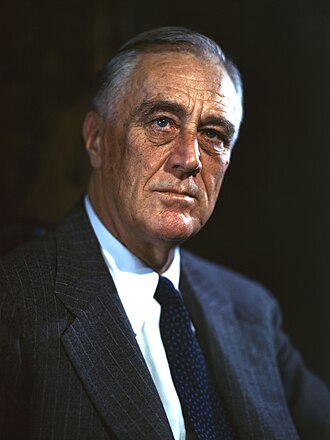 Franklin D. Roosevelt
Post-Graduate Legal • 2m
EO 8382 Mar 25, 1940
⚖️✨ Zone 2 (Zone of Twilight) Constitutional Neutral
Executive Order 8382—Amendment of Executive Order No. 8234 of September 5, 1939, Prescribing Regulations Governing the Passage and Control of Vessels Through the Panama Canal in Any War in Which the United States is Neutral
📜 Art. II §2: Commander-in-Chief Supervisory Authority
Executive Order No. 8234 of September 5, 1939, prescribing regulations governing the passage and control of vessels through the Panama Canal in any war in which the United States is neutral, is hereby amended by adding thereto, immediately following paragraph numbered 2…
Franklin D. Roosevelt Post-Graduate Legal • 2m
EO 8380 Mar 19, 1940
⚖️✨ Zone 2 (Zone of Twilight) Constitutional Neutral
Executive Order 8380—Changing the Name of the Cold Springs Reservation to Cold Springs National Wildlife Refuge and Adding Certain Lands Thereto
📜 Art. II §1: Executive Discretion & Internal Operations
The name of the Cold Springs Reservation, in Umatilla County, Oregon, established by Executive Order No. 1032 of February 25, 1909, and enlarged by Executive Order No. 1439 of November 25, 1911, is hereby changed to Cold Springs National Wildlife Refuge. SEC. 2.
Franklin D. Roosevelt Grade 7 • 2m
EO 8379 Mar 19, 1940
🏛️✅ Zone 1 (Maximum Authority) Constitutional Neutral
Executive Order 8379—Amending the Foreign Service Regulations
📜 10th Amend: Intergovernmental Federalism Cooperation
The Foreign Service Regulations of the United States be, and they are hereby, amended by prescribing the following as Chapter VII thereof: CHAPTER VII RECORD BOOKS, ARCHIVES, AND CODES RECORD BOOKS VII-1. Maintenance of record books in Foreign Service establishments .
Franklin D. Roosevelt High School • 2m
EO 8378 Mar 18, 1940
⚖️✨ Zone 2 (Zone of Twilight) Constitutional Neutral
Executive Order 8378—Establishing an Airspace Reservation Over a Portion of the District of Columbia
📜 Art. II §2: Commander-in-Chief Supervisory Authority
The airspace above the following-described portion of the District of Columbia is hereby reserved and set apart for national defense and other governmental purposes, and for public safety purposes, as an airspace reservation within which no person shall navigate a civil…
Franklin D. Roosevelt College Level • 3m
EO 8377 Mar 18, 1940
⚖️✨ Zone 2 (Zone of Twilight) Constitutional Neutral
Executive Order 8377—Amending Executive Order No. 8356 Entitled "Rules of Precedence Relating to Foreign Service Officers and Other Officers of the United States Government"
📜 Art. II §1: Executive Discretion & Internal Operations
Executive Order No. 8356, of March 2, 1940, entitled "Rules of Precedence Relating to Foreign Service Officers and Other Officers of the United States Government," be, and it is hereby, amended by the substitution of the word "Foreign" for the word "Federal" in section 5 thereof.
Franklin D. Roosevelt High School • 1m
📜
Scholarly & Legal Citations
Exec. Order No. 8381 (Mar. 22, 1940), https://executiveordersarchive.org/orders/app-executive-order-8381-defining-certain-vital-military-and-naval-installations-and-equipment.
