Early Statesman synthesis distilling legal jargon into practical meaning, statutory anchors, and structural constitutional impacts.
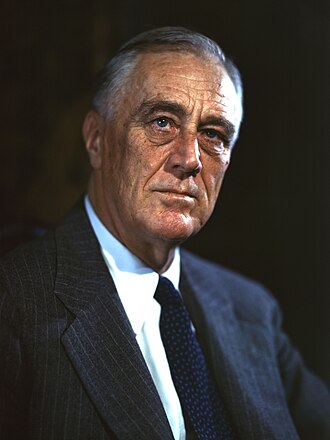
This executive order, signed by President Franklin D. Roosevelt on 1940-10-08, establishes federal administrative policy concerning "Amendment of Executive Order No. 8257 of September 21, 1939, Authorizing Excepted Appointments To Meet Public Exigency." It is a direct, concise executive instruction delivering focused administrative or military commands to department leadership.
Constitutional Assessment: Scrutinized through Article II, Section 2, this action exercises the President's constitutional role as Commander in Chief. Early Framers recognized broad executive discretion in commanding military forces during conflict, provided it remains bounded by congressional declarations and respects civilian domestic courts.
Key Directives & Operative Actions
▪8257 of September 21, 1939, authorizing excepted appointments to meet public exigency, is hereby amended to read as follows: "By virtue of the authority vested in me by paragraph Eighth, subdivision SECOND, section 2 of the Civil Service Act (22 Stat.
Constitutional & Societal Entities Impacted
🏛️ Armed Forces & Military Establishments
🏛️ Executive Departments & Federal Civil Servants
🏛️ Private Citizens & Property Owners
Total Words
164
1,054 characters
Estimated Read Time
1 min
@ 200 words / min
Flesch-Kincaid
18.4
Post-Grad reading level
Constitutional Polarity
+0.02
Framers' Alignment index
📜
Scholarly & Legal Citations
Exec. Order No. 8564, Franklin D. Roosevelt (Oct 8, 1940). Available at https://executiveordersarchive.org/orders/app-executive-order-8564-amendment-executive-order-no-8257-september-21-1939-authorizing.
Official Document Text
Source: The American Presidency Project (UCSB Archive)
Executive Order No. 8257 of September 21, 1939, authorizing excepted appointments to meet public exigency, is hereby amended to read as follows: "By virtue of the authority vested in me by paragraph Eighth, subdivision SECOND, section 2 of the Civil Service Act (22 Stat. 404), it is hereby ordered as follows: "Whenever, because of a public exigency directly connected with the national-defense program, or because of the urgency for the immediate filling of a position involved in such program, the Civil Service Commission determines that it is in the public interest to do so, it may authorize the filling of any position connected with the national-defense program for a term not extending beyond the duration of the national-defense program, without regard to the competitive requirements of the Civil Service Rules, subject to such noncompetitive tests of fitness as the Commission may prescribe. Persons so appointed will not thereby acquire a classified (competitive) civil service status." FRANKLIN D ROOSEVELT The White House, October 8, 1940.