The SECRETARY OF WAR. SIR: The destruction of the Spanish fleet at Manila, followed by the taking of the naval station at Cavite, the paroling of the garrisons, and the acquisition of the control of the bay, has rendered it necessary, in the further prosecution of the measures adopted by this Government for the purpose of bringing about an honorable and durable peace with Spain, to send an army of occupation to the Philippines for the twofold purpose of completing the reduction of the Spanish power in that quarter and of giving order and security to the islands while in the possession of the United States. For the command of this expedition I have designated Major-General Wesley Merritt, and it now becomes my duty to give instructions as to the manner in which the movement shall be conducted. The first effect of the military occupation of the enemy's territory is the severance of the former political relations of the inhabitants and the establishment of a new political power. Under this changed condition of things the inhabitants, so long as they perform their duties, are entitled to security in their persons and property and in all their private rights and relations. It is my desire that the people of the Philippines should be acquainted with the purpose of the United States to discharge to the fullest extent its obligations in this regard. It will therefore be the duty of the commander of the expedition, immediately upon his arrival in the islands, to publish a proclamation declaring that we come not to make war upon the people of the Philippines, nor upon any party or faction among them, but to protect them in their homes, in their employments, and in their personal and religious rights. All persons who, either by active aid or by honest submission, co-operate with the United States in its efforts to give effect to this beneficent purpose will receive the reward of its support and protection. Our occupation should be as free from severity as possible. Though the powers of the military occupant are absolute and supreme and immediately operate upon the political condition of the inhabitants, the municipal laws of the conquered territory, such as affect private rights of person and property and provide for the punishment of crime, are considered as continuing in force, so far as they are compatible with the new order of things, until they are suspended or superseded by the occupying belligerent; and in practice they are not usually abrogated, but are allowed to remain in force and to be administered by the ordinary tribunals substantially as they were before the occupation. This enlightened practice is, so far as possible, to be adhered to on the present occasion. The judges and the other officials connected with the administration of justice may, if they accept the authority of the United States, continue to administer the ordinary law of the land as between man and man under the supervision of the American commander-in-chief. The native constabulary will, so far as may be practicable, be preserved. The freedom of the people to pursue their accustomed occupations will he abridged only when it may be necessary to do so. While the rule of conduct of the American commander-in-chief will be such as has just been defined, it will be his duty to adopt measures of a different kind if, unfortunately, the course of the people should render such measures indispensable to the maintenance of law and order. He will then possess the power to replace or expel the native officials in part or altogether, to substitute new courts of his own constitution for those that now exist, or to create such new or supplementary tribunals as may be necessary. In the exercise of these high powers the commander must be guided by his judgment and his experience and a high sense of justice. One of the most important and most practical problems with which the commander of the expedition will have to deal is that of the treatment of property and the collection and administration of the revenues. It is conceded that all public funds and securities belonging to the government of the country in its own right and all arms and supplies and other movable property of such government may be seized by the military occupant and converted to the use of this Government. The real property of the state he may hold and administer, at the same time enjoying the revenues thereof; but he is not to destroy it save in the case of military necessity. All public means of transportation, such as telegraph lines, cables, railways, and boats belonging to the state may be appropriated to his use, but unless in case of military necessity they are not to be destroyed. All churches and buildings devoted to religious worship and to the arts and sciences, all schoolhouses, are, so far as possible, to be protected, and all destruction or intentional defacement of such places, of historical monuments or archives, or of works of science or art is prohibited save when required by urgent military necessity. Private property, whether belonging to individuals or corporations, is to be respected, and can be confiscated only as hereafter indicated. Means of transportation, such as telegraph lines and cables, railways, and boats, may, although they belong to private individuals or corporations, be seized by the military occupant, but unless destroyed under military necessity, are not to be retained. While it is held to be the right of a conqueror to levy contributions upon the enemy in their seaports, towns, or provinces which may be in his military possession by conquest, and to apply the proceeds to defray the expenses of the war, this right is to be exercised within such limitations that it may not savor of confiscation. As the result of military occupation the taxes and duties payable by the inhabitants to the former government become payable to the military occupant, unless he sees fit to substitute for them other rates or modes of contribution to the expenses of the government. The moneys so collected are to be used for the .purpose of paying expenses of government under the military occupation, such as the salaries of the judges and the police, and for the payment of the expenses of the army. Private property taken for the use of the army is to be paid for when possible in cash at a fair valuation, and when payment in cash is not possible receipts are to be given. In order that there may be no conflict of authority between the army and the navy in the administration of affairs in the Philippines you are instructed to confer with the Secretary of the Navy so far as necessary for the purpose of devising measures to secure the harmonious action of those two branches of the public service. I will give instructions to the Secretary of the Treasury to make a report to me upon the subject of the revenues of the Philippines, with a view to the formulation of such revenue measures as may seem expedient. All ports and places in the Philippines which may be in the actual possession of our land and naval forces will be opened, while our military occupation may continue, to the commerce of all neutral nations, as well as our own, in articles not contrabrand of war, and upon payment of the prescribed rates of duty which may be in force at the time of the importation. WILLIAM MCKINLEY
Presidential Order
⚖️⚠️ Zone 3: Lowest Ebb Constitutional Friction / Overreach (-0.41)
📜 Art. II §2: Commander-in-Chief / War Prerogative Tension
Executive Order
Executive Brief • At a Glance
⏱️ 6 min read (1,255 words) •
● In Effect
🎯 Primary Mandate
For the command of this expedition I have designated Major-General Wesley Merritt, and it now becomes my duty to give instructions as to the manner in which the movement shall be conducted.
⚖️ Constitutional Footing
⚖️⚠️ Zone 3: Lowest Ebb
Incompatible with Expressed Will of Congress or High Friction
📜 Art. II §2: Commander-in-Chief / War Prerogative Tension
🏛️ Scope & Affected Sectors
Armed Forces & Military Establishments Merchants, Importers & Commercial Enterprises Sovereign State Governments & Localities Private Citizens & Property Owners
Plain-English Translation & Framers' Constitutional Analysis
Early Statesman synthesis distilling legal jargon into practical meaning, statutory anchors, and structural constitutional impacts.
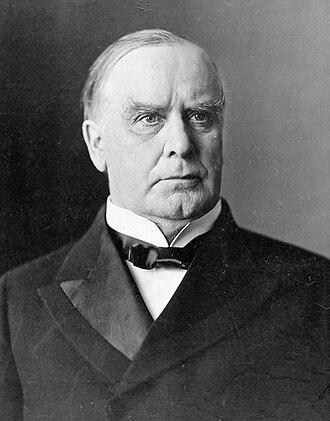
Signed by President William McKinley on May 19, 1898, this order reads: The SECRETARY OF WAR. SIR: The destruction of the Spanish fleet at Manila, followed by the taking of the naval station at Cavite, the paroling of the garrisons, and the acquisition of the control of the bay, has rendered it necessary, in the further prosecution of the measures adopted by this Government for the purpose of bringing about an honorable and durable peace with Spain, to send an army of occupation to the…
Constitutional Assessment: Scrutinized through Article II, Section 2, this action exercises the President's constitutional role as Commander in Chief. Early Framers recognized broad executive discretion in commanding military forces during conflict, provided it remains bounded by congressional declarations and respects civilian domestic courts.
Key Directives & Operative Actions
▪
For the command of this expedition I have designated Major-General Wesley Merritt, and it now becomes my duty to give instructions as to the manner in which the movement shall be conducted.
▪
Though the powers of the military occupant are absolute and supreme and immediately operate upon the political condition of the inhabitants, the municipal laws of the conquered territory, such as affect private rights of person and property and provide for the punishment of crime, are considered as continuing in force, so far as they are compatible with the new order of things, until they are suspended or superseded by the occupying belligerent; and in practice they are not usually abrogated, but are allowed to remain in force and to be administered by the ordinary tribunals substantially as they were before the occupation.
▪
He will then possess the power to replace or expel the native officials in part or altogether, to substitute new courts of his own constitution for those that now exist, or to create such new or supplementary tribunals as may be necessary.
▪
All churches and buildings devoted to religious worship and to the arts and sciences, all schoolhouses, are, so far as possible, to be protected, and all destruction or intentional defacement of such places, of historical monuments or archives, or of works of science or art is prohibited save when required by urgent military necessity.
Constitutional & Societal Entities Impacted
🏛️ Armed Forces & Military Establishments
🏛️ Merchants, Importers & Commercial Enterprises
🏛️ Sovereign State Governments & Localities
🏛️ Private Citizens & Property Owners
🏛️ Foreign Nations & International Entities
🏛️
The Framers' Constitutional Council
1787 PrismEvaluating this order against the constitutional debates of 1787 and the limits of Article II executive power.
⚖️⚠️ Zone 3 (Lowest Ebb)
§
"When the President takes measures incompatible with the expressed or implied will of Congress, his power is at its lowest ebb."
— Justice Robert H. Jackson, Youngstown Sheet & Tube Co. v. Sawyer (1952) Incompatible with Expressed Will of Congress or High Friction
JM
James Madison
Separation of Powers & Legislative Primacy
"The accumulation of all powers, legislative, executive, and judiciary, in the same hands... may justly be pronounced the very definition of tyranny." — Federalist No. 47 (1788)
Madison would express grave alarm over this order. By asserting independent authority in tension with legislative limits or the Bill of Rights, the Executive risks collapsing the separation of powers into unilateral rule. Under the Madisonian model, no emergency justifies the Executive substituting its decree for a deliberative Act of Congress.
Madisonian Stance: Strict Dissent (Overreach)
AH
Alexander Hamilton
The Energetic Executive & Unified Command
"The direction of war implies the direction of the common strength; and the power of directing and employing the common strength must be under the direction of the single hand of the Executive." — Federalist No. 74 (1788)
Hamilton would forcefully champion executive discretion here. For foreign entanglements, commerce defense, and national security, deliberative assemblies are too slow and faction-ridden. A unified, energetic Executive exercising swift command is precisely what the Philadelphia Convention intended for national preservation.
Hamiltonian Stance: Strong Prerogative Support
GM
George Mason
Bill of Rights, Due Process & 10th Amendment
"The purse and the sword ought never to be in the same hands... nor the liberties of the citizen placed at the pleasure of a single magistrate." — Virginia Ratifying Convention (1788)
George Mason and the Anti-Federalists would sound a fierce warning. They feared that Article II would inevitably evolve into an elective monarchy. When an executive order impacts private rights, property, or civil liberties without individualized judicial process, Mason would see their darkest predictions verified.
Anti-Federalist Stance: Vehement Objection
📐
Five Measurable "Constitutional Friction" Dimensions
An objective audit measuring potential separation-of-powers tension against the United States Constitution and established Supreme Court doctrine.
⚠️ Elevated Constitutional Friction
77 / 100 friction index
Dimension 1 • Art. I, §1 & §8
Moderate Friction
Legislative Encroachment & Purse
Administers commerce or fiscal programs requiring ongoing statutory delegation and legislative oversight.
Benchmark: Power of the purse, taxes/tariffs, and rule of law reserved to Congress.
Dimension 2 • Art. II, §1 & §3
High Friction
Executive Scope & Faithfulness
Invokes broad unilateral or emergency executive authorities that test the constitutional boundary of the Take Care Clause.
Benchmark: Faithfully execute laws enacted by Congress vs. unilateral decree.
Dimension 3 • 10th Amendment
High Friction
Federalism & State Sovereignty
Creates friction with the Tenth Amendment by conditioning state grants, mandating local compliance, or preempting state police powers.
Benchmark: Police powers and un-delegated responsibilities reserved to the States.
Dimension 4 • 5th & 14th Amendments
High Friction
Due Process & Individual Rights
Scrutinized under the Bill of Rights for potential impact on private contracts, property rights, or procedural due process.
Benchmark: Protection of private property, contracts, liberty, and procedural justice.
Dimension 5 • Separation of Powers
High Friction
Youngstown Jacksonian Tier
The order asserts independent Article II prerogative against statutory constraints, reallocates funds without explicit appropriation, or stretches executive power into realms constitutionally reserved to the legislature or judiciary.
Benchmark: Incompatible with Expressed Will of Congress or High Friction
⚖️
Audit Synthesis
This directive engages significant constitutional friction across statutory authorization, legislative prerogatives, or individual liberties.
Weighted composite: Art. I (25%), Art. II (25%), Federalism (15%), Due Process (15%), Youngstown (20%).
ℹ️
How to read these dimensions: Executive power expands whenever an administration acts without explicit statutory authorization from Congress (Article I), touches upon police powers historically reserved to the states (Tenth Amendment), or limits private rights and property without judicial process. A low friction score indicates strict concordance with enacted law; a high friction score highlights orders testing the limits of presidential discretion.
Total Words
1,255
7,341 characters
Estimated Read Time
6 min
@ 200 words / min
Flesch-Kincaid
19.3
Post-Graduate Legal
Text size:
Related Executive Orders
Other executive actions signed by William McKinley around this period.
Order
May 19, 1898
⚖️✨ Zone 2 (Zone of Twilight) Constitutional Neutral
Executive Order
📜 Art. II §2: Commander-in-Chief Supervisory Authority
The SECRETARY OF THE NAVY. SIR: The destruction of the Spanish fleet at Manila, followed by the taking of the naval station at Cavite, the paroling of the garrisons, and the acquisition of the control of the bay, has rendered it necessary, in the further prosecution of the…
 William McKinley
Post-Graduate Legal • 2m
Order
May 19, 1898
⚖️✨ Zone 2 (Zone of Twilight) Constitutional Neutral
Executive Order
📜 Art. II §2: Commander-in-Chief Supervisory Authority
The SECRETARY OF THE TREASURY, SIR: The destruction of the Spanish fleet at Manila, followed by the taking of the naval station at Cavite, the paroling of the garrisons, and the acquisition of the control of the bay, has rendered it necessary, in the further prosecution of the…
William McKinley Post-Graduate Legal • 2m
Order
May 7, 1898
⚖️✨ Zone 2 (Zone of Twilight) Constitutional Neutral
Executive Order
📜 Art. II §1: Executive Discretion & Internal Operations
DEWEY, Care American Consul, Hongkong: The President, in the name of the American people, thanks you and your officers and men for your splendid achievement and overwhelming victory.
William McKinley College Level • 1m
Order
Jul 4, 1898
⚖️✨ Zone 2 (Zone of Twilight) Constitutional Neutral
Executive Order
📜 Art. II §2: Commander-in-Chief Supervisory Authority
Admiral SAMPSON, Playa del Este, Cuba: You have the gratitude and congratulations of the whole American people. Convey to your noble officers and crews, through whose valor new honors have been added to the American navy, the grateful thanks and appreciation of the nation.
William McKinley College Level • 1m
Order
Jul 8, 1898
⚖️✨ Zone 2 (Zone of Twilight) Constitutional Neutral
Executive Order
📜 Art. II §2: Commander-in-Chief Supervisory Authority
General SHAFTER, Playa, Cuba: Telegram which it appears you did not receive read as follows: The President directs me to say you have the gratitude and thanks of the nation for the brilliant and effective work of your noble army in the fight of July 1.
William McKinley Grade 9 • 1m
Order
Mar 28, 1898
⚖️✨ Zone 2 (Zone of Twilight) Constitutional Neutral
Executive Order
📜 5th Amend: Regulatory Execution with Due Process
The following described tract of land situate on Kadiak Island, District of Alaska, be temporarily reserved and set apart as an experiment station for the use of the Department of Agriculture: Beginning at a point in the easterly boundary line of the property now occupied by…
William McKinley Post-Graduate Legal • 1m
📜
Scholarly & Legal Citations
Exec. Order (May 19, 1898), https://executiveordersarchive.org/orders/app-executive-order-86.
