Whereas section 1 of Title II of the act of June 15, 1917, 40 Stat. 217, 220 (U.S.C., title 50, sec. 191), provides: "Whenever the President by proclamation or Executive order declares a national emergency to exist by reason of actual or threatened war, insurrection, or invasion, or disturbance or threatened disturbance of the international relations of the United States, the Secretary of the Treasury may make, subject to the approval of the President, rules and regulations governing the anchorage and movement of any vessel, foreign or domestic, in the territorial waters of the United States, may inspect such vessel at any time, place guards thereon, and, if necessary in his opinion in order to secure such vessels from damage or injury, or to prevent damage or injury to any harbor or waters of the United States, or to secure the observance of the rights and obligations of the United States, may take, by and with the consent of the President, for such purposes, full possession and control of such vessel and remove therefrom the officers and crew thereof and all other persons not specially authorized by him to go or remain on board thereof." Whereas by proclamation dated June 27, 1940, I declared a national emergency to exist by reason of threatened disturbance of the international relations of the United States, and such emergency still exists; Whereas I approved on June 27, 1940, and July 9, 1940, respectively, regulations issued by the Secretary of the Treasury and regulations issued by the Governor of the Panama Canal pursuant to the above-quoted statutory provisions; and Whereas section 4 of Title II of the said act of June 15, 1917, provides: "The President may employ such part of the land or naval forces of the United States as he may deem necessary to carry out the purpose of this title." Now, Therefore , by virtue of the authority vested in me by the last above-quoted statutory provisions, it is hereby ordered as follows: Upon request of the Secretary of the Treasury or the Governor of the Panama Canal (or of such officers as are designated in regulations prescribed pursuant to section 1 of Title II of the said act of June 15, 1917) for assistance in the control of vessels in the territorial waters of the United States or in the territorial waters of the Canal Zone, respectively, those in command of the land and naval forces of the United States shall employ such part of the forces under their respective commands as may be necessary and available to render the assistance requested: Provided , that any such request by the Governor of the Panama Canal shall, while Executive Order No. 8232 of September 5, 1939 (placing control of the Panama Canal and Canal Zone in the Officer of the Army commanding the United States troops in the Canal Zone), or any future Executive order of like effect, remains in force, be subject to the approval of the commanding officer designated therein. FRANKLIN D ROOSEVELT The White House, February 11, 1941.
Executive Order 8677 ⚖️⚠️ Zone 3: Lowest Ebb Constitutional Friction / Overreach (-0.19)
📜 Art. II §2: Commander-in-Chief / War Prerogative Tension
Executive Order 8677—Employment of the Land and Naval Forces in the Control of Vessels in the Territorial Waters of the United States and the Canal Zone
Executive Brief • At a Glance
⏱️ 3 min read (509 words) •
● In Effect
🎯 Primary Mandate
Upon request of the Secretary of the Treasury or the Governor of the Panama Canal (or of such officers as are designated in regulations prescribed pursuant to section 1 of Title II of the said act of June 15, 1917) for assistance in the control of vessels in the territorial waters of the United States or in the territorial waters of the Canal Zone, respectively, those in command of the land and naval forces of the United States shall employ such part of the forces under their respective commands as may be necessary and available to render the assistance requested: Provided , that any such request by the Governor of the Panama Canal shall, while Executive Order No. 8232 of September 5, 1939 (placing control of the Panama Canal and Canal…
⚖️ Constitutional Footing
⚖️⚠️ Zone 3: Lowest Ebb
Incompatible with Expressed Will of Congress or High Friction
📜 Art. II §2: Commander-in-Chief / War Prerogative Tension
🏛️ Scope & Affected Sectors
Armed Forces & Military Establishments Sovereign State Governments & Localities Executive Departments & Federal Civil Servants Foreign Nations & International Entities
Plain-English Translation & Framers' Constitutional Analysis
Early Statesman synthesis distilling legal jargon into practical meaning, statutory anchors, and structural constitutional impacts.
Signed by President Franklin D. Roosevelt on February 11, 1941, this order concerns Employment of the Land and Naval Forces in the Control of Vessels in the Territorial Waters of the United States and the Canal Zone. Upon request of the Secretary of the Treasury or the Governor of the Panama Canal (or of such officers as are designated in regulations prescribed pursuant to section 1 of Title II of the said act of June 15, 1917) for assistance in the control of vessels in the territorial waters of the United States or in the territorial waters of the Canal Zone, respectively, those in command of the land and naval forces of the…
Constitutional Assessment: Scrutinized through Article II, Section 2, this action exercises the President's constitutional role as Commander in Chief. Early Framers recognized broad executive discretion in commanding military forces during conflict, provided it remains bounded by congressional declarations and respects civilian domestic courts.
Key Directives & Operative Actions
▪
Upon request of the Secretary of the Treasury or the Governor of the Panama Canal (or of such officers as are designated in regulations prescribed pursuant to section 1 of Title II of the said act of June 15, 1917) for assistance in the control of vessels in the territorial waters of the United States or in the territorial waters of the Canal Zone, respectively, those in command of the land and naval forces of the United States shall employ such part of the forces under their respective commands as may be necessary and available to render the assistance requested: Provided , that any such request by the Governor of the Panama Canal shall, while Executive Order No. 8232 of September 5, 1939 (placing control of the Panama Canal and Canal…
Constitutional & Societal Entities Impacted
🏛️ Armed Forces & Military Establishments
🏛️ Sovereign State Governments & Localities
🏛️ Executive Departments & Federal Civil Servants
🏛️ Foreign Nations & International Entities
🏛️ Financial Institutions & Monetary Authorities
Policy Areas & Topics
🏛️
The Framers' Constitutional Council
1787 PrismEvaluating this order against the constitutional debates of 1787 and the limits of Article II executive power.
⚖️⚠️ Zone 3 (Lowest Ebb)
§
"When the President takes measures incompatible with the expressed or implied will of Congress, his power is at its lowest ebb."
— Justice Robert H. Jackson, Youngstown Sheet & Tube Co. v. Sawyer (1952) Incompatible with Expressed Will of Congress or High Friction
JM
James Madison
Separation of Powers & Legislative Primacy
"The accumulation of all powers, legislative, executive, and judiciary, in the same hands... may justly be pronounced the very definition of tyranny." — Federalist No. 47 (1788)
Madison would express grave alarm over this order. By asserting independent authority in tension with legislative limits or the Bill of Rights, the Executive risks collapsing the separation of powers into unilateral rule. Under the Madisonian model, no emergency justifies the Executive substituting its decree for a deliberative Act of Congress.
Madisonian Stance: Strict Dissent (Overreach)
AH
Alexander Hamilton
The Energetic Executive & Unified Command
"The direction of war implies the direction of the common strength; and the power of directing and employing the common strength must be under the direction of the single hand of the Executive." — Federalist No. 74 (1788)
Hamilton would forcefully champion executive discretion here. For foreign entanglements, commerce defense, and national security, deliberative assemblies are too slow and faction-ridden. A unified, energetic Executive exercising swift command is precisely what the Philadelphia Convention intended for national preservation.
Hamiltonian Stance: Strong Prerogative Support
GM
George Mason
Bill of Rights, Due Process & 10th Amendment
"The purse and the sword ought never to be in the same hands... nor the liberties of the citizen placed at the pleasure of a single magistrate." — Virginia Ratifying Convention (1788)
George Mason and the Anti-Federalists would sound a fierce warning. They feared that Article II would inevitably evolve into an elective monarchy. When an executive order impacts private rights, property, or civil liberties without individualized judicial process, Mason would see their darkest predictions verified.
Anti-Federalist Stance: Vehement Objection
📐
Five Measurable "Constitutional Friction" Dimensions
An objective audit measuring potential separation-of-powers tension against the United States Constitution and established Supreme Court doctrine.
⚠️ Elevated Constitutional Friction
60 / 100 friction index
Dimension 1 • Art. I, §1 & §8
Moderate Friction
Legislative Encroachment & Purse
Administers commerce or fiscal programs requiring ongoing statutory delegation and legislative oversight.
Benchmark: Power of the purse, taxes/tariffs, and rule of law reserved to Congress.
Dimension 2 • Art. II, §1 & §3
High Friction
Executive Scope & Faithfulness
Invokes broad unilateral or emergency executive authorities that test the constitutional boundary of the Take Care Clause.
Benchmark: Faithfully execute laws enacted by Congress vs. unilateral decree.
Dimension 3 • 10th Amendment
Moderate Friction
Federalism & State Sovereignty
Engages state and local partners in cooperative federalism programs.
Benchmark: Police powers and un-delegated responsibilities reserved to the States.
Dimension 4 • 5th & 14th Amendments
Low Friction
Due Process & Individual Rights
Focuses on internal governmental operations with no direct impairment of private rights or property.
Benchmark: Protection of private property, contracts, liberty, and procedural justice.
Dimension 5 • Separation of Powers
High Friction
Youngstown Jacksonian Tier
The order asserts independent Article II prerogative against statutory constraints, reallocates funds without explicit appropriation, or stretches executive power into realms constitutionally reserved to the legislature or judiciary.
Benchmark: Incompatible with Expressed Will of Congress or High Friction
⚖️
Audit Synthesis
This directive engages significant constitutional friction across statutory authorization, legislative prerogatives, or individual liberties.
Weighted composite: Art. I (25%), Art. II (25%), Federalism (15%), Due Process (15%), Youngstown (20%).
ℹ️
How to read these dimensions: Executive power expands whenever an administration acts without explicit statutory authorization from Congress (Article I), touches upon police powers historically reserved to the states (Tenth Amendment), or limits private rights and property without judicial process. A low friction score indicates strict concordance with enacted law; a high friction score highlights orders testing the limits of presidential discretion.
Total Words
509
2,990 characters
Estimated Read Time
3 min
@ 200 words / min
Flesch-Kincaid
28.9
Post-Graduate Legal
Text size:
Related Executive Orders
1 order cited directly in this text, plus related actions from this administration.
EO 8232 Sep 5, 1939
⚖️✨ Zone 2 (Zone of Twilight) Constitutional Neutral
Executive Order 8232—Control of the Panama Canal and the Canal Zone
📜 Art. II §2: Commander-in-Chief Supervisory Authority
The Officer of the Army commanding the United States Troops stationed in the Canal Zone shall, until otherwise ordered, assume and have exclusive authority and jurisdiction over the operation of the Panama Canal and all its adjuncts, appendants, and appurtenances, including the…
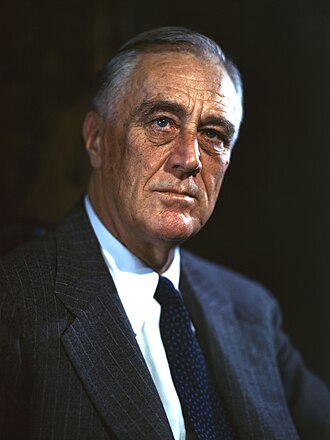 Franklin D. Roosevelt
Post-Graduate Legal • 1m
EO 8678 Feb 11, 1941
⚖️✨ Zone 2 (Zone of Twilight) Constitutional Neutral
Executive Order 8678—Placing Certain Lands Under the Control and Jurisdiction of the Navy Department, the War Department, and the United States Public Health Service
📜 Art. II §2: Commander-in-Chief Supervisory Authority
A. The following-described lands are placed under the control and jurisdiction of the Navy Department for use in connection with the United States Naval Air Station, San Juan, Puerto Rico: 1.
Franklin D. Roosevelt High School • 9m
EO 8679 Feb 13, 1941
⚖️✨ Zone 2 (Zone of Twilight) Constitutional Neutral
Executive Order 8679—Authorizing Initial Appointments to the Positions of Assistant Director of the Naval Civilian Police Corps of the Navy Department Without Compliance With the Civil Service Rules
📜 Art. II §2: Commander-in-Chief Supervisory Authority
Subject to the establishment before the Civil Service Commission of the requisite qualifications in each case, the initial appointments to the two positions of assistant director of the Naval Civilian Police Corps of the Navy Department may be made without compliance with the…
Franklin D. Roosevelt College Level • 1m
EO 8685 Feb 14, 1941
⚖️✨ Zone 2 (Zone of Twilight) Constitutional Neutral
Executive Order 8685—Establishing the Imperial National Wildlife Refuge
📜 Art. II §1: Executive Discretion & Internal Operations
All lands owned by the United States within the following-described areas, comprising 51,090 acres, more or less, in Yuma County, Arizona, and Imperial County, California, be, and they are hereby, reserved and set apart, subject to valid rights, for the use of the Department of…
Franklin D. Roosevelt Grade 5 • 3m
EO 8684 Feb 14, 1941
⚖️✨ Zone 2 (Zone of Twilight) Constitutional Neutral
Executive Order 8684—Establishing Culebra Island Naval Defensive Sea Area and Culebra Island Naval Airspace Reservation
📜 Art. II §2: Commander-in-Chief Supervisory Authority
By virtue of the authority vested in me by the provisions of section 44 of the Criminal Code, as amended (U.S.C., title 18, sec. 96), and section 4 of the Air Commerce Act approved May 20, 1926 (44 Stat. 570, U.S.C., title 49, sec. 174), the territorial waters between the…
Franklin D. Roosevelt College Level • 2m
EO 8683 Feb 14, 1941
⚖️✨ Zone 2 (Zone of Twilight) Constitutional Neutral
Executive Order 8683—Establishing Naval Defensive Sea Areas Around and Naval Airspace Reservations Over the Islands of Rose, Tutuila, and Guam
📜 Art. II §2: Commander-in-Chief Supervisory Authority
By virtue of the authority vested in me by the provisions of section 44 of the Criminal Code, as amended (U.S.C., title 18, sec. 96), and section 4 of the Air Commerce Act approved May 20, 1926 (44 Stat. 570, U.S.C., title 49, sec. 174), the territorial waters between the…
Franklin D. Roosevelt Post-Graduate Legal • 2m
📜
Scholarly & Legal Citations
Exec. Order No. 8677 (Feb. 11, 1941), https://executiveordersarchive.org/orders/app-executive-order-8677-employment-the-land-and-naval-forces-the-control-vessels-the.
