★
Executive Orders Historical Archive
Cite
Executive Order 9832 🏛️✅ Zone 1: Maximum Authority Constitutional Fidelity (+0.23) 📜 Art. II §2: Commander-in-Chief Supervisory Authority

Executive Order 9832—Prescribing Procedures for the Administration of the Reciprocal Trade Agreements Program

•
Tuesday, February 25, 1947
•
6 min read (1,146 words)

Executive Brief • At a Glance

⏱️ 6 min read (1,146 words) • ● In Effect
🎯 Primary Mandate

There shall be included in every trade agreement hereafter entered into under the authority of said act of June 12, 1934, as amended, a clause providing developments and in effect that if, as a result of unforeseen developments and of the concession granted by the United States on any article in the trade agreement, such article is being imported in such increased quantities and under such conditions as to cause, or threaten, serious injury to domestic producers of like or similar articles, the United States shall be free to withdraw the concession, in whole or in part, or to modify it, to the extent and for such time as may be necessary to prevent such injury. 2.

⚖️ Constitutional Footing
🏛️✅ Zone 1: Maximum Authority
Express or Implied Congressional Authorization
📜 Art. II §2: Commander-in-Chief Supervisory Authority
🏛️ Scope & Affected Sectors
Armed Forces & Military Establishments Merchants, Importers & Commercial Enterprises Sovereign State Governments & Localities Executive Departments & Federal Civil Servants

Plain-English Translation & Framers' Constitutional Analysis

Early Statesman synthesis distilling legal jargon into practical meaning, statutory anchors, and structural constitutional impacts.

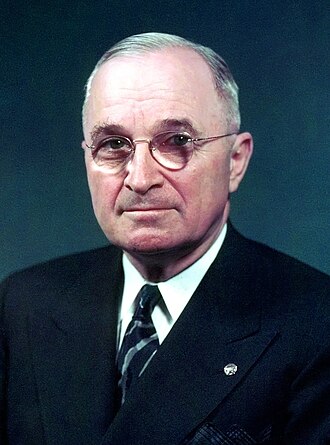
Signed by President Harry S Truman on February 25, 1947, this order concerns Prescribing Procedures for the Administration of the Reciprocal Trade Agreements Program. There shall be included in every trade agreement hereafter entered into under the authority of said act of June 12, 1934, as amended, a clause providing developments and in effect that if, as a result of unforeseen developments and of the concession granted by the United States on any article in the trade agreement, such article is being imported in such increased quantities and under such conditions as to cause…

Constitutional Assessment: Scrutinized through Article II, Section 2, this action exercises the President's constitutional role as Commander in Chief. Early Framers recognized broad executive discretion in commanding military forces during conflict, provided it remains bounded by congressional declarations and respects civilian domestic courts.

Key Directives & Operative Actions

▪

There shall be included in every trade agreement hereafter entered into under the authority of said act of June 12, 1934, as amended, a clause providing developments and in effect that if, as a result of unforeseen developments and of the concession granted by the United States on any article in the trade agreement, such article is being imported in such increased quantities and under such conditions as to cause, or threaten, serious injury to domestic producers of like or similar articles, the United States shall be free to withdraw the concession, in whole or in part, or to modify it, to the extent and for such time as may be necessary to prevent such injury. 2.

▪

The United States Tariff Commission upon its own motion, or upon application of any interested party when in the judgment of the Tariff Commission there is good and sufficient reason therefor, shall make an investigation to determine whether, as a result of unforeseen development as of the concession granted on any article by the Untied States in a trade agreement containing such a clause, such article is being imported in such increase quantities and under such conditions as to cause or threaten serious injury to domestic producers of like or similar articles.

▪

Should the Tariff Commission find, as a result of its investigation, that such injury is being caused or threatened, the Tariff Commission shall recommend to the President, for his consideration in the light of the public interest, the withdrawal of the concession, in whole or in part, or the modification of the concession, to the extent and for such time as the Tariff Commission finds would be necessary to prevent such injury. 3.

▪

In the course of any investigation under the preceding paragraph, the Tariff Commission shall hold public hearings, giving such reasonable public notice thereof, and shall afford reasonable opportunity for parties interested to be present, to produce evidence, and to be heard at such hearings.

Constitutional & Societal Entities Impacted

🏛️ Armed Forces & Military Establishments 🏛️ Merchants, Importers & Commercial Enterprises 🏛️ Sovereign State Governments & Localities 🏛️ Executive Departments & Federal Civil Servants 🏛️ Private Citizens & Property Owners
🏛️

The Framers' Constitutional Council

1787 Prism

Evaluating this order against the constitutional debates of 1787 and the limits of Article II executive power.

🏛️✅ Zone 1 (Maximum Authority)
§

"When the President acts pursuant to an express or implied authorization of Congress, his authority is at its maximum, for it includes all that he possesses in his own right plus all that Congress can delegate."

— Justice Robert H. Jackson, Youngstown Sheet & Tube Co. v. Sawyer (1952) Express or Implied Congressional Authorization
JM

James Madison

Separation of Powers & Legislative Primacy

"The constitutional magistracy was designed not to invent policy, but to be the faithful instrument of the laws passed by the people's representatives." — Speech in the First Congress (1789)

Madison would approve the structural posture of this order. The President acts strictly in subordination to statutory authority granted under Article II, Section 3 ("take Care that the Laws be faithfully executed"). The checks and balances hold firm because the policy origin remains with the legislature.

Madisonian Stance: Concurring (Statutory)
AH

Alexander Hamilton

The Energetic Executive & Unified Command

"The direction of war implies the direction of the common strength; and the power of directing and employing the common strength must be under the direction of the single hand of the Executive." — Federalist No. 74 (1788)

Hamilton would forcefully champion executive discretion here. For foreign entanglements, commerce defense, and national security, deliberative assemblies are too slow and faction-ridden. A unified, energetic Executive exercising swift command is precisely what the Philadelphia Convention intended for national preservation.

Hamiltonian Stance: Strong Prerogative Support
GM

George Mason

Bill of Rights, Due Process & 10th Amendment

"The president will be surrounded by flatterers and sycophants... and the great powers of the executive will gradually absorb the liberties of the people." — Cato IV (Anti-Federalist, 1787)

The Anti-Federalist prism advises continuous democratic vigilance. Even routine administrative directives aggregate centralized federal power away from town halls and state assemblies toward a distant executive apparatus.

Anti-Federalist Stance: Eternal Vigilance Required
📐

Five Measurable "Constitutional Friction" Dimensions

An objective audit measuring potential separation-of-powers tension against the United States Constitution and established Supreme Court doctrine.

⚖️ Discretionary Twilight Zone
31 / 100 friction index
Dimension 1 • Art. I, §1 & §8

Legislative Encroachment & Purse

Moderate Friction

Administers commerce or fiscal programs requiring ongoing statutory delegation and legislative oversight.

Benchmark: Power of the purse, taxes/tariffs, and rule of law reserved to Congress.
Dimension 2 • Art. II, §1 & §3

Executive Scope & Faithfulness

Low Friction

Exercises standard supervisory executive authority to faithfully execute existing statutes.

Benchmark: Faithfully execute laws enacted by Congress vs. unilateral decree.
Dimension 3 • 10th Amendment

Federalism & State Sovereignty

Moderate Friction

Engages state and local partners in cooperative federalism programs.

Benchmark: Police powers and un-delegated responsibilities reserved to the States.
Dimension 4 • 5th & 14th Amendments

Due Process & Individual Rights

Low Friction

Focuses on internal governmental operations with no direct impairment of private rights or property.

Benchmark: Protection of private property, contracts, liberty, and procedural justice.
Dimension 5 • Separation of Powers

Youngstown Jacksonian Tier

Low Friction

The President operates strictly as the constitutional Chief Executive, carrying out policy established by Congress with strong statutory backing.

Benchmark: Express or Implied Congressional Authorization
⚖️ Audit Synthesis

This order operates within Justice Jackson’s Zone of Twilight, resting upon concurrent presidential authority or congressional silence.

Weighted composite: Art. I (25%), Art. II (25%), Federalism (15%), Due Process (15%), Youngstown (20%).
ℹ️
How to read these dimensions: Executive power expands whenever an administration acts without explicit statutory authorization from Congress (Article I), touches upon police powers historically reserved to the states (Tenth Amendment), or limits private rights and property without judicial process. A low friction score indicates strict concordance with enacted law; a high friction score highlights orders testing the limits of presidential discretion.
Total Words
1,146
7,198 characters
Estimated Read Time
6 min
@ 200 words / min
Flesch-Kincaid
21.3
Post-Graduate Legal
Language Tone Score
+0.23
Constitutional Fidelity
How is this scored?
Text size:

Official Archival Text

View Source Document

By virtue of the authority vested in me by the Constitution and statutes, including section 332 of the Tariff Act of 1930 (46 Stat. 698) and the Trade Agreements Act approved June 12, 1934, as amended (48 Stat. 943; 59 Stat. 410), in the interest of the foreign affairs functions of the United States and in order that the interests of the various ranches of American production shall be effectively safeguarded in the administration of the trade-agreements program, it is hereby ordered as follows: PART I 1. There shall be included in every trade agreement hereafter entered into under the authority of said act of June 12, 1934, as amended, a clause providing developments and in effect that if, as a result of unforeseen developments and of the concession granted by the United States on any article in the trade agreement, such article is being imported in such increased quantities and under such conditions as to cause, or threaten, serious injury to domestic producers of like or similar articles, the United States shall be free to withdraw the concession, in whole or in part, or to modify it, to the extent and for such time as may be necessary to prevent such injury. 2. The United States Tariff Commission upon its own motion, or upon application of any interested party when in the judgment of the Tariff Commission there is good and sufficient reason therefor, shall make an investigation to determine whether, as a result of unforeseen development as of the concession granted on any article by the Untied States in a trade agreement containing such a clause, such article is being imported in such increase quantities and under such conditions as to cause or threaten serious injury to domestic producers of like or similar articles. Should the Tariff Commission find, as a result of its investigation, that such injury is being caused or threatened, the Tariff Commission shall recommend to the President, for his consideration in the light of the public interest, the withdrawal of the concession, in whole or in part, or the modification of the concession, to the extent and for such time as the Tariff Commission finds would be necessary to prevent such injury. 3. In the course of any investigation under the preceding paragraph, the Tariff Commission shall hold public hearings, giving such reasonable public notice thereof, and shall afford reasonable opportunity for parties interested to be present, to produce evidence, and to be heard at such hearings. The procedure and rules and regulations for such investigations and hearings shall from time to time be prescribed by the Tariff Commission. 4. The Tariff Commission shall at all times keep informed concerning the operation and effect of provisions relating to duties or other import restrictions of the United States contained din trade agreements heretofore or hereafter entered into by the President under the authority of said act of June 12, 1934, as amended. The Tariff Commission, at least once a year, shall submit to the President and to the Congress a factual report on the operation of the trade-agreements program. PART II 5. An Interdepartmental Committee on Trade Agreements (hereinafter referred to as the Interdepartmental Committee) shall act as the agency through which the President shall, in accordance with section 4 of said act of June 12, 1934, as amended, seek information and advice before concluding a trade agreement. In order that the interests of American industry, labor, and farmers, and American military, financial, and foreign policy, shall be appropriately represented, the Interdepartmental Committee shall consist of a Commissioner of the Tariff Commission and of persons designated from their respective agencies by the Secretary of State, the Secretary of the Treasury, the Secretary of War, the Secretary of the Navy, the Secretary of Agriculture, the Secretary of Commerce, and the Secretary of Labor. The chairman of the Interdepartmental Committee shall be the representative from the Department of State. The Interdepartmental Committee may designate such subcommittees as it may deem necessary. 6. With respect to each dutiable import item which is considered by the Interdepartmental Committee for inclusion in a trade agreement, the Tariff Commission shall make an analysis of the fact relative to the production, trade, and consumption of the article involved, to the probable effect of granting a concession thereon, and to the competitive factors involved. Such analysis shall be submitted in digest form to the Interdepartmental Committee. The digests, excepting confidential material, shall be published by the Tariff Commission. 7. With respect to each export item which is considered by the Interdepartmental Committee for inclusion in a trade agreement, the Department of Commerce shall make an analysis of the facts relative to the production, trade, and consumption of the article involved, to the probably effect of obtaining a concession thereon, and to the competitive factors involved. Such analysis shall be submitted in digest form to the Interdepartmental Committee. 8. After analysis and consideration of the studies of the Tariff Commission and the Department of Commerce provided for in paragraphs 6 and 7 hereof, of the views of interested persons presented to the Committee for Reciprocity Information (established by Executive Order 6750, dated June 27, 1934, as amended by Executive Order 9647, dated October 25, 19451), and of any other information available to the Interdepartmental Committee shall make such recommendations to the President relative to the conclusion of trade agreements, and to the provisions to be included therein, as are considered appropriate to carry out the purposes set forth in said act of June 12, 1934, as amended. If any such recommendation to the President with respect to the inclusions of a concession in any trade agreement is not unanimous, the President shall be provided with a full report by the dissenting member or members of the Interdepartmental Committee giving the reasons for their dissent and specifying the point beyond which they consider any reduction or concession involved cannot be made without injury to the domestic economy. PART III 9. There shall also be included in every trade agreement hereafter entered into under the authority of said act of June 12, 1934, as amended, a most-favored nation provision securing for the exports of the United States the benefits of all tariff concessions and other tariff advantages hereafter accorded by the other party or parties to the agreement to any third country. These provisions shall be subject to the minimum of necessary exceptions and shall be designed to obtain the greatest possible benefits for exports from the Untied States. The Interdepartmental Committee shall keep informed of discriminations of any country against the trade of the United States which cannot be removed by normal diplomatic representations and, if the public interest will be served thereby, shall recommend to the President the withholding from such country of the benefit of concessions granted under said act. HARRY S. TRUMAN

THE WHITE HOUSE, #signature

February 25, 1947
🔗

Referenced By Later Executive Orders (1)

Subsequent presidents who cited, amended, continued, or revoked this directive in later orders.

📜

Scholarly & Legal Citations

Exec. Order No. 9832 (Feb. 25, 1947), https://executiveordersarchive.org/orders/app-executive-order-9832-prescribing-procedures-for-the-administration-the-reciprocal-trade.