★
Executive Orders Historical Archive
Cite
Presidential Order ⚖️✨ Zone 2: Zone of Twilight Constitutional Neutral (+0.02) 📜 Art. II §2: Commander-in-Chief Supervisory Authority

Executive Order—General Orders: 26—Order in Relation to Trials by Military Courts and Commissions

•
Tuesday, May 1, 1866
•
7 min read (1,308 words)

Executive Brief • At a Glance

⏱️ 7 min read (1,308 words) • ● In Effect
🎯 Primary Mandate

By the President , That hereafter, whenever offenses committed by civilians are to be tried where civil tribunals are in existence which can try them, their cases are not authorized to be, and will not be, brought before military courts-martial or commissions, but will be committed to the proper civil authorities.

⚖️ Constitutional Footing
⚖️✨ Zone 2: Zone of Twilight
Concurrent Authority / Congressional Silence
📜 Art. II §2: Commander-in-Chief Supervisory Authority
🏛️ Scope & Affected Sectors
Armed Forces & Military Establishments Executive Departments & Federal Civil Servants Private Citizens & Property Owners

Plain-English Translation & Framers' Constitutional Analysis

Early Statesman synthesis distilling legal jargon into practical meaning, statutory anchors, and structural constitutional impacts.

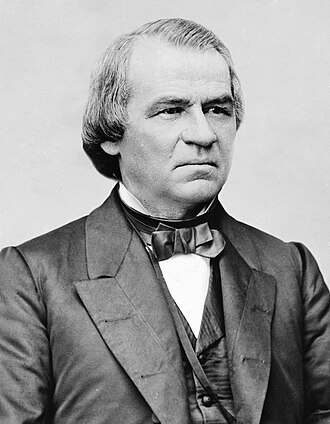
Signed by President Andrew Johnson on May 1, 1866, this order concerns General Orders: 26—Order in Relation to Trials by Military Courts and Commissions. By the President , That hereafter, whenever offenses committed by civilians are to be tried where civil tribunals are in existence which can try them, their cases are not authorized to be, and will not be, brought before military courts-martial or commissions, but will be committed to the proper civil authorities.

Constitutional Assessment: Scrutinized through Article II, Section 2, this action exercises the President's constitutional role as Commander in Chief. Early Framers recognized broad executive discretion in commanding military forces during conflict, provided it remains bounded by congressional declarations and respects civilian domestic courts.

Key Directives & Operative Actions

▪

By the President , That hereafter, whenever offenses committed by civilians are to be tried where civil tribunals are in existence which can try them, their cases are not authorized to be, and will not be, brought before military courts-martial or commissions, but will be committed to the proper civil authorities.

▪

Persons and offenses cognizable by the Rules and Articles of War and by the acts of Congress above cited will continue to be tried and punished by military tribunals as prescribed by the Rules and Articles of War and acts of Congress hereinafter cited, to wit: (Sixtieth of the Rules and Articles of War.) 60.

▪

And be it further enacted , That whenever any contractor for subsistence, clothing, arms, ammunition, munitions of war, and for every description of supplies for the Army or Navy of the United States, shall be found guilty by a court-martial of fraud or willful neglect of duty, he shall be punished by fine, imprisonment, or such other punishment as the court-martial shall adjudge; and any person who shall contract to furnish supplies of any kind or description for the Army or Navy, he shall be deemed and taken as a part of the land or naval forces of the United States for which he shall contract to furnish said supplies, and be subject to the rules and regulations for the government of the land and naval forces of the United States.

▪

And every person so offending may be arrested and held for trial by a court-martial, and if found guilty shall be punished by fine and imprisonment, or such other punishment as the court-martial may adjudge, save the punishment of death.

Constitutional & Societal Entities Impacted

🏛️ Armed Forces & Military Establishments 🏛️ Executive Departments & Federal Civil Servants 🏛️ Private Citizens & Property Owners
🏛️

The Framers' Constitutional Council

1787 Prism

Evaluating this order against the constitutional debates of 1787 and the limits of Article II executive power.

⚖️✨ Zone 2 (Zone of Twilight)
§

"When the President acts in absence of either a congressional grant or denial of authority, he can only rely upon his own independent powers, but there is a zone of twilight in which he and Congress may have concurrent authority."

— Justice Robert H. Jackson, Youngstown Sheet & Tube Co. v. Sawyer (1952) Concurrent Authority / Congressional Silence
JM

James Madison

Separation of Powers & Legislative Primacy

"Power is of an encroaching nature, and it ought to be effectually restrained from passing the limits assigned to it." — Federalist No. 48 (1788)

Madison would view this order with watchful scrutiny. Operating in the 'Zone of Twilight' where Congress is silent, each such directive establishes an administrative precedent that steadily expands the executive perimeter at the expense of legislative primacy.

Madisonian Stance: Vigilant / Cautionary
AH

Alexander Hamilton

The Energetic Executive & Unified Command

"The direction of war implies the direction of the common strength; and the power of directing and employing the common strength must be under the direction of the single hand of the Executive." — Federalist No. 74 (1788)

Hamilton would forcefully champion executive discretion here. For foreign entanglements, commerce defense, and national security, deliberative assemblies are too slow and faction-ridden. A unified, energetic Executive exercising swift command is precisely what the Philadelphia Convention intended for national preservation.

Hamiltonian Stance: Strong Prerogative Support
GM

George Mason

Bill of Rights, Due Process & 10th Amendment

"The president will be surrounded by flatterers and sycophants... and the great powers of the executive will gradually absorb the liberties of the people." — Cato IV (Anti-Federalist, 1787)

The Anti-Federalist prism advises continuous democratic vigilance. Even routine administrative directives aggregate centralized federal power away from town halls and state assemblies toward a distant executive apparatus.

Anti-Federalist Stance: Eternal Vigilance Required
📐

Five Measurable "Constitutional Friction" Dimensions

An objective audit measuring potential separation-of-powers tension against the United States Constitution and established Supreme Court doctrine.

⚖️ Discretionary Twilight Zone
53 / 100 friction index
Dimension 1 • Art. I, §1 & §8

Legislative Encroachment & Purse

Moderate Friction

Administers commerce or fiscal programs requiring ongoing statutory delegation and legislative oversight.

Benchmark: Power of the purse, taxes/tariffs, and rule of law reserved to Congress.
Dimension 2 • Art. II, §1 & §3

Executive Scope & Faithfulness

Moderate Friction

Directs internal executive branch machinery, agency workflows, and federal personnel.

Benchmark: Faithfully execute laws enacted by Congress vs. unilateral decree.
Dimension 3 • 10th Amendment

Federalism & State Sovereignty

High Friction

Creates friction with the Tenth Amendment by conditioning state grants, mandating local compliance, or preempting state police powers.

Benchmark: Police powers and un-delegated responsibilities reserved to the States.
Dimension 4 • 5th & 14th Amendments

Due Process & Individual Rights

Moderate Friction

Applies regulatory or compliance standards to private contractors or commercial entities.

Benchmark: Protection of private property, contracts, liberty, and procedural justice.
Dimension 5 • Separation of Powers

Youngstown Jacksonian Tier

Moderate Friction

The order relies on inherent Article II executive discretion, civil service management, or foreign diplomacy where Congress has neither expressly approved nor prohibited action.

Benchmark: Concurrent Authority / Congressional Silence
⚖️ Audit Synthesis

This order operates within Justice Jackson’s Zone of Twilight, resting upon concurrent presidential authority or congressional silence.

Weighted composite: Art. I (25%), Art. II (25%), Federalism (15%), Due Process (15%), Youngstown (20%).
ℹ️
How to read these dimensions: Executive power expands whenever an administration acts without explicit statutory authorization from Congress (Article I), touches upon police powers historically reserved to the states (Tenth Amendment), or limits private rights and property without judicial process. A low friction score indicates strict concordance with enacted law; a high friction score highlights orders testing the limits of presidential discretion.
Total Words
1,308
7,622 characters
Estimated Read Time
7 min
@ 200 words / min
Flesch-Kincaid
45.8
Post-Graduate Legal
Language Tone Score
+0.02
Constitutional Neutral
How is this scored?
Text size:

Official Archival Text

View Source Document
📑Sections Outline (2 sections)

WAR DEPARTMENT, ADJUTANT-GENERAL'S OFFICE Whereas some military commanders are embarrassed by doubts as to the operation of the proclamation of the President dated the 2d day of April, 1866, upon trials by military courts-martial and military officers; to remove such doubts-- It is ordered by the President , That hereafter, whenever offenses committed by civilians are to be tried where civil tribunals are in existence which can try them, their cases are not authorized to be, and will not be, brought before military courts-martial or commissions, but will be committed to the proper civil authorities. This order is not applicable to camp followers, as provided for under the sixtieth article of war, or to contractors and others specified in section 16, act of July 17, 1862, and sections 1 and 2, act of March 2, 1863. Persons and offenses cognizable by the Rules and Articles of War and by the acts of Congress above cited will continue to be tried and punished by military tribunals as prescribed by the Rules and Articles of War and acts of Congress hereinafter cited, to wit: (Sixtieth of the Rules and Articles of War.) 60. All sutlers and retainers to the camp, and all persons whatsoever serving with the armies of the United States in the field, though not enlisted soldiers, are to be subject to orders, according to the rules and discipline of war. (Extract from "An act to define the pay and emoluments of certain officers of the Army, and for other purposes," approved July 17, 1862.)

Sec. 16. #sec-16

And be it further enacted , That whenever any contractor for subsistence, clothing, arms, ammunition, munitions of war, and for every description of supplies for the Army or Navy of the United States, shall be found guilty by a court-martial of fraud or willful neglect of duty, he shall be punished by fine, imprisonment, or such other punishment as the court-martial shall adjudge; and any person who shall contract to furnish supplies of any kind or description for the Army or Navy, he shall be deemed and taken as a part of the land or naval forces of the United States for which he shall contract to furnish said supplies, and be subject to the rules and regulations for the government of the land and naval forces of the United States. (Extract from "An act to prevent and punish frauds upon the Government of the United States," approved March 2, 1863.) Be it enacted by the Senate and House of Representatives of the United States of America in Congress assembled, That any person in the land or naval forces of the United States, or in the militia in actual service of the United States in time of war, who shall make or cause to be made, or present or cause to be presented for payment or approval to or by any person or office in the civil or military service of the United States, any claim upon or against the Government of the United States, or any department or officer thereof, knowing such claim to be false, fictitious, or fraudulent; any person in such forces or service who shall, for the purpose of obtaining or aiding in obtaining the approval or payment of such claim, make, use, or cause to be made or used, any false bill, receipt, voucher, entry, roll, account, claim, statement, certificate, affidavit, or deposition, knowing the same to contain any false or fraudulent statement or entry; any person in said forces or service who shall make or procure to be made, or knowingly advise the making of, any false oath to any fact, statement, or certificate, voucher or entry, for the purpose of obtaining or of aiding to obtain any approval or payment of any claim against the United States, or any department or officer thereof; any person in said forces or service who, for the purpose of obtaining or enabling any other person to obtain from the Government of the United States, or any department or officer thereof, any payment or allowance, or the approval or signature of any person in the military, naval, or civil service of the United States of or to any false, fraudulent, or fictitious claim, shall forge or counterfeit, or cause or procure to be forged or counterfeited, any signature upon any bill, receipt, voucher, account, claim, roll, statement, affidavit, or deposition; and any person in said forces or service who shall utter or use the same as true or genuine, knowing the same to have been forged or counterfeited; any person in said forces or service who shall enter into any agreement, combination, or conspiracy to cheat or defraud the Government of the United States, or any department or officer thereof, by obtaining or aiding and assisting to obtain the payment or allowance of any false or fraudulent claim; any person in said forces or service who shall steal, embezzle, or knowingly and willfully misappropriate or apply to his own use or benefit, or who shall wrongfully and knowingly sell, convey, or dispose of any ordnance, arms, ammunition, clothing, subsistence stores, money, or other property of the United States, furnished or to be used for the military or naval service of the United States; any contractor, agent, paymaster, quartermaster, or other person whatsoever in said forces or service having charge, possession, custody, or control of any money or other public property used or to be used in the military or naval service of the United States, who shall, with intent to defraud the United States, or willfully to conceal such money or other property, deliver or cause to be delivered to any other person having authority to receive the same any amount of such money or other public property less than that for which he shall receive a certificate or receipt; any person in said forces or service who is or shall be authorized to make or deliver any certificate, voucher, or receipt, or other paper certifying the receipt of arms, ammunition, provisions, clothing, or other public property so used or to be used, who shall make or deliver the same to any person without having full knowledge of the truth of the facts stated therein, and with intent to cheat, defraud, or injure the United States; any person in said forces or service who shall knowingly purchase or receive, in pledge for any obligation or indebtedness, from any soldier, office, or other person called into or employed in said forces or service, any arms, equipments, ammunition, clothes, or military stores, or other public property, such soldier, officer, or other person not having the lawful fight to pledge or sell the same, shall be deemed guilty of a criminal offense, and shall be subject to the rules and regulations made for the government of the military and naval forces of the United States, and of the militia when called into and employed in the actual service of the United States in time of war, and to the provisions of this act. And every person so offending may be arrested and held for trial by a court-martial, and if found guilty shall be punished by fine and imprisonment, or such other punishment as the court-martial may adjudge, save the punishment of death.

Sec. 2. #sec-2

And be it further enacted, That any person heretofore called or hereafter to be called into or employed in such forces or service who shall commit any violation of this act, and shall afterwards receive his discharge or be dismissed from the service, shall, notwithstanding such discharge or dismissal, continue to be liable to be arrested and held for trial and sentence by a court-martial in the same manner and to the same extent as if he had not received such discharge or been dismissed. By order of the Secretary of War: E. D. TOWNSEND, Assistant Adjutant-General.

📜

Scholarly & Legal Citations

Exec. Order, General Orders: 26—Order in Relation to Trials by Military Courts and Commissions (May 1, 1866), https://executiveordersarchive.org/orders/app-executive-order-general-orders-26-order-relation-trials-military-courts-and-commissions.