WAR DEPARTMENT The breaking out of a formidable insurrection based on a conflict of political ideas, being an event without precedent in the United States, was necessarily attended by great confusion and perplexity of the public mind. Disloyalty before unsuspected suddenly became bold, and treason astonished the world by bringing at once into the field military forces superior in number to the standing Army of the United States. Every department of the Government was paralyzed by treason. Defection appeared in the Senate, in the House of Representatives, in the Cabinet, in the Federal courts; ministers and consuls returned from foreign countries to enter the insurrectionary councils or land or naval forces; commanding and other officers of the Army and in the Navy betrayed our councils or deserted their posts for commands in the insurgent forces. Treason was flagrant in the revenue and in the post-office service, as well as in the Territorial governments and in the Indian reserves. Not only governors, judges, legislators, and ministerial officers in the States, but even whole States rushed one after another with apparent unanimity into rebellion. The capital was besieged and its connection with all the States cut off. Even in the portions of the country which were most loyal political combinations and secret societies were formed furthering the work of disunion, while, from motives of disloyalty or cupidity or from excited passions or perverted sympathies, individuals were found furnishing men, money, and materials of war and supplies to the insurgents' military and naval forces. Armies, ships, fortifications, navy-yards, arsenals, military posts, and garrisons one after another were betrayed or abandoned to the insurgents. Congress had not anticipated, and so had not provided for, the emergency. The municipal authorities were powerless and inactive. The judicial machinery seemed as if it had been designed, not to sustain the Government, but to embarrass and betray it. Foreign intervention, openly invited and industriously instigated by the abettors of the insurrection, became imminent, and has only been prevented by the practice of strict and impartial justice, with the most perfect moderation, in our intercourse with nations. The public mind was alarmed and apprehensive, though fortunately not distracted or disheartened. It seemed to be doubtful whether the Federal Government, which one year before had been thought a model worthy of universal acceptance, had indeed the ability to defend and maintain itself. Some reverses, which, perhaps, were unavoidable, suffered by newly levied and inefficient forces, discouraged the loyal and gave new hopes to the insurgents. Voluntary enlistments seemed about to cease and desertions commenced. Parties speculated upon the question whether conscription had not become necessary to fill up the armies of the United States. In this emergency the President felt it his duty to employ with energy the extraordinary powers which the Constitution confides to him in cases of insurrection. He called into the field such military and naval forces, unauthorized by the existing laws, as seemed necessary. He directed measures to prevent the use of the post-office for treasonable correspondence. He subjected passengers to and from foreign countries to new passport regulations, and he instituted a blockade, suspended the writ of habeas corpus in various places, and caused persons who were represented to him as being or about to engage in disloyal and treasonable practices to be arrested by special civil as well as military, agencies and detained in military custody when necessarry to prevent them and deter others from such practices. Examinations of such cases were instituted, and some of the persons so arrested have been discharged from time to time under circumstances or upon conditions compatible, as was thought, with the public safety. Meantime a favorable change of public opinion has occurred. The line between loyalty and disloyalty is plainly defined. The whole structure of the Government is firm and stable. Apprehension of public danger and facilities for treasonable practices have diminished with the passions which prompted heedless persons to adopt them. The insurrection is believed to have culminated and to be declining. The President, in view of these facts, and anxious to favor a return to the normal course of the Administration as far as regard for the public welfare will allow, directs that all political prisoners or state prisoners now held in military custody be released on their subscribing to a parole engaging them to, render no aid or comfort to the enemies in hostility to the United States. The Secretary of War will, however, in his discretion, except from the effect of this order any persons detained as spies in the service of the insurgents, or others whose release at the present moment may be deemed incompatible with the public safety. To all persons who shall be so released and who shall keep their parole the President grants an amnesty for any past offenses of treason or disloyalty which they may have committed. Extraordinary arrests will hereafter be made under the direction of the military authorities alone. By order of the President: EDWIN M. STANTON, Secretary of War.
Presidential Order
⚖️✨ Zone 2: Zone of Twilight Constitutional Neutral (+0.02)
📜 Art. II §2: Commander-in-Chief Supervisory Authority
Executive Order No. 1—Relating to Political Prisoners
Executive Brief • At a Glance
⏱️ 4 min read (834 words) •
● In Effect
🎯 Primary Mandate
Defection appeared in the Senate, in the House of Representatives, in the Cabinet, in the Federal courts; ministers and consuls returned from foreign countries to enter the insurrectionary councils or land or naval forces; commanding and other officers of the Army and in the Navy betrayed our councils or deserted their posts for commands in the insurgent forces.
⚖️ Constitutional Footing
⚖️✨ Zone 2: Zone of Twilight
Concurrent Authority / Congressional Silence
📜 Art. II §2: Commander-in-Chief Supervisory Authority
🏛️ Scope & Affected Sectors
Armed Forces & Military Establishments Sovereign State Governments & Localities Executive Departments & Federal Civil Servants Private Citizens & Property Owners
Plain-English Translation & Framers' Constitutional Analysis
Early Statesman synthesis distilling legal jargon into practical meaning, statutory anchors, and structural constitutional impacts.
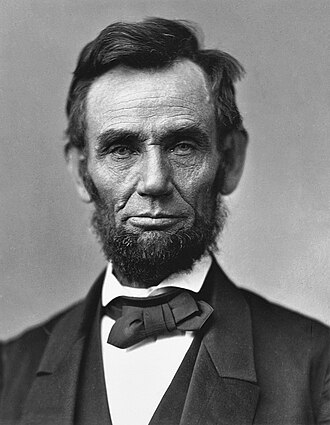
Signed by President Abraham Lincoln on February 14, 1862, this order concerns No. 1—Relating to Political Prisoners. The breaking out of a formidable insurrection based on a conflict of political ideas, being an event without precedent in the United States, was necessarily attended by great confusion and perplexity of the public mind. Disloyalty before unsuspected suddenly became bold, and treason astonished the world by bringing at once into the field military forces superior in number to the standing Army of the United States.
Constitutional Assessment: Scrutinized through Article II, Section 2, this action exercises the President's constitutional role as Commander in Chief. Early Framers recognized broad executive discretion in commanding military forces during conflict, provided it remains bounded by congressional declarations and respects civilian domestic courts.
Key Directives & Operative Actions
▪
Defection appeared in the Senate, in the House of Representatives, in the Cabinet, in the Federal courts; ministers and consuls returned from foreign countries to enter the insurrectionary councils or land or naval forces; commanding and other officers of the Army and in the Navy betrayed our councils or deserted their posts for commands in the insurgent forces.
▪
He subjected passengers to and from foreign countries to new passport regulations, and he instituted a blockade, suspended the writ of habeas corpus in various places, and caused persons who were represented to him as being or about to engage in disloyal and treasonable practices to be arrested by special civil as well as military, agencies and detained in military custody when necessarry to prevent them and deter others from such practices.
▪
The President, in view of these facts, and anxious to favor a return to the normal course of the Administration as far as regard for the public welfare will allow, directs that all political prisoners or state prisoners now held in military custody be released on their subscribing to a parole engaging them to, render no aid or comfort to the enemies in hostility to the United States.
▪
To all persons who shall be so released and who shall keep their parole the President grants an amnesty for any past offenses of treason or disloyalty which they may have committed.
Constitutional & Societal Entities Impacted
🏛️ Armed Forces & Military Establishments
🏛️ Sovereign State Governments & Localities
🏛️ Executive Departments & Federal Civil Servants
🏛️ Private Citizens & Property Owners
🏛️ Foreign Nations & International Entities
Policy Areas & Topics
🏛️
The Framers' Constitutional Council
1787 PrismEvaluating this order against the constitutional debates of 1787 and the limits of Article II executive power.
⚖️✨ Zone 2 (Zone of Twilight)
§
"When the President acts in absence of either a congressional grant or denial of authority, he can only rely upon his own independent powers, but there is a zone of twilight in which he and Congress may have concurrent authority."
— Justice Robert H. Jackson, Youngstown Sheet & Tube Co. v. Sawyer (1952) Concurrent Authority / Congressional Silence
JM
James Madison
Separation of Powers & Legislative Primacy
"Power is of an encroaching nature, and it ought to be effectually restrained from passing the limits assigned to it." — Federalist No. 48 (1788)
Madison would view this order with watchful scrutiny. Operating in the 'Zone of Twilight' where Congress is silent, each such directive establishes an administrative precedent that steadily expands the executive perimeter at the expense of legislative primacy.
Madisonian Stance: Vigilant / Cautionary
AH
Alexander Hamilton
The Energetic Executive & Unified Command
"The direction of war implies the direction of the common strength; and the power of directing and employing the common strength must be under the direction of the single hand of the Executive." — Federalist No. 74 (1788)
Hamilton would forcefully champion executive discretion here. For foreign entanglements, commerce defense, and national security, deliberative assemblies are too slow and faction-ridden. A unified, energetic Executive exercising swift command is precisely what the Philadelphia Convention intended for national preservation.
Hamiltonian Stance: Strong Prerogative Support
GM
George Mason
Bill of Rights, Due Process & 10th Amendment
"The president will be surrounded by flatterers and sycophants... and the great powers of the executive will gradually absorb the liberties of the people." — Cato IV (Anti-Federalist, 1787)
The Anti-Federalist prism advises continuous democratic vigilance. Even routine administrative directives aggregate centralized federal power away from town halls and state assemblies toward a distant executive apparatus.
Anti-Federalist Stance: Eternal Vigilance Required
📐
Five Measurable "Constitutional Friction" Dimensions
An objective audit measuring potential separation-of-powers tension against the United States Constitution and established Supreme Court doctrine.
⚖️ Discretionary Twilight Zone
48 / 100 friction index
Dimension 1 • Art. I, §1 & §8
Moderate Friction
Legislative Encroachment & Purse
Administers commerce or fiscal programs requiring ongoing statutory delegation and legislative oversight.
Benchmark: Power of the purse, taxes/tariffs, and rule of law reserved to Congress.
Dimension 2 • Art. II, §1 & §3
Low Friction
Executive Scope & Faithfulness
Exercises standard supervisory executive authority to faithfully execute existing statutes.
Benchmark: Faithfully execute laws enacted by Congress vs. unilateral decree.
Dimension 3 • 10th Amendment
Moderate Friction
Federalism & State Sovereignty
Engages state and local partners in cooperative federalism programs.
Benchmark: Police powers and un-delegated responsibilities reserved to the States.
Dimension 4 • 5th & 14th Amendments
High Friction
Due Process & Individual Rights
Scrutinized under the Bill of Rights for potential impact on private contracts, property rights, or procedural due process.
Benchmark: Protection of private property, contracts, liberty, and procedural justice.
Dimension 5 • Separation of Powers
Moderate Friction
Youngstown Jacksonian Tier
The order relies on inherent Article II executive discretion, civil service management, or foreign diplomacy where Congress has neither expressly approved nor prohibited action.
Benchmark: Concurrent Authority / Congressional Silence
⚖️
Audit Synthesis
This order operates within Justice Jackson’s Zone of Twilight, resting upon concurrent presidential authority or congressional silence.
Weighted composite: Art. I (25%), Art. II (25%), Federalism (15%), Due Process (15%), Youngstown (20%).
ℹ️
How to read these dimensions: Executive power expands whenever an administration acts without explicit statutory authorization from Congress (Article I), touches upon police powers historically reserved to the states (Tenth Amendment), or limits private rights and property without judicial process. A low friction score indicates strict concordance with enacted law; a high friction score highlights orders testing the limits of presidential discretion.
Total Words
834
5,314 characters
Estimated Read Time
4 min
@ 200 words / min
Flesch-Kincaid
15.1
College Level
Text size:
Related Executive Orders
Other executive actions signed by Abraham Lincoln around this period.
Order
Feb 13, 1862
⚖️✨ Zone 2 (Zone of Twilight) Constitutional Neutral
Executive Order
📜 Art. II §2: Commander-in-Chief Supervisory Authority
Ordered , I. That all applications to go south across the military lines of the United States be made to Major-General John A. Dix, commanding at Baltimore, who will grant or refuse the same at his discretion. 2.
 Abraham Lincoln
High School • 1m
Order
Feb 11, 1862
⚖️✨ Zone 2 (Zone of Twilight) Constitutional Neutral
Executive Order
📜 Art. II §2: Commander-in-Chief Supervisory Authority
Ordered, That D.C. McCallum be, and he is hereby, appointed military director and superintendent of railroads in the United States, with authority to enter upon, take possession of, hold, and use all railroads, engines, cars, locomotives, equipments, appendages, and…
Abraham Lincoln College Level • 1m
Order
Feb 18, 1862
⚖️✨ Zone 2 (Zone of Twilight) Constitutional Neutral
Executive Order
📜 Art. II §2: Commander-in-Chief Supervisory Authority
Ordered by the President, Commander in Chief of the Army and Navy of the United States, That on the 22d day of February, in the Hall of the House of Representatives, immediately after the Farewell Address of George Washington shall have been read, the rebel flags lately…
Abraham Lincoln College Level • 1m
Order
Feb 18, 1862
⚖️✨ Zone 2 (Zone of Twilight) Constitutional Neutral
Executive Order
📜 Art. II §2: Commander-in-Chief Supervisory Authority
No. 16. HEADQUARTERS OF THE ARMY ADJUTANT-GENERAL'S OFFICE I. The following concurrent resolutions of the two Houses of the Congress of the United States are published for the information of the Army: Resolved, That the two Houses will assemble in the Chamber of the House of…
Abraham Lincoln Post-Graduate Legal • 10m
Order
Feb 18, 1862
⚖️✨ Zone 2 (Zone of Twilight) Constitutional Neutral
Executive Order
📜 Art. II §2: Commander-in-Chief Supervisory Authority
The President, Commander in Chief of the Army and Navy, returns thanks to Brigadier-General Burnside and Flag-Officer Goldsborough, and to Brigadier-General Grant and Flag-Officer Foote, and the land and naval forces under their respective commands, for their gallant…
Abraham Lincoln College Level • 1m
Order
Feb 18, 1862
⚖️✨ Zone 2 (Zone of Twilight) Constitutional Neutral
Executive Order
📜 Art. II §2: Commander-in-Chief Supervisory Authority
Brigadier-General F. W. LANDER: The President directs me to say that he has observed with pleasure the activity and enterprise manifested by yourself and the officers and soldiers of your command.
Abraham Lincoln High School • 1m
📜
Scholarly & Legal Citations
Exec. Order, No. 1—Relating to Political Prisoners (Feb. 14, 1862), https://executiveordersarchive.org/orders/app-executive-order-no-1-relating-political-prisoners.
