Early Statesman synthesis distilling legal jargon into practical meaning, statutory anchors, and structural constitutional impacts.
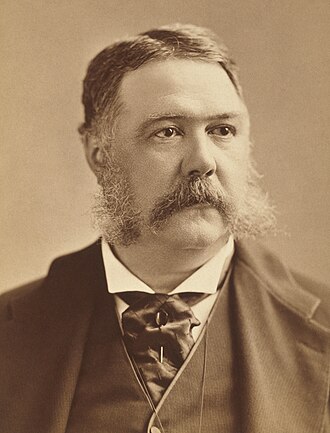
This executive order, signed by President Chester A. Arthur on 1884-03-20, establishes federal administrative policy concerning "—Withdrawing Sioux Indian Land." It is a direct, concise executive instruction delivering focused administrative or military commands to department leadership.
Constitutional Assessment: This action represents an orderly exercise of Article II administrative discretion, managing the internal machinery and personnel of the executive branch without abridging the ancient liberties of the people.
Key Directives & Operative Actions
▪Formal executive instruction issued by the President establishing official administrative policy on —Withdrawing Sioux Indian Land.
Constitutional & Societal Entities Impacted
🏛️ Private Citizens & Property Owners
Total Words
106
609 characters
Estimated Read Time
1 min
@ 200 words / min
Flesch-Kincaid
23
Post-Grad reading level
Constitutional Polarity
+0.02
Framers' Alignment index
📜
Scholarly & Legal Citations
Exec. Order, "Executive Order—Withdrawing Sioux Indian Land," Chester A. Arthur (Mar 20, 1884). Available at https://executiveordersarchive.org/orders/app-executive-order-withdrawing-sioux-indian-land.
Official Document Text
Source: The American Presidency Project (UCSB Archive)
Executive Mansion, March 20, 1884. It is hereby ordered that the lands embraced within the three existing Executive additions to the Great Sioux Reservation, in Dakota, east of the Missouri River, viz, the one opposite the Standing Rock Agency, the one opposite the mouth of Grand River and the site of the old Grand River Agency, and the one opposite the mouth of Big Cheyenne River and the Cheyenne River Agency, be, and the same are hereby, restored to the mass of the public domain, the same being no longer needed for the purpose for which they were withdrawn from sale and settlement. Chester A. Arthur.