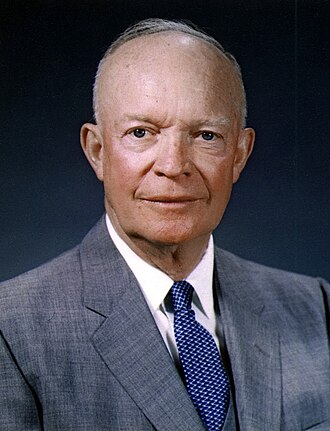
By virtue of the authority vested in me by section 301 of title 3 of the United States Code, section 499 of title 14 of the United States Code, and Article 140 of the Uniform Code of Military Justice (64 Stat. 145), and as President of the United States, it is hereby ordered as follows: SECTION 1. The Secretary of the Treasury is hereby designated and empowered to perform the following-described functions without the approval, ratification, or other action of the President: (a) The authority vested in the President by section 149 of title 14 of the United States Code, in his discretion, to detail officers and enlisted men of the Coast Guard to assist foreign governments in matters concerning which the Coast Guard may be of assistance. (b) The authority vested in the President by section 229 of title 14 of the United States Code to revoke the commission of any officer on the active list of the Coast Guard who, at the date of such revocation, has had less than three years of continuous service as a commissioned officer in the Coast Guard, and to prescribe regulations relating to such revocations. (c) The authority vested in the President by section 232 of title 14 of the United States Code, in his discretion, to retire from active service any commissioned officer of the Coast Guard, upon his own application, who has completed twenty years of active service in the Coast Guard, Navy, Army, Air Force, or Marine Corps, or the Reserve Components thereof. (d) The authority vested in the President by section 235 of title 14 of the United States Code to retire, to approve the retirement of, to place out of line of promotion, and to approve the placing out of line of prom9tion of, officers of the Coast Guard. (e) The authority vested in the President by section 492 of title 14 of the United States Code to present a distinguished service medal (including incidental items) to any person who, while serving in any capacity with the Coast Guard, distinguishes himself by exceptionally meritorious service to the Government in a duty of great responsibility. (f) The authority vested in the President by section 493 of title 14 of the United States Code to present the Coast Guard medal (including incidental items) to any person who, while serving in any capacity with the Coast Guard, distinguishes himself by heroism not involving actual conflict with an enemy. (g) The authority vested in the President by section 494 of title 14 of the United States Code to award emblems, insignia, rosettes, and other devices, to the extent that such authority relates to the awarding of such items to be worn with the distinguished service medal or the Coast Guard medal. (h) The authority vested in the President by section 498 of title 14 of the United States Code to make posthumous awards of decorations and to designate representatives to receive such awards, to the extent that such authority relates to the awarding of the distinguished service medal or the Coast Guard medal, or ribbons, emblems, insignia, rosettes, or other devices corresponding thereto. (i) The authority vested in the President by section 499 of title 14 of the United States Code to make rules, regulations, and orders to the extent that they shall relate to the authority described in sections 1 (1), 1 (g), and 1 (h) above. (j) The authority vested in the President by the first paragraph of section 806 of the act of September 8, 1916, ch. 463, 39 Stat. 799 (15 U.S.C. 77), to direct the detention of any vessel, American or foreign, by withholding clearance or by formal notice forbidding departure; but such authority shall be exercised by the Secretary of the Treasury only upon a finding by the President that there is reasonable ground to believe that the vessel concerned is making or giving undue or unreasonable preference or advantage to any party, or is subjecting any party to undue or unreasonable prejudice, disadvantage, injury, or discrimination, as described in the said paragraph; and the authority so vested to revoke, modify, or renew any such direction. (k) The authority vested in the President by the second paragraph of the said section 806 of the act of September 8, 1916, to withhold clearance from one or more vessels of a belligerent country or government until such belligerent shall restore to American vessels and American citizens reciprocal liberty of commerce and equal facilities for trade, and the authority to direct that similar privileges and facilities, if any, enjoyed by vessels and citizens of such belligerent in the United States or its possessions be refused to vessels or citizens of such belligerent; but such authority shall not, in either instance, be exercised by the Secretary of the Treasury with respect to any vessel or citizen of such belligerent unless and until the President proclaims that the belligerent nation concerned is denying privileges and facilities to American vessels as described in the said paragraph. (l) The authority vested in the President by section 963 (a) of title 18 of the United States Code to detain, in accordance with the provisions of such section, any armed vessel, or any vessel, domestic or foreign (other than one which has entered the ports of the United States as a public vessel), which is manifestly built for warlike purposes or has been converted or adapted from a private vessel to one suitable for warlike use, and to determine, in each case, whether the proof required by such section is satisfactory. (m) The authority vested in the President by section 967 (a) of title 18 of the United States Code, during a war in which the United States is a neutral nation, to withhold clearance from or to any vessel, domestic or foreign, or, by service of formal notice upon the owner, master, or person in command or in charge of any domestic vessel not required to secure clearances, and to forbid its departure from port or from the United States, whenever there is reasonable cause to believe that such vessel is about to carry fuel, arms, ammunition, men, supplies, dispatches, or information to any warship, tender, or supply ship of a foreign belligerent nation in violation of the laws, treaties, or obligations of the United States under the law of nations. (n) The authority vested in the President by section 10 (a) of the act of November 4, 1939, ch. 2, 54 Stat. 9 (22 U.S.C. 450 (a)), to require the owner, master, or person in command of a vessel to give a bond to the United States, as prescribed by the said section 10 (a). (o) The authority vested in the President by section 10 (b) of the act of November 4, 1939, ch. 2, 54 Stat. 9 (22 U.S.C. 450 (b)), to prohibit the departure of a vessel from a port of the United States, in accordance with the provisions of the said section 10 (b). (p) The authority vested in the President by section 2 of the act of August 18, 1914, ch. 256, 38 Stat. 699 (46 U.S.C. 236), to suspend, in his discretion, by order, so far and for such length of time as he may deem desirable, the provisions of law prescribing that all watch officers of vessels of the United States registered for foreign trade shall be citizens of the United States. (q) The authority vested in the President by section 2 of the act of October 17, 1940, ch. 896, 54 Stat. 1201 (46 U.S.C. 643b) to extend, whenever in his judgment the national interest requires, the provisions of subsection (b) of section 4551, Revised Statutes, as amended, to such additional class or classe•of vessels and to such waters as he may designate. (r) The authority vested in the Secretary of the Treasury by the first paragraph of section 1 of Title II of the act of June 15, 1917, ch. 30, 40 Stat. 220, as amended (50 U.S.C. 191), during a national emergency proclaimed as provided in the said paragraph, (1) to make rules and regulations governing the anchorage and movement of any vessel, foreign or domestic, in the territorial waters of the United States, and (2) to take full possession and control of such vessel for the purposes set forth in the said paragraph. (s) The authority vested in the President by section 6 of the act of July 24, 1941, ch. 320, 55 Stat. 604, as amended (34 U.S.C. 350e), to make appointments of officers below flag rank without the advice and consent of the Senate, to the extent that such authority relates, pursuant to section 11 (b) of the said act, as amended (34 U.S.C. 350j), to officers of the United States Coast Guard. SEC. 2. The Secretary of the Treasury is hereby designated and empowered to perform without the approval, ratification, or other action of the President the following described functions to the extent that they relate to the United States Coast Guard: (a) The authority vested in the President by Article 4 (a) of the Uniform Code of Military Justice (section 1 of the act of May 5, 1950, ch. 169, 64 Stat. 110; 50 U.S.C. 554 (a)), to convene a general court-martial to try any dismissed officer, upon application by the officer concerned for trial by court-martial. (b) The authority vested in the President by Articles 4 (c) and 75 of the Uniform Code of Military Justice (64 Stat. 110, 132; 50 U.S.C. 554 (c), 662), to reappoint a discharged officer to such commissioned rank and precedence as the former officer would have attained had he not been dismissed, and to direct the extent to which any such reappointment shall affect the promotion status of other officers. (c) The authority vested in the President by section 10 of the act of May 5, 1950, ch. 169, 64 Stat. 146 (50 U.S.C. 739), to drop from the rolls any officer who has been absent without authority from his place of duty for a period of three months or more, or who, having been found guilty by the civil authorities of any offense, is finally sentenced to confinement in a Federal or State penitentiary or correctional institution. (d) The authority vested in the President by section 219 of the Armed Forces Reserve Act, approved July 9, 1952 (66 Stat. 487; 50 U.S.C. 943), to make appointments of Reserves in commissioned grades below flag officer grades. (e) The authority vested in the President by section 221 of the said Armed Forces Reserve Act (50 U.S.C. 945) to determine the tenure in office of commissioned officers of the reserve. (f) The authority vested in the President by section 248 of the said Armed Forces Reserve Act (50 U.S.C. 991), to effect the discharge of commissioned officers of the reserve. (g) The authority vested in the President by section 6 of the act of February 21, 1946, ch. 34, 60 Stat. 27 (34 U.S.C. 410b), as made applicable to the Coast Guard Reserve by section 755 (a) of title 14 of the United States Code, in his discretion, to place upon the retired list any officer of the Coast Guard Reserve, upon his own application, who has completed more than twenty years of active service as described in the said section 6. SEC. 3. All actions heretofore taken by the President with respect to the matters affected by this order and in force at the time of issuance of this order, including any regulations prescribed or approved by the President with respect to such matters, shall, except as they may be inconsistent with the provisions of this order, remain in effect until amended, modified, or revoked pursuant to the authority conferred by this order. SEC. 4. As used in this order, the term "functions" embraces duties, powers, responsibilities, authority, or discretion, and the term "perform" may be construed to mean "exercise". SEC. 5. Whenever the entire Coast Guard operates as a service in the Navy, the references to the Secretary of the Treasury in the introductory portions of sections 1 and 2 of this order shall be deemed to be references to the Secretary of the Navy. DWIGHT D. EISENHOWER
THE WHITE HOUSE, #signature
September 16, 1955.
