★
Executive Orders Historical Archive
Cite
Executive Order 11002 ⚖️⚠️ Zone 3: Lowest Ebb Constitutional Friction / Overreach (-0.19) 📜 Art. II §2: Commander-in-Chief / War Prerogative Tension

Executive Order 11002—Assigning Emergency Preparedness Functions to the Postmaster General

•
Friday, February 16, 1962
•
3 min read (590 words)

Executive Brief • At a Glance

⏱️ 3 min read (590 words) • ● In Effect
🎯 Primary Mandate

The Postmaster General shall assist in the development of a national emergency registration system.

⚖️ Constitutional Footing
⚖️⚠️ Zone 3: Lowest Ebb
Incompatible with Expressed Will of Congress or High Friction
📜 Art. II §2: Commander-in-Chief / War Prerogative Tension
🏛️ Scope & Affected Sectors
Armed Forces & Military Establishments Sovereign State Governments & Localities Executive Departments & Federal Civil Servants Public Health & Medical Institutions

Plain-English Translation & Framers' Constitutional Analysis

Early Statesman synthesis distilling legal jargon into practical meaning, statutory anchors, and structural constitutional impacts.

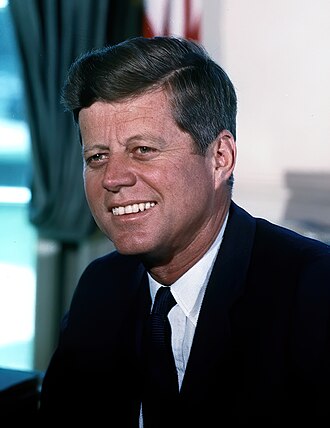
Signed by President John F. Kennedy on February 16, 1962, this order concerns Assigning Emergency Preparedness Functions to the Postmaster General. Scope. The Postmaster General shall assist in the development of a national emergency registration system. These plans and programs shall be designed to develop a state of readiness in this area with respect to all conditions of national emergency including attack upon the United States. SEC. 2. Cooperation with Department of Defense.

Constitutional Assessment: Scrutinized through Article II, Section 2, this action exercises the President's constitutional role as Commander in Chief. Early Framers recognized broad executive discretion in commanding military forces during conflict, provided it remains bounded by congressional declarations and respects civilian domestic courts.

Key Directives & Operative Actions

▪

The Postmaster General shall assist in the development of a national emergency registration system.

▪

These plans and programs shall be designed to develop a state of readiness in this area with respect to all conditions of national emergency including attack upon the United States.

▪

In consonance with national civil defense plans, programs, and operations of the Department of Defense under Executive Order No. 10952, the Postmaster General shall: (a) Registration system.

▪

Assist in planning a national program and developing technical guidance for States, and directing Post Office activities concerned with registering persons and families for the purpose of receiving and answering welfare inquiries, and reuniting families in civil defense emergencies.

Constitutional & Societal Entities Impacted

🏛️ Armed Forces & Military Establishments 🏛️ Sovereign State Governments & Localities 🏛️ Executive Departments & Federal Civil Servants 🏛️ Public Health & Medical Institutions
🏛️

The Framers' Constitutional Council

1787 Prism

Evaluating this order against the constitutional debates of 1787 and the limits of Article II executive power.

⚖️⚠️ Zone 3 (Lowest Ebb)
§

"When the President takes measures incompatible with the expressed or implied will of Congress, his power is at its lowest ebb."

— Justice Robert H. Jackson, Youngstown Sheet & Tube Co. v. Sawyer (1952) Incompatible with Expressed Will of Congress or High Friction
JM

James Madison

Separation of Powers & Legislative Primacy

"The accumulation of all powers, legislative, executive, and judiciary, in the same hands... may justly be pronounced the very definition of tyranny." — Federalist No. 47 (1788)

Madison would express grave alarm over this order. By asserting independent authority in tension with legislative limits or the Bill of Rights, the Executive risks collapsing the separation of powers into unilateral rule. Under the Madisonian model, no emergency justifies the Executive substituting its decree for a deliberative Act of Congress.

Madisonian Stance: Strict Dissent (Overreach)
AH

Alexander Hamilton

The Energetic Executive & Unified Command

"The direction of war implies the direction of the common strength; and the power of directing and employing the common strength must be under the direction of the single hand of the Executive." — Federalist No. 74 (1788)

Hamilton would forcefully champion executive discretion here. For foreign entanglements, commerce defense, and national security, deliberative assemblies are too slow and faction-ridden. A unified, energetic Executive exercising swift command is precisely what the Philadelphia Convention intended for national preservation.

Hamiltonian Stance: Strong Prerogative Support
GM

George Mason

Bill of Rights, Due Process & 10th Amendment

"The purse and the sword ought never to be in the same hands... nor the liberties of the citizen placed at the pleasure of a single magistrate." — Virginia Ratifying Convention (1788)

George Mason and the Anti-Federalists would sound a fierce warning. They feared that Article II would inevitably evolve into an elective monarchy. When an executive order impacts private rights, property, or civil liberties without individualized judicial process, Mason would see their darkest predictions verified.

Anti-Federalist Stance: Vehement Objection
📐

Five Measurable "Constitutional Friction" Dimensions

An objective audit measuring potential separation-of-powers tension against the United States Constitution and established Supreme Court doctrine.

⚠️ Elevated Constitutional Friction
52 / 100 friction index
Dimension 1 • Art. I, §1 & §8

Legislative Encroachment & Purse

Low Friction

Operates within delegated statutory execution without modifying legislative appropriations or taxing powers.

Benchmark: Power of the purse, taxes/tariffs, and rule of law reserved to Congress.
Dimension 2 • Art. II, §1 & §3

Executive Scope & Faithfulness

High Friction

Invokes broad unilateral or emergency executive authorities that test the constitutional boundary of the Take Care Clause.

Benchmark: Faithfully execute laws enacted by Congress vs. unilateral decree.
Dimension 3 • 10th Amendment

Federalism & State Sovereignty

Moderate Friction

Engages state and local partners in cooperative federalism programs.

Benchmark: Police powers and un-delegated responsibilities reserved to the States.
Dimension 4 • 5th & 14th Amendments

Due Process & Individual Rights

Low Friction

Focuses on internal governmental operations with no direct impairment of private rights or property.

Benchmark: Protection of private property, contracts, liberty, and procedural justice.
Dimension 5 • Separation of Powers

Youngstown Jacksonian Tier

High Friction

The order asserts independent Article II prerogative against statutory constraints, reallocates funds without explicit appropriation, or stretches executive power into realms constitutionally reserved to the legislature or judiciary.

Benchmark: Incompatible with Expressed Will of Congress or High Friction
⚖️ Audit Synthesis

This directive engages significant constitutional friction across statutory authorization, legislative prerogatives, or individual liberties.

Weighted composite: Art. I (25%), Art. II (25%), Federalism (15%), Due Process (15%), Youngstown (20%).
ℹ️
How to read these dimensions: Executive power expands whenever an administration acts without explicit statutory authorization from Congress (Article I), touches upon police powers historically reserved to the states (Tenth Amendment), or limits private rights and property without judicial process. A low friction score indicates strict concordance with enacted law; a high friction score highlights orders testing the limits of presidential discretion.
Total Words
590
3,928 characters
Estimated Read Time
3 min
@ 200 words / min
Flesch-Kincaid
14.5
College Level
Language Tone Score
-0.19
Constitutional Friction / Overreach
How is this scored?
Text size:

Official Archival Text

View Source Document

By virtue of the authority vested in me as President of the United States, including authority vested in me by Reorganization Plan No. 1 of 1958 (72 Stat. 1799), it is hereby ordered as follows: SECTION 1. Scope. The Postmaster General shall assist in the development of a national emergency registration system. These plans and programs shall be designed to develop a state of readiness in this area with respect to all conditions of national emergency including attack upon the United States. SEC. 2. Cooperation with Department of Defense. In consonance with national civil defense plans, programs, and operations of the Department of Defense under Executive Order No. 10952, the Postmaster General shall: (a) Registration system. Assist in planning a national program and developing technical guidance for States, and directing Post Office activities concerned with registering persons and families for the purpose of receiving and answering welfare inquiries, and reuniting families in civil defense emergencies. The program shall include: 1. Forms. Procurement, transportation, storage, and distribution of safety notification and emergency change of address cards in quantities and localities jointly determined by the Department of Defense and the Post Office Department. 2. Training. Conduct of training programs for postal employees which will enable them to operate emergency central postal directories and to assist in the operation of a national emergency registration system including support of local welfare activities in reuniting families. (b) Damage assessment. Maintain a capability to assess the effects of attack on its postal service and resources, both at national and field levels, and provide data to the Department of Defense. SEC. 3. Functional Guidance. The Postmaster General, in carrying out the functions assigned in this order, shall be guided by the following: (a) Interagency cooperation. The Postmaster General shall work with the heads of other agencies concerned in the development of systems outlined above. He shall utilize to the maximum those capabilities of other agencies qualified to perform or assist in the performance of assigned functions by contractual or other agreements. (b) Presidential coordination. The Director of the Office of Emergency Planning shall advise and assist the President in determining policy for, and assist him in coordinating the performance of functions under this order with the total national preparedness program. (c) Emergency planning. Emergency plans and programs, and emergency organization structures required thereby, shall be developed as an integral part of the continuing activities of the Post Office Department on the basis that it will have the responsibility for carrying out such programs during an emergency. The Postmaster General shall be prepared to implement all appropriate plans developed under this order. Modifications and temporary organizational changes, based on emergency conditions, shall be in accordance with policy determination by the President. SEC. 4. Emergency Actions. Nothing in this order shall be construed as conferring authority under Title III of the Federal Civil Defense Act of 1950, as amended, or otherwise, to put into effect any emergency plan, procedure, policy, program, or course of action prepared or developed pursuant to this order. Such authority is reserved to the President. SEC. 5. Redelegation. The Postmaster General is hereby authorized to redelegate within the Post Office Department the functions hereinabove assigned to him. SEC. 6. Prior Actions. To the extent of any inconsistency between the provisions of any prior order and the provisions of this order, the latter shall control. Emergency Preparedness Order No. 9 (heretofore issued by the Director, Office of Civil and Defense Mobilization) (26 F.R. 661-662), is hereby revoked. JOHN F. KENNEDY

THE WHITE HOUSE, #signature

February 16, 1962

🔗

Referenced By Later Executive Orders (1)

Subsequent presidents who cited, amended, continued, or revoked this directive in later orders.

📜

Scholarly & Legal Citations

Exec. Order No. 11,002 (Feb. 16, 1962), https://executiveordersarchive.org/orders/app-executive-order-11002-assigning-emergency-preparedness-functions-the-postmaster-general.