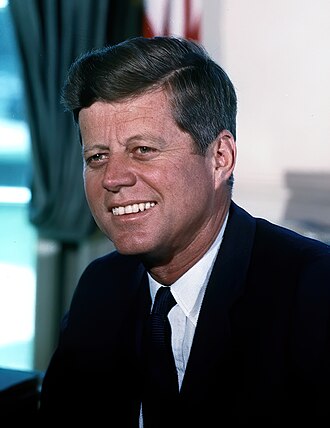
By virtue of the authority vested in me as President of the United States, including authority vested in me by Reorganization Plan No. l of 1958 (72 Stat. 1799), it is hereby ordered as follows: SECTION 1. Scope. The Interstate Commerce Commission (hereinafter referred to as the Commission shall prepare national emergency plans and develop preparedness programs covering railroad utilization, reduction of vulnerability, maintenance, restoration, and operation in an emergency; motor carrier utilization, reduction of vulnerability, and operation in an emergency; inland waterway mutilization of equipment and shipping, reduction of vulnerability, and operation in an emergency, excepting the St. Lawrence Seaway; and also provide guidance and consultation to domestic surface transportation and storage industries, as defined below, regarding emergency preparedness measures, and to States regarding development of their transportation plans in assigned areas. These plans and programs will be designed to develop a state of readiness in these areas with respect to all conditions of national emergency, including attack upon the United States. SEC. 2. Definitions. As used in this order: "Domestic surface transportation and storage" means rail, motor, and inland water transportation facilities and services and public storage. "Public storage" as used herein includes warehouses and other places which are used for the storage of property belonging to persons other than the persons having the ownership or control of such premises. "Inland water transportation" includes shipping on all inland waterways and Great Lakes shipping engaged solely in the transportation of passengers or cargo between United States ports on the Great Lakes. Specifically excluded, for the purposes of this order, are petroleum and gas pipelines, petroleum and gas storage, agricultural and food resources storage, including the cold storage of food resources, the St. Lawrence Seaway, ocean ports and Great Lakes ports and port facilities, highways, streets, roads, bridges, and related appurtenances, maintenance of inland waterways, and any transportation owned by or pre-allocated to the military. SEC. 3. Transportation Functions. The Commission shall: (a) Requirements. Periodically assemble, develop as appropriate, and evaluate requirements for domestic surface transportation and storage in an emergency, taking into account estimated needs for military as well as civilian purposes. Such evaluation shall take into consideration distribution of requirements under emergency conditions. (b) Resources. Periodically assess assigned resources available from all sources in order to estimate availability under an emergency situation, analyze resource estimates in relation to estimated requirements in order to identify problem areas and develop appropriate recommendations and programs. Provide data and assistance before and after attack for national resource evaluation purposes of the Office of Emergency Planning. (c) Claimancy. Prepare plans to claim material, equipment, manpower, supplies, and services needed to carry out assigned responsibilities and other essential functions of the Commission before the appropriate agency, and work with such agencies in developing programs to insure availability of such resources in an emergency. (d) Priorities and allocations. Prepare plans for the allocation of the use of domestic surface transportation and storage by operators and users, and to administer such priorities systems as may be necessary to insure expeditious movement of essential freight and passengers (including designation of priorities on traffic in transit through port areas between domestic surface points) subject to determination of designated authorities as to degree of essentially and relative priority of the activity served. (e) Control. Develop plans with appropriate private transportation and storage organizations and associations for the coordination and direction of the use of domestic surface transportation and storage facilities for movement of passenger and freight traffic. (f) Emergency operations. Develop a system for keeping informed as to operational conditions and capabilities throughout the domestic surface transportation and storage industry including the intensities of chemical, biological, radiological (CBR) contamination along and on the appropriate ways and terminals and the consequent interdiction occasioned by it, and prepare plans to take such actions as are necessary to avoid conflicts, overcome "bottle-necks," effect conservation, decrease waste, and speed turn-arounds. Develop and maintain necessary orders and regulations for the operation of domestic surface transport and storage industries in an emergency. (g) Salvage and rehabilitation. Develop plans for salvage of domestic surface transportation and storage equipment and rehabilitation including decontamination of appropriate terminals, rights of way, equipment, and shops after attack. (h) National program guidance. Develop plans and issue guidance designed to utilize to the maximum extent the existing nonmilitary facilities, technical competence, and resources of the Federal Government, the States and local political subdivisions thereof, and non-governmental organizations and systems engaged in domestic surface transportation and storage activities to promote the effective and safe use and maintenance of transportation facilities, equipment, and services in an emergency. (i) Stockpiles. Assist the office of Emergency Planning in formulating and carrying out plans for the stockpiling of strategic and critical materials and items necessary to the maintenance of a domestic surface transportation and storage capability in an emergency. (j) Economic stabilization. Cooperate with the office of Emergency Planning in the development of economic stabilization policies as they affect domestic surface transportation and storage programs in an emergency. (k) Financial aid. Develop plans and procedures for financial and credit assistance to domestic surface transportation and storage organizations that might need such assistance in various mobilization conditions, particularly those resulting from attack. SEC. 4. Cooperation with Department of Defense. In consonance with national civil defense plans, programs, and operations of the Department of Defense under Executive order 10952, the Commission shall: (a) Chemical, biological, and radiological warfare defense. Develop plans to participate with Federal, State, and local, and nongovernmental chemical, biological and radiological defense units in the detection and the assessment of chemical, biological and radiological contaminants, and participate in plans for decontamination operations. (b) Facilities protection. Provide industry protection and guidance material adapted to the needs of industries concerned and promote a national program to stimulate disaster preparedness and control in order to minimize the effects of overt or covert attack on domestic surface transportation and storage facilities. Guidance shall include but not be limited to organization and training of facility employees, personnel shelter, evacuation and relocation plans, records protection, continuity of management, emergency repair and recovery of facilities, deconcentration and dispersal of facilities and equipment, and mutual aid associations for emergency. (c) Damage assessment. Maintain a capability to assess the effects of attack on all domestic surface transportation and storage facilities essential to safe and effective surface transportation in a national emergency, and to provide data to the Department of Defense. SEC. 5. Research. Within the framework of the over-all Federal research objectives, the Commission shall supervise or conduct research in areas directly concerned with carrying responsibilities, assigned emergency preparedness responsibilities, designate representatives for necessary ad hoc or task force groups, and provide advice and assistance to other agencies in planning for research in areas involving the Commission's interest. SEC. 6. Functional Guidance. The Commission, in carrying out the functions assigned in this order, shall be guided by the following: (a) Interagency cooperation. The Commission shall assume the initiative in developing joint plans for the coordination; of emergency domestic surface transportation and storage programs of those departments and agencies having responsibility for any segment of such activity. It shall utilize to the maximum those capabilities of other agencies qualified to perform or assist in the performance of assigned functions by contractual or other agreements. (b) Presidential coordination. The Director of the office of Emergency Planning shall advise and assist the President in determining policy for, and assist him in coordinating the performance of functions under this order with the total national preparedness program. (c) Emergency planning. Emergency plans and programs, and emergency organization structure required thereby, shall be developed as an integral part of the continuing activities of the Commission on the basis that it will have tile responsibility for carrying out such programs during an emergency. The Commission shall be prepared to implement all appropriate plans developed under this order. Modifications and temporary organizational changes, based on emergency conditions, will be in accordance with policy determination by the President. SEC. 7. Emergency Actions. Nothing in this order shall be construed as conferring authority under Title III of the Federal Civil Defense Act of 1950, as amended, or otherwise, to put into effect any emergency plan, procedure, policy, program, or course of action prepared or developed pursuant to this order. Such authority is reserved to the President. SEC. 8. Redelegation. The Commission is hereby authorized to redelegate within the Interstate Commerce Commission the functions hereinabove assigned to it. SEC. 9. Prior Actions. To the extent of any inconsistency between the provisions of any prior order and the provisions of this order, the latter shall control. Emergency Preparedness Order No. 15 (heretofore issued by the Director, Office of Civil and Defense Mobilization) (26 F.R. 838-839), is hereby revoked. JOHN F. KENNEDY
THE WHITE HOUSE, #signature
February 16, 1962
