By virtue of the authority vested in me by Section 301 of Title 3 of the United States Code and by the Canal Zone Code (76A Stat.), and as President of the United States, it is hereby ordered as follows: SECTION 1. The following provisions of this section shall constitute Subpart A of Part 3 of Title 35 (Panama Canal) of the Code of Federal Regulations— 3.1 Delegations to Secretary of the Army. (a) The Secretary of the Army shall exercise the powers vested in the President of the United States by the following provisions of the Canal Zone Code: (1) 2 C.Z.C. 1331(1), (2), and (3) (76AStat.46), relative to prescribing and amending regulations governing (i) the navigation of the harbors and other waters of the Canal Zone, (ii) the passage and control of vessels through the Canal or any part thereof, including the locks and approaches thereto, and (iii) pilotage in the Canal or the approaches thereto through the adjacent waters. (2) 2 C.Z.C. 701 (76A Stat. 29), relative to prescribing and amending regulations governing aircraft, air navigation, air-navigation facilities, and aeronautical activities within the Canal Zone. (3) 2 C.Z.C. 911 (76A Stat. 36), relative to prescribing and amending regulations governing matters of health, sanitation, and quarantine for the Canal Zone. (4) 2 C.Z.C. 1191 (76A Stat. 41), relative to prescribing and amending regulations governing the issuance and revocation of licenses to practice the healing art. (5) 2 C.Z.C. 1441 (76A Stat. 49), relative to prescribing and amending regulations for levying, assessing, and collecting of ad valorem, excise, license, and franchise taxes in the Canal Zone. (6) 2 C.Z.C. 731 (76A Stat. 29), relative to prescribing and amending regulations relating to (i) the manufacture and sale of alcoholic beverages in the Canal Zone, and licenses and fees therefor, and (ii) the importation of alcoholic beverages into, and exportation thereof from, the Canal Zone. (b) The Secretary of the Army, after consultation with the Secretary of State, shall exercise the powers vested in the President of the United States by 2 C.Z.C. 841 (76A Stat. 32), relative to making and amending regulations governing (1) the rights of persons to enter, remain upon or pass over, any part of the Canal Zone, and (2) the detention of persons entering the Canal Zone in violation of the regulations, and their return to the countries whence they came. (c) The Secretary of the Army Inay redelegate to the Governor of the Canal Zone (hereafter in this subpart referred to as "the Governor") all or any designated portion of the powers delegated to the Secretary of the Army by G 3.1(a). 5 3.2 Secretary of the Army as representative of President. (a) Pursuant to 2 C.Z.C. 31 and 62(b), respectively (76A Stat. 7 and 9), the Secretary of the Army is designated as the officer of the United States to supervise the administration of the Canal Zone Government by the Governor, and to act as "stockholder" of the Panama Canal Company. (b) In performing his functions under § 3.2 (a), the Secretary of the Army shall act as the direct representative of the President of the United States, and not in his capacity as the head of the Department of the Army. S 3.3 Delegations to Governor. (a) The Governor shall exercise the powers vested in the President of the United States by the following provisions of the Canal Zone Code: (1) 2 C.Z.C. 1001 (76A Stat. 37), relative to making, publishing, enforcing, and amending rules and regulations for the use of public highways and roads in the Canal Zone, for the regulation, licensing, and taxing of the use and operation of all self-propelled vehicles using the public highways and roads, and for the other matters referred to in 2 C.Z.C. 1001. (2) 2 C.Z.C. 1002 (76A Stat. 37), relative to making mutual agreements with the Republic of Panama concerning (i) the reciprocal use of the public highways and roads of the Canal Zone and the Republic of Panama by self-propelled vehicles, (ii) taxes and license fees, and (iii) other matters of regulation to establish comity for the convenience of the residents of the two jurisdictions. (3) 2 C.Z.C. 1134 (76A Stat. 39), relative to establishing the rate of interest borne by postal savings certificates. (4) 2 C.Z.C. 1331(4) (76A Stat. 46), relative to prescribing and amending regulations governing the licensing of officers or other operators of vessels (including pilots of vessels and operators of motorboats) navigating the waters of the Canal Zone. (5) 3 C.Z.C. 82 (76A Stat. 54), relative to (i) the appointment and removal of magistrates, and (ii) the appointment of relief magistrates and the assignment of a magistrate to another magistrate's court in the circumstances specified in 3 C.Z.C. 82. (6) 3 C.Z.C. 86 (76A Stat. 55), relative to prescribing regulations governing the administration of magistrates' courts and prescribing (i) the duties of magistrates and constables, (ii) oaths and bonds, (iii) the times and places of holding magistrates' courts, and (iv) the disposition of fines, costs, and forfeitures. (7) 6 C.Z.C. 1281 (76A Stat. 455), relative to prescribing and amending rules and regulations to assert and exercise the police power in the Canal Zone, or for any portion or division thereof, for the purpose of enforcing 6 C.Z.C. 1281 (a) declaring unlawful the engaging in or permitting any indecent or immoral conduct. (b) The Governor's authority to exercise the powers enumerated in § 3.3 (a) is subject to (1) the provisions of 2 C.Z.C. 34 (76A Stat. 8), (2) the supervision of the Secretary of the Army, and (3), in the case of § 3.3 (a) (2), consultation with the ranking diplomatic officer of the United States accredited to the Republic of Panama. (c) His authority under 2 C.Z.C. 31 and 33 (76A Stat. 7) to establish, alter, or discontinue military and naval reservations shall be exercised by the Governor (1) only with the approval of the Secretary of the Army in all cases, and (2) also only after consultation with (i) the Secretary of the Navy in the case of Naval reservations and in the case of other reservations and bases concerning which the Department of the Navy may express an interest, (ii) the Secretary of the Air Force in the case of air-force bases and in the case of other reservations and bases concerning which the Department of the Air Force may express an interest, and (iii) both the Secretary of the Navy and the Secretary of the Air Force when they both have an interest. § 3.4 Scope of delegated powers; duty of Government personnel; construction. (a) The Secretary of the Army may exercise the powers delegated or otherwise assigned to him by this subpart without approval, ratification, or other action by the President. (b) The Governor may exercise the powers delegated to him by § 3.3(a), and any powers redelegated to him under § 3.1(c), (i) without approval, ratification, or other action by the President, and (ii), except to the extent inconsistent with § 3.3 (b) (2) and except as the Secretary of the Army may otherwise provide in pursuance of § 3.1 (c), without approval, ratification, or other action by the Secretary of the Army. (c) All officers, officials, and employees of the United States, including disbursing, accounting, and auditing officers, shall give the same effect to any acts of those authorized under this subpart to exercise powers as if exercised by the President. (d) This subpart does not limit or restrict the right of the President to exercise any power specified in this subpart. (e) Unless inappropriate, references in this subpart to any statute or to any provision of any statute shall be deemed to include references thereto as amended from time to time. SEC. 2. All actions heretofore taken by the President or by his delegates in respect of the matters affected by this order and in force at the time of the issuance of this order, including any regulations prescribed or approved by the President or by his delegates in respect of such matters, shall, except as they may be inconsistent with the provisions of this order, remain in effect until amended, modified, or revoked pursuant to the authority conferred by this order unless sooner terminated by operation of law. SEC. 3. (a) The following are hereby superseded: (1) Sections 9, 10, 11, 12, and 12a of Executive Order No. 7676 of July 26, 1937. (2) Executive Order No. 8962 of December 6, 1941. (3) Executive Order No. 9746 of July 1, 1946. (4) Executive Order No. 10595 of February 7, 1955. (b) All other Executive orders and proclamations issued prior to the date of this order which are inconsistent with this order, or any regulations issued pursuant thereto, are hereby superseded to the extent of such inconsistency. SEC. 4. This order shall take effect on the 90th day after its publication in the Federal Register. LYNDON B. JOHNSON The White House September 12, 1966
Executive Order 11305 🏛️✅ Zone 1: Maximum Authority Constitutional Fidelity (+0.23)
📜 Art. II §2: Commander-in-Chief Supervisory Authority
Executive Order 11305—Authorizing the Secretary of Army and the Governor of the Canal Zone, Respectively, to Perform Certain Functions Relating to the Panama Canal and the Canal Zone
Executive Brief • At a Glance
⏱️ 7 min read (1,493 words) •
● In Effect
🎯 Primary Mandate
The following provisions of this section shall constitute Subpart A of Part 3 of Title 35 (Panama Canal) of the Code of Federal Regulations— 3.1 Delegations to Secretary of the Army.
⚖️ Constitutional Footing
🏛️✅ Zone 1: Maximum Authority
Express or Implied Congressional Authorization
📜 Art. II §2: Commander-in-Chief Supervisory Authority
🏛️ Scope & Affected Sectors
Armed Forces & Military Establishments Merchants, Importers & Commercial Enterprises Sovereign State Governments & Localities Executive Departments & Federal Civil Servants
Plain-English Translation & Framers' Constitutional Analysis
Early Statesman synthesis distilling legal jargon into practical meaning, statutory anchors, and structural constitutional impacts.
Signed by President Lyndon B. Johnson on September 12, 1966, this order concerns Authorizing the Secretary of Army and the Governor of the Canal Zone, Respectively, to Perform Certain Functions Relating to the Panama Canal and the Canal Zone. The following provisions of this section shall constitute Subpart A of Part 3 of Title 35 (Panama Canal) of the Code of Federal Regulations— 3.1 Delegations to Secretary of the Army. (a) The Secretary of the Army shall exercise the powers vested in the President of the United States by the following provisions of the Canal Zone Code: (1) 2 C.Z.C. 1331(1), (2), and (3) (76AStat.46), relative to prescribing and…
Constitutional Assessment: Scrutinized through Article II, Section 2, this action exercises the President's constitutional role as Commander in Chief. Early Framers recognized broad executive discretion in commanding military forces during conflict, provided it remains bounded by congressional declarations and respects civilian domestic courts.
Key Directives & Operative Actions
▪
The following provisions of this section shall constitute Subpart A of Part 3 of Title 35 (Panama Canal) of the Code of Federal Regulations— 3.1 Delegations to Secretary of the Army.
▪
The Secretary of the Army shall exercise the powers vested in the President of the United States by the following provisions of the Canal Zone Code: (1) 2 C.Z.C. 1331(1), (2), and (3) (76AStat.46), relative to prescribing and amending regulations governing (i) the navigation of the harbors and other waters of the Canal Zone, (ii) the passage and control of vessels through the Canal or any part thereof, including the locks and approaches thereto, and (iii) pilotage in the Canal or the approaches thereto through the adjacent waters.
▪
2 C.Z.C. 701 (76A Stat. 29), relative to prescribing and amending regulations governing aircraft, air navigation, air-navigation facilities, and aeronautical activities within the Canal Zone.
▪
2 C.Z.C. 911 (76A Stat. 36), relative to prescribing and amending regulations governing matters of health, sanitation, and quarantine for the Canal Zone.
Constitutional & Societal Entities Impacted
🏛️ Armed Forces & Military Establishments
🏛️ Merchants, Importers & Commercial Enterprises
🏛️ Sovereign State Governments & Localities
🏛️ Executive Departments & Federal Civil Servants
🏛️ Private Citizens & Property Owners
Policy Areas & Topics
🏛️
The Framers' Constitutional Council
1787 PrismEvaluating this order against the constitutional debates of 1787 and the limits of Article II executive power.
🏛️✅ Zone 1 (Maximum Authority)
§
"When the President acts pursuant to an express or implied authorization of Congress, his authority is at its maximum, for it includes all that he possesses in his own right plus all that Congress can delegate."
— Justice Robert H. Jackson, Youngstown Sheet & Tube Co. v. Sawyer (1952) Express or Implied Congressional Authorization
JM
James Madison
Separation of Powers & Legislative Primacy
"The constitutional magistracy was designed not to invent policy, but to be the faithful instrument of the laws passed by the people's representatives." — Speech in the First Congress (1789)
Madison would approve the structural posture of this order. The President acts strictly in subordination to statutory authority granted under Article II, Section 3 ("take Care that the Laws be faithfully executed"). The checks and balances hold firm because the policy origin remains with the legislature.
Madisonian Stance: Concurring (Statutory)
AH
Alexander Hamilton
The Energetic Executive & Unified Command
"The direction of war implies the direction of the common strength; and the power of directing and employing the common strength must be under the direction of the single hand of the Executive." — Federalist No. 74 (1788)
Hamilton would forcefully champion executive discretion here. For foreign entanglements, commerce defense, and national security, deliberative assemblies are too slow and faction-ridden. A unified, energetic Executive exercising swift command is precisely what the Philadelphia Convention intended for national preservation.
Hamiltonian Stance: Strong Prerogative Support
GM
George Mason
Bill of Rights, Due Process & 10th Amendment
"The president will be surrounded by flatterers and sycophants... and the great powers of the executive will gradually absorb the liberties of the people." — Cato IV (Anti-Federalist, 1787)
The Anti-Federalist prism advises continuous democratic vigilance. Even routine administrative directives aggregate centralized federal power away from town halls and state assemblies toward a distant executive apparatus.
Anti-Federalist Stance: Eternal Vigilance Required
📐
Five Measurable "Constitutional Friction" Dimensions
An objective audit measuring potential separation-of-powers tension against the United States Constitution and established Supreme Court doctrine.
⚖️ Discretionary Twilight Zone
57 / 100 friction index
Dimension 1 • Art. I, §1 & §8
High Friction
Legislative Encroachment & Purse
Touches upon core congressional prerogatives: raises appropriations reallocation, tariff imposition, or statutory preemption questions.
Benchmark: Power of the purse, taxes/tariffs, and rule of law reserved to Congress.
Dimension 2 • Art. II, §1 & §3
Low Friction
Executive Scope & Faithfulness
Exercises standard supervisory executive authority to faithfully execute existing statutes.
Benchmark: Faithfully execute laws enacted by Congress vs. unilateral decree.
Dimension 3 • 10th Amendment
High Friction
Federalism & State Sovereignty
Creates friction with the Tenth Amendment by conditioning state grants, mandating local compliance, or preempting state police powers.
Benchmark: Police powers and un-delegated responsibilities reserved to the States.
Dimension 4 • 5th & 14th Amendments
High Friction
Due Process & Individual Rights
Scrutinized under the Bill of Rights for potential impact on private contracts, property rights, or procedural due process.
Benchmark: Protection of private property, contracts, liberty, and procedural justice.
Dimension 5 • Separation of Powers
Low Friction
Youngstown Jacksonian Tier
The President operates strictly as the constitutional Chief Executive, carrying out policy established by Congress with strong statutory backing.
Benchmark: Express or Implied Congressional Authorization
⚖️
Audit Synthesis
This order operates within Justice Jackson’s Zone of Twilight, resting upon concurrent presidential authority or congressional silence.
Weighted composite: Art. I (25%), Art. II (25%), Federalism (15%), Due Process (15%), Youngstown (20%).
ℹ️
How to read these dimensions: Executive power expands whenever an administration acts without explicit statutory authorization from Congress (Article I), touches upon police powers historically reserved to the states (Tenth Amendment), or limits private rights and property without judicial process. A low friction score indicates strict concordance with enacted law; a high friction score highlights orders testing the limits of presidential discretion.
Total Words
1,493
8,890 characters
Estimated Read Time
7 min
@ 200 words / min
Flesch-Kincaid
11.1
High School
Text size:
Related Executive Orders
4 orders cited directly in this text, plus related actions from this administration.
EO 7676 Jul 26, 1937
⚖️✨ Zone 2 (Zone of Twilight) Constitutional Neutral
Executive Order 7676—The Canal Zone Judiciary
📜 Art. II §2: Commander-in-Chief Supervisory Authority
I hereby prescribe the following order relating to the Canal Zone Judiciary: SECTION 1. Definitions .--As used in this order: (a) "District Court" shall mean the United States District Court for the District of the Canal Zone.
 Franklin D. Roosevelt
High School • 7m
EO 8962 Dec 6, 1941
⚖️✨ Zone 2 (Zone of Twilight) Constitutional Neutral
Executive Order 8962—Amending Executive Order No. 7676 of July 26, 1937, Entitled "The Canal Zone Judiciary"
📜 5th Amend: Regulatory Execution with Due Process
Section 9 of Executive Order No. 7676 of July 26, 1937, entitled 'The Canal Zone Judiciary, is amended to read: "SECTION 9. Magistrates, constables and other employees of magistrates' courts; appointment; compensation.
Franklin D. Roosevelt College Level • 1m
EO 9746 Jul 1, 1946
🏛️✅ Zone 1 (Maximum Authority) Fidelity (+0.23)
Executive Order 9746—Authorizing the Secretary of War and the Governor of the Panama Canal to Perform Certain Functions Relating to the Panama Canal and the Canal Zone
📜 Art. II §2: Commander-in-Chief Supervisory Authority
The Secretary of War is authorized to exercise the powers vested in the President by the following provisions of law: (a) Canal Zone Code, title 2, section 9 (48 U.S.C. 1318), relative to making and amending regulations governing (1) the operation of the Panama Canal, (2) the…
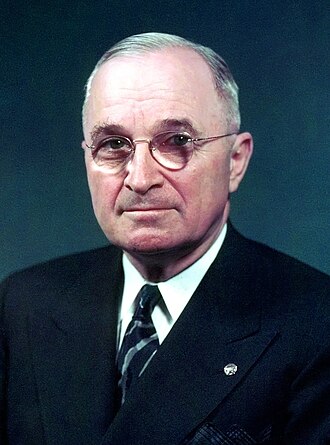 Harry S Truman
College Level • 5m
EO 10595 Feb 7, 1955
⚖️✨ Zone 2 (Zone of Twilight) Constitutional Neutral
Executive Order 10595—Amendment of Executive Order No. 9746 of July 1, 1946, Relating to the Panama Canal and the Canal Zone
📜 Art. II §2: Commander-in-Chief Supervisory Authority
Executive Order No. 9746 of July 1, 1946 (11 F. R. 7329), relating to the Panama Canal and the Canal Zone, is hereby amended as follows: 1. Paragraphs 1 to 6, inclusive, thereof are renumbered as paragraphs 3 to 8, inclusive, and two new paragraphs, numbered 1 and 2, and…
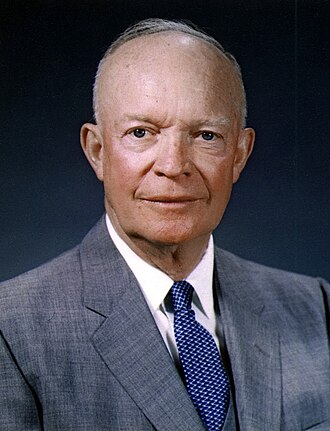 Dwight D. Eisenhower
Post-Graduate Legal • 3m
EO 11304 Sep 12, 1966
🏛️✅ Zone 1 (Maximum Authority) Constitutional Neutral
Executive Order 11304—Amending Executive Order No. 11175 Relating to the Exclusion For Original or New Canadian Issues Where Required for International Monetary Stability
📜 Art. I §8: Delegated Tariff & Commerce Execution
Executive Order No. 11175, dated September 2, 1964, be, and it is hereby, amended to read as follows: SECTION 1. Except as provided in section 2, the tax imposed by section 4911 of the Internal Revenue Code of 1954 shall not apply to the acquisition by a United States person of…
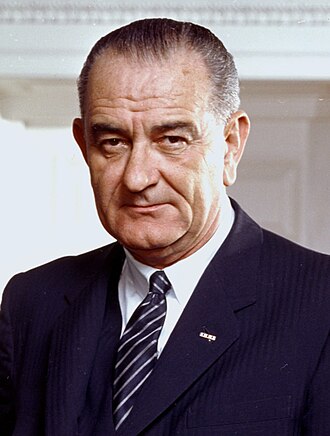 Lyndon B. Johnson
Post-Graduate Legal • 2m
EO 11303 Sep 12, 1966
⚖️✨ Zone 2 (Zone of Twilight) Constitutional Neutral
Executive Order 11303—Modifying Executive Order No. 9721, as Amended by Executive Order No. 10103, Providing For the Transfer of Personnel to Certain International Organizations
📜 Art. II §3: Administrative Management & Civil Service
Executive Order No. 9721 of May 10, 1946, as amended by Executive Order No. 10103 of February 1,1950, providing for the transfer of personnel to public international organizations in which the United States Government participates be, and it is hereby, modified as follows: The…
Lyndon B. Johnson High School • 1m
📜
Scholarly & Legal Citations
Exec. Order No. 11,305 (Sept. 12, 1966), https://executiveordersarchive.org/orders/app-executive-order-11305-authorizing-the-secretary-army-and-the-governor-the-canal-zone.
