WHEREAS the proper discharge of Federal responsibilities under the Appalachian Regional Development Act of 1965 (79 Stat. 5, 40 U.S.C. App.) and the Public Works and Economic Development Act of 1965 (79 Stat. 552, 42 U.S.C. 3121 et seq.), as amended by Public Law 90-103, 81 Stat. 257, requires that the participation of the Federal Government in regional development activities be effectively coordinated; WHEREAS the President is required by the Appalachian Regional Development Act of 1965 to provide effective and continuing liaison between the Federal Government and the Appalachian Regional Commission; WHEREAS the Secretary of Commerce has responsibility under the Public Works and Economic Development Act of 1965 for Federal economic development activities designed to alleviate conditions of substantial and persistent unemployment and underemployment in economically distressed areas and regions of the Nation; WHEREAS the Secretary of Commerce is directed by the Public Works and Economic Development Act of 1965 to coordinate the Federal Cochairmen appointed to regional commissions established before or after the date of that Act; WHEREAS the Secretary of Commerce is required by the Public Works and Economic Development Act of 1965 to provide effective and continuing liaison between the Federal Government and each regional commission established under Title V of that Act; and WHEREAS the Secretary of Commerce has been Chairman of the President's Review Committee for Development Planning in Alaska, established to provide general direction and guidance to the Federal Field Committee for Development Planning in Alaska, established by Executive Order No. 11182, dated October 2, 1964: Now, THEREFORE, by virtue of the authority vested in me by the Appalachian Regional Development Act of 1965, the Public Works and Economic Development Act of 1965, and section 301 of Title 3 of the United States Code, and as President of the United States, it is ordered as follows: SECTION 1. Functions of the Secretary of Commerce. The Secretary of Commerce shall (a) Provide the effective and continuing liaison required by section 104 of the Appalachian Regional Development Act of 1965 and by section 503 (c) of the Public Works and Economic Development Act of 1965 between the Federal Government and each regional commission established under those Acts, and between the Federal Government and the Federal Field Committee for Development Planning in Alaska (hereinafter referred to as "the Field Committee"). (b) Obtain a coordinated review within the Federal Government of plans and recommendations submitted by the commissions and the Field Committee. (c) Provide guidance and policy direction to the Federal Cochairmen and the Chairman of the Field Committee with respect to their Federal functions. (d) Promote the effective coordination of the activities of the Federal Government relating to regional economic development. (e) In carrying out the functions set forth in section 1 (a), (b), (c), and (d) the Secretary of Commerce shall (1) Review the regional economic development plans and programs submitted to him by the Federal Cochairmen, budgetary recommendations, the standards for development underlying those plans, programs and budgetary recommendations, and legislative recommendations; and advise the Federal Cochairmen of the Federal policy with respect to those matters, and where appropriate, submit recommendations to the Director of the Bureau of the Budget. (2) Review and advise the Chairman of the Field Committee with respect to the tentative plans and recommendations of the Field Committee, and receive and consider the final plans and recommendations of the Field Committee and transmit them to the heads of interested Federal departments and agencies and to the President. (3) Resolve any questions of policy which may arise between a Federal Cochairman and a Federal department or agency in the implementation of regional development programs. (4) Appoint a Special Assistant and other staff as required to assist him in carrying out these functions. SEC. 2. Establishment of the Council. (a) There is hereby established the Federal Advisory Council on Regional Economic Development, hereinafter referred to as "the Council." (b) The Council shall be composed of the following members: The Secretary of Commerce, who shall be the Chairman of the Council (hereinafter referred to as "the Chairman"), the Secretary of Agriculture, the Secretary of the Army, the Secretary of Health, Education, and Welfare, the Secretary of Housing and Urban Development, the Secretary of the Interior, the Secretary of Labor, the Secretary of Transportation, the Director of the Office of Economic Opportunity, the Administrator of the Small Business Administration, the Federal Cochairman of the Appalachian Regional Commission, such Federal Cochairmen as are appointed by the President under authority of Title V of the Public Works and Economic Development Act of 1965, and the Chairman of the Field Committee. (c) Whenever matters within the purview of the Council may be of interest to heads of Federal departments or agencies not represented on the Council under section 2 (b) of this order, the Chairman may consult with the heads of such departments and agencies and may invite them to participate in meetings and deliberations of the Council. (d) The Council shall meet at the call of the Chairman. SEC. 3. Functions of the Council. The Council shall assist the Secretary of Commerce in carrying out the functions set forth in section 1 of this order, and shall, as requested by the Secretary of Commerce (a) Review proposed long-range economic development plans prepared by the regional commissions and the Field Committee. (b) Recommend desirable development objectives and programs for such regions and Alaska. (c) Review proposed designations of additional economic development regions under Title V of the Public Works and Economic Development Act of 1965. (d) Review Federal programs relating to regional economic development, develop basic policies and priorities with respect to such programs, and recommend administrative or legislative action needed to stimulate and further regional economic development. (e) Review proposed department or agency regional economic development plans. (f) Recommend surveys and studies needed to assist the Secretary of Commerce and the Council in carrying out their functions. SEC. 4. Responsibilities of Participating Federal Agencies. (a) Each Federal department and agency the head of which is referred to in section 2 (b) of this order shall, as may be necessary, furnish assistance to the Council in accordance with the provisions of section 214 of the Act of May 3, 1945 (59 Stat. 134, 31 U.S.C. 691). (b) The head of each such Federal department or agency shall designate an Assistant Secretary or equivalent level official who shall have primary and continuing responsibility for the participation and cooperation of that department or agency in regional economic development as required by this order. (c) The head of each such Federal department or agency shall keep the Secretary of Commerce and the Council informed of all proposed regional economic development plans of his department or agency. (d) The head of each such Federal department or agency shall, consonant with law and within the limits of available funds, cooperate with the Council and with the Secretary of Commerce in carrying out their functions under this order. Such cooperation shall include, as may be appropriate, (1) furnishing relevant available information, (2) making studies and preparing reports, (3) in connection with the development of programs, priorities, and operations of the department or agency, giving full consideration to any plans and recommendations for the economic development of the various regions, including recommendations made by the Council, and (4) advising on the work of the Council as the Chairman may from time to time request. SEC. 5. Responsibilities of the Federal Cochairmen and the Chairman of the Field Committee. The Federal Cochairmen, and the Chairman of the Field Committee as appropriate, shall (a) Maintain continuing liaison with the Secretary of Commerce with respect to the activities of the regional commissions and the Field Committee. (b) Adhere to general Federal policies affecting regional economic development that are established by the Secretary of Commerce. (c) Inform the appropriate Federal departments and agencies of programs and projects to be considered by the commissions, and attempt to obtain a consensus within the Federal Government through consultation with appropriate Federal agency representatives before casting a vote on any such matter. (d) Represent the participating Federal departments and agencies in connection with the activities of the regional commissions. (e) Submit to the Secretary of Commerce regional economic development plans and programs of the regional commissions, budgetary recommendations, legislative recommendations, and progress reports, as requested by the Secretary of Commerce, on the activities of the regional commissions. (f) Submit reports required by section 304 of the Appalachian Regional Development Act of 1965 and by section 510 of the Public Works and Economic Development Act of 1965 to the Secretary of Commerce for review prior to transmittal to the President or the Congress. SEC. 6. Appalachian Program. (a) Funds appropriated pursuant to sections 201 and 401 of the Appalachian Regional Development Act of 1965 shall be available to the Federal Cochairman of the Appalachian Regional Commission for the purposes of carrying out that Act. (b) The Federal Cochairman of the Appalachian Regional Commission is delegated the functions conferred upon the President by sections 214(a), 302 (a), and 302 (c) of the Appalachian Regional Development Act of 1965, which shall be exercised by him in accordance with the provisions of this order. SEC. 7. Construction. Nothing in this order shall be construed as subjecting any function vested by law in, or assigned pursuant to law to, any Federal department or agency, to the authority of the Council or the Secretary of Commerce, or as abrogating or restricting any such function in any manner. SEC. 8. Definition. Except as the context may otherwise require, any reference herein to any Act, or to any provision of any Act, shall be deemed to be a reference thereto as amended from time to time. SEC. 9. Prior Executive Orders. (a) Executive Order No. 11182, as amended, is hereby further amended as follows: (1) By changing the heading of the order so as to read as follows: "ESTABLISHING THE FEDERAL FIELD COMMITTEE FOR DEVELOPMENT PLANNING IN ALASKA". (2) By striking the words "the Housing and Home Finance Administrator" from section 1 (b) and by inserting in lieu thereof the words "the Secretary of Housing and Urban Development, the Director of the Office of Economic Opportunity". (3) By substituting the following for subsection (a) of section 2: "(a) Subject to the general direction and guidance of the Secretary of Commerce, the Field Committee shall serve as the principal instrumentality for developing coordinated plans for Federal programs which contribute to economic and resources development in Alaska and for recommending appropriate action by the Federal Government to carry out such plans." (4) By striking from sections 3(e) and 3 (f) the words "Review Committee" and by inserting in lieu thereof the words "Secretary of Commerce". (5) By revoking Part II. The President's Review Committee for Development Planning in Alaska, established by that Part, shall be deemed to be hereby abolished. (6) By redesignating Part III and section 31 thereof as Part II and section 21, respectively. (7) By redesignating Part IV and sections 41, 42, and 43 as Part III and sections 31, 32, and 33, respectively, and by striking from the redesignated section 33 the words "and the Review Committee". (b) The Federal Development Committee for Appalachia, established by Executive Order No. 11209 of March 25, 1965, is hereby abolished and that order is hereby revoked. The White House December 28, 1967 LYNDON B. JOHNSON
Executive Order 11386 🏛️✅ Zone 1: Maximum Authority Constitutional Fidelity (+0.33)
📜 Art. II §2: Commander-in-Chief Supervisory Authority
Executive Order 11386—Prescribing Arrangements for Coordination of the Activities of Regional Commissions and Activities of the Federal Government Relating to Regional Economic Development, and Establishing the Federal Advisory Council on Regional Economic Development
Executive Brief • At a Glance
⏱️ 9 min read (1,893 words) •
● In Effect
🎯 Primary Mandate
The Secretary of Commerce shall (a) Provide the effective and continuing liaison required by section 104 of the Appalachian Regional Development Act of 1965 and by section 503 (c) of the Public Works and Economic Development Act of 1965 between the Federal Government and each regional commission established under those Acts, and between the Federal Government and the Federal Field Committee for Development Planning in Alaska (hereinafter referred to as "the Field Committee").
⚖️ Constitutional Footing
🏛️✅ Zone 1: Maximum Authority
Express or Implied Congressional Authorization
📜 Art. II §2: Commander-in-Chief Supervisory Authority
🏛️ Scope & Affected Sectors
Armed Forces & Military Establishments Executive Departments & Federal Civil Servants Private Citizens & Property Owners Foreign Nations & International Entities
Plain-English Translation & Framers' Constitutional Analysis
Early Statesman synthesis distilling legal jargon into practical meaning, statutory anchors, and structural constitutional impacts.
Signed by President Lyndon B. Johnson on December 28, 1967, this order concerns Prescribing Arrangements for Coordination of the Activities of Regional Commissions and Activities of the Federal Government Relating to Regional Economic Development, and Establishing the Federal Advisory Council on Regional Economic Development. Functions of the Secretary of Commerce. The Secretary of Commerce shall (a) Provide the effective and continuing liaison required by section 104 of the Appalachian Regional Development Act of 1965 and by section 503 (c) of the Public Works and Economic Development Act of 1965 between the Federal Government and each regional commission established under those Acts, and between the Federal Government and the Federal…
Constitutional Assessment: Scrutinized through Article II, Section 2, this action exercises the President's constitutional role as Commander in Chief. Early Framers recognized broad executive discretion in commanding military forces during conflict, provided it remains bounded by congressional declarations and respects civilian domestic courts.
Key Directives & Operative Actions
▪
The Secretary of Commerce shall (a) Provide the effective and continuing liaison required by section 104 of the Appalachian Regional Development Act of 1965 and by section 503 (c) of the Public Works and Economic Development Act of 1965 between the Federal Government and each regional commission established under those Acts, and between the Federal Government and the Federal Field Committee for Development Planning in Alaska (hereinafter referred to as "the Field Committee").
▪
In carrying out the functions set forth in section 1 (a), (b), (c), and (d) the Secretary of Commerce shall (1) Review the regional economic development plans and programs submitted to him by the Federal Cochairmen, budgetary recommendations, the standards for development underlying those plans, programs and budgetary recommendations, and legislative recommendations; and advise the Federal Cochairmen of the Federal policy with respect to those matters, and where appropriate, submit recommendations to the Director of the Bureau of the Budget.
▪
Appoint a Special Assistant and other staff as required to assist him in carrying out these functions.
▪
There is hereby established the Federal Advisory Council on Regional Economic Development, hereinafter referred to as "the Council." (b) The Council shall be composed of the following members: The Secretary of Commerce, who shall be the Chairman of the Council (hereinafter referred to as "the Chairman"), the Secretary of Agriculture, the Secretary of the Army, the Secretary of Health, Education, and Welfare, the Secretary of Housing and Urban Development, the Secretary of the Interior, the Secretary of Labor, the Secretary of Transportation, the Director of the Office of Economic Opportunity, the Administrator of the Small Business Administration, the Federal Cochairman of the Appalachian Regional Commission, such Federal Cochairmen as…
Constitutional & Societal Entities Impacted
🏛️ Armed Forces & Military Establishments
🏛️ Executive Departments & Federal Civil Servants
🏛️ Private Citizens & Property Owners
🏛️ Foreign Nations & International Entities
🏛️ Public Health & Medical Institutions
Policy Areas & Topics
🏛️
The Framers' Constitutional Council
1787 PrismEvaluating this order against the constitutional debates of 1787 and the limits of Article II executive power.
🏛️✅ Zone 1 (Maximum Authority)
§
"When the President acts pursuant to an express or implied authorization of Congress, his authority is at its maximum, for it includes all that he possesses in his own right plus all that Congress can delegate."
— Justice Robert H. Jackson, Youngstown Sheet & Tube Co. v. Sawyer (1952) Express or Implied Congressional Authorization
JM
James Madison
Separation of Powers & Legislative Primacy
"The constitutional magistracy was designed not to invent policy, but to be the faithful instrument of the laws passed by the people's representatives." — Speech in the First Congress (1789)
Madison would approve the structural posture of this order. The President acts strictly in subordination to statutory authority granted under Article II, Section 3 ("take Care that the Laws be faithfully executed"). The checks and balances hold firm because the policy origin remains with the legislature.
Madisonian Stance: Concurring (Statutory)
AH
Alexander Hamilton
The Energetic Executive & Unified Command
"The direction of war implies the direction of the common strength; and the power of directing and employing the common strength must be under the direction of the single hand of the Executive." — Federalist No. 74 (1788)
Hamilton would forcefully champion executive discretion here. For foreign entanglements, commerce defense, and national security, deliberative assemblies are too slow and faction-ridden. A unified, energetic Executive exercising swift command is precisely what the Philadelphia Convention intended for national preservation.
Hamiltonian Stance: Strong Prerogative Support
GM
George Mason
Bill of Rights, Due Process & 10th Amendment
"The president will be surrounded by flatterers and sycophants... and the great powers of the executive will gradually absorb the liberties of the people." — Cato IV (Anti-Federalist, 1787)
The Anti-Federalist prism advises continuous democratic vigilance. Even routine administrative directives aggregate centralized federal power away from town halls and state assemblies toward a distant executive apparatus.
Anti-Federalist Stance: Eternal Vigilance Required
📐
Five Measurable "Constitutional Friction" Dimensions
An objective audit measuring potential separation-of-powers tension against the United States Constitution and established Supreme Court doctrine.
⚖️ Discretionary Twilight Zone
46 / 100 friction index
Dimension 1 • Art. I, §1 & §8
Moderate Friction
Legislative Encroachment & Purse
Administers commerce or fiscal programs requiring ongoing statutory delegation and legislative oversight.
Benchmark: Power of the purse, taxes/tariffs, and rule of law reserved to Congress.
Dimension 2 • Art. II, §1 & §3
Moderate Friction
Executive Scope & Faithfulness
Directs internal executive branch machinery, agency workflows, and federal personnel.
Benchmark: Faithfully execute laws enacted by Congress vs. unilateral decree.
Dimension 3 • 10th Amendment
High Friction
Federalism & State Sovereignty
Creates friction with the Tenth Amendment by conditioning state grants, mandating local compliance, or preempting state police powers.
Benchmark: Police powers and un-delegated responsibilities reserved to the States.
Dimension 4 • 5th & 14th Amendments
Moderate Friction
Due Process & Individual Rights
Applies regulatory or compliance standards to private contractors or commercial entities.
Benchmark: Protection of private property, contracts, liberty, and procedural justice.
Dimension 5 • Separation of Powers
Low Friction
Youngstown Jacksonian Tier
The President operates strictly as the constitutional Chief Executive, carrying out policy established by Congress with strong statutory backing.
Benchmark: Express or Implied Congressional Authorization
⚖️
Audit Synthesis
This order operates within Justice Jackson’s Zone of Twilight, resting upon concurrent presidential authority or congressional silence.
Weighted composite: Art. I (25%), Art. II (25%), Federalism (15%), Due Process (15%), Youngstown (20%).
ℹ️
How to read these dimensions: Executive power expands whenever an administration acts without explicit statutory authorization from Congress (Article I), touches upon police powers historically reserved to the states (Tenth Amendment), or limits private rights and property without judicial process. A low friction score indicates strict concordance with enacted law; a high friction score highlights orders testing the limits of presidential discretion.
Total Words
1,893
12,251 characters
Estimated Read Time
9 min
@ 200 words / min
Flesch-Kincaid
19.9
Post-Graduate Legal
Text size:
🔗
Referenced By Later Executive Orders (1)
Subsequent presidents who cited, amended, continued, or revoked this directive in later orders.
Revokes Executive Order 11608—Termination of Federal Field Committee for Development Planning in Alaska
Richard Nixon • 1971-07-19
Related Executive Orders
2 orders cited directly in this text, plus related actions from this administration.
EO 11182 Oct 2, 1964
🏛️✅ Zone 1 (Maximum Authority) Fidelity (+0.58)
Executive Order 11182—Establishing Federal Development Planning Committees for Alaska
📜 Art. II §2: Commander-in-Chief Supervisory Authority
Committee Section 1. Establishment of Field Committee. (a) There is hereby established the Federal Field Committee for Development Planning in Alaska (hereinafter referred to as the "Field Committee").
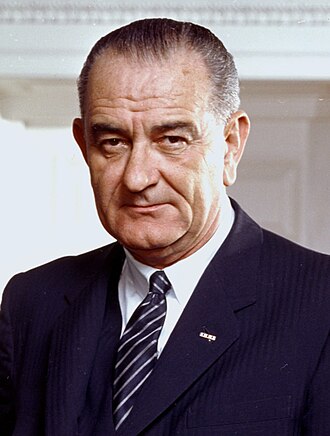 Lyndon B. Johnson
Post-Graduate Legal • 10m
EO 11209 Mar 25, 1965
🏛️✅ Zone 1 (Maximum Authority) Fidelity (+0.60)
Executive Order 11209—Establishing the Federal Development Committee for Appalachia and Prescribing Other Arrangements for Coordination With the Appalachia Regional Commission
📜 Art. II §2: Commander-in-Chief Supervisory Authority
There is hereby established the Federal Development Committee for Appal achia (hereinafter referred to as the "Committee"). (b) The Committee shall be composed of the Federal Cochairman of the Appalachian Regional Commission established by Section 101 of the Act, who shall be…
Lyndon B. Johnson Post-Graduate Legal • 5m
EO 11387 Jan 1, 1968
⚖️⚠️ Zone 3 (Lowest Ebb) Friction (-0.19)
Executive Order 11387—Governing Certain Capital Transfers Abroad
📜 Art. I §8: Legislative Prerogative Tension (Purse & Commerce)
1. (a) Any person subject to the jurisdiction of the United States who, alone or together with one or more affiliated persons, owns or acquires as much as a 10% interest in the voting securities, capital or earnings of a foreign business venture is prohibited on or after the…
Lyndon B. Johnson Post-Graduate Legal • 4m
EO 11385 Dec 16, 1967
⚖️✨ Zone 2 (Zone of Twilight) Constitutional Neutral
Executive Order 11385—Placing an Additional Position in Level IV of the Federal Executive Salary Schedule
📜 Art. II §1: Executive Discretion & Internal Operations
Of Executive Order No. 11248 of October 10, 1965, as amended, is further amended by adding thereto the following: (6) Deputy Administrator, Federal Highway Administration, Department of Transportation.
Lyndon B. Johnson College Level • 1m
EO 11388 Jan 15, 1968
⚖️✨ Zone 2 (Zone of Twilight) Constitutional Neutral
Executive Order 11388—Designation of Officers of the Department of Commerce to Act as Secretary of Commerce
📜 Art. II §1: Executive Discretion & Internal Operations
During any period when by reason of absence, disability, or vacancy in office, neither the Secretary of Commerce nor the Under Secretary of Commerce is available to exercise the powers or perform the duties of the office of Secretary, an Assistant Secretary of Commerce or the…
Lyndon B. Johnson College Level • 1m
EO 11390 Jan 22, 1968
⚖️⚠️ Zone 3 (Lowest Ebb) Friction (-0.19)
Executive Order 11390—Delegation of Certain Functions of the President to the Secretary of Defense
📜 Art. II §2: Commander-in-Chief / War Prerogative Tension
The Secretary of Defense, and, as designated by the said Secretary for this purpose, any of the Secretaries, Under Secretaries, and Assistant Secretaries of the military departments, are hereby designated and empowered to perform the following-described functions of the…
Lyndon B. Johnson Post-Graduate Legal • 3m
📜
Scholarly & Legal Citations
Exec. Order No. 11,386 (Dec. 28, 1967), https://executiveordersarchive.org/orders/app-executive-order-11386-prescribing-arrangements-for-coordination-the-activities-regional.
