By virtue of the authority vested in me by the Constitution and laws of the United States, including section 5 of the United Nations Participation Act of 1945 (59 Stat." 620), as amended (22 U.S.C. 287c), and section 301 of Title 3 of the United States Code, and as President of the United States, and considering the measures which the Security Council of the United Nations by Security Council Resolution No. 253 adopted May 29, 1968, has decided upon pursuant to article 41 of the Charter of the United Nations, and which it has called upon all members of the United Nations, including the United States, to apply, it is hereby ordered: SECTION I. In addition to the prohibitions of section 1 of Executive Order No. 11322 of January 5, 1967, the following are prohibited effective immediately, notwithstanding any contracts entered into or licenses granted before the date of this Order: (a) Importation into the United States of any commodities or products originating in Southern Rhodesia and exported therefrom after May 29, 1968. (b) Any activities by any person subject to the jurisdiction of the United States which promote or are calculated to promote the export from Southern Rhodesia after May 29, 1968, of any commodities or products originating in Southern Rhodesia, and any dealings by any such person in any such commodities or products, including in particular any transfer of funds to Southern Rhodesia for the purposes of such activities or dealings; Provided, however, that the prohibition against the dealing in commodities or products exported from Southern Rhodesia shall not apply to any such commodities or products which, prior to the date of this Order, had been lawfully imported into the United States. (c) Carriage in vessels or aircraft of United States registration or under charter to any person subject to the jurisdiction of the United States of any commodities or products originating in Southern Rhodesia and exported therefrom after May 29, 1968. (d) Sale or supply by any person subject to the jurisdiction of the United States, or any other activities by any such person which promote or are calculated to promote the sale or supply, to any person or body in Southern Rhodesia or to any person or body for the purposes of any business carried on in or operated from Southern Rhodesia of any commodities or products. Such activities, including carriage in vessels or aircraft, may be authorized with' respect to supplies intended strictly for medical purposes, educational equipment and material for use in schools and other educational institutions, publications, news material, and foodstuffs required by special humanitarian circumstances. (e) Carriage in vessels or aircraft of United States registration or under charter to any person subject to the jurisdiction of the United States of any commodities or products consigned to any person or body in Southern Rhodesia, or to any person or body for the purposes of any business carried on in or operated from Southern Rhodesia. (f) Transfer by any person subject to the jurisdiction of the United States directly or indirectly to any person or body in Southern Rhodesia of any funds or other financial or economic resources. Payments exclusively for pensions, for strictly medical, humanitarian or educational purposes, for the provision of news material or for foodstuffs required by special humanitarian circumstances may be authorized. (g) Operation of any United. States air carrier or aircraft owned or chartered by any person subject to the jurisdiction of the United States or of United States registration (i) to or from Southern Rhodesia or (ii) in coordination with any airline company constituted or aircraft registered in Southern Rhodesia. SEC. 2. The functions and responsibilities for the 'enforcement of the foregoing prohibitions, and of those prohibitions of Executive Order No. 11322 of January 5, 1967 specified below, are delegated as follows: ' (a) To the Secretary of Commerce, the function and responsibility of enforcement relating to (i) the exportation from the United States of commodities and products other, than those articles referred to in section 2(a) of Executive Order No. 11322 of January 5, 1967; and (ii) the carriage in vessels of any commodities or products the carriage of which is prohibited by section 1 of this Order or by section 1 of Executive Order No. 11322 of January 5, 1967. (b) To the Secretary' of Transportation, the function and responsibility of enforcement relating to the operation of air carriers and aircraft and the carriage in aircraft of any commodities or products the carriage of which is prohibited by section 1 of this Order or by section 1 of Executive Order No. 11322 of January 5, 1967. (c) To the Secretary of the Treasury, the function and responsibility of enforcement to the extent not previously delegated in section 2 of Executive Order No. 11322 of January 5, 1967, and not delegated under subsections (a) and (b) of this section. SEC. 3. The Secretary of the Treasury, the Secretary of Commerce, and the Secretary of Transportation shall exercise any authority which such officer may have apart from the United Nations Participation Act of 1945 or this Order so as to give full effect to this Order and Security Council Resolution No. 253. SEC. 4. (a) In carrying out their respective functions and responsibilities under this Order, the Secretary of the Treasury, the Secretary of Commerce, and the Secretary of Transportation shall consult with the Secretary of State. Each such. Secretary shall consult, as appropriate, with other government agencies and private persons. (b) Each such Secretary shall issue such regulations, licenses or other authorizations as he considers necessary to carry out the purposes, of this Order and Security Council Resolution No. 253. 1171 SEC. 5. (a) The term "United States," as used in this Order in a geographical sense, means all territory subject to the jurisdiction of the United States. (b) The term "person" means an individual, partnership, association or other unincorporated body of individuals, or corporation. SEC. 6. Executive Order No. 11322 of January 5, 1967, implementing United Nations Security Council Resolution No, 232 of December 16, 1966, shall continue in effect as modified by sections 2, 3, and 4 of this Order. LYNDON B. JOHNSON The White House July 29, 1968
Executive Order 11419 🏛️✅ Zone 1: Maximum Authority Constitutional Neutral (+0.02)
📜 Art. I §8: Delegated Tariff & Commerce Execution
Executive Order 11419—Relating to Trade and Other Transactions Involving Southern Rhodesia
Executive Brief • At a Glance
⏱️ 5 min read (1,034 words) •
● In Effect
🎯 Primary Mandate
In addition to the prohibitions of section 1 of Executive Order No. 11322 of January 5, 1967, the following are prohibited effective immediately, notwithstanding any contracts entered into or licenses granted before the date of this Order: (a) Importation into the United States of any commodities or products originating in Southern Rhodesia and exported therefrom after May 29, 1968.
⚖️ Constitutional Footing
🏛️✅ Zone 1: Maximum Authority
Express or Implied Congressional Authorization
📜 Art. I §8: Delegated Tariff & Commerce Execution
🏛️ Scope & Affected Sectors
Sovereign State Governments & Localities Foreign Nations & International Entities Public Health & Medical Institutions Financial Institutions & Monetary Authorities
Plain-English Translation & Framers' Constitutional Analysis
Early Statesman synthesis distilling legal jargon into practical meaning, statutory anchors, and structural constitutional impacts.
Signed by President Lyndon B. Johnson on July 29, 1968, this order concerns Relating to Trade and Other Transactions Involving Southern Rhodesia. In addition to the prohibitions of section 1 of Executive Order No. 11322 of January 5, 1967, the following are prohibited effective immediately, notwithstanding any contracts entered into or licenses granted before the date of this Order: (a) Importation into the United States of any commodities or products originating in Southern Rhodesia and exported therefrom after May 29, 1968.
Constitutional Assessment: This action represents an orderly exercise of Article II administrative discretion, managing the internal machinery and personnel of the executive branch without abridging the ancient liberties of the people.
Key Directives & Operative Actions
▪
In addition to the prohibitions of section 1 of Executive Order No. 11322 of January 5, 1967, the following are prohibited effective immediately, notwithstanding any contracts entered into or licenses granted before the date of this Order: (a) Importation into the United States of any commodities or products originating in Southern Rhodesia and exported therefrom after May 29, 1968.
▪
Any activities by any person subject to the jurisdiction of the United States which promote or are calculated to promote the export from Southern Rhodesia after May 29, 1968, of any commodities or products originating in Southern Rhodesia, and any dealings by any such person in any such commodities or products, including in particular any transfer of funds to Southern Rhodesia for the purposes of such activities or dealings; Provided, however, that the prohibition against the dealing in commodities or products exported from Southern Rhodesia shall not apply to any such commodities or products which, prior to the date of this Order, had been lawfully imported into the United States.
▪
Such activities, including carriage in vessels or aircraft, may be authorized with' respect to supplies intended strictly for medical purposes, educational equipment and material for use in schools and other educational institutions, publications, news material, and foodstuffs required by special humanitarian circumstances.
▪
Transfer by any person subject to the jurisdiction of the United States directly or indirectly to any person or body in Southern Rhodesia of any funds or other financial or economic resources.
Constitutional & Societal Entities Impacted
🏛️ Sovereign State Governments & Localities
🏛️ Foreign Nations & International Entities
🏛️ Public Health & Medical Institutions
🏛️ Financial Institutions & Monetary Authorities
Policy Areas & Topics
🏛️
The Framers' Constitutional Council
1787 PrismEvaluating this order against the constitutional debates of 1787 and the limits of Article II executive power.
🏛️✅ Zone 1 (Maximum Authority)
§
"When the President acts pursuant to an express or implied authorization of Congress, his authority is at its maximum, for it includes all that he possesses in his own right plus all that Congress can delegate."
— Justice Robert H. Jackson, Youngstown Sheet & Tube Co. v. Sawyer (1952) Express or Implied Congressional Authorization
JM
James Madison
Separation of Powers & Legislative Primacy
"The constitutional magistracy was designed not to invent policy, but to be the faithful instrument of the laws passed by the people's representatives." — Speech in the First Congress (1789)
Madison would approve the structural posture of this order. The President acts strictly in subordination to statutory authority granted under Article II, Section 3 ("take Care that the Laws be faithfully executed"). The checks and balances hold firm because the policy origin remains with the legislature.
Madisonian Stance: Concurring (Statutory)
AH
Alexander Hamilton
The Energetic Executive & Unified Command
"The direction of war implies the direction of the common strength; and the power of directing and employing the common strength must be under the direction of the single hand of the Executive." — Federalist No. 74 (1788)
Hamilton would forcefully champion executive discretion here. For foreign entanglements, commerce defense, and national security, deliberative assemblies are too slow and faction-ridden. A unified, energetic Executive exercising swift command is precisely what the Philadelphia Convention intended for national preservation.
Hamiltonian Stance: Supportive of Execution
GM
George Mason
Bill of Rights, Due Process & 10th Amendment
"The president will be surrounded by flatterers and sycophants... and the great powers of the executive will gradually absorb the liberties of the people." — Cato IV (Anti-Federalist, 1787)
The Anti-Federalist prism advises continuous democratic vigilance. Even routine administrative directives aggregate centralized federal power away from town halls and state assemblies toward a distant executive apparatus.
Anti-Federalist Stance: Eternal Vigilance Required
📐
Five Measurable "Constitutional Friction" Dimensions
An objective audit measuring potential separation-of-powers tension against the United States Constitution and established Supreme Court doctrine.
⚖️ Discretionary Twilight Zone
43 / 100 friction index
Dimension 1 • Art. I, §1 & §8
High Friction
Legislative Encroachment & Purse
Touches upon core congressional prerogatives: raises appropriations reallocation, tariff imposition, or statutory preemption questions.
Benchmark: Power of the purse, taxes/tariffs, and rule of law reserved to Congress.
Dimension 2 • Art. II, §1 & §3
Low Friction
Executive Scope & Faithfulness
Exercises standard supervisory executive authority to faithfully execute existing statutes.
Benchmark: Faithfully execute laws enacted by Congress vs. unilateral decree.
Dimension 3 • 10th Amendment
Moderate Friction
Federalism & State Sovereignty
Engages state and local partners in cooperative federalism programs.
Benchmark: Police powers and un-delegated responsibilities reserved to the States.
Dimension 4 • 5th & 14th Amendments
Moderate Friction
Due Process & Individual Rights
Applies regulatory or compliance standards to private contractors or commercial entities.
Benchmark: Protection of private property, contracts, liberty, and procedural justice.
Dimension 5 • Separation of Powers
Low Friction
Youngstown Jacksonian Tier
The President operates strictly as the constitutional Chief Executive, carrying out policy established by Congress with strong statutory backing.
Benchmark: Express or Implied Congressional Authorization
⚖️
Audit Synthesis
This order operates within Justice Jackson’s Zone of Twilight, resting upon concurrent presidential authority or congressional silence.
Weighted composite: Art. I (25%), Art. II (25%), Federalism (15%), Due Process (15%), Youngstown (20%).
ℹ️
How to read these dimensions: Executive power expands whenever an administration acts without explicit statutory authorization from Congress (Article I), touches upon police powers historically reserved to the states (Tenth Amendment), or limits private rights and property without judicial process. A low friction score indicates strict concordance with enacted law; a high friction score highlights orders testing the limits of presidential discretion.
Total Words
1,034
6,394 characters
Estimated Read Time
5 min
@ 200 words / min
Flesch-Kincaid
18.7
Post-Graduate Legal
Text size:
🔗
Referenced By Later Executive Orders (2)
Subsequent presidents who cited, amended, continued, or revoked this directive in later orders.
Jimmy Carter • 1979-12-16
Jimmy Carter • 1977-03-18
Related Executive Orders
1 order cited directly in this text, plus related actions from this administration.
EO 11322 Jan 5, 1967
⚖️✨ Zone 2 (Zone of Twilight) Constitutional Neutral
Executive Order 11322—Relating to Trade and Other Transactions Involving Southern Rhodesia
📜 Art. II §2: Commander-in-Chief Supervisory Authority
The following are prohibited effective immediately, notwithstanding any contracts entered into or licenses granted before the date of this Order: (a) The importation into the United States of asbestos, iron ore, chrome, pig-iron, sugar, tobacco, copper, meat and meat products…
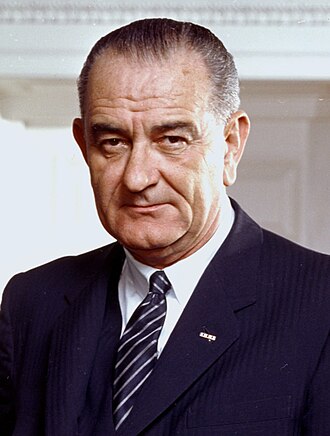 Lyndon B. Johnson
Post-Graduate Legal • 5m
EO 11420 Jul 31, 1968
🏛️✅ Zone 1 (Maximum Authority) Fidelity (+0.33)
Executive Order 11420—Establishing the Export Expansion Advisory Committee
📜 Art. I §8: Delegated Tariff & Commerce Execution
Establishment of Advisory Committee. (a) There is hereby established the Export Expansion Advisory Committee (hereinafter referred to as "the Committee").
Lyndon B. Johnson Post-Graduate Legal • 2m
EO 11418 Jul 27, 1968
⚖️✨ Zone 2 (Zone of Twilight) Constitutional Neutral
Executive Order 11418—Extending the Life of the President's Advisory Council on Cost Reduction
📜 Art. II §1: Executive Discretion & Internal Operations
Executive Order NO. 11353 of May 23, 1967, entitled "Establishing the President's Advisory Council on Cost Reduction," is hereby amended by striking from section 2(5) thereof the text "12 months after the effective date of this order" and inserting in lieu of the stricken text…
Lyndon B. Johnson High School • 1m
EO 11417 Jul 24, 1968
🏛️✅ Zone 1 (Maximum Authority) Constitutional Neutral
Executive Order 11417—Adding an Assistant Secretary of Commerce to the Membership of the Development Loan Committee
📜 Art. I §8: Delegated Tariff & Commerce Execution
Executive Order No. 10973 of November 3, 1961, as amended, is hereby further amended by inserting in section 305, after the text "the Assistant Secretary of the Treasury dealing with international finance,", the following: "the Assistant Secretary of Commerce for Domestic and…
Lyndon B. Johnson High School • 1m
EO 11421 Aug 9, 1968
⚖️✨ Zone 2 (Zone of Twilight) Constitutional Neutral
Executive Order 11421—Placing an Additional Position in Level V of the Federal Executive Salary Schedule
📜 Art. II §2: Commander-in-Chief Supervisory Authority
Section 2 of Executive Order No. 11248 of October 10, 1965, as amended, is further amended by adding thereto the following: (20) Deputy Assistant Secretary of Defense for Reserve Affairs.
Lyndon B. Johnson High School • 1m
EO 11422 Aug 15, 1968
🏛️✅ Zone 1 (Maximum Authority) Fidelity (+0.57)
Executive Order 11422—Cooperative Area Manpower Planning System
📜 10th Amend: Intergovernmental Federalism Cooperation
Policy. (a) Cooperative planning and execution of manpower training and supportive manpower service programs is hereby established as the policy of the Federal Government.
Lyndon B. Johnson Post-Graduate Legal • 3m
📜
Scholarly & Legal Citations
Exec. Order No. 11,419 (July 29, 1968), https://executiveordersarchive.org/orders/app-executive-order-11419-relating-trade-and-other-transactions-involving-southern-rhodesia.
