By virtue of the authority vested in me as President of the United States, it is ordered as follows: PART I. ENVIRONMENTAL QUALITY COUNCIL SECTION 101. Establishment of the Council. (a) There is hereby established the Environmental Quality Council (hereinafter referred to as "the Council."). (b) The President of the United States shall preside over meetings of the Council. The Vice President shall preside in the absence of the President. (c) The Council shall be composed of the following members: The Vice President of the United States Secretary of Agriculture Secretary of Commerce Secretary of Health, Education and Welfare Secretary of Housing and Urban Development Secretary of the Interior Secretary of Transportation and such other heads of departments and agencies and others as the President may from time to time direct. (d) Each member of the Council may designate an alternate, who shall serve as a member of the Council whenever the regular member is unable to attend any meeting of the Council. (e) When matters which affect the interests of Federal agencies the heads of which are not members of the Council are to be considered by the Council, the President or his representative may invite such agency heads or their alternates to participate in the deliberations of the Council. (f) The Director of the Bureau of the Budget, the Chairman of the Council of Economic Advisers, and the Executive Secretary of the Council for Urban Affairs or their representatives may participate in the deliberations of the Environmental Quality Council as observers. (g) The Science Adviser to the President shall be the Executive Secretary of the Council and shall assist the President in directing the affairs of the Council. SEC. 102. Functions of the Council. (a) The Council shall advise and assist the President with respect to environmental quality matters and shall perform such other related duties as the President may from time to time prescribe. In addition thereto, the Council is directed to: (1) Recommend measures to ensure that Federal policies and programs, including those for development and conservation of natural resources, take adequate account of environmental effects. (2) Review the adequacy of existing systems for monitoring and predicting environmental changes so as to achieve effective coverage and efficient use of facilities and other resources. (3) Foster cooperation between the Federal Government, State and local governments, and private organizations in environmental programs. (4) Seek advancement of scientific knowledge of changes in the environment and encourage the development of technology to prevent or minimize adverse effects that endanger man's health and well-being. (5) Stimulate public and private participation in programs and activities to protect against pollution of the Nation's air, water, and land and its living resources. (6) Encourage timely public disclosure by all levels of government and by private parties of plans that would affect the quality of environment. (7) Assure assessment of new and changing technologies for their potential effects on the environment. (8) Facilitate coordination among departments and agencies of the Federal Government in protecting and improving the environment. (b) The Council shall review plans and actions of Federal agencies affecting outdoor recreation and natural beauty. The Council may conduct studies and make recommendations to the President on matters of policy in the fields of outdoor recreation and natural beauty. In carrying out the foregoing provisions of this subsection, the Council shall, as far as may be practical, advise Federal agencies with respect to the effect of their respective plans and programs on recreation and natural beauty, and may suggest to such agencies ways to accomplish the purposes of this order. For the purposes of this order, plans and programs may include, but are not limited to, those for or affecting: (1) development, restoration, and preservation of the beauty of the countryside, urban and suburban areas, water resources, wild rivers, scenic roads, parkways and highways, (2) the protection and appropriate management of scenic or primitive areas, natural wonders, historic sites, and recreation areas, (3) the management of Federal land and water resources, including fish and wildlife, to enhance natural beauty and recreational opportunities consistent with other essential uses, (4) cooperation with the States and their local subdivisions and private organizations and individuals in areas of mutual interest, (5) interstate arrangements, including Federal participation where authorized and necessary, and (6) leadership in a nationwide recreation and beautification effort. (c) The Council shall assist the President in preparing periodic reports to the Congress on the subjects of this order. SEC. 103. Coordination. The Secretary of the Interior may make available to the Council for coordination of outdoor recreation the authorities and resources available to him under the Act of May 28, 1963, 77 Stat. 49; to the extent permitted by law, he may make such authorities and resources available to the Council also for promoting such coordination of other matters assigned to the Council by this order. SEC. 104. Assistance for the Council. In compliance with provisions of applicable law, and as necessary to serve the purposes of this order, (1) the Office of Science and Technology shall provide or arrange for necessary administrative and staff services, support, and facilities for the Council, and (2) each department and agency which has membership on the Council under Section 101(c) hereof shall furnish the Council such information and other assistance as may be available PART II. CITIZENS' ADVISORY COMMITTEE ON ENVIRONMENTAL QUALITY SEC. 201. Establishment of the Committee. There is hereby established the Citizens' Advisory Committee on Environmental Quality (hereinafter referred to as the "Committee"). The Committee shall be composed of a chairman and not more than 14 other members appointed by the President. Appointments to membership on the Committee shall be for staggered terms, except that the chairman of the Committee shall serve until his successor is appointed. SEC. 202. Functions of the Committee. The Committee shall advise the President and the Council on matters assigned to the Council by the provisions of this order. SEC. 203. Expenses. Members of the Committee shall receive no compensation from the United States by reason of their services under this order but shall be entitled to receive travel and expenses, including per diem in lieu of subsistence, as authorized by law (5 U.S.C. 5701-5708) for persons in the Government service employed intermittently. SEC. 204. Continuity. Persons who on the date of this order are members of the Citizens' Advisory Committee on Recreation and Natural Beauty established by Executive Order No. 11278 of May 4, 1966, as amended, shall, until the expirations of their respective terms and without further action by the President, be members of the Committee established by the provisions of this Part in lieu of an equal number of the members provided for in section 201 of this order. PART III. GENERAL PROVISIONS SEC. 301. Construction. Nothing in this order shall be construed as subjecting any department, establishment, or other instrumentality of the executive branch of the Federal Government or the head thereof, or any function vested by law in or assigned pursuant to law to any such agency or head, to the authority of any other such agency or head or as abrogating, modifying, or restricting any such function in any manner. SEC. 302. Prior bodies and orders. The President's Council on Recreation and Natural Beauty and the Citizens' Advisory Committee on Recreation and Natural Beauty are hereby terminated and the following are revoked: (1) Executive Order No. 11278 of May 4, 1966. (2) Executive Order No. 11359A of June 29, 1967. (3) Executive Order No. 11402 of March 29, 1968. RICHARD NIXON The White House May 29, 1969
Executive Order 11472 🏛️✅ Zone 1: Maximum Authority Constitutional Fidelity (+0.47)
📜 5th Amend: Regulatory Execution with Due Process
Executive Order 11472—Establishing the Environmental Quality Council and the Citizens' Advisory Committee on Environmental Quality
Executive Brief • At a Glance
⏱️ 6 min read (1,260 words) •
● In Effect
🎯 Primary Mandate
There is hereby established the Environmental Quality Council (hereinafter referred to as "the Council.").
⚖️ Constitutional Footing
🏛️✅ Zone 1: Maximum Authority
Express or Implied Congressional Authorization
📜 5th Amend: Regulatory Execution with Due Process
🏛️ Scope & Affected Sectors
Merchants, Importers & Commercial Enterprises Sovereign State Governments & Localities Executive Departments & Federal Civil Servants Private Citizens & Property Owners
Plain-English Translation & Framers' Constitutional Analysis
Early Statesman synthesis distilling legal jargon into practical meaning, statutory anchors, and structural constitutional impacts.
Signed by President Richard Nixon on May 29, 1969, this order concerns Establishing the Environmental Quality Council and the Citizens' Advisory Committee on Environmental Quality. Establishment of the Council. (a) There is hereby established the Environmental Quality Council (hereinafter referred to as "the Council."). (b) The President of the United States shall preside over meetings of the Council. The Vice President shall preside in the absence of the President.
Constitutional Assessment: Evaluated against the Fifth Amendment, this action touches upon property or economic rights. An early statesman would insist upon strict adherence to due process of law and the constitutional guarantee that private holdings shall not be encumbered or taken for public purposes without just compensation and lawful process.
Key Directives & Operative Actions
▪
There is hereby established the Environmental Quality Council (hereinafter referred to as "the Council.").
▪
The President of the United States shall preside over meetings of the Council.
▪
The Vice President shall preside in the absence of the President.
▪
The Council shall be composed of the following members: The Vice President of the United States Secretary of Agriculture Secretary of Commerce Secretary of Health, Education and Welfare Secretary of Housing and Urban Development Secretary of the Interior Secretary of Transportation and such other heads of departments and agencies and others as the President may from time to time direct.
Constitutional & Societal Entities Impacted
🏛️ Merchants, Importers & Commercial Enterprises
🏛️ Sovereign State Governments & Localities
🏛️ Executive Departments & Federal Civil Servants
🏛️ Private Citizens & Property Owners
🏛️ Foreign Nations & International Entities
Policy Areas & Topics
🏛️
The Framers' Constitutional Council
1787 PrismEvaluating this order against the constitutional debates of 1787 and the limits of Article II executive power.
🏛️✅ Zone 1 (Maximum Authority)
§
"When the President acts pursuant to an express or implied authorization of Congress, his authority is at its maximum, for it includes all that he possesses in his own right plus all that Congress can delegate."
— Justice Robert H. Jackson, Youngstown Sheet & Tube Co. v. Sawyer (1952) Express or Implied Congressional Authorization
JM
James Madison
Separation of Powers & Legislative Primacy
"The constitutional magistracy was designed not to invent policy, but to be the faithful instrument of the laws passed by the people's representatives." — Speech in the First Congress (1789)
Madison would approve the structural posture of this order. The President acts strictly in subordination to statutory authority granted under Article II, Section 3 ("take Care that the Laws be faithfully executed"). The checks and balances hold firm because the policy origin remains with the legislature.
Madisonian Stance: Concurring (Statutory)
AH
Alexander Hamilton
The Energetic Executive & Unified Command
"A feeble Executive implies a feeble execution of the government; and a government ill executed, whatever it may be in theory, must be, in practice, a bad government." — Federalist No. 70 (1788)
Hamilton would view this directive as the natural and indispensable functioning of administrative leadership. Without the power to coordinate agencies, manage personnel, and resolve operational ambiguities, the modern presidency would be reduced to an impotent figurehead.
Hamiltonian Stance: Supportive of Execution
GM
George Mason
Bill of Rights, Due Process & 10th Amendment
"The purse and the sword ought never to be in the same hands... nor the liberties of the citizen placed at the pleasure of a single magistrate." — Virginia Ratifying Convention (1788)
George Mason and the Anti-Federalists would sound a fierce warning. They feared that Article II would inevitably evolve into an elective monarchy. When an executive order impacts private rights, property, or civil liberties without individualized judicial process, Mason would see their darkest predictions verified.
Anti-Federalist Stance: High Bill of Rights Scrutiny
📐
Five Measurable "Constitutional Friction" Dimensions
An objective audit measuring potential separation-of-powers tension against the United States Constitution and established Supreme Court doctrine.
⚖️ Discretionary Twilight Zone
32 / 100 friction index
Dimension 1 • Art. I, §1 & §8
Low Friction
Legislative Encroachment & Purse
Operates within delegated statutory execution without modifying legislative appropriations or taxing powers.
Benchmark: Power of the purse, taxes/tariffs, and rule of law reserved to Congress.
Dimension 2 • Art. II, §1 & §3
Moderate Friction
Executive Scope & Faithfulness
Directs internal executive branch machinery, agency workflows, and federal personnel.
Benchmark: Faithfully execute laws enacted by Congress vs. unilateral decree.
Dimension 3 • 10th Amendment
Moderate Friction
Federalism & State Sovereignty
Engages state and local partners in cooperative federalism programs.
Benchmark: Police powers and un-delegated responsibilities reserved to the States.
Dimension 4 • 5th & 14th Amendments
Moderate Friction
Due Process & Individual Rights
Applies regulatory or compliance standards to private contractors or commercial entities.
Benchmark: Protection of private property, contracts, liberty, and procedural justice.
Dimension 5 • Separation of Powers
Low Friction
Youngstown Jacksonian Tier
The President operates strictly as the constitutional Chief Executive, carrying out policy established by Congress with strong statutory backing.
Benchmark: Express or Implied Congressional Authorization
⚖️
Audit Synthesis
This order operates within Justice Jackson’s Zone of Twilight, resting upon concurrent presidential authority or congressional silence.
Weighted composite: Art. I (25%), Art. II (25%), Federalism (15%), Due Process (15%), Youngstown (20%).
ℹ️
How to read these dimensions: Executive power expands whenever an administration acts without explicit statutory authorization from Congress (Article I), touches upon police powers historically reserved to the states (Tenth Amendment), or limits private rights and property without judicial process. A low friction score indicates strict concordance with enacted law; a high friction score highlights orders testing the limits of presidential discretion.
Total Words
1,260
8,086 characters
Estimated Read Time
6 min
@ 200 words / min
Flesch-Kincaid
15.5
College Level
Text size:
🔗
Referenced By Later Executive Orders (5)
Subsequent presidents who cited, amended, continued, or revoked this directive in later orders.
Jimmy Carter • 1977-08-22
Gerald R. Ford • 1976-12-20
Gerald R. Ford • 1975-01-04
Richard Nixon • 1970-07-01
Richard Nixon • 1970-03-05
Related Executive Orders
3 orders cited directly in this text, plus related actions from this administration.
EO 11278 May 4, 1966
🏛️✅ Zone 1 (Maximum Authority) Fidelity (+0.57)
Executive Order 11278—Establishing a President's Council and a Committee on Recreation and Natural Beauty
📜 Art. II §2: Commander-in-Chief Supervisory Authority
With each passing year America becomes more thoroughly a nation of cities. Of our two hundred million citizens, 135 million live in major urban areas. The proportion of city-dwellers is certain to rise in the decades to come.
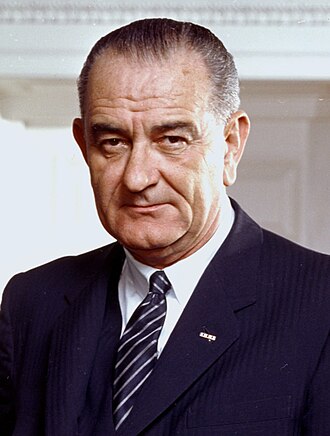 Lyndon B. Johnson
College Level • 7m
EO 11359 Jun 20, 1967
⚖️✨ Zone 2 (Zone of Twilight) Constitutional Neutral
Executive Order 11359—Establishment of the Souris-Red-Rainy River Basins Commission
📜 Art. II §2: Commander-in-Chief Supervisory Authority
Souris-Red-Rainy River Basins Commission. It is hereby declared that the Souris-Red-Rainy River Basins Commission is established under the provisions of Title II of the Act. SEC. 2. Jurisdiction of the Commission.
Lyndon B. Johnson Post-Graduate Legal • 5m
EO 11402 Mar 29, 1968
⚖️✨ Zone 2 (Zone of Twilight) Constitutional Neutral
Executive Order 11402—Making the Vice President of the United States the Chairman of the President's Council on Recreation and Natural Beauty
📜 Art. II §2: Commander-in-Chief Supervisory Authority
Executive Order No. 11278 of May 4, 1966, entitled "Establishing a President's Council and a Committee on Recreation and Natural Beauty", as amended, is hereby further amended by substituting for section 101 thereof the following: "SECTION 101. Membership and chairmanship.
Lyndon B. Johnson Post-Graduate Legal • 1m
EO 11471 May 28, 1969
🏛️✅ Zone 1 (Maximum Authority) Constitutional Neutral
Executive Order 11471—Relating to the Implementation of the Convention on the Service Abroad of Judicial and Extrajudicial Documents in Civil or Commercial Matters
📜 10th Amend: Intergovernmental Federalism Cooperation
The Department of State is designated as the Central Authority to receive requests for service from other Contracting States and to proceed in conformity with articles 3-6 of the Convention. Section 2. Designation of Authority to Complete Certificate.
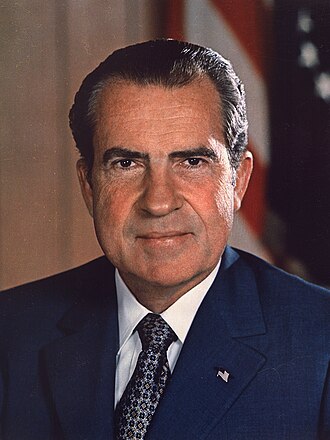 Richard Nixon
College Level • 1m
EO 11470 May 26, 1969
🏛️✅ Zone 1 (Maximum Authority) Fidelity (+0.47)
Executive Order 11470—Prescribing Arrangements for the Structure and Conduct of a National Program for Voluntary Action
📜 5th Amend: Regulatory Execution with Due Process
There shall be undertaken within the executive branch of the government, as provided in this order, a national voluntary action program to encourage and stimulate more widespread and effective voluntary action for solving public domestic problems.
Richard Nixon Post-Graduate Legal • 4m
EO 11469 May 23, 1969
⚖️✨ Zone 2 (Zone of Twilight) Constitutional Neutral
Executive Order 11469—Extending the life of the National Commission on the Causes and Prevention of Violence
📜 Art. II §1: Executive Discretion & Internal Operations
Executive Order No. 11412 of June 10, 1968, entitled "Establishing a National Commission on the Causes and Prevention of Violence", is hereby amended by substituting for the last sentence thereof the following: "The Commission shall terminate thirty days following the…
Richard Nixon College Level • 1m
📜
Scholarly & Legal Citations
Exec. Order No. 11,472 (May 29, 1969), https://executiveordersarchive.org/orders/app-executive-order-11472-establishing-the-environmental-quality-council-and-the-citizens.
