By virtue of the authority vested in me as President of the United States and in furtherance of the purpose and policy of the National Environmental Policy Act of 1969 (Public Law No. 91-190, approved January 1, 1970), it is ordered as follows: SECTION 1. Policy. The Federal Government shall provide leadership in protecting and enhancing the quality of the Nation's environment to sustain and enrich human life. Federal agencies shall initiate measures needed to direct their policies, plans and programs so as to meet national environmental goals. The Council on Environmental Quality, through the Chairman, shall advise and assist the President in leading this national effort. SEC. 2. Responsibilities of Federal agencies. Consonant with Title I of the National Environmental Policy Act of 1969, hereafter referred to as the "Act", the heads of Federal agencies shall: (a) Monitor, evaluate, and control on a continuing basis their agencies' activities so as to protect and enhance the quality of the environment. Such activities shall include those directed to controlling pollution and enhancing the environment and those designed to accomplish other program objectives which may affect the quality of the environment. Agencies shall develop programs and measures to protect and enhance environmental quality and shall assess progress in meeting the specific objectives of such activities. Heads of agencies shall consult with appropriate Federal, State and local agencies in carrying out their activities as they affect the quality of the environment. (b) Develop procedures to ensure the fullest practicable provision of timely public information and understanding of Federal plans and programs with environmental impact in order to obtain the views of interested parties. These procedures shall include, whenever appropriate, provision for public hearings, and shall provide the public with relevant information, including information on alternative courses of action. Federal agencies shall also encourage State and local agencies to adopt similar procedures for informing the public concerning their activities affecting the quality of the environment. (c) Insure that information regarding existing or potential environmental problems and control methods developed as part of research, development, demonstration, test, or evaluation activities is made available to Federal agencies, States, counties, municipalities, institutions, and other entities, as appropriate. (d) Review their agencies' statutory authority, administrative regulations, policies, and procedures, including those relating to loans, grants, contracts, leases, licenses, or permits, in order to identify any deficiencies or inconsistencies therein which prohibit or limit full compliance with the purposes and provisions of the Act. A report on this review and the corrective actions taken or planned, including such measures to be proposed to the President as may be necessary to bring their authority and policies into conformance with the intent, purposes, and procedures of the Act, shall be provided to the Council on Environmental Quality not later than September 1, 1970. (e) Engage in exchange of data and research results, and cooperate with agencies of other governments to foster the purposes of the Act. (f) Proceed, in coordination with other agencies, with actions required by section 102 of the Act. SEC. 3. Responsibilities of Council on Environmental Quality. The Council on Environmental Quality shall: (a) Evaluate existing and proposed policies and activities of the Federal Government directed to the control of pollution and the enhancement of the environment and to the accomplishment of other objectives which affect the quality of the environment. This shall include continuing review of procedures employed in the development and enforcement of Federal standards affecting environmental quality. Based upon such evaluations the Council shall, where appropriate, recommend to the President policies and programs to achieve more effective protection and enhancement of environmental quality and shall, where appropriate, seek resolution of significant environmental issues. (b) Recommend to the President and to the agencies priorities among programs designed for the control of pollution and for enhancement of the environment. (c) Determine the need for new policies and programs for dealing with environmental problems not being adequately addressed. (d) Conduct, as it determines to be appropriate, public hearings or conferences on issues of environmental significance. (e) Promote the development and use of indices and monitoring systems (1) to assess environmental conditions and trends, (2) to predict the environmental impact of proposed public and private actions, and (3) to determine the effectiveness of programs for protecting and enhancing environmental quality. (f) Coordinate Federal programs related to environmental quality. (g) Advise and assist the President and the agencies in achieving international cooperation for dealing with environmental problems, under the foreign policy guidance of the Secretary of State. (h) Issue guidelines to Federal agencies for the preparation of detailed statements on proposals for legislation and other Federal actions affecting the environment, as required by section 102(2) (C) of the Act. (i) Issue such other instructions to agencies, and request such reports and other information from them, as may be required to carry out the Council's responsibilities under the Act. (j) Assist the President in preparing the annual Environmental Quality Report provided for in section 201 of the Act. (k) Foster investigations, studies, surveys, research, and analyses relating to (i) ecological systems and environmental quality, (ii) the impact of new and changing technologies thereon, and (iii) means of preventing or reducing adverse effects from such technologies. SEC. 4. Amendments of E.O. 11472. Executive Order No. 11472 of May 29, 1969, including the heading thereof, is hereby amended: (1) By substituting for the term "the Environmental Quality Council", wherever it occurs, the following: "the Cabinet Committee on the Environment". (2) By substituting for the term "the Council", wherever it occurs, the following: "the Cabinet Committee". (3) By inserting in subsection (f) of section 101, after "Budget,", the following: "the Director of the Office of Science and Technology,". (4) By substituting for subsection (g) of section 101 the following: "(g) The Chairman of the Council on Environmental Quality (established by Public Law 91-190) shall assist the President in directing the affairs of the Cabinet Committee." By deleting subsection (c) of section 102. (5) By substituting for "the Office of Science and Technology", in section 104, the following: "the Council on Environmental Quality (established by Public Law 91-190)". (6) By substituting for "(hereinafter referred to as the `Committee')", in section 201, the following: "(hereinafter referred to as the 'Citizens' Committee')". (7) By substituting for the term "the Committee", wherever it occurs, the following: "the Citizens' Committee". RICHARD NIXON The White House March 5, 1970
Executive Order 11514 🏛️✅ Zone 1: Maximum Authority Constitutional Neutral (+0.02)
📜 10th Amend: Intergovernmental Federalism Cooperation
Executive Order 11514—Protection and Enhancement of Environmental Quality
Executive Brief • At a Glance
⏱️ 5 min read (1,059 words) •
● In Effect
🎯 Primary Mandate
The Federal Government shall provide leadership in protecting and enhancing the quality of the Nation's environment to sustain and enrich human life.
⚖️ Constitutional Footing
🏛️✅ Zone 1: Maximum Authority
Express or Implied Congressional Authorization
📜 10th Amend: Intergovernmental Federalism Cooperation
🏛️ Scope & Affected Sectors
Sovereign State Governments & Localities Executive Departments & Federal Civil Servants Private Citizens & Property Owners Foreign Nations & International Entities
Plain-English Translation & Framers' Constitutional Analysis
Early Statesman synthesis distilling legal jargon into practical meaning, statutory anchors, and structural constitutional impacts.
Signed by President Richard Nixon on March 5, 1970, this order concerns Protection and Enhancement of Environmental Quality. Policy. The Federal Government shall provide leadership in protecting and enhancing the quality of the Nation's environment to sustain and enrich human life. Federal agencies shall initiate measures needed to direct their policies, plans and programs so as to meet national environmental goals.
Constitutional Assessment: Reviewed under the Tenth Amendment and the principle of dual federalism, this order touches upon domains traditionally reserved to the sovereign States. The Framers would caution against any attempt to commandeer state officers or displace local police powers through federal executive fiat.
Key Directives & Operative Actions
▪
The Federal Government shall provide leadership in protecting and enhancing the quality of the Nation's environment to sustain and enrich human life.
▪
Federal agencies shall initiate measures needed to direct their policies, plans and programs so as to meet national environmental goals.
▪
The Council on Environmental Quality, through the Chairman, shall advise and assist the President in leading this national effort.
▪
Consonant with Title I of the National Environmental Policy Act of 1969, hereafter referred to as the "Act", the heads of Federal agencies shall: (a) Monitor, evaluate, and control on a continuing basis their agencies' activities so as to protect and enhance the quality of the environment.
Constitutional & Societal Entities Impacted
🏛️ Sovereign State Governments & Localities
🏛️ Executive Departments & Federal Civil Servants
🏛️ Private Citizens & Property Owners
🏛️ Foreign Nations & International Entities
Policy Areas & Topics
🏛️
The Framers' Constitutional Council
1787 PrismEvaluating this order against the constitutional debates of 1787 and the limits of Article II executive power.
🏛️✅ Zone 1 (Maximum Authority)
§
"When the President acts pursuant to an express or implied authorization of Congress, his authority is at its maximum, for it includes all that he possesses in his own right plus all that Congress can delegate."
— Justice Robert H. Jackson, Youngstown Sheet & Tube Co. v. Sawyer (1952) Express or Implied Congressional Authorization
JM
James Madison
Separation of Powers & Legislative Primacy
"The constitutional magistracy was designed not to invent policy, but to be the faithful instrument of the laws passed by the people's representatives." — Speech in the First Congress (1789)
Madison would approve the structural posture of this order. The President acts strictly in subordination to statutory authority granted under Article II, Section 3 ("take Care that the Laws be faithfully executed"). The checks and balances hold firm because the policy origin remains with the legislature.
Madisonian Stance: Concurring (Statutory)
AH
Alexander Hamilton
The Energetic Executive & Unified Command
"A feeble Executive implies a feeble execution of the government; and a government ill executed, whatever it may be in theory, must be, in practice, a bad government." — Federalist No. 70 (1788)
Hamilton would view this directive as the natural and indispensable functioning of administrative leadership. Without the power to coordinate agencies, manage personnel, and resolve operational ambiguities, the modern presidency would be reduced to an impotent figurehead.
Hamiltonian Stance: Supportive of Execution
GM
George Mason
Bill of Rights, Due Process & 10th Amendment
"The powers not delegated to the United States by the Constitution, nor prohibited by it to the States, are reserved to the States respectively, or to the people." — 10th Amendment to the US Constitution (1791)
Mason would scrutinize whether this federal directive intrudes into police powers, land stewardship, or municipal domains historically reserved to local citizens. The Anti-Federalist demand is that federal administration must never supplant state self-governance.
Anti-Federalist Stance: Eternal Vigilance Required
📐
Five Measurable "Constitutional Friction" Dimensions
An objective audit measuring potential separation-of-powers tension against the United States Constitution and established Supreme Court doctrine.
⚖️ Discretionary Twilight Zone
46 / 100 friction index
Dimension 1 • Art. I, §1 & §8
Moderate Friction
Legislative Encroachment & Purse
Administers commerce or fiscal programs requiring ongoing statutory delegation and legislative oversight.
Benchmark: Power of the purse, taxes/tariffs, and rule of law reserved to Congress.
Dimension 2 • Art. II, §1 & §3
Moderate Friction
Executive Scope & Faithfulness
Directs internal executive branch machinery, agency workflows, and federal personnel.
Benchmark: Faithfully execute laws enacted by Congress vs. unilateral decree.
Dimension 3 • 10th Amendment
Moderate Friction
Federalism & State Sovereignty
Engages state and local partners in cooperative federalism programs.
Benchmark: Police powers and un-delegated responsibilities reserved to the States.
Dimension 4 • 5th & 14th Amendments
High Friction
Due Process & Individual Rights
Scrutinized under the Bill of Rights for potential impact on private contracts, property rights, or procedural due process.
Benchmark: Protection of private property, contracts, liberty, and procedural justice.
Dimension 5 • Separation of Powers
Low Friction
Youngstown Jacksonian Tier
The President operates strictly as the constitutional Chief Executive, carrying out policy established by Congress with strong statutory backing.
Benchmark: Express or Implied Congressional Authorization
⚖️
Audit Synthesis
This order operates within Justice Jackson’s Zone of Twilight, resting upon concurrent presidential authority or congressional silence.
Weighted composite: Art. I (25%), Art. II (25%), Federalism (15%), Due Process (15%), Youngstown (20%).
ℹ️
How to read these dimensions: Executive power expands whenever an administration acts without explicit statutory authorization from Congress (Article I), touches upon police powers historically reserved to the states (Tenth Amendment), or limits private rights and property without judicial process. A low friction score indicates strict concordance with enacted law; a high friction score highlights orders testing the limits of presidential discretion.
Total Words
1,059
7,224 characters
Estimated Read Time
5 min
@ 200 words / min
Flesch-Kincaid
16.9
Post-Graduate Legal
Text size:
🔗
Referenced By Later Executive Orders (5)
Subsequent presidents who cited, amended, continued, or revoked this directive in later orders.
Jimmy Carter • 1977-08-22
Jimmy Carter • 1977-05-24
Jimmy Carter • 1977-05-24
Jimmy Carter • 1977-05-24
Related Executive Orders
1 order cited directly in this text, plus related actions from this administration.
EO 11472 May 29, 1969
🏛️✅ Zone 1 (Maximum Authority) Fidelity (+0.47)
Executive Order 11472—Establishing the Environmental Quality Council and the Citizens' Advisory Committee on Environmental Quality
📜 5th Amend: Regulatory Execution with Due Process
Establishment of the Council. (a) There is hereby established the Environmental Quality Council (hereinafter referred to as "the Council."). (b) The President of the United States shall preside over meetings of the Council.
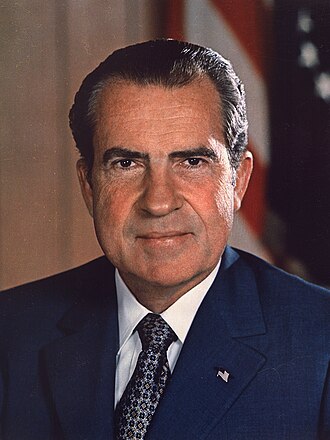 Richard Nixon
College Level • 6m
EO 11513 Mar 3, 1970
🏛️✅ Zone 1 (Maximum Authority) Constitutional Neutral
Executive Order 11513—Establishing the President's Commission on School Finance
📜 Art. I §8: Delegated Tariff & Commerce Execution
Establishment of the Commission. (a) There is hereby established the President's Commission on School Finance (hereinafter referred to as "the Commission"). (b) The Commission shall be composed of not more than sixteen members to be appointed by the President.
Richard Nixon College Level • 4m
EO 11512 Feb 27, 1970
⚖️✨ Zone 2 (Zone of Twilight) Constitutional Neutral
Executive Order 11512—Planning, Acquisition, and Management of Federal Space
📜 Art. II §2: Commander-in-Chief Supervisory Authority
The Administrator of General Services (hereinafter termed "the Administrator") shall initiate and maintain plans and programs for the effective and efficient acquisition and utilization of federally owned and leased space located in the States of the United States or in the…
Richard Nixon Post-Graduate Legal • 4m
EO 11511 Feb 27, 1970
⚖️✨ Zone 2 (Zone of Twilight) Constitutional Neutral
Executive Order 11511—Amending Executive Order No. 11157 as it Relates to Basic Allowances for Quarters for Members Without Dependents
📜 Art. II §2: Commander-in-Chief Supervisory Authority
Executive Order No. 11157 of June 22, 1964, as amended, is further amended by deleting the words "at his permanent station" in clause (b) of section 403 thereof.
Richard Nixon High School • 1m
EO 11515 Mar 13, 1970
⚖️✨ Zone 2 (Zone of Twilight) Constitutional Neutral
Executive Order 11515—Terminating Certain Bodies Established by the President
📜 Art. II §1: Executive Discretion & Internal Operations
Interdepartmental Highway Safety Board. (a) The Interdepartmental Highway Safety Board is terminated. (b) Executive Order No. 10898 of December 2, 1960, and Executive Order No. 10986 of January 12, 1962, are revoked.
Richard Nixon High School • 2m
EO 11517 Mar 19, 1970
🏛️✅ Zone 1 (Maximum Authority) Constitutional Neutral
Executive Order 11517—Providing for the Issuance and Signature by the Secretary of State of Warrants Appointing Agents to Return Fugitives From Justice Extradited to the United States
📜 10th Amend: Intergovernmental Federalism Cooperation
The Secretary of State is hereby designated and empowered to issue and sign all warrants appointing agents to receive, in behalf of the United States, the delivery in extradition by a foreign government of any person accused of a crime committed within the United States, and to…
Richard Nixon Post-Graduate Legal • 2m
📜
Scholarly & Legal Citations
Exec. Order No. 11,514 (Mar. 5, 1970), https://executiveordersarchive.org/orders/app-executive-order-11514-protection-and-enhancement-environmental-quality.
