By virtue of the authority vested in me by section 212 of the Federal Salary Act of 1967 (Public Law 90-206, 81 Stat. 634), and after seeking the views of employee organizations as provided therein, it is hereby ordered as follows: General Schedule SECTION 1. (a) The rates of basic pay in the General Schedule contained in section 5332(a) of title 5, United States Code, are adjusted as follows: (b) Except as provided in section 5303 of title 5, United States Code, the rates of basic pay of officers and employees to whom the General Schedule set forth in this section applies shall be initially adjusted as of the effective date of this order as follows: (1) If the officer or employee is receiving basic pay immediately prior to the effective date of this order at one of the rates of a grade in the General Schedule, he shall receive a rate of basic pay at the corresponding rate in effect on and after such date. (2) If the officer or employee is receiving basic pay immediately prior to the effective date of this order at a rate between two rates of a grade in the General Schedule, he shall receive a rate of basic pay at the higher of the two corresponding rates in effect on and after such date. (3) If the officer or employee is receiving basic pay immediately prior to the effective date of this order at a rate in excess of the maximum rate of his grade, he shall receive his existing rate of basic pay increased by the amount of increase made by this section in the maximum rate for his grade. (4) If the officer or employee, immediately prior to the effective date of this order, is receiving, pursuant to section 2 (b) (4) of the Federal Employees Salary Increase Act of 1955, an existing aggregate rate of pay determined under section 208 (b) of the Act of September 1, 1954 (68 Stat. 1111), plus subsequent increases authorized by law, he shall receive an aggregate rate of pay equal to the sum of his existing aggregate rate of pay on the day preceding the effective date of this order, plus the amount of increase made by this section in the maximum rate of his grade, until (i) he leaves his position, or (ii) he is entitled to receive aggregate pay at a higher rate by reason of the operation of any provision of law; but, when such position becomes vacant, the aggregate rate of pay of any subsequent appointee thereto shall be fixed in accordance with applicable provisions of law. Subject to clauses (i) and (ii) of the immediately preceding sentence of this paragraph, the amount of the increase provided by this section shall be held and considered for the purposes of section 208(b) of the Act of September 1, 1954, to constitute a part of the existing rate of pay of the employee. Schedules for the Postal Field Service SEC. 2 (a) The rates of basic compensation in Postal Field Service Schedule II contained in section 3542(a) of title 39, United States Code, are adjusted as follows: (b) The rates of basic compensation in the Rural Carrier Schedule II contained in section 3543(a) of title 39, United States Code, are adjusted as follows: (c) The basic compensation of each employee subject to the Postal Field Service Schedule or the Rural Carrier Schedule immediately prior to the effective date of this order shall be determined as follows : (1) Each employee shall be assigned to the same numerical step for his position which he had attained immediately prior to such effective date. If changes in levels or steps would otherwise occur on such effective date without regard to the provisions of this order, such changes shall be deemed to have occurred prior to conversion. (2) If the existing basic compensation is greater than the rate to which the employee is converted under paragraph (1) of this subsection, the employee shall be placed in the lowest step which exceeds his basic compensation. If the existing basic compensation exceeds the maximum step of his position, his existing basic compensation shall be increased by the amount of increase made by this section in the maximum rate of his level. Schedules for the Department of Medicine and Surgery of the Veterans' Administration SEC. 3. The schedules contained in section 4107 of title 38, United States Code, for certain positions within the Department of Medicine and Surgery of the Veterans' Administration, are adjusted as follows: "Section 4103 Schedule "Assistant Chief Medical Director, $33,495. "Medical Director, $28,976 minimum to $32,840 maximum. "Director of Nursing Service, $21,589 minimum to $28,069 maximum. "Director of Chaplain Service, $21,589 minimum to $28,069 maximum. "Chief Pharmacist, $21,589 minimum to $28,069 maximum. "Chief Dietitian, $21,589 minimum to $28,069 maximum. "Physician and Dentist Schedule "Director grade, $25,044 minimum to $31,724 maximum. "Executive grade, $23,273 minimum to $30,257 maximum. "Chief grade, $21,589 minimum to $28,069 maximum. "Senior grade, $18,531 minimum to $24,093 maximum. "Intermediate grade, $15,812 minimum to $20,555 maximum. "Full grade, $13,389 minimum to $17,403 maximum. "Associate grade, $11,233 minimum to $14,599 maximum. "Nurse Schedule "Assistant Director grade, $18,531 minimum to $24,093 maximum. "Chief grade, $15,812 minimum to $20,555 maximum. "Senior grade, $13,389 minimum to $17,403 maximum. "Intermediate grade, $11,233 minimum to $14,599 maximum. "Full grade, $9,320 minimum to $12,119 maximum. "Associate grade, $8,037 minimum to $10,449 maximum. "Junior grade, $6,882 minimum to $8,943 maximum. "Foreign Service Schedules SEC. 4. (a) The per annum salaries of Foreign Service officers in the schedule contained in section 412 of the Foreign Service Act of 1946, as amended (22 U.S.C. 867), are adjusted as follows: (b) The per annum salaries of staff officers and employees in the schedule contained in section 415 of the Foreign Service Act of 1946, as amended (22 U.S.C. 870(a)), are adjusted as follows: Effective Date SEC. 5. This order shall become effective on the first day of the first pay period beginning on or after July 1, 1969. RICHARD NIXON The White House June 16, 1969
Executive Order 11474 ⚖️✨ Zone 2: Zone of Twilight Constitutional Neutral (+0.02)
📜 5th Amend: Regulatory Execution with Due Process
Executive Order 11474—Adjusting Rates of Pay for Certain Statutory Schedules
Executive Brief • At a Glance
⏱️ 5 min read (1,012 words) •
● In Effect
🎯 Primary Mandate
The rates of basic pay in the General Schedule contained in section 5332(a) of title 5, United States Code, are adjusted as follows: (b) Except as provided in section 5303 of title 5, United States Code, the rates of basic pay of officers and employees to whom the General Schedule set forth in this section applies shall be initially adjusted as of the effective date of this order as follows: (1) If the officer or employee is receiving basic pay immediately prior to the effective date of this order at one of the rates of a grade in the General Schedule, he shall receive a rate of basic pay at the corresponding rate in effect on and after such date.
⚖️ Constitutional Footing
⚖️✨ Zone 2: Zone of Twilight
Concurrent Authority / Congressional Silence
📜 5th Amend: Regulatory Execution with Due Process
🏛️ Scope & Affected Sectors
Armed Forces & Military Establishments Executive Departments & Federal Civil Servants Private Citizens & Property Owners Foreign Nations & International Entities
Plain-English Translation & Framers' Constitutional Analysis
Early Statesman synthesis distilling legal jargon into practical meaning, statutory anchors, and structural constitutional impacts.
Signed by President Richard Nixon on June 16, 1969, this order concerns Adjusting Rates of Pay for Certain Statutory Schedules. General Schedule SECTION 1. (a) The rates of basic pay in the General Schedule contained in section 5332(a) of title 5, United States Code, are adjusted as follows: (b) Except as provided in section 5303 of title 5, United States Code, the rates of basic pay of officers and employees to whom the General Schedule set forth in this section applies shall be initially adjusted as of the effective date of this order as…
Constitutional Assessment: Evaluated against the Fifth Amendment, this action touches upon property or economic rights. An early statesman would insist upon strict adherence to due process of law and the constitutional guarantee that private holdings shall not be encumbered or taken for public purposes without just compensation and lawful process.
Key Directives & Operative Actions
▪
The rates of basic pay in the General Schedule contained in section 5332(a) of title 5, United States Code, are adjusted as follows: (b) Except as provided in section 5303 of title 5, United States Code, the rates of basic pay of officers and employees to whom the General Schedule set forth in this section applies shall be initially adjusted as of the effective date of this order as follows: (1) If the officer or employee is receiving basic pay immediately prior to the effective date of this order at one of the rates of a grade in the General Schedule, he shall receive a rate of basic pay at the corresponding rate in effect on and after such date.
▪
If the officer or employee is receiving basic pay immediately prior to the effective date of this order at a rate between two rates of a grade in the General Schedule, he shall receive a rate of basic pay at the higher of the two corresponding rates in effect on and after such date.
▪
If the officer or employee, immediately prior to the effective date of this order, is receiving, pursuant to section 2 (b) (4) of the Federal Employees Salary Increase Act of 1955, an existing aggregate rate of pay determined under section 208 (b) of the Act of September 1, 1954 (68 Stat. 1111), plus subsequent increases authorized by law, he shall receive an aggregate rate of pay equal to the sum of his existing aggregate rate of pay on the day preceding the effective date of this order, plus the amount of increase made by this section in the maximum rate of his grade, until (i) he leaves his position, or (ii) he is entitled to receive aggregate pay at a higher rate by reason of the operation of any provision of law; but, when such…
▪
Subject to clauses (i) and (ii) of the immediately preceding sentence of this paragraph, the amount of the increase provided by this section shall be held and considered for the purposes of section 208(b) of the Act of September 1, 1954, to constitute a part of the existing rate of pay of the employee.
Constitutional & Societal Entities Impacted
🏛️ Armed Forces & Military Establishments
🏛️ Executive Departments & Federal Civil Servants
🏛️ Private Citizens & Property Owners
🏛️ Foreign Nations & International Entities
🏛️ Public Health & Medical Institutions
Policy Areas & Topics
🏛️
The Framers' Constitutional Council
1787 PrismEvaluating this order against the constitutional debates of 1787 and the limits of Article II executive power.
⚖️✨ Zone 2 (Zone of Twilight)
§
"When the President acts in absence of either a congressional grant or denial of authority, he can only rely upon his own independent powers, but there is a zone of twilight in which he and Congress may have concurrent authority."
— Justice Robert H. Jackson, Youngstown Sheet & Tube Co. v. Sawyer (1952) Concurrent Authority / Congressional Silence
JM
James Madison
Separation of Powers & Legislative Primacy
"Power is of an encroaching nature, and it ought to be effectually restrained from passing the limits assigned to it." — Federalist No. 48 (1788)
Madison would view this order with watchful scrutiny. Operating in the 'Zone of Twilight' where Congress is silent, each such directive establishes an administrative precedent that steadily expands the executive perimeter at the expense of legislative primacy.
Madisonian Stance: Vigilant / Cautionary
AH
Alexander Hamilton
The Energetic Executive & Unified Command
"A feeble Executive implies a feeble execution of the government; and a government ill executed, whatever it may be in theory, must be, in practice, a bad government." — Federalist No. 70 (1788)
Hamilton would view this directive as the natural and indispensable functioning of administrative leadership. Without the power to coordinate agencies, manage personnel, and resolve operational ambiguities, the modern presidency would be reduced to an impotent figurehead.
Hamiltonian Stance: Defends Vigor & Dispatch
GM
George Mason
Bill of Rights, Due Process & 10th Amendment
"The purse and the sword ought never to be in the same hands... nor the liberties of the citizen placed at the pleasure of a single magistrate." — Virginia Ratifying Convention (1788)
George Mason and the Anti-Federalists would sound a fierce warning. They feared that Article II would inevitably evolve into an elective monarchy. When an executive order impacts private rights, property, or civil liberties without individualized judicial process, Mason would see their darkest predictions verified.
Anti-Federalist Stance: High Bill of Rights Scrutiny
📐
Five Measurable "Constitutional Friction" Dimensions
An objective audit measuring potential separation-of-powers tension against the United States Constitution and established Supreme Court doctrine.
⚖️ Discretionary Twilight Zone
30 / 100 friction index
Dimension 1 • Art. I, §1 & §8
Low Friction
Legislative Encroachment & Purse
Operates within delegated statutory execution without modifying legislative appropriations or taxing powers.
Benchmark: Power of the purse, taxes/tariffs, and rule of law reserved to Congress.
Dimension 2 • Art. II, §1 & §3
Low Friction
Executive Scope & Faithfulness
Exercises standard supervisory executive authority to faithfully execute existing statutes.
Benchmark: Faithfully execute laws enacted by Congress vs. unilateral decree.
Dimension 3 • 10th Amendment
Moderate Friction
Federalism & State Sovereignty
Engages state and local partners in cooperative federalism programs.
Benchmark: Police powers and un-delegated responsibilities reserved to the States.
Dimension 4 • 5th & 14th Amendments
Low Friction
Due Process & Individual Rights
Focuses on internal governmental operations with no direct impairment of private rights or property.
Benchmark: Protection of private property, contracts, liberty, and procedural justice.
Dimension 5 • Separation of Powers
Moderate Friction
Youngstown Jacksonian Tier
The order relies on inherent Article II executive discretion, civil service management, or foreign diplomacy where Congress has neither expressly approved nor prohibited action.
Benchmark: Concurrent Authority / Congressional Silence
⚖️
Audit Synthesis
This order operates within Justice Jackson’s Zone of Twilight, resting upon concurrent presidential authority or congressional silence.
Weighted composite: Art. I (25%), Art. II (25%), Federalism (15%), Due Process (15%), Youngstown (20%).
ℹ️
How to read these dimensions: Executive power expands whenever an administration acts without explicit statutory authorization from Congress (Article I), touches upon police powers historically reserved to the states (Tenth Amendment), or limits private rights and property without judicial process. A low friction score indicates strict concordance with enacted law; a high friction score highlights orders testing the limits of presidential discretion.
Total Words
1,012
6,079 characters
Estimated Read Time
5 min
@ 200 words / min
Flesch-Kincaid
13.4
College Level
Text size:
🔗
Referenced By Later Executive Orders (1)
Subsequent presidents who cited, amended, continued, or revoked this directive in later orders.
Gerald R. Ford • 1974-10-07
Related Executive Orders
Other executive actions signed by Richard Nixon around this period.
EO 11475 Jun 16, 1969
⚖️✨ Zone 2 (Zone of Twilight) Constitutional Neutral
Executive Order 11475—Adjusting the Rates of Monthly Basic Pay for Members of the Uniformed Services
📜 Art. II §2: Commander-in-Chief Supervisory Authority
The rates of monthly basic pay for members of the uniformed services within each pay grade are, effective on July 1, 1969, adjusted upwards as set forth in the following tables
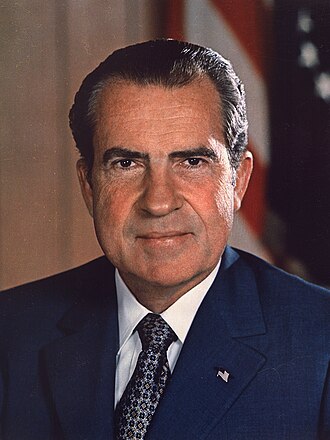 Richard Nixon
Post-Graduate Legal • 1m
EO 11473 Jun 14, 1969
⚖️✨ Zone 2 (Zone of Twilight) Constitutional Neutral
Executive Order 11473—Amending Executive Order No. 11157 as it Relates to Incentive Pay for Hazardous Duty Involving Participation in Flight Operations on the Flight Deck of an Aircraft Carrier
📜 Art. II §2: Commander-in-Chief Supervisory Authority
09 (f) of Executive Order No. 11157 of June 22, 1964, as amended by Executive Order No. 11242 of August 28, 1965, is amended to read as follows: "(f) The term 'duty involving frequent and regular participation in flight operations on the flight deck of an aircraft carrier'…
Richard Nixon Post-Graduate Legal • 1m
EO 11476 Jun 19, 1969
⚖️✨ Zone 2 (Zone of Twilight) Constitutional Neutral
Executive Order 11476—Prescribing the Manual for Courts-Martial, United States, 1969 (Revised edition)
📜 Art. II §2: Commander-in-Chief Supervisory Authority
I hereby prescribe the following Manual for Courts-Martial, to be designated as "Manual for Courts-Martial, United States, 1969 (Revised edition).
Richard Nixon Post-Graduate Legal • 1m
EO 11472 May 29, 1969
🏛️✅ Zone 1 (Maximum Authority) Fidelity (+0.47)
Executive Order 11472—Establishing the Environmental Quality Council and the Citizens' Advisory Committee on Environmental Quality
📜 5th Amend: Regulatory Execution with Due Process
Establishment of the Council. (a) There is hereby established the Environmental Quality Council (hereinafter referred to as "the Council."). (b) The President of the United States shall preside over meetings of the Council.
Richard Nixon College Level • 6m
EO 11471 May 28, 1969
🏛️✅ Zone 1 (Maximum Authority) Constitutional Neutral
Executive Order 11471—Relating to the Implementation of the Convention on the Service Abroad of Judicial and Extrajudicial Documents in Civil or Commercial Matters
📜 10th Amend: Intergovernmental Federalism Cooperation
The Department of State is designated as the Central Authority to receive requests for service from other Contracting States and to proceed in conformity with articles 3-6 of the Convention. Section 2. Designation of Authority to Complete Certificate.
Richard Nixon College Level • 1m
EO 11470 May 26, 1969
🏛️✅ Zone 1 (Maximum Authority) Fidelity (+0.47)
Executive Order 11470—Prescribing Arrangements for the Structure and Conduct of a National Program for Voluntary Action
📜 5th Amend: Regulatory Execution with Due Process
There shall be undertaken within the executive branch of the government, as provided in this order, a national voluntary action program to encourage and stimulate more widespread and effective voluntary action for solving public domestic problems.
Richard Nixon Post-Graduate Legal • 4m
📜
Scholarly & Legal Citations
Exec. Order No. 11,474 (June 16, 1969), https://executiveordersarchive.org/orders/app-executive-order-11474-adjusting-rates-pay-for-certain-statutory-schedules.
