The opportunity for full participation in our free enterprise system by socially and economically disadvantaged persons is essential if we are to obtain social and economic justice for such persons and improve the functioning of our national economy. The Office of Minority Business Enterprise, established in 1969, greatly facilitated the strengthening and expansion of our minority enterprise program. In order to take full advantage of resources and opportunities in the minority enterprise field, we now must build on this foundation. One important way of improving our efforts is by clarifying the authority of the Secretary of Commerce (a) to implement Federal policy in support of the minority business enterprise program; (b) provide additional technical and management assistance to disadvantaged businesses; (c) to assist in demonstration projects; and (d) to coordinate the participation of all Federal departments and agencies in an increased minority enterprise effort. Now, THEREFORE, by virtue of the authority vested in me as President of the United States, it is ordered as follows: SECTION 1. Functions of the Secretary of Commerce. (a) The Secretary of Commerce (hereinafter referred to as "the Secretary") shall (1) Coordinate as consistent with law the plans, programs, and operations of the Federal Government which affect or may contribute to the establishment, preservation, and strengthening of minority business enterprise. (2) Promote the mobilization of activities and resources of State and local governments, businesses and trade associations, universities, foundations, professional organizations, and volunteer and other groups towards the growth of minority business enterprises, and facilitate the coordination of the efforts of these groups with those of Federal departments and agencies. (3) Establish a center for the development, collection, summarization, and dissemination of information that will be helpful to persons and organizations throughout the Nation in undertaking or promoting the establishment and successful operation of minority business enterprise. (4) Within constraints of law and appropriations therefor, and according to his discretion, provide financial assistance to public and private organizations so that they may render technical and management assistance to minority business enterprises, and defray all or part of the costs of pilot or demonstration projects conducted by public or private agencies or organizations which are designed to overcome the special problems of minority business enterprises or otherwise to further the purposes of this order. (b) The Secretary, as he deems necessary or appropriate to enable him to better fulfill the responsibilities vested in him by subsection (a), may (1) With the participation of other Federal departments and agencies as appropriate, develop comprehensive plans and specific program goals for the minority enterprise program; establish regular performance monitoring and reporting systems to assure that goals are being achieved; and evaluate the impact of Federal support in achieving the objectives established by this order. (2) Require a coordinated review of all proposed Federal training and technical assistance activities in direct support of the minority enterprise program to assure consistency with program goals and to avoid duplication. (3) Convene, for purposes of coordination, meetings of the heads of such departments and agencies, or their designees, whose programs and activities may affect or contribute to the purposes of this order. (4) Convene business leaders, educators, and other representatives of the private sector who are engaged in assisting the development of minority business enterprise or who could contribute to its development, for the purpose of proposing, evaluating and coordinating governmental and private activities in furtherance of the objectives of this order. (5) Confer with and advise officials of State and local governments. (6) Provide the managerial and organizational framework through which joint or collaborative undertakings with Federal departments or agencies or private organizations can be planned and implemented. (7) Recommend appropriate legislative or executive actions. SEC. 2. Advisory Council for Minority Enterprise. (a) The Advisory Council for Minority Enterprise (hereinafter referred to as "the Council'), established by Executive Order No. 11458 of March 5, 1969, shall continue in existence under the terms of this order. (b) The Council shall be composed of members appointed by the President from among persons, including members of minority groups and representatives from minority business enterprises, who are knowledgeable in this field and who are dedicated to the purposes of this order. The members shall serve for a term of two years and may be reappointed. (c) The President shall designate one of the members of the Council as the Chairman of the Council. (d) The Council shall meet at the call of the Secretary. (e) The Council shall be advisory to the Secretary in which capacity it shall (1) Serve as a source of knowledge and information on developments in different fields and segments of our economic and social life which affect minority business enterprise. (2) Keep abreast of plans, programs, and activities in the public and private sectors which relate to minority business enterprise, and advise the Secretary on any measures to better achieve the objectives of this order. (3) Consider, and advise the Secretary, and such officials as he may designate, on problems and matters referred to the Council. (f) For the purposes of Executive Order No. 11007 of February 26, 1962, the Council shall be deemed to have been formed by the Secretary. (g) Members of the Council shall be entitled to receive travel and expenses, including per diem in lieu of subsistence, as authorized by law (5 U.S.C. 5701-5708) for persons in the Government service employed intermittently. (h) The Secretary shall arrange for administrative support of the Council to the extent necessary, including use of any gifts or bequests accepted by the Department of Commerce pursuant to law. SEC. 3. Responsibilities of Other Federal Departments and Agencies. (a) The head of each Federal department and agency, or a representative designated by him, when and in the manner so requested by the Secretary, shall furnish information, assistance, and reports to, and shall otherwise cooperate with, the Secretary in the performance of his functions hereunder. (b) The head of each Federal department or agency shall, when so requested by the Secretary, designate his Under Secretary or such other similar official to have primary and continuing responsibility for the participation and cooperation of that department or agency in matters concerning minority business enterprise. (c) The officials designated under the preceding paragraph, when so requested, shall review and report to the Secretary upon the policies and programs of the minority business enterprise program, and shall keep the Secretary informed of all proposed budgets, plans and programs of his department or agency affecting minority business enterprise. (d) The head of each Federal department or agency, or a representative designated by him, shall, to the extent provided under regulations issued by the Secretary after consultation with the official designated in paragraph (b) above, report to the Secretary on any activity that falls within the scope of the minority business enterprise program as defined herein and in those regulations. (e) Each Federal department or agency shall, within constraints of law and appropriations therefor, continue all current efforts to foster and promote minority business enterprises and to support the program herein set forth, and shall cooperate with the Secretary of Commerce in increasing the total Federal effort. SEC. 4. Reports. The Secretary shall, not later than 120 days after the close of each fiscal year, submit to the President a full report of his activities hereunder during the previous fiscal year. Further, the Secretary shall, from time to time, submit to the President his recommendations for legislation or other action as he deems desirable to promote the purposes of this order. Each Federal department or agency shall report to the Secretary as hereinabove provided on a timely basis so that the Secretary may consider such reports for his report and recommendations to the President. Each Federal department or agency shall develop and implement systematic data collection processes which will provide to the Office of Minority Business Enterprise Information Center current data helpful in evaluating and promoting the efforts herein described. SEC. 5. Policies and Standards. The Secretary may establish such policies, standards, definitions, criteria, and procedures to govern the implementation, interpretation, and application of this order, and generally perform such functions and take such steps as he may deem to be necessary or appropriate to achieve the purposes and carry out the provisions hereof. SEC. 6. Definitions. For purposes of this order, the following definitions shall apply: (a) "Minority business enterprise" means a business enterprise that is owned or controlled by one or more socially or economically disadvantaged persons. Such disadvantage may arise from cultural, racial, chronic economic circumstances or background or other similar cause. Such persons include, but are not limited to, Negroes, Puerto Ricans, Spanish-speaking Americans, American Indians, Eskimos, and Aleuts. (b) "State" means the States of the United States, the District of Columbia, the Commonwealth of Puerto Rico, the territories and possessions of the United States, and the Trust Territory of the Pacific Islands. SEC. 7. Construction. Nothing in this order shall be construed as subjecting any function vested in, or assigned pursuant to law to, any Federal department or agency or head thereof to the authority of any other agency or office exclusively, or as abrogating or restricting any such function in any manner. SEC. 8. Prior Executive Order. Executive Order No. 11458 of March 5, 1969, is hereby superseded. RICHARD NIXON The White House October 13, 1971
Executive Order 11625 🏛️✅ Zone 1: Maximum Authority Constitutional Fidelity (+0.58)
📜 10th Amend: Intergovernmental Federalism Cooperation
Executive Order 11625—Prescribing Additional Arrangements for Developing and Coordinating a National Program for Minority Business Enterprise
Executive Brief • At a Glance
⏱️ 8 min read (1,552 words) •
● In Effect
🎯 Primary Mandate
The Secretary of Commerce (hereinafter referred to as "the Secretary") shall (1) Coordinate as consistent with law the plans, programs, and operations of the Federal Government which affect or may contribute to the establishment, preservation, and strengthening of minority business enterprise.
⚖️ Constitutional Footing
🏛️✅ Zone 1: Maximum Authority
Express or Implied Congressional Authorization
📜 10th Amend: Intergovernmental Federalism Cooperation
🏛️ Scope & Affected Sectors
Merchants, Importers & Commercial Enterprises Sovereign State Governments & Localities Executive Departments & Federal Civil Servants Private Citizens & Property Owners
Plain-English Translation & Framers' Constitutional Analysis
Early Statesman synthesis distilling legal jargon into practical meaning, statutory anchors, and structural constitutional impacts.
Signed by President Richard Nixon on October 13, 1971, this order concerns Prescribing Additional Arrangements for Developing and Coordinating a National Program for Minority Business Enterprise. Functions of the Secretary of Commerce. (a) The Secretary of Commerce (hereinafter referred to as "the Secretary") shall (1) Coordinate as consistent with law the plans, programs, and operations of the Federal Government which affect or may contribute to the establishment, preservation, and strengthening of minority business enterprise.
Constitutional Assessment: Reviewed under the Tenth Amendment and the principle of dual federalism, this order touches upon domains traditionally reserved to the sovereign States. The Framers would caution against any attempt to commandeer state officers or displace local police powers through federal executive fiat.
Key Directives & Operative Actions
▪
The Secretary of Commerce (hereinafter referred to as "the Secretary") shall (1) Coordinate as consistent with law the plans, programs, and operations of the Federal Government which affect or may contribute to the establishment, preservation, and strengthening of minority business enterprise.
▪
Establish a center for the development, collection, summarization, and dissemination of information that will be helpful to persons and organizations throughout the Nation in undertaking or promoting the establishment and successful operation of minority business enterprise.
▪
The Secretary, as he deems necessary or appropriate to enable him to better fulfill the responsibilities vested in him by subsection (a), may (1) With the participation of other Federal departments and agencies as appropriate, develop comprehensive plans and specific program goals for the minority enterprise program; establish regular performance monitoring and reporting systems to assure that goals are being achieved; and evaluate the impact of Federal support in achieving the objectives established by this order.
▪
Require a coordinated review of all proposed Federal training and technical assistance activities in direct support of the minority enterprise program to assure consistency with program goals and to avoid duplication.
Constitutional & Societal Entities Impacted
🏛️ Merchants, Importers & Commercial Enterprises
🏛️ Sovereign State Governments & Localities
🏛️ Executive Departments & Federal Civil Servants
🏛️ Private Citizens & Property Owners
🏛️ Foreign Nations & International Entities
Policy Areas & Topics
🏛️
The Framers' Constitutional Council
1787 PrismEvaluating this order against the constitutional debates of 1787 and the limits of Article II executive power.
🏛️✅ Zone 1 (Maximum Authority)
§
"When the President acts pursuant to an express or implied authorization of Congress, his authority is at its maximum, for it includes all that he possesses in his own right plus all that Congress can delegate."
— Justice Robert H. Jackson, Youngstown Sheet & Tube Co. v. Sawyer (1952) Express or Implied Congressional Authorization
JM
James Madison
Separation of Powers & Legislative Primacy
"The constitutional magistracy was designed not to invent policy, but to be the faithful instrument of the laws passed by the people's representatives." — Speech in the First Congress (1789)
Madison would approve the structural posture of this order. The President acts strictly in subordination to statutory authority granted under Article II, Section 3 ("take Care that the Laws be faithfully executed"). The checks and balances hold firm because the policy origin remains with the legislature.
Madisonian Stance: Concurring (Statutory)
AH
Alexander Hamilton
The Energetic Executive & Unified Command
"A feeble Executive implies a feeble execution of the government; and a government ill executed, whatever it may be in theory, must be, in practice, a bad government." — Federalist No. 70 (1788)
Hamilton would view this directive as the natural and indispensable functioning of administrative leadership. Without the power to coordinate agencies, manage personnel, and resolve operational ambiguities, the modern presidency would be reduced to an impotent figurehead.
Hamiltonian Stance: Supportive of Execution
GM
George Mason
Bill of Rights, Due Process & 10th Amendment
"The powers not delegated to the United States by the Constitution, nor prohibited by it to the States, are reserved to the States respectively, or to the people." — 10th Amendment to the US Constitution (1791)
Mason would scrutinize whether this federal directive intrudes into police powers, land stewardship, or municipal domains historically reserved to local citizens. The Anti-Federalist demand is that federal administration must never supplant state self-governance.
Anti-Federalist Stance: Eternal Vigilance Required
📐
Five Measurable "Constitutional Friction" Dimensions
An objective audit measuring potential separation-of-powers tension against the United States Constitution and established Supreme Court doctrine.
⚖️ Discretionary Twilight Zone
53 / 100 friction index
Dimension 1 • Art. I, §1 & §8
Moderate Friction
Legislative Encroachment & Purse
Administers commerce or fiscal programs requiring ongoing statutory delegation and legislative oversight.
Benchmark: Power of the purse, taxes/tariffs, and rule of law reserved to Congress.
Dimension 2 • Art. II, §1 & §3
Moderate Friction
Executive Scope & Faithfulness
Directs internal executive branch machinery, agency workflows, and federal personnel.
Benchmark: Faithfully execute laws enacted by Congress vs. unilateral decree.
Dimension 3 • 10th Amendment
High Friction
Federalism & State Sovereignty
Creates friction with the Tenth Amendment by conditioning state grants, mandating local compliance, or preempting state police powers.
Benchmark: Police powers and un-delegated responsibilities reserved to the States.
Dimension 4 • 5th & 14th Amendments
High Friction
Due Process & Individual Rights
Scrutinized under the Bill of Rights for potential impact on private contracts, property rights, or procedural due process.
Benchmark: Protection of private property, contracts, liberty, and procedural justice.
Dimension 5 • Separation of Powers
Low Friction
Youngstown Jacksonian Tier
The President operates strictly as the constitutional Chief Executive, carrying out policy established by Congress with strong statutory backing.
Benchmark: Express or Implied Congressional Authorization
⚖️
Audit Synthesis
This order operates within Justice Jackson’s Zone of Twilight, resting upon concurrent presidential authority or congressional silence.
Weighted composite: Art. I (25%), Art. II (25%), Federalism (15%), Due Process (15%), Youngstown (20%).
ℹ️
How to read these dimensions: Executive power expands whenever an administration acts without explicit statutory authorization from Congress (Article I), touches upon police powers historically reserved to the states (Tenth Amendment), or limits private rights and property without judicial process. A low friction score indicates strict concordance with enacted law; a high friction score highlights orders testing the limits of presidential discretion.
Total Words
1,552
10,293 characters
Estimated Read Time
8 min
@ 200 words / min
Flesch-Kincaid
18.9
Post-Graduate Legal
Text size:
🔗
Referenced By Later Executive Orders (4)
Subsequent presidents who cited, amended, continued, or revoked this directive in later orders.
William J. Clinton • 2000-10-06
Jimmy Carter • 1977-08-22
Gerald R. Ford • 1976-12-20
Gerald R. Ford • 1975-01-04
Related Executive Orders
2 orders cited directly in this text, plus related actions from this administration.
EO 11458 Mar 5, 1969
🏛️✅ Zone 1 (Maximum Authority) Fidelity (+0.64)
Executive Order 11458—Prescribing Arrangements for Developing and Coordinating a National Program For Minority Business Enterprise
📜 10th Amend: Intergovernmental Federalism Cooperation
Functions of the Secretary of Commerce. (a) The Secretary of Commerce (hereinafter referred to as "the Secretary") shall (1) Coordinate as consistent with law the plans, programs, and operations of the Federal Government which affect or may contribute to the establishment…
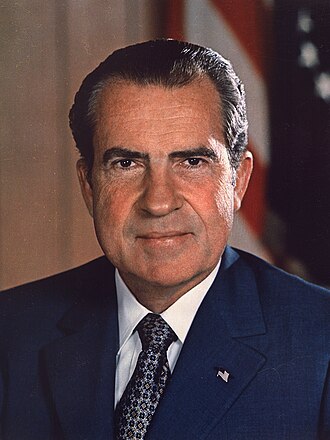 Richard Nixon
Post-Graduate Legal • 4m
EO 11007 Feb 26, 1962
🏛️✅ Zone 1 (Maximum Authority) Constitutional Neutral
Executive Order 11007—Prescribing Regulations for the Formation and Use of Advisory Committees
📜 10th Amend: Intergovernmental Federalism Cooperation
The regulations prescribed in this order for the formation and use of advisory committees shall govern the departments and agencies of the Government to the extent not inconsistent with specific law. SEC. 2.
 John F. Kennedy
Post-Graduate Legal • 7m
EO 11626 Oct 13, 1971
⚖️✨ Zone 2 (Zone of Twilight) Constitutional Neutral
Executive Order 11626—The Honorable Dean Acheson
📜 Art. II §2: Commander-in-Chief Supervisory Authority
Pursuant to the provisions of Section 4 of Proclamation 3044 of March 1, 1954, as amended, that until interment the flag of the United States shall be flown at half-staff on all buildings, grounds and naval vessels of the Federal Government in the District of Columbia and…
Richard Nixon Post-Graduate Legal • 1m
EO 11624 Oct 12, 1971
🏛️✅ Zone 1 (Maximum Authority) Constitutional Neutral
Executive Order 11624—Inspection of Income, Excess Profits, Estate, Gift, and Excise Tax Returns by the Senate Committee on Commerce
📜 Art. I §8: Delegated Tariff & Commerce Execution
Any income, excess-profits, estate, gift, or excise tax return for the years 1939 to 1972, inclusive, shall, during the Ninety-second Congress, be open to inspection by the Senate Committee on Commerce, or any duly authorized subcommittee thereof, in connection with its…
Richard Nixon Post-Graduate Legal • 1m
EO 11623 Amended Oct 12, 1971
⚖️✨ Zone 2 (Zone of Twilight) Constitutional Neutral
Executive Order 11623—Delegating to the Director of Selective Service Authority to Issue Rules and Regulations Under the Military Selective Service Act
📜 Art. II §2: Commander-in-Chief Supervisory Authority
The Director of Selective Service (hereinafter referred to as the Director) is authorized to prescribe the necessary rules and regulations to carry out the provisions of the Act.
Richard Nixon Post-Graduate Legal • 3m
EO 11627 Oct 15, 1971
🏛️✅ Zone 1 (Maximum Authority) Fidelity (+0.29)
Executive Order 11627—Further Providing for the Stabilization of the Economy
📜 Art. I §8: Delegated Tariff & Commerce Execution
On August 15, 1971, I issued Executive Order No. 11615 providing for the stabilization of prices, rents, wages, and salaries, for a period of 90 days from the date of that Order.
Richard Nixon Post-Graduate Legal • 14m
📜
Scholarly & Legal Citations
Exec. Order No. 11,625 (Oct. 13, 1971), https://executiveordersarchive.org/orders/app-executive-order-11625-prescribing-additional-arrangements-for-developing-and-coordinating.
