On August 15, 1971, I issued Executive Order No. 11615 providing for the stabilization of prices, rents, wages, and salaries, for a period of 90 days from the date of that Order. That Order also established the Cost of Living Council and charged it with the primary responsibility for administering the stabilization program, and for recommending to me additional policies and mechanisms to permit an orderly transition from the 90-day general price, rents, wages, and salaries freeze imposed by Executive Order No. 11615 to a more flexible and selective system of economic restraints. I have received recommendations from the Cost of Living Council, and have determined that the intent of the Economic Stabilization Act of 1970 (P.L. 91-379; 84 Stat. 799), as amended, can more effectively be carried out and the goals I specified in my speech to the Nation on October 7, 1971, can more effectively be achieved, on and after the date of this Order, by substituting this Order for Executive Order No. 11615, as amended. Notwithstanding this substitution, the findings which I made in the preamble of Executive Order No. 11615 of August 15, 1971, are, after careful reconsideration, reaffirmed. Under this Order, the Cost of Living Council will be continued and will be given broad authority to stabilize prices, rents, wages, and salaries for so long as the Economic Stabilization Act of 1970, as amended, is in effect or until such other time as the President may hereafter prescribe. This, in effect, will result in the establishment of a new economic stabilization program. That program will be carried out through a Pay Board and a Price Commission each of which is newly established by this Order. The Pay Board will be a tripartite organization composed of five representatives of organized labor, five representatives of business, and five representatives of the general public. The Price Commission will be composed of seven members, all from the general public. The President will appoint all members of both the Board and the Commission and will designate the Chairman of each, who will be a full-time official of the United States. The Cost of Living Council will establish broad stabilization goals for the Nation, and the Pay Board and Price Commission, acting through their respective Chairmen, will prescribe specific standards, criteria, and regulations, and make rulings and decisions aimed at carrying out these goals. In addition, this Order establishes three new committees to assist the Council, the Pay Board, and the Price Commission in the performance of their functions. They are the Committee on Interest and Dividends, an interagency body made up of the heads of various Federal departments and agencies having financial regulatory functions; the Committee on the Health Services Industry; and the Committee on State and Local Government Cooperation. Finally, this Order modifies Executive Order No. 11588 so as to bring the Construction Industry Stabilization Committee established by that Order into the framework of the new economic stabilization program established by this Order. Now, THEREFORE, by virtue of the authority vested in me by the Constitution and statutes of the United States, particularly the Economic Stabilization Act of 1970, as amended, it is hereby ordered as follows: SECTION 1. (a) The Pay Board and Price Commission established by sections 7 and 8 of this Order, respectively, and the Chairman of each of those bodies, shall, pursuant to goals of the Cost of Living Council, take such steps as may be necessary, and authorized by or pursuant to this Order, to stabilize prices, rents, wages, and salaries. Pending action under this Order, and except as otherwise provided in section 202 of the Economic Stabilization Act of 1970, as amended, prices, rents, wages, and salaries are stabilized effective as of August 16, 1971, at levels not greater than the highest of those pertaining to a substantial volume of actual transactions by each individual, business, firm, or other entity of any kind during the 30-day period ending August 14, 1971, for like or similar commodities or services. If no transactions occurred in that period, the ceiling will be the highest price, rent, salary, or wage in the nearest preceding 30-day period in which transactions did occur. No person shall charge, assess, or receive, directly or indirectly, in any transaction, prices or rents in any form higher than those permitted hereunder, and no person shall, directly or indirectly, pay or agree to pay, in any transaction, wages or salaries in any form, or to use any means to obtain payment of wages and salaries in any form, higher than those permitted hereunder, whether by retroactive increase or otherwise. (b) Each person engaged in the business of selling or providing commodities or services shall maintain available for public inspection a record of the highest prices or rents charged for such or similar commodities or services during the 30-day period ending August 14, 1971. (c) The provisions of sections 1 and 2 of this Order shall not apply to the prices charged for raw agricultural products. SEC. 2. (a) The Cost of Living Council (hereinafter referred to as the Council), established by section 2 of Executive Order No. 11615 of August 15, 1971, is hereby continued and shall continue to act as an agency of the United States. (b) The Council shall he composed of the following members: The Secretary of the Treasury, the Secretary of Agriculture, the Secretary of Commerce, the Secretary of Labor, the Secretary of Housing and Urban Development, the Director of the Office of Management and Budget, the Chairman of the Council of Economic Advisers, the Director of the Office of Emergency Preparedness, the Special Assistant to the President for Consumer Affairs, and such others as the President may, from time to time, designate. The Secretary of the Treasury shall serve as Chairman of the Council and the Chairman of the Council of Economic Advisers shall serve as Vice Chairman. The Chairman of the Board of Governors of the Federal Reserve System shall serve as adviser to the Council. (c) There shall be a Director of the Cost of Living Council who shall be appointed by the President, be a member of the Council, be a full-time official of the United States, and be the Council's chief executive officer. SEC. 3. (a) Except as otherwise provided herein, there are continued to be delegated to the Council all of the powers conferred upon the President by the Economic Stabilization Act of 1970, as amended. (b) The Council shall develop and recommend to the President policies, mechanisms and procedures to achieve and maintain stability of prices and costs in a growing economy. To this end it shall consult with representatives of agriculture, industry, labor, State and local governments, consumers and the public, through the National Commission on Productivity and otherwise. (c) In all of its actions the Council shall be guided by the need to maintain consistency of price and wage policies with fiscal, monetary, international, and other economic policies of the United States. (d) The Council shall inform the public, agriculture, industry, and labor concerning the need for controlling inflation and shall encourage and promote voluntary action to that end. SEC. 4. (a) The Council, in carrying out the provisions of this Order, may continue to (i) prescribe definitions for any terms used herein, (ii) make exceptions or grant exemptions, (iii) issue regulations and orders, (iv) provide for the establishment of committees and other comparable groups, and (v) take such other actions as it determines to be necessary and appropriate to carry out the purposes of this Order. More particularly, the Council, working through appropriate delegations to the Chairman of the Pay Board and the Chairman of the Price Commission, may (1) notwithstanding the provisions of subsection (a) of section 1 of this Order, prescribe base periods for determining maximum levels for prices, rents, wages, and salaries other than the base period specified in subsection (a) of section 1 of this Order, and (2) otherwise increase or decrease, subject to section 202 of the Economic Stabilization Act of 1970, as amended, the maximum levels for prices, rents, wages, and salaries prescribed by subsection (a) of section 1 of this Order. (b) The Council may redelegate to any agency, instrumentality, or official of the United States any authority under this Order, and may, in administering this Order, utilize the services of any other agencies, Federal or State, as may be available and appropriate. (c) On request of the Chairman of the Council, each executive department or agency is authorized and directed, consistent with law, to furnish the Council with any available information which the Council may require in the performance of its functions. SEC. 5. The Council may require the maintenance of appropriate records or other evidence which are necessary in carrying out the provisions of this Order, and may require any person to maintain and produce for examination such records or other evidence, in such form as it shall require, concerning prices, rents, wages, and salaries and all related matters. The Council may make such exemptions from any requirement otherwise imposed as are consistent with the purposes of this Order. Any type of record or evidence required under regulations issued under this Order shall be retained for such period as the Council may prescribe. SEC. 6. The expenses of the Council shall be paid from such funds of the Department of the Treasury or otherwise as may be available therefor. SEC. 7. (a) There is hereby established a "Pay Board" (hereinafter referred to as the Board). (b) The Board shall be composed of fifteen members. The members shall be appointed by the President and shall include five labor representatives, five business representatives, and five representatives of the general public. The members of the Board shall serve at the pleasure of the President and the President shall designate one of the members representing the public to serve as Chairman. The Chairman shall serve full time and be an official of the United States. The Chairman shall designate an Executive Director of the Board who shall serve under the direction of the Chairman of the Board and perform such duties as the Chairman may specify. (c) The Board shall perform such functions with respect to the stabilization of wages and salaries as the Council delegates to the Board. The Chairman of the Board shall perform such functions with respect to the stabilization of wages and salaries as the Council may delegate to him and, in performing those functions, shall exercise such authority, including the development and establishment of criteria for the stabilization of wages and salaries which shall be applied in the administration of this Order, as may be delegated to him by the Council. SEC. 8. (a) There is hereby established a "Price Commission" (hereinafter referred to as the Commission). (b) The Commission shall be composed of seven members. The members shall be appointed by the President and shall be representative of the general public. The Members of the Commission shall serve at the pleasure of the President, and the President shall designate one of the members to serve as Chairman. The Chairman shall serve full time and be an official of the United States. The Chairman shall designate an Executive Director of the Commission who shall serve under the direction of the Chairman of the Commission, and perform such duties as the Chairman may specify. (c) The Commission shall perform such functions with respect to the stabilization of prices and rents as the Council delegates to the Commission. The Chairman of the Commission shall perform such functions with respect to the stabilization of prices and rents as the Council may delegate to him and, in performing these functions, shall exercise such authority, including the development and establishment of criteria for the stabilization of prices and rents which shall be applied in the administration of this Order, as may be delegated to him by the Council. SEC. 9. (a) There is hereby established a Committee on Interest and Dividends. The Committee shall be composed of the Chairman of the Board of Governors of the Federal Reserve System, the Secretary of the Treasury, the Secretary of Commerce, the Secretary of Housing and Urban Development, the Chairman of the Federal Deposit Insurance Corporation, the Chairman of the Federal Home Loan Bank Board, and such others as the President may, from time to time, designate. The Chairman of the Board of Governors of the Federal Reserve System shall serve as Chairman of the Committee. (b) This Committee shall, subject to review by the Council, formulate and execute a program for obtaining voluntary restraints on interest rates and dividends. SEC. 10. (a) There is hereby established a Committee on the Health Services Industry. This Committee shall be composed of such members as the President may from time to time appoint. The members shall be generally representative of medical professions and related occupations, hospitals, the insurance industry, other supporting industries, consumer interests, and the public. The President shall designate the Chairman of the Committee. (b) This Committee shall provide advice concerning special considerations that tend to contribute to inflation in the health services industry. This Committee shall also assist the Board and Commission in the performance of their functions by making technical analyses of specific matters referred to it by the Board or Commission. SEC. 11. (a) There is hereby established a Committee on State and Local Government Cooperation. The Committee shall be composed of such representatives of State and local governments and subdivisions thereof, representatives of State and local employees, and such others as the President may, from time to time, appoint. The President shall designate the Chairman of the Committee. (b) This Committee shall provide advice concerning special considerations involved in the stabilization of prices, rents, wages, and salaries pursuant to this Order as they relate to State and local governments, and subdivisions and employees thereof. This Committee shall also assist the Board and Commission in the performance of their functions by making technical analyses of specific matters referred to it by the Board or Commission. SEC. 12. Upon request of the Chairman of the Council, Federal departments and agencies shall provide such assistance in carrying out the provisions of this Order as is permitted by law. SEC. 13. All orders, regulations, circulars, or other directives issued and all other actions taken pursuant to Executive Order No. 11615, as amended, are hereby confirmed and ratified, and shall remain in full force and effect, as if issued under this Order, unless and until altered, amended, or revoked by the Council or by such competent authority as the Council may specify. SEC. 14. (a) The Construction Industry Stabilization Committee established by Executive Order No. 11588 of March 29, 1971, and the craft dispute boards authorized by section 2 of that Order, are hereby continued. (b) The Chairman of the Pay Board, established by section 7 of this Order, shall henceforth perform all functions vested in the Secretary of Labor by Executive Order No. 11588, with respect to (1) the certification of determinations that a proposed wage or salary increase is not acceptable, (2) the approval of rules and regulations issued by the Construction Industry Stabilization Committee, and (3) the issuance of rules and regulations. (c) Subsection (d) of section 5 and section 6 of Executive Order No. 11588, are hereby revoked. (d) Subsections (a) and (c) of this section are effective immediately. Subsection (b) of this section shall be effective on the day the Chairman of the Pay Board gives notice that the Pay Board is operational. SEC. 15. (a) Whoever willfully violates this Order or any order or regulation issued under authority of this Order shall be fined not more than $5,000 for each such violation. (b) The Council may in its discretion request the Department of Justice to bring actions for injunctions authorized under Section 205 of the Economic Stabilization Act of 1970, as amended, whenever it appears to the Council that any person has engaged, is engaged, or is about to engage in any acts or practices constituting a violation of any regulation or order issued pursuant to this Order. SEC. 16. Executive Order No. 11615 of August 15, 1971, and Executive Order No. 11617 of September 2, 1971, are hereby superseded. RICHARD NIXON The White House October 15, 1971
Executive Order 11627 🏛️✅ Zone 1: Maximum Authority Constitutional Fidelity (+0.29)
📜 Art. I §8: Delegated Tariff & Commerce Execution
Executive Order 11627—Further Providing for the Stabilization of the Economy
Executive Brief • At a Glance
⏱️ 14 min read (2,715 words) •
● In Effect
🎯 Primary Mandate
That Order also established the Cost of Living Council and charged it with the primary responsibility for administering the stabilization program, and for recommending to me additional policies and mechanisms to permit an orderly transition from the 90-day general price, rents, wages, and salaries freeze imposed by Executive Order No. 11615 to a more flexible and selective system of economic restraints.
⚖️ Constitutional Footing
🏛️✅ Zone 1: Maximum Authority
Express or Implied Congressional Authorization
📜 Art. I §8: Delegated Tariff & Commerce Execution
🏛️ Scope & Affected Sectors
Merchants, Importers & Commercial Enterprises Sovereign State Governments & Localities Executive Departments & Federal Civil Servants Private Citizens & Property Owners
Plain-English Translation & Framers' Constitutional Analysis
Early Statesman synthesis distilling legal jargon into practical meaning, statutory anchors, and structural constitutional impacts.
Signed by President Richard Nixon on October 15, 1971, this order concerns Further Providing for the Stabilization of the Economy. On August 15, 1971, I issued Executive Order No. 11615 providing for the stabilization of prices, rents, wages, and salaries, for a period of 90 days from the date of that Order. That Order also established the Cost of Living Council and charged it with the primary responsibility for administering the stabilization program, and for recommending to me additional policies and mechanisms to permit an orderly…
Constitutional Assessment: This action represents an orderly exercise of Article II administrative discretion, managing the internal machinery and personnel of the executive branch without abridging the ancient liberties of the people.
Key Directives & Operative Actions
▪
That Order also established the Cost of Living Council and charged it with the primary responsibility for administering the stabilization program, and for recommending to me additional policies and mechanisms to permit an orderly transition from the 90-day general price, rents, wages, and salaries freeze imposed by Executive Order No. 11615 to a more flexible and selective system of economic restraints.
▪
I have received recommendations from the Cost of Living Council, and have determined that the intent of the Economic Stabilization Act of 1970 (P.L. 91-379; 84 Stat. 799), as amended, can more effectively be carried out and the goals I specified in my speech to the Nation on October 7, 1971, can more effectively be achieved, on and after the date of this Order, by substituting this Order for Executive Order No. 11615, as amended.
▪
Under this Order, the Cost of Living Council will be continued and will be given broad authority to stabilize prices, rents, wages, and salaries for so long as the Economic Stabilization Act of 1970, as amended, is in effect or until such other time as the President may hereafter prescribe.
▪
That program will be carried out through a Pay Board and a Price Commission each of which is newly established by this Order.
Constitutional & Societal Entities Impacted
🏛️ Merchants, Importers & Commercial Enterprises
🏛️ Sovereign State Governments & Localities
🏛️ Executive Departments & Federal Civil Servants
🏛️ Private Citizens & Property Owners
🏛️ Foreign Nations & International Entities
Policy Areas & Topics
🏛️
The Framers' Constitutional Council
1787 PrismEvaluating this order against the constitutional debates of 1787 and the limits of Article II executive power.
🏛️✅ Zone 1 (Maximum Authority)
§
"When the President acts pursuant to an express or implied authorization of Congress, his authority is at its maximum, for it includes all that he possesses in his own right plus all that Congress can delegate."
— Justice Robert H. Jackson, Youngstown Sheet & Tube Co. v. Sawyer (1952) Express or Implied Congressional Authorization
JM
James Madison
Separation of Powers & Legislative Primacy
"The constitutional magistracy was designed not to invent policy, but to be the faithful instrument of the laws passed by the people's representatives." — Speech in the First Congress (1789)
Madison would approve the structural posture of this order. The President acts strictly in subordination to statutory authority granted under Article II, Section 3 ("take Care that the Laws be faithfully executed"). The checks and balances hold firm because the policy origin remains with the legislature.
Madisonian Stance: Concurring (Statutory)
AH
Alexander Hamilton
The Energetic Executive & Unified Command
"The direction of war implies the direction of the common strength; and the power of directing and employing the common strength must be under the direction of the single hand of the Executive." — Federalist No. 74 (1788)
Hamilton would forcefully champion executive discretion here. For foreign entanglements, commerce defense, and national security, deliberative assemblies are too slow and faction-ridden. A unified, energetic Executive exercising swift command is precisely what the Philadelphia Convention intended for national preservation.
Hamiltonian Stance: Supportive of Execution
GM
George Mason
Bill of Rights, Due Process & 10th Amendment
"The president will be surrounded by flatterers and sycophants... and the great powers of the executive will gradually absorb the liberties of the people." — Cato IV (Anti-Federalist, 1787)
The Anti-Federalist prism advises continuous democratic vigilance. Even routine administrative directives aggregate centralized federal power away from town halls and state assemblies toward a distant executive apparatus.
Anti-Federalist Stance: Eternal Vigilance Required
📐
Five Measurable "Constitutional Friction" Dimensions
An objective audit measuring potential separation-of-powers tension against the United States Constitution and established Supreme Court doctrine.
⚖️ Discretionary Twilight Zone
46 / 100 friction index
Dimension 1 • Art. I, §1 & §8
Moderate Friction
Legislative Encroachment & Purse
Administers commerce or fiscal programs requiring ongoing statutory delegation and legislative oversight.
Benchmark: Power of the purse, taxes/tariffs, and rule of law reserved to Congress.
Dimension 2 • Art. II, §1 & §3
Moderate Friction
Executive Scope & Faithfulness
Directs internal executive branch machinery, agency workflows, and federal personnel.
Benchmark: Faithfully execute laws enacted by Congress vs. unilateral decree.
Dimension 3 • 10th Amendment
High Friction
Federalism & State Sovereignty
Creates friction with the Tenth Amendment by conditioning state grants, mandating local compliance, or preempting state police powers.
Benchmark: Police powers and un-delegated responsibilities reserved to the States.
Dimension 4 • 5th & 14th Amendments
Moderate Friction
Due Process & Individual Rights
Applies regulatory or compliance standards to private contractors or commercial entities.
Benchmark: Protection of private property, contracts, liberty, and procedural justice.
Dimension 5 • Separation of Powers
Low Friction
Youngstown Jacksonian Tier
The President operates strictly as the constitutional Chief Executive, carrying out policy established by Congress with strong statutory backing.
Benchmark: Express or Implied Congressional Authorization
⚖️
Audit Synthesis
This order operates within Justice Jackson’s Zone of Twilight, resting upon concurrent presidential authority or congressional silence.
Weighted composite: Art. I (25%), Art. II (25%), Federalism (15%), Due Process (15%), Youngstown (20%).
ℹ️
How to read these dimensions: Executive power expands whenever an administration acts without explicit statutory authorization from Congress (Article I), touches upon police powers historically reserved to the states (Tenth Amendment), or limits private rights and property without judicial process. A low friction score indicates strict concordance with enacted law; a high friction score highlights orders testing the limits of presidential discretion.
Total Words
2,715
16,834 characters
Estimated Read Time
14 min
@ 200 words / min
Flesch-Kincaid
17.4
Post-Graduate Legal
Text size:
🔗
Referenced By Later Executive Orders (6)
Subsequent presidents who cited, amended, continued, or revoked this directive in later orders.
References Executive Order 11788—Providing for the Orderly Termination of Economic Stabilization Activities
Richard Nixon • 1974-06-18
References Executive Order 11781—Providing for an Orderly Termination of the Economic Stabilization Program
Richard Nixon • 1974-05-01
Richard Nixon • 1973-01-11
Richard Nixon • 1972-03-23
Richard Nixon • 1972-01-26
Richard Nixon • 1972-01-11
Related Executive Orders
3 orders cited directly in this text, plus related actions from this administration.
EO 11615 Aug 15, 1971
🏛️✅ Zone 1 (Maximum Authority) Fidelity (+0.29)
Executive Order 11615—Providing for Stabilization of Prices, Rents, Wages, and Salaries
📜 Art. I §8: Delegated Tariff & Commerce Execution
Prices, rents, wages, and salaries shall be stabilized for a period of 90 days from the date hereof at levels not greater than the highest of those pertaining to a substantial volume of actual transactions by each individual, business, firm or other entity of any kind during…
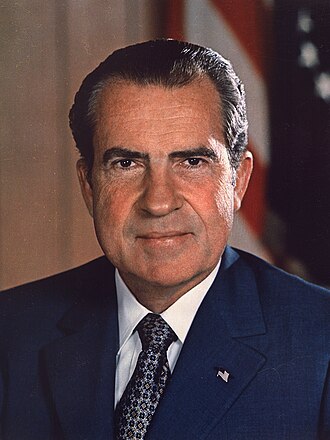 Richard Nixon
Post-Graduate Legal • 5m
EO 11588 Mar 29, 1971
⚖️✨ Zone 2 (Zone of Twilight) Constitutional Neutral
Executive Order 11588—Providing for the Stabilization of Wages and Prices in the Construction Industry
📜 5th Amend: Regulatory Execution with Due Process
. A Construction Industry Stabilization Committee (hereafter referred to as "Committee") is hereby established to assure generally conformance of any increase in any wage or salary in the construction industry to the provisions of this order.
Richard Nixon Post-Graduate Legal • 9m
EO 11617 Sep 2, 1971
⚖️✨ Zone 2 (Zone of Twilight) Constitutional Neutral
Executive Order 11617—Amending Executive Order No. 11615, Providing for Stabilization of Prices, Rents, Wages, and Salaries
📜 Art. II §1: Executive Discretion & Internal Operations
Section 2 (b) of Executive Order No. 11615 of August 15, 1971, is amended by inserting after the comma following the words "the Secretary of Labor", the following: "the Secretary of Housing and Urban Development,".
Richard Nixon High School • 1m
EO 11626 Oct 13, 1971
⚖️✨ Zone 2 (Zone of Twilight) Constitutional Neutral
Executive Order 11626—The Honorable Dean Acheson
📜 Art. II §2: Commander-in-Chief Supervisory Authority
Pursuant to the provisions of Section 4 of Proclamation 3044 of March 1, 1954, as amended, that until interment the flag of the United States shall be flown at half-staff on all buildings, grounds and naval vessels of the Federal Government in the District of Columbia and…
Richard Nixon Post-Graduate Legal • 1m
EO 11625 Oct 13, 1971
🏛️✅ Zone 1 (Maximum Authority) Fidelity (+0.58)
Executive Order 11625—Prescribing Additional Arrangements for Developing and Coordinating a National Program for Minority Business Enterprise
📜 10th Amend: Intergovernmental Federalism Cooperation
Functions of the Secretary of Commerce. (a) The Secretary of Commerce (hereinafter referred to as "the Secretary") shall (1) Coordinate as consistent with law the plans, programs, and operations of the Federal Government which affect or may contribute to the establishment…
Richard Nixon Post-Graduate Legal • 8m
EO 11628 Oct 18, 1971
⚖️✨ Zone 2 (Zone of Twilight) Constitutional Neutral
Executive Order 11628—Establishing a Seal for the Environmental Protection Agency
📜 Art. II §3: Administrative Management & Civil Service
The Administrator of the Environmental Protection Agency has caused to be made, and has recommended that I approve, a seal for the Environmental Protection Agency, the design of which accompanies and is hereby made a part of this order, and which is described as follows: A…
Richard Nixon College Level • 1m
📜
Scholarly & Legal Citations
Exec. Order No. 11,627 (Oct. 15, 1971), https://executiveordersarchive.org/orders/app-executive-order-11627-further-providing-for-the-stabilization-the-economy.
