By virtue of the authority vested in me by sections 5303, 5304, and 5305 of title 5, United States Code, and as President of the United States, it is hereby ordered as follows: PART I—GENERAL POLICY SECTION 101. Heads of agencies are directed: (a) To make full use of the authorities in chapter 53 of title 5, United States Code, and the statutory pay systems to which section 5301 of that chapter refers to secure and maintain the high quality of Federal personnel necessary for an effective and efficient Government service; (b) To use these authorities to (1) motivate employees to perform continuously at their full capacity, and (2) provide fair treatment in pay matters of all employees subject to the statutory pay systems; and (c) To take appropriate measures to ensure that the Government receives full value for its expenditures for salaries and that every employee is paid no more than is warranted by the nature of his assignments and the degree of competence with which he performs them. SEC. 102. As used in this order, the term "agency" has the meaning given to it by section 5102 (a) of title 5, United States Code. PART II—ANNUAL PAY REVIEW SECTION 201. The Director, Office of Management and Budget, and the Chairman, United States Civil Service Commission, are hereby designated as the President's agent under section 5305 of title 5, United States Code. SEC. 202. The head of each agency employing personnel under the statutory pay systems (as defined in section 5301 (c) of title 5, United States Code) shall provide such information and technical assistance with respect to the statutory pay systems applicable to his agency as may be requested by the President's agent in carrying out the provisions of section 5305 of title 5, United States Code. SEC. 203. The following agencies are designated under section 5305 (q) of title 5, United States Code, to prescribe the rules necessary to convert the rates of basic pay or salaries of officers and employees to the new pay rates as adjusted for each statutory pay system under section 5305 of title 5, United States Code: (i) General Schedule—the Civil Service Commission; (ii) Foreign Service schedules—the Department of State; (iii) Schedules for the Department of Medicine and Surgery of the Veterans Administration--the Veterans Administration. PART III—SPECIAL RATES FOR RECRUITMENT AND RETENTION SECTION 301 (a). The Civil Service Commission is hereby designated to exercise— (1) the authority of the President under section 5303 (a) and (b) of title 5, United States Code, to establish or revise higher minimum rates of pay, and (2) the authority of the President under section 5303(d) of title 5, United States Code, to prescribe conversion rules for adjusting an employee's pay. (b) Before exercising these functions for positions compensated under the Foreign Service schedules or under the schedules for physicians, dentists, and nurses in the Department of Medicine and Surgery of the Veterans Administration, the Civil Service Commission shall consult with the head of the agency concerned. SEC. 302(a). Before establishing higher rates of pay under section 5303 (a) of title 5, United States Code, the Civil Service Commission shall consider whether— (1) an adequate recruiting program has been implemented and that attention has been given to the improvement of working conditions and to other relevant factors; and (2) adequate recruitment or retention cannot be achieved by alternate means such as job redesign or skills improvement training programs. (b) The Civil Service Commission may not establish higher rates for all positions in a statutory grade or level in a given area unless the Commission determines that adequate recruitment and retention cannot be achieved by establishment of higher rates for certain occupations or groups of occupations. SEC. 303. The Civil Service Commission shall review, at least annually, higher rates of pay established under section 5303 (a) of title 5, United States Code, and shall continue, abolish, or revise the higher rates in consideration of the facts and pertinent criteria under the law and this order. SEC. 304. An employee's basic pay rate may not be reduced solely because of a revision to, or cancellation of, the higher rates established under section 5303 (a) of title 5, United States Code. PART IV—GENERAL SCHEDULE SYSTEM SECTION 401 (a). Heads of agencies shall ensure that agency managers and supervisors at all levels use the position classification plan of the General Schedule system as a tool for effective and efficient human resources utilization. (b) The Civil Service Commission shall revoke the position classification authority of an agency under the General Schedule whenever the Commission finds, in connection with its regular evaluation, or otherwise, that an agency has failed to classify its positions in accordance with or consistently with applicable standards. SEC. 402. The Civil Service Commission shall issue such regulations and standards as may be necessary to ensure that only those employees whose work is of an acceptable level of competence receive periodic step-increases under the provisions of section 5335 of title 5, United States Code. SEC. 403 (a). The Civil Service Commission shall require each agency employing personnel under the General Schedule to establish a plan for granting additional step-increases in recognition of high quality performance under section 5336 of title 5, United States Code, and shall require that the plans (1) be as simple as practicable, (2) provide for delegation of authority to an appropriate management level, (3) seek to ensure fairness to all employees, and (4) provide for informing employees, at least annually, of the number of additional step-increases granted in their agencies. (b) The Civil Service Commission shall (1) establish such regulations and standards as it deems appropriate for agency plans, (2) aid and advise agencies in the formulation and administration of the plans, and (3) evaluate the plans and their operation to ensure that step-increases are granted in a manner that is fair to employees and provides motivation for high quality performance. SEC. 404. The Civil Service Commission, in prescribing regulations for higher rates of pay under section 5333 (b) of title 5, United States Code, for employees having responsibility for supervision of prevailing-rate employees, shall give effect to the following: (a) An irregular prevailing rate (such as the saved rate of a prevailing-rate employee not related to his current position) shall not serve to advance the pay rate of a supervisor under the General Schedule. (b) The relative rate-range of a General Schedule supervisor and a prevailing-rate employee supervised by him shall be considered as well as the specific rate either is receiving at a given time. (c) Due consideration shall be given to equities among General Schedule supervisors as well as those between a General Schedule supervisor and a prevailing-rate employee supervised by him. PART V—PRIOR ORDER SUPERSEDED SECTION 501. Executive Order 11073 of January 2, 1963, and Executive Order 11173 of August 20, 1964, are hereby superseded. RICHARD NIXON The White House, May 23, 1973.
Executive Order 11721 🏛️✅ Zone 1: Maximum Authority Constitutional Neutral (+0.02)
📜 10th Amend: Intergovernmental Federalism Cooperation
Executive Order 11721—Providing for Federal Pay Administration
Executive Brief • At a Glance
⏱️ 6 min read (1,151 words) •
● In Effect
🎯 Primary Mandate
The Director, Office of Management and Budget, and the Chairman, United States Civil Service Commission, are hereby designated as the President's agent under section 5305 of title 5, United States Code.
⚖️ Constitutional Footing
🏛️✅ Zone 1: Maximum Authority
Express or Implied Congressional Authorization
📜 10th Amend: Intergovernmental Federalism Cooperation
🏛️ Scope & Affected Sectors
Armed Forces & Military Establishments Sovereign State Governments & Localities Executive Departments & Federal Civil Servants Foreign Nations & International Entities
Plain-English Translation & Framers' Constitutional Analysis
Early Statesman synthesis distilling legal jargon into practical meaning, statutory anchors, and structural constitutional impacts.
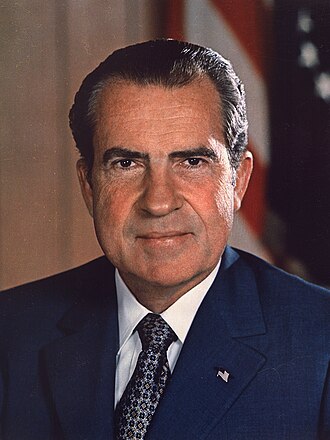
Signed by President Richard Nixon on May 23, 1973, this order concerns Providing for Federal Pay Administration. PART I—GENERAL POLICY SECTION 101. Heads of agencies are directed: (a) To make full use of the authorities in chapter 53 of title 5, United States Code, and the statutory pay systems to which section 5301 of that chapter refers to secure and maintain the high quality of Federal personnel necessary for an effective and efficient Government service; (b) To use these authorities to (1) motivate employees to perform…
Constitutional Assessment: Reviewed under the Tenth Amendment and the principle of dual federalism, this order touches upon domains traditionally reserved to the sovereign States. The Framers would caution against any attempt to commandeer state officers or displace local police powers through federal executive fiat.
Key Directives & Operative Actions
▪
The Director, Office of Management and Budget, and the Chairman, United States Civil Service Commission, are hereby designated as the President's agent under section 5305 of title 5, United States Code.
▪
The head of each agency employing personnel under the statutory pay systems (as defined in section 5301 (c) of title 5, United States Code) shall provide such information and technical assistance with respect to the statutory pay systems applicable to his agency as may be requested by the President's agent in carrying out the provisions of section 5305 of title 5, United States Code.
▪
The following agencies are designated under section 5305 (q) of title 5, United States Code, to prescribe the rules necessary to convert the rates of basic pay or salaries of officers and employees to the new pay rates as adjusted for each statutory pay system under section 5305 of title 5, United States Code: (i) General Schedule—the Civil Service Commission; (ii) Foreign Service schedules—the Department of State; (iii) Schedules for the Department of Medicine and Surgery of the Veterans Administration--the Veterans Administration.
▪
The Civil Service Commission is hereby designated to exercise— (1) the authority of the President under section 5303 (a) and (b) of title 5, United States Code, to establish or revise higher minimum rates of pay, and (2) the authority of the President under section 5303(d) of title 5, United States Code, to prescribe conversion rules for adjusting an employee's pay.
Constitutional & Societal Entities Impacted
🏛️ Armed Forces & Military Establishments
🏛️ Sovereign State Governments & Localities
🏛️ Executive Departments & Federal Civil Servants
🏛️ Foreign Nations & International Entities
Policy Areas & Topics
🏛️
The Framers' Constitutional Council
1787 PrismEvaluating this order against the constitutional debates of 1787 and the limits of Article II executive power.
🏛️✅ Zone 1 (Maximum Authority)
§
"When the President acts pursuant to an express or implied authorization of Congress, his authority is at its maximum, for it includes all that he possesses in his own right plus all that Congress can delegate."
— Justice Robert H. Jackson, Youngstown Sheet & Tube Co. v. Sawyer (1952) Express or Implied Congressional Authorization
JM
James Madison
Separation of Powers & Legislative Primacy
"The constitutional magistracy was designed not to invent policy, but to be the faithful instrument of the laws passed by the people's representatives." — Speech in the First Congress (1789)
Madison would approve the structural posture of this order. The President acts strictly in subordination to statutory authority granted under Article II, Section 3 ("take Care that the Laws be faithfully executed"). The checks and balances hold firm because the policy origin remains with the legislature.
Madisonian Stance: Concurring (Statutory)
AH
Alexander Hamilton
The Energetic Executive & Unified Command
"A feeble Executive implies a feeble execution of the government; and a government ill executed, whatever it may be in theory, must be, in practice, a bad government." — Federalist No. 70 (1788)
Hamilton would view this directive as the natural and indispensable functioning of administrative leadership. Without the power to coordinate agencies, manage personnel, and resolve operational ambiguities, the modern presidency would be reduced to an impotent figurehead.
Hamiltonian Stance: Supportive of Execution
GM
George Mason
Bill of Rights, Due Process & 10th Amendment
"The powers not delegated to the United States by the Constitution, nor prohibited by it to the States, are reserved to the States respectively, or to the people." — 10th Amendment to the US Constitution (1791)
Mason would scrutinize whether this federal directive intrudes into police powers, land stewardship, or municipal domains historically reserved to local citizens. The Anti-Federalist demand is that federal administration must never supplant state self-governance.
Anti-Federalist Stance: Eternal Vigilance Required
📐
Five Measurable "Constitutional Friction" Dimensions
An objective audit measuring potential separation-of-powers tension against the United States Constitution and established Supreme Court doctrine.
⚖️ Discretionary Twilight Zone
36 / 100 friction index
Dimension 1 • Art. I, §1 & §8
Moderate Friction
Legislative Encroachment & Purse
Administers commerce or fiscal programs requiring ongoing statutory delegation and legislative oversight.
Benchmark: Power of the purse, taxes/tariffs, and rule of law reserved to Congress.
Dimension 2 • Art. II, §1 & §3
Moderate Friction
Executive Scope & Faithfulness
Directs internal executive branch machinery, agency workflows, and federal personnel.
Benchmark: Faithfully execute laws enacted by Congress vs. unilateral decree.
Dimension 3 • 10th Amendment
Moderate Friction
Federalism & State Sovereignty
Engages state and local partners in cooperative federalism programs.
Benchmark: Police powers and un-delegated responsibilities reserved to the States.
Dimension 4 • 5th & 14th Amendments
Low Friction
Due Process & Individual Rights
Focuses on internal governmental operations with no direct impairment of private rights or property.
Benchmark: Protection of private property, contracts, liberty, and procedural justice.
Dimension 5 • Separation of Powers
Low Friction
Youngstown Jacksonian Tier
The President operates strictly as the constitutional Chief Executive, carrying out policy established by Congress with strong statutory backing.
Benchmark: Express or Implied Congressional Authorization
⚖️
Audit Synthesis
This order operates within Justice Jackson’s Zone of Twilight, resting upon concurrent presidential authority or congressional silence.
Weighted composite: Art. I (25%), Art. II (25%), Federalism (15%), Due Process (15%), Youngstown (20%).
ℹ️
How to read these dimensions: Executive power expands whenever an administration acts without explicit statutory authorization from Congress (Article I), touches upon police powers historically reserved to the states (Tenth Amendment), or limits private rights and property without judicial process. A low friction score indicates strict concordance with enacted law; a high friction score highlights orders testing the limits of presidential discretion.
Total Words
1,151
7,247 characters
Estimated Read Time
6 min
@ 200 words / min
Flesch-Kincaid
22.4
Post-Graduate Legal
Text size:
🔗
Referenced By Later Executive Orders (2)
Subsequent presidents who cited, amended, continued, or revoked this directive in later orders.
George Bush • 1991-02-01
Jimmy Carter • 1977-07-20
Related Executive Orders
2 orders cited directly in this text, plus related actions from this administration.
EO 11073 Jan 2, 1963
⚖️✨ Zone 2 (Zone of Twilight) Constitutional Neutral
Executive Order 11073—Providing for Federal Salary Administration
📜 5th Amend: Regulatory Execution with Due Process
Heads of departments and agencies in the executive branch of the Government are directed: (a) To make full use of the authorities provided by the Federal Salary Reform Act of 1962 and the statutory salary systems to which that Act refers in such a manner as to secure and…
 John F. Kennedy
Post-Graduate Legal • 8m
EO 11173 Aug 20, 1964
⚖️✨ Zone 2 (Zone of Twilight) Constitutional Neutral
Executive Order 11173—Amending Executive Order No. 11073, Relating to Federal Salary Administration
📜 Art. II §3: Administrative Management & Civil Service
Section 301 of Executive Order No. 11073 of January 2, 1963, entitled "Providing for Federal Salary Administration," is hereby amended by inserting "(a)" immediately after "Section 301" and by adding at the end thereof a new subsection (b) as follows: "(b) The Civil Service…
 Lyndon B. Johnson
Post-Graduate Legal • 1m
EO 11720 May 17, 1973
🏛️✅ Zone 1 (Maximum Authority) Constitutional Neutral
Executive Order 11720—Inspection of Income, Excess-Profits, Estate, Gift, and Excise Tax Returns by the Senate Committee on Commerce
📜 Art. I §8: Delegated Tariff & Commerce Execution
Any income, excess-profits, estate, gift, or excise tax return for the years 1939 to 1974, inclusive, shall, during the Ninety-third Congress, be open to inspection by the Senate Committee on Commerce, or any duly authorized subcommittee thereof, in connection with its…
 Richard Nixon
College Level • 1m
EO 11719 May 17, 1973
🏛️✅ Zone 1 (Maximum Authority) Constitutional Neutral
Executive Order 11719—Inspection of Income, Estate, and Gift Tax Returns by the Committee on Public Works, House of Representatives
📜 Art. I §8: Delegated Tariff & Commerce Execution
Any income, estate, or gift tax return for the years 1960 to 1974, inclusive, shall, during the Ninety-third Congress, be open to inspection by the Committee on Public Works, House of Representatives, or any duly authorized subcommittee thereof, in connection with its…
Richard Nixon Post-Graduate Legal • 1m
EO 11718 May 14, 1973
🏛️✅ Zone 1 (Maximum Authority) Constitutional Neutral
Executive Order 11718—Designating the International Telecommunications Satellite Organization (INTELSAT) as an International Organization Entitled to Enjoy Certain Privileges, Exemptions, and Immunities
📜 10th Amend: Intergovernmental Federalism Cooperation
I hereby designate the International Telecommunications Satellite Organization (INTEL SAT) as an international organization, as that term is defined in section 4(i) of the International Organizations Immunities Act, entitled to enjoy, on and after February 12, 1973, all of the…
Richard Nixon College Level • 1m
EO 11717 May 9, 1973
⚖️✨ Zone 2 (Zone of Twilight) Constitutional Neutral
Executive Order 11717—Transferring Certain Functions from the Office of Management and Budget to the General Services Administration and the Department of Commerce
📜 5th Amend: Regulatory Execution with Due Process
There are hereby transferred to the Administrator of General Services all functions that were being performed in the Office of Management and Budget on April 13, 1973 by: (1) the Financial Management Branch, the Procurement and Property Management Branch, and the Management…
Richard Nixon Post-Graduate Legal • 3m
📜
Scholarly & Legal Citations
Exec. Order No. 11,721 (May 23, 1973), https://executiveordersarchive.org/orders/app-executive-order-11721-providing-for-federal-pay-administration.
