On January 11, 1973 I issued Executive Order 11695 which provided for establishment of Phase III of the Economic Stabilization Program. On April 30, 1973 the Congress enacted, and I signed into law, amendments to the Economic Stabilization Act of 1970 which extended for one year, until April 30, 1974, the legislative authority for carrying out the Economic Stabilization Program. During Phase III, labor and management have contributed to our stabilization efforts through responsible collective bargaining. The American people look to labor and management to continue their constructive and cooperative contributions. Price behavior under Phase III has not been satisfactory, however. I have therefore determined to impose a comprehensive freeze for a maximum period of 60 days on the prices of all commodities and services offered for sale except the prices charged for raw agricultural products. I have determined that this action is necessary to stabilize the economy, reduce inflation, minimize unemployment, improve the Nation's competitive position in world trade and protect the purchasing power of the dollar, all in the context of sound fiscal management and effective monetary policies. Now, THEREFORE, by virtue of the authority vested in me by the Constitution and statutes of the United States, particularly the Economic Stabilization Act of 1970, as amended, it is hereby ordered as follows: SECTION 1. Effective 9:00 p.m., e.s.t., June 13, 1973, no seller may charge to any class of purchaser and no purchaser may pay a price for any commodity or service which exceeds the freeze price charged for the same or a similar commodity or service in transactions with the same class of purchaser during the freeze base period. This order shall be effective for a maximum period of 60 days from the date hereof, until 11:59 p.m., e.s.t., August 12, 1973. It is not unlawful to charge or pay a price less than the freeze price and lower prices are encouraged. SEC. 2. Each seller shall prepare a list of freeze prices for all commodities and services which he sells and shall maintain a copy of that list available for public inspection, during normal business hours, at each place of business where such commodities or services are offered for sale. In addition, the calculations and supporting data upon which the list is based shall be maintained by the seller at the location where the pricing decisions reflected on the list are ordinarily made and shall be made available on request to representatives of the Economic Stabilization Program. SEC. 3. The provisions of this order shall not extend to the prices charged for raw agricultural products. The prices of processed agricultural products, however, are subject to the provisions of this order. For those agricultural products which are sold for ultimate consumption in their original unprocessed form, this provision applies after the first sale. SEC. 4. The provisions of this order do not extend to (a) wages and salaries, which continue to be subject to the program established pursuant to Executive Order 11695 (b) interest and dividends, which continue to be subject to the program established by the Committee on Interest and Dividends and (c) rents which continue to be subject to controls only to the limited extent provided in Executive Order 11695. SEC. 5. The Cost of Living Council shall develop and recommend to the President policies, mechanisms and procedures to achieve and maintain stability of prices and costs in a growing economy after the expiration of this freeze. To this end, it shall consult with representatives of agriculture, industry, labor, consumers and the public. SEC. 6. (a) Executive Order 11695 continues to remain in full force and effect and the authority conferred by and pursuant to this order shall be in addition to the authority conferred by or pursuant to Executive Order 11695 including authority to grant exceptions and exemptions under appropriate standards issued pursuant to regulations. (b) All powers and duties delegated to the Chairman of the Cost of Living Council by Executive Order 11695 for the purpose of carrying out the provisions of that order are hereby delegated to the Chairman of the Cost of Living Council for the purpose of carrying out the provisions of this order. SEC. 7. Whoever willfully violates this order or any order or regulation continued or issued under authority of this order shall be subject to a fine of not more than $5,000 for each such violation. Whoever violates this order or any order or regulation continued or issued under authority of this order shall be subject to a civil penalty of not more than $2,500 for each such violation. SEC. 8. For purposes of this Executive Order, the following definitions apply: "Freeze price" means the highest price at or above which at least 10 percent of the commodities or services concerned were priced by the seller in transactions with the class of purchaser concerned during the freeze base period. In computing the freeze price, a seller may not exclude any temporary special sale, deal or allowance in effect during the freeze base period. "Class of purchaser" means all those purchasers to whom a seller has charged a comparable price for comparable commodities or services during the freeze base period pursuant to customary price differentials between those purchasers and other purchasers. "Freeze base period" means (a) the period June 1 to June 8, 1973; or (b) in the case of a seller who had no transactions during that period, the nearest preceding seven-day period in which he had a transaction. "Transaction" means an arms length sale between unrelated persons and is considered to occur at the time of shipment in the case of commodities and the time of performance in the case of services. RICHARD NIXON The White House, June 13,1973.
Executive Order 11723 ⚖️✨ Zone 2: Zone of Twilight Constitutional Neutral (+0.02)
📜 Art. II §1: Executive Discretion & Internal Operations
Executive Order 11723—Further Providing for the Stabilization of the Economy
Executive Brief • At a Glance
⏱️ 5 min read (953 words) •
● In Effect
🎯 Primary Mandate
On April 30, 1973 the Congress enacted, and I signed into law, amendments to the Economic Stabilization Act of 1970 which extended for one year, until April 30, 1974, the legislative authority for carrying out the Economic Stabilization Program.
⚖️ Constitutional Footing
⚖️✨ Zone 2: Zone of Twilight
Concurrent Authority / Congressional Silence
📜 Art. II §1: Executive Discretion & Internal Operations
🏛️ Scope & Affected Sectors
Merchants, Importers & Commercial Enterprises Private Citizens & Property Owners Foreign Nations & International Entities
Plain-English Translation & Framers' Constitutional Analysis
Early Statesman synthesis distilling legal jargon into practical meaning, statutory anchors, and structural constitutional impacts.
Signed by President Richard Nixon on June 13, 1973, this order concerns Further Providing for the Stabilization of the Economy. On January 11, 1973 I issued Executive Order 11695 which provided for establishment of Phase III of the Economic Stabilization Program. On April 30, 1973 the Congress enacted, and I signed into law, amendments to the Economic Stabilization Act of 1970 which extended for one year, until April 30, 1974, the legislative authority for carrying out the Economic Stabilization Program.
Constitutional Assessment: This action represents an orderly exercise of Article II administrative discretion, managing the internal machinery and personnel of the executive branch without abridging the ancient liberties of the people.
Key Directives & Operative Actions
▪
On April 30, 1973 the Congress enacted, and I signed into law, amendments to the Economic Stabilization Act of 1970 which extended for one year, until April 30, 1974, the legislative authority for carrying out the Economic Stabilization Program.
▪
Each seller shall prepare a list of freeze prices for all commodities and services which he sells and shall maintain a copy of that list available for public inspection, during normal business hours, at each place of business where such commodities or services are offered for sale.
▪
In addition, the calculations and supporting data upon which the list is based shall be maintained by the seller at the location where the pricing decisions reflected on the list are ordinarily made and shall be made available on request to representatives of the Economic Stabilization Program.
▪
The provisions of this order shall not extend to the prices charged for raw agricultural products.
Constitutional & Societal Entities Impacted
🏛️ Merchants, Importers & Commercial Enterprises
🏛️ Private Citizens & Property Owners
🏛️ Foreign Nations & International Entities
Policy Areas & Topics
🏛️
The Framers' Constitutional Council
1787 PrismEvaluating this order against the constitutional debates of 1787 and the limits of Article II executive power.
⚖️✨ Zone 2 (Zone of Twilight)
§
"When the President acts in absence of either a congressional grant or denial of authority, he can only rely upon his own independent powers, but there is a zone of twilight in which he and Congress may have concurrent authority."
— Justice Robert H. Jackson, Youngstown Sheet & Tube Co. v. Sawyer (1952) Concurrent Authority / Congressional Silence
JM
James Madison
Separation of Powers & Legislative Primacy
"Power is of an encroaching nature, and it ought to be effectually restrained from passing the limits assigned to it." — Federalist No. 48 (1788)
Madison would view this order with watchful scrutiny. Operating in the 'Zone of Twilight' where Congress is silent, each such directive establishes an administrative precedent that steadily expands the executive perimeter at the expense of legislative primacy.
Madisonian Stance: Vigilant / Cautionary
AH
Alexander Hamilton
The Energetic Executive & Unified Command
"A feeble Executive implies a feeble execution of the government; and a government ill executed, whatever it may be in theory, must be, in practice, a bad government." — Federalist No. 70 (1788)
Hamilton would view this directive as the natural and indispensable functioning of administrative leadership. Without the power to coordinate agencies, manage personnel, and resolve operational ambiguities, the modern presidency would be reduced to an impotent figurehead.
Hamiltonian Stance: Defends Vigor & Dispatch
GM
George Mason
Bill of Rights, Due Process & 10th Amendment
"The president will be surrounded by flatterers and sycophants... and the great powers of the executive will gradually absorb the liberties of the people." — Cato IV (Anti-Federalist, 1787)
The Anti-Federalist prism advises continuous democratic vigilance. Even routine administrative directives aggregate centralized federal power away from town halls and state assemblies toward a distant executive apparatus.
Anti-Federalist Stance: Eternal Vigilance Required
📐
Five Measurable "Constitutional Friction" Dimensions
An objective audit measuring potential separation-of-powers tension against the United States Constitution and established Supreme Court doctrine.
⚖️ Discretionary Twilight Zone
42 / 100 friction index
Dimension 1 • Art. I, §1 & §8
Moderate Friction
Legislative Encroachment & Purse
Administers commerce or fiscal programs requiring ongoing statutory delegation and legislative oversight.
Benchmark: Power of the purse, taxes/tariffs, and rule of law reserved to Congress.
Dimension 2 • Art. II, §1 & §3
Low Friction
Executive Scope & Faithfulness
Exercises standard supervisory executive authority to faithfully execute existing statutes.
Benchmark: Faithfully execute laws enacted by Congress vs. unilateral decree.
Dimension 3 • 10th Amendment
Moderate Friction
Federalism & State Sovereignty
Engages state and local partners in cooperative federalism programs.
Benchmark: Police powers and un-delegated responsibilities reserved to the States.
Dimension 4 • 5th & 14th Amendments
Moderate Friction
Due Process & Individual Rights
Applies regulatory or compliance standards to private contractors or commercial entities.
Benchmark: Protection of private property, contracts, liberty, and procedural justice.
Dimension 5 • Separation of Powers
Moderate Friction
Youngstown Jacksonian Tier
The order relies on inherent Article II executive discretion, civil service management, or foreign diplomacy where Congress has neither expressly approved nor prohibited action.
Benchmark: Concurrent Authority / Congressional Silence
⚖️
Audit Synthesis
This order operates within Justice Jackson’s Zone of Twilight, resting upon concurrent presidential authority or congressional silence.
Weighted composite: Art. I (25%), Art. II (25%), Federalism (15%), Due Process (15%), Youngstown (20%).
ℹ️
How to read these dimensions: Executive power expands whenever an administration acts without explicit statutory authorization from Congress (Article I), touches upon police powers historically reserved to the states (Tenth Amendment), or limits private rights and property without judicial process. A low friction score indicates strict concordance with enacted law; a high friction score highlights orders testing the limits of presidential discretion.
Total Words
953
5,851 characters
Estimated Read Time
5 min
@ 200 words / min
Flesch-Kincaid
16.7
Post-Graduate Legal
Text size:
🔗
Referenced By Later Executive Orders (3)
Subsequent presidents who cited, amended, continued, or revoked this directive in later orders.
References Executive Order 11788—Providing for the Orderly Termination of Economic Stabilization Activities
Richard Nixon • 1974-06-18
Amends Executive Order 11781—Providing for an Orderly Termination of the Economic Stabilization Program
Richard Nixon • 1974-05-01
Richard Nixon • 1973-07-18
Related Executive Orders
1 order cited directly in this text, plus related actions from this administration.
EO 11695 Jan 11, 1973
🏛️✅ Zone 1 (Maximum Authority) Fidelity (+0.33)
Executive Order 11695—Further Providing for the Stabilization of the Economy
📜 Art. I §8: Delegated Tariff & Commerce Execution
On August 15, 1971, I issued Executive Order 11615 establishing a freeze on prices, rents, wages and salaries for a period of 90 days from the date of that order and establishing the Cost of Living Council as the agency with primary responsibility for administering the Economic…
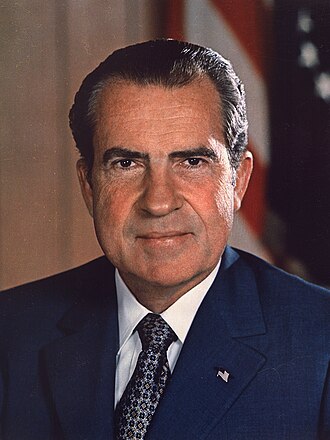 Richard Nixon
Post-Graduate Legal • 9m
EO 11722 Jun 9, 1973
🏛️✅ Zone 1 (Maximum Authority) Constitutional Neutral
Executive Order 11722—Inspection of Income, Estate, and Gift Tax Returns by the Committee on Internal Security, House of Representatives
📜 Art. I §8: Delegated Tariff & Commerce Execution
Any income, estate, or gift tax return for the years 1964 to 1974, inclusive, shall, during the Ninety-third Congress, be open to inspection by the Committee on Internal Security, House of Representatives, or any duly authorized subcommittee thereof, for the purpose of carrying…
Richard Nixon Post-Graduate Legal • 1m
EO 11724 Jun 25, 1973
🏛️✅ Zone 1 (Maximum Authority) Fidelity (+0.29)
Executive Order 11724—Federal Property Council
📜 5th Amend: Regulatory Execution with Due Process
There is hereby established in the Executive Office of the President a Federal Property Council (hereinafter referred to as the Council). The Council shall be composed of the Director of the Office of Management and Budget, the Chairman of the Council of Economic Advisers, the…
Richard Nixon Post-Graduate Legal • 3m
EO 11725 Jun 27, 1973
⚖️✨ Zone 2 (Zone of Twilight) Constitutional Neutral
Executive Order 11725—Transfer of Certain Functions of the Office of Emergency Preparedness
📜 Art. II §2: Commander-in-Chief Supervisory Authority
The Secretary of Housing and Urban Development is designated and empowered to exercise, without the approval, ratification, or other action of the President: (1) All authority vested in the President by the Disaster Relief Act of 1970, as amended, and assigned or delegated to…
Richard Nixon College Level • 7m
EO 11726 Jun 29, 1973
🏛️✅ Zone 1 (Maximum Authority) Fidelity (+0.29)
Executive Order 11726—Energy Policy Office
📜 Art. II §3: Faithful Execution of Statutory Law
Energy Policy Office SECTION 1. There is hereby established in the Executive Office of the President an Energy Policy Office. The office shall be under the immediate supervision and direction of a Director of the Energy Policy Office who shall be designated or appointed by the…
Richard Nixon Post-Graduate Legal • 2m
EO 11721 May 23, 1973
🏛️✅ Zone 1 (Maximum Authority) Constitutional Neutral
Executive Order 11721—Providing for Federal Pay Administration
📜 10th Amend: Intergovernmental Federalism Cooperation
PART I—GENERAL POLICY SECTION 101. Heads of agencies are directed: (a) To make full use of the authorities in chapter 53 of title 5, United States Code, and the statutory pay systems to which section 5301 of that chapter refers to secure and maintain the high quality of Federal…
Richard Nixon Post-Graduate Legal • 6m
📜
Scholarly & Legal Citations
Exec. Order No. 11,723 (June 13, 1973), https://executiveordersarchive.org/orders/app-executive-order-11723-further-providing-for-the-stabilization-the-economy.
