By virtue of the authority vested in me by Section 1(c) (2) of the Act to provide for final settlement of the conflicting rights and interests of the Hopi and Navajo Tribes concerning lands within the reservation established by the Executive order of December 16, 1882, and lands within the reservation created by the Act of June 14, 1934, and for other purposes (Public Law 93-531, approved December 22, 1974, hereinafter referred to as the Act), and as President of the United States of America, Section 2(a) of Executive Order No. 11829 of January 6 1975, is hereby amended to read as follows: "Sec. 2. Functions of the Committee. (a) The Committee shall, to the extent permitted by law, and as provided by Section 1(c) (2) of the Act, develop relevant information for and respond to the requests of the Mediator who shall be appointed by the Director of the Federal Mediation and Conciliation Service pursuant to Section 1(a) of the Act, in order to facilitate the expeditious and orderly compilation and development of factual information relevant to the negotiation process established by the Act." GERALD R. FORD The White House, April 17, 1975.
Executive Order 11853 🏛️✅ Zone 1: Maximum Authority Constitutional Fidelity (+0.29)
📜 Art. II §3: Faithful Execution of Statutory Law
Executive Order 11853—Amending Executive Order No. 11829, Relating to the Hopi-Navajo Land Settlement Interagency Committee
Executive Brief • At a Glance
⏱️ 1 min read (194 words) •
● In Effect
🎯 Primary Mandate
Section 2(a) of Executive Order No. 11829 of January 6 1975, is hereby amended to read as follows: "Sec. 2.
⚖️ Constitutional Footing
🏛️✅ Zone 1: Maximum Authority
Express or Implied Congressional Authorization
📜 Art. II §3: Faithful Execution of Statutory Law
🏛️ Scope & Affected Sectors
Private Citizens & Property Owners
Plain-English Translation & Framers' Constitutional Analysis
Early Statesman synthesis distilling legal jargon into practical meaning, statutory anchors, and structural constitutional impacts.
Signed by President Gerald R. Ford on April 17, 1975, this order concerns Amending Executive Order No. 11829, Relating to the Hopi-Navajo Land Settlement Interagency Committee. Section 2(a) of Executive Order No. 11829 of January 6 1975, is hereby amended to read as follows: "Sec. 2. Functions of the Committee. (a) The Committee shall, to the extent permitted by law, and as provided by Section 1(c) (2) of the Act, develop relevant information for and respond to the requests of the Mediator who shall be appointed by the Director of the Federal Mediation and Conciliation Service pursuant to…
Constitutional Assessment: An early statesman would view this measure favorably under Article II, Section 3 (the Take Care Clause). The President operates strictly within the ambit of executing established laws and supervising departmental subordinates, respecting the supremacy of the legislative branch without fabricating novel statutory obligations.
Key Directives & Operative Actions
▪
Section 2(a) of Executive Order No. 11829 of January 6 1975, is hereby amended to read as follows: "Sec. 2.
▪
The Committee shall, to the extent permitted by law, and as provided by Section 1(c) (2) of the Act, develop relevant information for and respond to the requests of the Mediator who shall be appointed by the Director of the Federal Mediation and Conciliation Service pursuant to Section 1(a) of the Act, in order to facilitate the expeditious and orderly compilation and development of factual information relevant to the negotiation process established by the Act."
Constitutional & Societal Entities Impacted
🏛️ Private Citizens & Property Owners
Policy Areas & Topics
🏛️
The Framers' Constitutional Council
1787 PrismEvaluating this order against the constitutional debates of 1787 and the limits of Article II executive power.
🏛️✅ Zone 1 (Maximum Authority)
§
"When the President acts pursuant to an express or implied authorization of Congress, his authority is at its maximum, for it includes all that he possesses in his own right plus all that Congress can delegate."
— Justice Robert H. Jackson, Youngstown Sheet & Tube Co. v. Sawyer (1952) Express or Implied Congressional Authorization
JM
James Madison
Separation of Powers & Legislative Primacy
"The constitutional magistracy was designed not to invent policy, but to be the faithful instrument of the laws passed by the people's representatives." — Speech in the First Congress (1789)
Madison would approve the structural posture of this order. The President acts strictly in subordination to statutory authority granted under Article II, Section 3 ("take Care that the Laws be faithfully executed"). The checks and balances hold firm because the policy origin remains with the legislature.
Madisonian Stance: Concurring (Statutory)
AH
Alexander Hamilton
The Energetic Executive & Unified Command
"A feeble Executive implies a feeble execution of the government; and a government ill executed, whatever it may be in theory, must be, in practice, a bad government." — Federalist No. 70 (1788)
Hamilton would view this directive as the natural and indispensable functioning of administrative leadership. Without the power to coordinate agencies, manage personnel, and resolve operational ambiguities, the modern presidency would be reduced to an impotent figurehead.
Hamiltonian Stance: Supportive of Execution
GM
George Mason
Bill of Rights, Due Process & 10th Amendment
"The president will be surrounded by flatterers and sycophants... and the great powers of the executive will gradually absorb the liberties of the people." — Cato IV (Anti-Federalist, 1787)
The Anti-Federalist prism advises continuous democratic vigilance. Even routine administrative directives aggregate centralized federal power away from town halls and state assemblies toward a distant executive apparatus.
Anti-Federalist Stance: Eternal Vigilance Required
📐
Five Measurable "Constitutional Friction" Dimensions
An objective audit measuring potential separation-of-powers tension against the United States Constitution and established Supreme Court doctrine.
🛡️ High Constitutional Concordance
27 / 100 friction index
Dimension 1 • Art. I, §1 & §8
Low Friction
Legislative Encroachment & Purse
Operates within delegated statutory execution without modifying legislative appropriations or taxing powers.
Benchmark: Power of the purse, taxes/tariffs, and rule of law reserved to Congress.
Dimension 2 • Art. II, §1 & §3
Low Friction
Executive Scope & Faithfulness
Exercises standard supervisory executive authority to faithfully execute existing statutes.
Benchmark: Faithfully execute laws enacted by Congress vs. unilateral decree.
Dimension 3 • 10th Amendment
Moderate Friction
Federalism & State Sovereignty
Engages state and local partners in cooperative federalism programs.
Benchmark: Police powers and un-delegated responsibilities reserved to the States.
Dimension 4 • 5th & 14th Amendments
Moderate Friction
Due Process & Individual Rights
Applies regulatory or compliance standards to private contractors or commercial entities.
Benchmark: Protection of private property, contracts, liberty, and procedural justice.
Dimension 5 • Separation of Powers
Low Friction
Youngstown Jacksonian Tier
The President operates strictly as the constitutional Chief Executive, carrying out policy established by Congress with strong statutory backing.
Benchmark: Express or Implied Congressional Authorization
⚖️
Audit Synthesis
This order operates in close harmony with statutory authority and standard Article II supervisory execution.
Weighted composite: Art. I (25%), Art. II (25%), Federalism (15%), Due Process (15%), Youngstown (20%).
ℹ️
How to read these dimensions: Executive power expands whenever an administration acts without explicit statutory authorization from Congress (Article I), touches upon police powers historically reserved to the states (Tenth Amendment), or limits private rights and property without judicial process. A low friction score indicates strict concordance with enacted law; a high friction score highlights orders testing the limits of presidential discretion.
Total Words
194
1,152 characters
Estimated Read Time
1 min
@ 200 words / min
Flesch-Kincaid
19.6
Post-Graduate Legal
Text size:
Related Executive Orders
1 order cited directly in this text, plus related actions from this administration.
EO 11829 Jan 6, 1975
🏛️✅ Zone 1 (Maximum Authority) Fidelity (+0.44)
Executive Order 11829—The Hopi-Navajo Land Settlement Interagency Committee
📜 Art. II §3: Administrative Management & Civil Service
There is established the Hopi-Navajo Land Settlement Interagency Committee (hereinafter referred to as the Committee). The membership of the Committee shall consist of the Secretary of the Interior, who shall be its Chairman, the Attorney General, the Secretary of Agriculture…
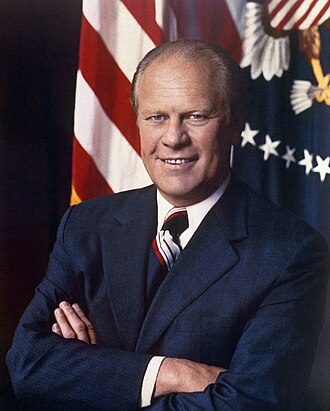 Gerald R. Ford
Post-Graduate Legal • 2m
EO 11852 Apr 16, 1975
⚖️✨ Zone 2 (Zone of Twilight) Constitutional Neutral
Executive Order 11852—Creating an Emergency Board to Investigate a Dispute Between the Carriers Represented by the National Railway Labor Conference and Certain of Their Employees
📜 Art. II §1: Executive Discretion & Internal Operations
A dispute exists between the carriers represented by the National Railway Labor Conference designated in lists attached hereto and made a part hereof, and certain of its employees represented by the Brotherhood of Railway, Airline, and Steamship Clerks, Freight Handlers…
Gerald R. Ford Post-Graduate Legal • 1m
EO 11854 Apr 24, 1975
⚖️✨ Zone 2 (Zone of Twilight) Constitutional Neutral
Executive Order 11854—Waiver Under the Trade Act of 1974 With Respect to the Socialist Republic of Romania
📜 Art. II §1: Executive Discretion & Internal Operations
I hereby waive the application of subsections (a) and (b) of section 402 of said Act with respect to the Socialist Republic of Romania.
Gerald R. Ford High School • 1m
EO 11851 Apr 10, 1975
🏛️✅ Zone 1 (Maximum Authority) Constitutional Neutral
Executive Order 11851—Delegation of Authority to Issue Regulations Limiting Imports of Certain Cheeses
📜 Art. I §8: Delegated Tariff & Commerce Execution
The Secretary of the Treasury, with the concurrence of the Secretary of State and Special Representative for Trade Negotiations, in order to implement an agreement concluded in December 1974 with the Commission of the European Communities designed to prevent the transshipment…
Gerald R. Ford Post-Graduate Legal • 1m
EO 11850 Apr 8, 1975
⚖️✨ Zone 2 (Zone of Twilight) Constitutional Neutral
Executive Order 11850—Renunciation of Certain Uses in War of Chemical Herbicides and Riot Control Agents
📜 Art. II §2: Commander-in-Chief Supervisory Authority
The United States renounces, as a matter of national policy, first use of herbicides in war except use, under regulations applicable to their domestic use, for control of vegetation within U.S. bases and installations or around their immediate defensive perimeters, and first…
Gerald R. Ford Post-Graduate Legal • 2m
EO 11855 May 1, 1975
⚖️✨ Zone 2 (Zone of Twilight) Constitutional Neutral
Executive Order 11855—Membership of the Energy Resources Council
📜 Art. II §2: Commander-in-Chief Supervisory Authority
Section 2 of Executive Order No. 11814 of October 11, 1974, as amended, is hereby amended to read as follows: SEC. 2. The Council shall consist of the Secretary of State, the Secretary of the Treasury, the Secretary of Defense, the Attorney General, the Secretary of the…
Gerald R. Ford Post-Graduate Legal • 1m
📜
Scholarly & Legal Citations
Exec. Order No. 11,853 (Apr. 17, 1975), https://executiveordersarchive.org/orders/app-executive-order-11853-amending-executive-order-no-11829-relating-the-hopi-navajo-land.
