Since the arrival of the first settlers on our eastern seaboard nearly 400 years ago, America has been a refuge for victims of persecution, intolerance and privation from around the world. Tide after tide of immigrants has settled here and each group has enriched cur heritage and added to our well-being as a nation. For many residents of Southeast Asia who stood by America as an ally and who have lost their homeland in the tragic developments of the past few weeks, America offers a last, best hope upon which they can build new lives. We are a big country and their numbers are proportionately small. We must open our doors and our hearts. The arrival of thousands of refugees, mostly children, will require many adjustments on their part and considerable assistance on ours. But it is in our best interest as well as theirs to make this transition as gracious and efficient as humanly possible. I have determined that it would be in the public interest to establish an advisory committee to the President on the resettlement in the United States of refugees from Indochina. Now, THEREFORE, by virtue of the authority vested in me by the Constitution and statutes of the United States, and as President of the United States, it is ordered as follows: SECTION 1. Establishment of a Presidential Advisory Committee. There is hereby established the President's Advisory Committee on Refugees, hereinafter referred to as the Committee. The Committee shall be composed of such citizens from private life as the President may, from time to time, appoint. The President shall designate one member of the Committee to serve as chairman. SEC. 2. Functions of the Advisory Committee. The Committee shall advise the President and the heads of appropriate Federal agencies concerning the expeditious and coordinated resettlement of refugees from Southeast Asia. The Committee shall include in its advice, consideration of the following areas: (a) Health and environmental matters related to resettlement; (b) the interrelationship of the governmental and volunteer roles in the resettlement; (c) educational and cultural adjustments required by these efforts; (d) the general well-being of resettled refugees and their families in their new American communities; and (e) such other related concerns as the President may, from time to time, specify. The Committee shall also seek to facilitate the location, solicitation, and channeling of private resources for these resettlement efforts, and to establish lines of communication with all concerned governmental agencies, relevant voluntary agencies, the Vietnamese-American community and the American public at large. The Committee shall conclude its work within one year. SEC. 3. Assistance, Cooperation, and Expenses. (a) All executive departments and agencies of the Federal government, to the extent permitted by law, are directed to cooperate with the Committee and to furnish such information, facilities, funds, and assistance as the Committee may require. (b) No member of the Committee shall receive compensation from the United States by reason of service on the Committee, but may, to the extent permitted by law, be allowed travel expenses, including per diem in lieu of subsistence, as authorized by law (5 U.S.C. 5703). SEC. 4. Federal Advisory Committee Act. Notwithstanding the provisions of any other Executive order, the functions of the President under the Federal Advisory Committee Act (5 U.S.C. App. 1), except that of reporting annually to Congress, which are applicable to the advisory committee established by this Order, shall be performed by the Secretary of Health, Education, and Welfare. GERALD R. FORD The White House, May 19, 1975.
Executive Order 11860 🏛️✅ Zone 1: Maximum Authority Constitutional Fidelity (+0.44)
📜 5th Amend: Regulatory Execution with Due Process
Executive Order 11860—Establishing the President's Advisory Committee on Refugees
Executive Brief • At a Glance
⏱️ 3 min read (583 words) •
● In Effect
🎯 Primary Mandate
There is hereby established the President's Advisory Committee on Refugees, hereinafter referred to as the Committee.
⚖️ Constitutional Footing
🏛️✅ Zone 1: Maximum Authority
Express or Implied Congressional Authorization
📜 5th Amend: Regulatory Execution with Due Process
🏛️ Scope & Affected Sectors
Executive Departments & Federal Civil Servants Private Citizens & Property Owners Foreign Nations & International Entities Public Health & Medical Institutions
Plain-English Translation & Framers' Constitutional Analysis
Early Statesman synthesis distilling legal jargon into practical meaning, statutory anchors, and structural constitutional impacts.
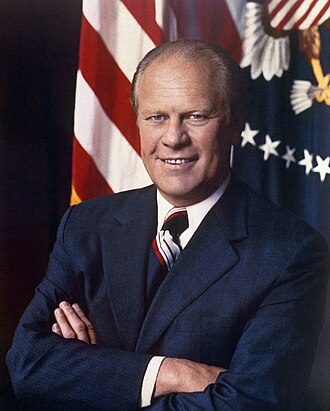
Signed by President Gerald R. Ford on May 19, 1975, this order concerns Establishing the President's Advisory Committee on Refugees. Since the arrival of the first settlers on our eastern seaboard nearly 400 years ago, America has been a refuge for victims of persecution, intolerance and privation from around the world. Tide after tide of immigrants has settled here and each group has enriched cur heritage and added to our well-being as a nation.
Constitutional Assessment: Evaluated against the Fifth Amendment, this action touches upon property or economic rights. An early statesman would insist upon strict adherence to due process of law and the constitutional guarantee that private holdings shall not be encumbered or taken for public purposes without just compensation and lawful process.
Key Directives & Operative Actions
▪
Establishment of a Presidential Advisory Committee
There is hereby established the President's Advisory Committee on Refugees, hereinafter referred to as the Committee.
▪
Now, THEREFORE, by virtue of the authority vested in me by the Constitution and statutes of the United States, and as President of the United States, it is ordered as follows: SECTION 1.
▪
The Committee shall be composed of such citizens from private life as the President may, from time to time, appoint.
▪
The President shall designate one member of the Committee to serve as chairman.
Constitutional & Societal Entities Impacted
🏛️ Executive Departments & Federal Civil Servants
🏛️ Private Citizens & Property Owners
🏛️ Foreign Nations & International Entities
🏛️ Public Health & Medical Institutions
Policy Areas & Topics
🏛️
The Framers' Constitutional Council
1787 PrismEvaluating this order against the constitutional debates of 1787 and the limits of Article II executive power.
🏛️✅ Zone 1 (Maximum Authority)
§
"When the President acts pursuant to an express or implied authorization of Congress, his authority is at its maximum, for it includes all that he possesses in his own right plus all that Congress can delegate."
— Justice Robert H. Jackson, Youngstown Sheet & Tube Co. v. Sawyer (1952) Express or Implied Congressional Authorization
JM
James Madison
Separation of Powers & Legislative Primacy
"The constitutional magistracy was designed not to invent policy, but to be the faithful instrument of the laws passed by the people's representatives." — Speech in the First Congress (1789)
Madison would approve the structural posture of this order. The President acts strictly in subordination to statutory authority granted under Article II, Section 3 ("take Care that the Laws be faithfully executed"). The checks and balances hold firm because the policy origin remains with the legislature.
Madisonian Stance: Concurring (Statutory)
AH
Alexander Hamilton
The Energetic Executive & Unified Command
"A feeble Executive implies a feeble execution of the government; and a government ill executed, whatever it may be in theory, must be, in practice, a bad government." — Federalist No. 70 (1788)
Hamilton would view this directive as the natural and indispensable functioning of administrative leadership. Without the power to coordinate agencies, manage personnel, and resolve operational ambiguities, the modern presidency would be reduced to an impotent figurehead.
Hamiltonian Stance: Supportive of Execution
GM
George Mason
Bill of Rights, Due Process & 10th Amendment
"The purse and the sword ought never to be in the same hands... nor the liberties of the citizen placed at the pleasure of a single magistrate." — Virginia Ratifying Convention (1788)
George Mason and the Anti-Federalists would sound a fierce warning. They feared that Article II would inevitably evolve into an elective monarchy. When an executive order impacts private rights, property, or civil liberties without individualized judicial process, Mason would see their darkest predictions verified.
Anti-Federalist Stance: High Bill of Rights Scrutiny
📐
Five Measurable "Constitutional Friction" Dimensions
An objective audit measuring potential separation-of-powers tension against the United States Constitution and established Supreme Court doctrine.
⚖️ Discretionary Twilight Zone
35 / 100 friction index
Dimension 1 • Art. I, §1 & §8
Moderate Friction
Legislative Encroachment & Purse
Administers commerce or fiscal programs requiring ongoing statutory delegation and legislative oversight.
Benchmark: Power of the purse, taxes/tariffs, and rule of law reserved to Congress.
Dimension 2 • Art. II, §1 & §3
Low Friction
Executive Scope & Faithfulness
Exercises standard supervisory executive authority to faithfully execute existing statutes.
Benchmark: Faithfully execute laws enacted by Congress vs. unilateral decree.
Dimension 3 • 10th Amendment
Moderate Friction
Federalism & State Sovereignty
Engages state and local partners in cooperative federalism programs.
Benchmark: Police powers and un-delegated responsibilities reserved to the States.
Dimension 4 • 5th & 14th Amendments
Moderate Friction
Due Process & Individual Rights
Applies regulatory or compliance standards to private contractors or commercial entities.
Benchmark: Protection of private property, contracts, liberty, and procedural justice.
Dimension 5 • Separation of Powers
Low Friction
Youngstown Jacksonian Tier
The President operates strictly as the constitutional Chief Executive, carrying out policy established by Congress with strong statutory backing.
Benchmark: Express or Implied Congressional Authorization
⚖️
Audit Synthesis
This order operates within Justice Jackson’s Zone of Twilight, resting upon concurrent presidential authority or congressional silence.
Weighted composite: Art. I (25%), Art. II (25%), Federalism (15%), Due Process (15%), Youngstown (20%).
ℹ️
How to read these dimensions: Executive power expands whenever an administration acts without explicit statutory authorization from Congress (Article I), touches upon police powers historically reserved to the states (Tenth Amendment), or limits private rights and property without judicial process. A low friction score indicates strict concordance with enacted law; a high friction score highlights orders testing the limits of presidential discretion.
Total Words
583
3,706 characters
Estimated Read Time
3 min
@ 200 words / min
Flesch-Kincaid
14.7
College Level
Text size:
🔗
Referenced By Later Executive Orders (1)
Subsequent presidents who cited, amended, continued, or revoked this directive in later orders.
Gerald R. Ford • 1976-12-20
Related Executive Orders
Other executive actions signed by Gerald R. Ford around this period.
EO 11861 May 21, 1975
⚖️✨ Zone 2 (Zone of Twilight) Constitutional Neutral
Executive Order 11861—Placing Certain Positions in Levels IV and V of the Executive Schedule
📜 Art. II §2: Commander-in-Chief Supervisory Authority
The following offices and positions are placed in level IV of the Executive Schedule: (1) Administrator, Social and Rehabilitation Service, Department of Health, Education, and Welfare. (2) Director, National Institutes of Health, Department of Health, Education, and Welfare.
 Gerald R. Ford
College Level • 2m
EO 11859 May 7, 1975
🏛️✅ Zone 1 (Maximum Authority) Constitutional Neutral
Executive Order 11859—Inspection of Income, Estate, and Gift Tax Returns by the Senate Committee on Government Operations
📜 Art. I §8: Delegated Tariff & Commerce Execution
Any income, estate, or gift tax return for the years 1955 to 1975, inclusive, shall, subject to the conditions imposed herein, during the Ninety-fourth Congress, be open to inspection by the Senate Committee on Government Operations or any duly authorized subcommittee thereof…
Gerald R. Ford Post-Graduate Legal • 1m
EO 11858 Amended May 7, 1975
🏛️✅ Zone 1 (Maximum Authority) Fidelity (+0.29)
Executive Order 11858—Foreign Investment in the United States
📜 Art. II §2: Commander-in-Chief Supervisory Authority
There is hereby established the Committee on Foreign Investment in the United States (hereinafter referred to as the Committee). The Committee shall be composed of a representative, whose status is not below that of an Assistant Secretary, designated by each of the following…
Gerald R. Ford Post-Graduate Legal • 4m
EO 11857 May 7, 1975
⚖️✨ Zone 2 (Zone of Twilight) Constitutional Neutral
Executive Order 11857—Amending Executive Order Nos. 11803, 11837, and 11842 to Provide Authority to Increase the Number of Members of the Presidential Clemency Board
📜 Art. II §1: Executive Discretion & Internal Operations
Of Executive Order No. 11803 of September 16, 1974, is hereby amended as follows: By adding the following at the end of the last sentence, "The President may appoint such additional members to the board as he shall from time to time determine to be necessary to carry out its…
Gerald R. Ford College Level • 1m
EO 11856 May 7, 1975
⚖️✨ Zone 2 (Zone of Twilight) Constitutional Neutral
Executive Order 11856—Amending the Civil Service Rules to Except Certain Positions From the Career Service
📜 Art. II §3: Administrative Management & Civil Service
Section 9.11 of Civil Service Rule IX is amended by adding "and the Small Business Administration" after "Environmental Protection Agency."
Gerald R. Ford High School • 1m
EO 11855 May 1, 1975
⚖️✨ Zone 2 (Zone of Twilight) Constitutional Neutral
Executive Order 11855—Membership of the Energy Resources Council
📜 Art. II §2: Commander-in-Chief Supervisory Authority
Section 2 of Executive Order No. 11814 of October 11, 1974, as amended, is hereby amended to read as follows: SEC. 2. The Council shall consist of the Secretary of State, the Secretary of the Treasury, the Secretary of Defense, the Attorney General, the Secretary of the…
Gerald R. Ford Post-Graduate Legal • 1m
📜
Scholarly & Legal Citations
Exec. Order No. 11,860 (May 19, 1975), https://executiveordersarchive.org/orders/app-executive-order-11860-establishing-the-presidents-advisory-committee-refugees.
