By virtue of the authority vested in me by the Constitution and laws of the United States of America, including section 801 of the Federal Aviation Act, as amended (49 U.S.C. 1461), and as President of the United States of America, solely to provide Presidential guidance to department and agency heads and in order to facilitate Presidential review of decisions submitted to the President for his approval by the Civil Aeronautics Board pursuant to section 801 of the Federal Aviation Act, as amended, it is hereby ordered as follows: SECTION 1. (a) Except as provided in this section, decisions of the Civil Aeronautics Board, hereinafter referred to as the CAB, transmitted to the President pursuant to section 801 of the Federal Aviation Act, as amended, hereinafter referred to as section 801, may be made available by the CAB for public inspection and copying following submission to the President. (b) In the interests of national security, and in order to allow for consideration of appropriate action under Executive Order No. 11652, as amended, decisions of the CAB transmitted to the President under section 801 shall be withheld from public disclosure for five days after submission to the President. (c) At the same time that decisions of the CAB are submitted to the President pursuant to section 801, the CAB shall transmit copies thereof to the Secretary of State, the Secretary of Defense and the Assistant to the President for National Security Affairs. (d) The Secretary of State and the Secretary of Defense, or their designees, shall review the decisions of the CAB transmitted pursuant to subsection (c) above, and shall promptly advise the Assistant to the President for National Security Affairs or his designee, whether, and if so, why, action pursuant to Executive Order No. 11652, as amended, is deemed appropriate. If, after considering the above recommendations, the Assistant to the President for National Security Affairs or his designee determines that classification under Executive Order No. 11652 is appropriate, he shall take such action and immediately so inform the CAB. Action pursuant to this subsection shall be completed within five days of receipt of the decision by the President. (e) On and after the sixth day following receipt by the President of a CAB decision submitted pursuant to section 801, the CAB is authorized to disclose all unclassified portions of the text of such decision. Nothing in this section is intended to affect the ability to withhold material under Executive order or statute other than section 801. SEC. 2. (a) Views of departments and agencies outside of the Executive Office of the President, other than those views involving considerations of defense or foreign policy (including international negotiations costs) which are to be the subject of recommendations to the President in connection with his review under section 801, shall be presented to the CAB in accordance with the procedures of the CAB. While some issues will inevitably involve both questions of regulatory policy and defense or foreign policy, departments and agencies outside of the Executive Office of the President should make a conscientious effort to present their views on regulatory matters in proceedings before the CAB, and raise only matters of defense or foreign policy that are of Presidential concern in the course of the review under section 801. (b) Departments and agencies outside of the Executive Office of the President which intend to make recommendations to the President on matters of defense or foreign policy and have such intentions while the matter is pending before the CAB, shall, except, as confidentiality is required for reasons of defense or foreign policy, make the existence of such intentions and the conclusions to be recommended known to the CAB in the course of its proceedings. SEC. 3. (a) In advising the President with respect to his review of an order submitted to him pursuant to section 801, departments and agencies outside of the Executive Office of the President shall: (1) identify any matter contained in their respective recommendations which was not previously submitted to the CAB pursuant to section 2(a) above; (2) explain why such matter was not previously submitted to the CAB for its consideration; and (3) identify with particularity the defense or foreign policy implications of the CAB decision which are deemed appropriate for the President's consideration. (b) Orders involving foreign and overseas air transportation certificates of U.S. carriers that are subject to the approval of the President are not subject to judicial review when the President approves or disapproves an order for reasons of defense or foreign policy. All disapprovals necessarily are based on such a Presidential decision, but approval by the President does not necessarily imply the existence of any defense or foreign policy reason. For the purpose of assuring whatever opportunity is available under the law for judicial review of the CAB decisions, all departments and agencies which make recommendations to the President pursuant to section 801 should indicate separately whether, and why, if the order or any portion of the order is approved, the President cannot state in his approval that no defense or foreign policy reason underlies his action. SEC. 4. Individuals within the Executive Office of the President shall follow a policy of (a) refusing/to discuss matters relating to the disposition of a case subject to the approval of the President under section 801 with any interested private party, or an attorney or agent for any such party, prior to the President's decision, and (b) referring any written communication from an interested private party, or an attorney or agent for any such party, to the appropriate department or agency outside of the Executive Office of the President. Exceptions to this policy may only be made when the head of an appropriate department or agency outside of the Executive Office of the President personally finds that direct written or oral communication between a private party and a person within the Executive Office of the President is needed for reasons of defense or foreign policy. SEC. 5. Departments and agencies outside of the Executive Office of the President which regularly make recommendations to the President in connection with the Presidential review pursuant to section 801 shall, consistent with applicable law, including the provisions of Chapter 5 of Title 5 of the United States Code: (a) establish public dockets for all written communications (other than those requiring confidential treatment for defense or foreign policy reasons) between their officers and employees and private parties in connection with the preparation of such recommendations; and (b) prescribe such other procedures governing oral and written communications as they deem appropriate. SEC. 6. Although it is recognized that the provisions set forth in this Order will frequently apply to review of decisions made in adversary proceedings involving private parties, this Order is intended solely for the internal guidance of the departments and agencies in order to facilitate the Presidential review process. This Order does not confer rights on any private parties. SEC. 7 The provisions of this Order shall be effective on the 30th day following publication in the FEDERAL REGISTER. GERALD R. FORD The White House, June 10, 1976.
Executive Order 11920 🏛️✅ Zone 1: Maximum Authority Constitutional Fidelity (+0.29)
📜 Art. II §2: Commander-in-Chief Supervisory Authority
Executive Order 11920—Establishing Executive Branch Procedures Solely for the Purpose of Facilitating Presidential Review of Decisions Submitted to the President by the Civil Aeronautics Board
Executive Brief • At a Glance
⏱️ 6 min read (1,186 words) •
● In Effect
🎯 Primary Mandate
Except as provided in this section, decisions of the Civil Aeronautics Board, hereinafter referred to as the CAB, transmitted to the President pursuant to section 801 of the Federal Aviation Act, as amended, hereinafter referred to as section 801, may be made available by the CAB for public inspection and copying following submission to the President.
⚖️ Constitutional Footing
🏛️✅ Zone 1: Maximum Authority
Express or Implied Congressional Authorization
📜 Art. II §2: Commander-in-Chief Supervisory Authority
🏛️ Scope & Affected Sectors
Armed Forces & Military Establishments Sovereign State Governments & Localities Executive Departments & Federal Civil Servants Private Citizens & Property Owners
Plain-English Translation & Framers' Constitutional Analysis
Early Statesman synthesis distilling legal jargon into practical meaning, statutory anchors, and structural constitutional impacts.
Signed by President Gerald R. Ford on June 10, 1976, this order concerns Establishing Executive Branch Procedures Solely for the Purpose of Facilitating Presidential Review of Decisions Submitted to the President by the Civil Aeronautics Board. Except as provided in this section, decisions of the Civil Aeronautics Board, hereinafter referred to as the CAB, transmitted to the President pursuant to section 801 of the Federal Aviation Act, as amended, hereinafter referred to as section 801, may be made available by the CAB for public inspection and copying following submission to the President.
Constitutional Assessment: Scrutinized through Article II, Section 2, this action exercises the President's constitutional role as Commander in Chief. Early Framers recognized broad executive discretion in commanding military forces during conflict, provided it remains bounded by congressional declarations and respects civilian domestic courts.
Key Directives & Operative Actions
▪
Except as provided in this section, decisions of the Civil Aeronautics Board, hereinafter referred to as the CAB, transmitted to the President pursuant to section 801 of the Federal Aviation Act, as amended, hereinafter referred to as section 801, may be made available by the CAB for public inspection and copying following submission to the President.
▪
In the interests of national security, and in order to allow for consideration of appropriate action under Executive Order No. 11652, as amended, decisions of the CAB transmitted to the President under section 801 shall be withheld from public disclosure for five days after submission to the President.
▪
At the same time that decisions of the CAB are submitted to the President pursuant to section 801, the CAB shall transmit copies thereof to the Secretary of State, the Secretary of Defense and the Assistant to the President for National Security Affairs.
▪
The Secretary of State and the Secretary of Defense, or their designees, shall review the decisions of the CAB transmitted pursuant to subsection (c) above, and shall promptly advise the Assistant to the President for National Security Affairs or his designee, whether, and if so, why, action pursuant to Executive Order No. 11652, as amended, is deemed appropriate.
Constitutional & Societal Entities Impacted
🏛️ Armed Forces & Military Establishments
🏛️ Sovereign State Governments & Localities
🏛️ Executive Departments & Federal Civil Servants
🏛️ Private Citizens & Property Owners
🏛️ Foreign Nations & International Entities
Policy Areas & Topics
🏛️
The Framers' Constitutional Council
1787 PrismEvaluating this order against the constitutional debates of 1787 and the limits of Article II executive power.
🏛️✅ Zone 1 (Maximum Authority)
§
"When the President acts pursuant to an express or implied authorization of Congress, his authority is at its maximum, for it includes all that he possesses in his own right plus all that Congress can delegate."
— Justice Robert H. Jackson, Youngstown Sheet & Tube Co. v. Sawyer (1952) Express or Implied Congressional Authorization
JM
James Madison
Separation of Powers & Legislative Primacy
"The constitutional magistracy was designed not to invent policy, but to be the faithful instrument of the laws passed by the people's representatives." — Speech in the First Congress (1789)
Madison would approve the structural posture of this order. The President acts strictly in subordination to statutory authority granted under Article II, Section 3 ("take Care that the Laws be faithfully executed"). The checks and balances hold firm because the policy origin remains with the legislature.
Madisonian Stance: Concurring (Statutory)
AH
Alexander Hamilton
The Energetic Executive & Unified Command
"The direction of war implies the direction of the common strength; and the power of directing and employing the common strength must be under the direction of the single hand of the Executive." — Federalist No. 74 (1788)
Hamilton would forcefully champion executive discretion here. For foreign entanglements, commerce defense, and national security, deliberative assemblies are too slow and faction-ridden. A unified, energetic Executive exercising swift command is precisely what the Philadelphia Convention intended for national preservation.
Hamiltonian Stance: Strong Prerogative Support
GM
George Mason
Bill of Rights, Due Process & 10th Amendment
"The president will be surrounded by flatterers and sycophants... and the great powers of the executive will gradually absorb the liberties of the people." — Cato IV (Anti-Federalist, 1787)
The Anti-Federalist prism advises continuous democratic vigilance. Even routine administrative directives aggregate centralized federal power away from town halls and state assemblies toward a distant executive apparatus.
Anti-Federalist Stance: Eternal Vigilance Required
📐
Five Measurable "Constitutional Friction" Dimensions
An objective audit measuring potential separation-of-powers tension against the United States Constitution and established Supreme Court doctrine.
⚖️ Discretionary Twilight Zone
32 / 100 friction index
Dimension 1 • Art. I, §1 & §8
Low Friction
Legislative Encroachment & Purse
Operates within delegated statutory execution without modifying legislative appropriations or taxing powers.
Benchmark: Power of the purse, taxes/tariffs, and rule of law reserved to Congress.
Dimension 2 • Art. II, §1 & §3
Moderate Friction
Executive Scope & Faithfulness
Directs internal executive branch machinery, agency workflows, and federal personnel.
Benchmark: Faithfully execute laws enacted by Congress vs. unilateral decree.
Dimension 3 • 10th Amendment
Moderate Friction
Federalism & State Sovereignty
Engages state and local partners in cooperative federalism programs.
Benchmark: Police powers and un-delegated responsibilities reserved to the States.
Dimension 4 • 5th & 14th Amendments
Moderate Friction
Due Process & Individual Rights
Applies regulatory or compliance standards to private contractors or commercial entities.
Benchmark: Protection of private property, contracts, liberty, and procedural justice.
Dimension 5 • Separation of Powers
Low Friction
Youngstown Jacksonian Tier
The President operates strictly as the constitutional Chief Executive, carrying out policy established by Congress with strong statutory backing.
Benchmark: Express or Implied Congressional Authorization
⚖️
Audit Synthesis
This order operates within Justice Jackson’s Zone of Twilight, resting upon concurrent presidential authority or congressional silence.
Weighted composite: Art. I (25%), Art. II (25%), Federalism (15%), Due Process (15%), Youngstown (20%).
ℹ️
How to read these dimensions: Executive power expands whenever an administration acts without explicit statutory authorization from Congress (Article I), touches upon police powers historically reserved to the states (Tenth Amendment), or limits private rights and property without judicial process. A low friction score indicates strict concordance with enacted law; a high friction score highlights orders testing the limits of presidential discretion.
Total Words
1,186
7,457 characters
Estimated Read Time
6 min
@ 200 words / min
Flesch-Kincaid
22.3
Post-Graduate Legal
Text size:
🔗
Referenced By Later Executive Orders (1)
Subsequent presidents who cited, amended, continued, or revoked this directive in later orders.
Related Executive Orders
1 order cited directly in this text, plus related actions from this administration.
EO 11652 Mar 8, 1972
🏛️✅ Zone 1 (Maximum Authority) Fidelity (+0.33)
Executive Order 11652—Classification and Declassification of National Security Information and Material
📜 Art. II §2: Commander-in-Chief Supervisory Authority
The interests of the United States and its citizens are best served by making information regarding the affairs of Government readily available to the public.
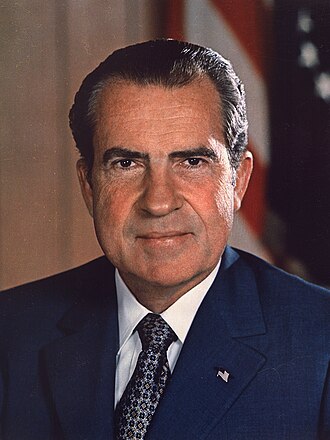 Richard Nixon
Post-Graduate Legal • 21m
EO 11921 Jun 11, 1976
⚖️⚠️ Zone 3 (Lowest Ebb) Friction (-0.19)
Executive Order 11921—Adjusting Emergency Preparedness Assignments to Organizational and Functional Changes in Federal Departments and Agencies
📜 Art. II §2: Commander-in-Chief / War Prerogative Tension
Executive Order No. 11490 of October 28, 1969, is hereby amended as follows: SECTION 1. The 'Table of Contents' is amended as follows: (a) In Part 6, delete 'Post Office Department' and substitute therefor 'United States Postal Service'.
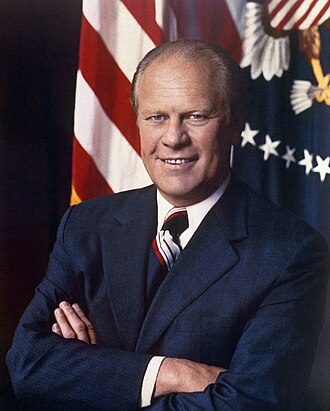 Gerald R. Ford
Post-Graduate Legal • 17m
EO 11919 Jun 9, 1976
⚖️✨ Zone 2 (Zone of Twilight) Constitutional Neutral
Executive Order 11919—Delegating Authority of the President to Concur in Designations of Commissioners, United States Parole Commission
📜 Art. II §1: Executive Discretion & Internal Operations
The Attorney General shall serve as the President's designee for purposes of concurring in designations of Commissioners of the United States Parole Commission to serve on the National Appeals Board, as vice chairman of the Commission, and as regional Commissioner.
Gerald R. Ford Post-Graduate Legal • 1m
EO 11922 Jun 16, 1976
🏛️✅ Zone 1 (Maximum Authority) Constitutional Neutral
Executive Order 11922—Amending Executive Order No. 11077 of January 22, 1963, Entitled "Administration of the Migration and Refugee Assistance Act of 1962"
📜 10th Amend: Intergovernmental Federalism Cooperation
Of Executive Order No. 11077 of January 22. 1963, is hereby amended by adding thereto the following: "(d) Funds appropriated or otherwise made available to the President for the United States Emergency Refugee and Migration Assistance Fund established by Section 2(c) of the act…
Gerald R. Ford Post-Graduate Legal • 1m
EO 11923 Jun 17, 1976
⚖️✨ Zone 2 (Zone of Twilight) Constitutional Neutral
Executive Order 11923—The Honorable Francis E. Meloy, Jr. and Robert O. Waring
📜 Art. II §2: Commander-in-Chief Supervisory Authority
Pursuant to the provisions of Section 4 of Proclamation 3044 of March 1, 1954, as amended, that on Monday, June 21, 1976, the flag of the United States shall be flown at half-staff on all buildings, grounds, and naval vessels of the Federal Government in the District of…
Gerald R. Ford College Level • 1m
EO 11918 Jun 1, 1976
⚖️✨ Zone 2 (Zone of Twilight) Constitutional Neutral
Executive Order 11918—Compensation for Damages Involving Nuclear Reactors of United States Warships
📜 Art. II §2: Commander-in-Chief Supervisory Authority
With respect to the administrative settlement of claims or judgments for bodily injury, death, or damage to or loss of real or personal property proven to have resulted from a nuclear incident involving the nuclear reactor of a United States warship, the Secretary of Defense is…
Gerald R. Ford Post-Graduate Legal • 2m
📜
Scholarly & Legal Citations
Exec. Order No. 11,920 (June 10, 1976), https://executiveordersarchive.org/orders/app-executive-order-11920-establishing-executive-branch-procedures-solely-for-the-purpose.
