PROVIDING FOR COORDINATION OF FEDERAL EQUAL EMPLOYMENT OPPORTUNITY PROGRAMS By virtue of the authority vested in me as President of the United States by the Constitution and statutes of the United States, including Section 9 of Reorganization Plan Number 1 of 1978 (43 FR 19807), it is ordered as follows: 1-1. Implementation of Reorganization Plan. 1-101. The transfer to the Equal Employment Opportunity Commission of all the functions of the Equal Employment Opportunity Coordinating Council, and the termination of that Council, as provided by Section 6 of Reorganization Plan Number 1 of 1978 (43 FR 19807), shall be effective on July 1, 1978. 1-2. Responsibilities of Equal Employment Opportunity Commission. 1-201. The Equal Employment Opportunity Commission shall provide leadership and coordination to the efforts of Federal departments and agencies to enforce all Federal statutes, Executive orders, regulations, and policies which require equal employment opportunity without regard to race, color, religion, sex, national origin, age or handicap. It shall strive to maximize effort, promote efficiency, and eliminate conflict, competition, duplication and inconsistency among the operations, functions and jurisdictions of the Federal departments and agencies having responsibility for enforcing such statutes, Executive orders, regulations and policies. 1-202. In carrying out its functions under this order the Equal Employment Opportunity Commission shall consult with and utilize the special expertise of Federal departments and agencies with equal employment opportunity responsibilities. The Equal Employment Opportunity Commission shall cooperate with such departments and agencies in the discharge of their equal employment responsibilities. 1-203. All Federal departments and agencies shall cooperate with and assist the Equal Employment Opportunity Commission in the performance of its functions under this order and shall furnish the Commission such reports and information as it may request. 1-3. Specific Responsibilities. 1-301. To implement its responsibilities under Section 1-2, the Equal Employment Opportunity Commission shall, where feasible: (a) develop uniform standards, guidelines, and policies defining the nature of employment discrimination on the ground of race, color, religion, sex, national origin, age or handicap under all Federal statutes, Executive orders, regulations, and policies which require equal employment opportunity; (b) develop uniform standards and procedures for investigations and compliance reviews to be conducted by Federal departments and agencies under any Federal statute, Executive order, regulation or policy requiring equal employment opportunity; (c) develop procedures with the affected agencies, including the use of memoranda of understanding, to minimize duplicative investigations or compliance reviews of particular employers or classes of employers or others covered by Federal statutes, Executive orders, regulations or policies requiring equal employment opportunity; (d) ensure that Federal departments and agencies develop their own standards and procedures for undertaking enforcement actions when compliance with equal employment opportunity requirements of any Federal statute, Executive order, regulation or policy cannot be secured by voluntary means; (e) develop uniform record-keeping and reporting requirements concerning employment practices to be utilized by all Federal departments and agencies having equal employment enforcement responsibilities; (f) provide for the sharing of compliance records, findings, and supporting documentation among Federal departments and agencies responsible for ensuring equal employment opportunity; (g) develop uniform training programs for the staff of Federal departments and agencies with equal employment opportunity responsibilities; (h) assist all Federal departments and agencies with equal employment opportunity responsibilities in developing programs to provide appropriate publications and other information for those covered and those protected by Federal equal employment opportunity statutes, Executive orders, regulations, and policies; and (i) initiate cooperative programs, including the development of memoranda of understanding between agencies, designed to improve the coordination of equal employment opportunity compliance and enforcement. 1-302. The Equal Employment Opportunity Commission shall assist the Civil Service Commission, or its successor, in establishing uniform job-related qualifications and requirements for job classifications and descriptions for Federal employees involved in enforcing all Federal equal employment opportunity provisions. 1-303. The Equal Employment Opportunity Commission shall issue such rules, regulations, policies, procedures or orders as it deems necessary to carry out its responsibilities under this order. It shall advise and offer to consult with the affected Federal departments and agencies during the development of any proposed rules, regulations, policies, procedures or orders and shall formally submit such proposed issuances to affected departments and agencies at least 15 working days prior to public announcement. The Equal Employment Opportunity Commission shall use its best efforts to reach agreement with the agencies on matters in dispute. Departments and agencies shall comply with all final rules, regulations, policies, procedures or orders of the Equal Employment Opportunity Commission. 1-304. All Federal departments and agencies shall advise and offer to consult with the Equal Employment Opportunity Commission during the development of any proposed rules, regulations, policies, procedures or orders concerning equal employment opportunity. Departments and agencies shall formally submit such proposed issuances to the Equal Employment Opportunity Commission and other interested Federal departments and agencies at least 15 working days prior to public announcement. The Equal Employment Opportunity Commission shall review such proposed rules, regulations, policies, procedures or orders to ensure consistency among the operations of the various Federal departments and agencies. Issuances related to internal management and administration are exempt from this clearance process. Case handling procedures unique to a single program also are exempt, although the Equal Employment Opportunity Commission may review such procedures in order to assure maximum consistency within the Federal equal employment opportunity program. 1-305. Before promulgating significant rules, regulations, policies, procedures or orders involving equal employment opportunity, the Commission and affected departments and agencies shall afford the public an opportunity to comment. 1-306. The Equal Employment Opportunity Commission may make recommendations concerning staff size and resource needs of the Federal departments and agencies having equal employment opportunity responsibilities to the Office of Management and Budget. 1-307. (a) It is the intent of this order that disputes between or among agencies concerning matters covered by this order shall be resolved through good faith efforts of the affected agencies to reach mutual agreement. Use of the dispute resolution mechanism contained in Subsections (b) and (c) of this Section should be resorted to only in extraordinary circumstances. (b) Whenever a dispute which cannot be resolved through good faith efforts arises between the Equal Employment Opportunity Commission and another Federal department or agency concerning the issuance of an equal employment opportunity rule, regulation, policy, procedure, order or any matter covered by this Order, the Chairman of the Equal Employment Opportunity Commission or the head of the affected department or agency may refer the matter to the Executive Office of the President. Such reference must be in writing and may not be made later than 15 working days following receipt of the initiating agency's notice of intent publicly to announce an equal employment opportunity rule, regulation, policy, procedure or order. If no reference is made within the 15 day period, the decision of the agency which initiated the proposed issuance will become effective. (c) Following reference of a disputed matter to the Executive Office of the President, the Assistant to the President for Domestic Affairs and Policy (or such other officials as the President may designate) shall designate an official within the Executive Office of the President to meet with the affected agencies to resolve the dispute within a reasonable time. 1-4. Annual Report. 1-401. The Equal Employment Opportunity Commission shall include in the annual report transmitted to the President and the Congress pursuant to Section 715 of Title VII of the Civil Rights Act of 1964, as amended (42 U.S.C. 2000e-14), a statement of the progress that has been made in achieving the purpose of this order. The Equal Employment Opportunity Commission shall provide Federal departments and agencies an opportunity to comment on the report prior to formal submission. 1-5. General Provisions. 1-501. Nothing in this order shall relieve or lessen the responsibilities or obligations imposed upon any person or entity by Federal equal employment law, Executive order, regulation or policy. 1-502. Nothing in this order shall limit the Attorney General's role as legal adviser to the Executive Branch. JIMMY CARTER The White House, June 30, 1978. [Filed with the Office of the Federal Register, 4:23 p.m., June 30, 1978]
Executive Order 12067 ⚖️✨ Zone 2: Zone of Twilight Constitutional Neutral (+0.02)
📜 1st Amend: Civil Liberties & Expressive Protections
Executive Order 12067—Equal Employment Opportunity Programs
Executive Brief • At a Glance
⏱️ 7 min read (1,343 words) •
● In Effect
🎯 Primary Mandate
The transfer to the Equal Employment Opportunity Commission of all the functions of the Equal Employment Opportunity Coordinating Council, and the termination of that Council, as provided by Section 6 of Reorganization Plan Number 1 of 1978 (43 FR 19807), shall be effective on July 1, 1978. 1-2.
⚖️ Constitutional Footing
⚖️✨ Zone 2: Zone of Twilight
Concurrent Authority / Congressional Silence
📜 1st Amend: Civil Liberties & Expressive Protections
🏛️ Scope & Affected Sectors
Executive Departments & Federal Civil Servants Private Citizens & Property Owners
Plain-English Translation & Framers' Constitutional Analysis
Early Statesman synthesis distilling legal jargon into practical meaning, statutory anchors, and structural constitutional impacts.
Signed by President Jimmy Carter on June 30, 1978, this order concerns Equal Employment Opportunity Programs. 1-1. Implementation of Reorganization Plan. 1-101. The transfer to the Equal Employment Opportunity Commission of all the functions of the Equal Employment Opportunity Coordinating Council, and the termination of that Council, as provided by Section 6 of Reorganization Plan Number 1 of 1978 (43 FR 19807), shall be effective on July 1, 1978. 1-2. Responsibilities of Equal Employment Opportunity Commission. 1-201.
Constitutional Assessment: This action represents an orderly exercise of Article II administrative discretion, managing the internal machinery and personnel of the executive branch without abridging the ancient liberties of the people.
Key Directives & Operative Actions
▪
The transfer to the Equal Employment Opportunity Commission of all the functions of the Equal Employment Opportunity Coordinating Council, and the termination of that Council, as provided by Section 6 of Reorganization Plan Number 1 of 1978 (43 FR 19807), shall be effective on July 1, 1978. 1-2.
▪
The Equal Employment Opportunity Commission shall provide leadership and coordination to the efforts of Federal departments and agencies to enforce all Federal statutes, Executive orders, regulations, and policies which require equal employment opportunity without regard to race, color, religion, sex, national origin, age or handicap.
▪
It shall strive to maximize effort, promote efficiency, and eliminate conflict, competition, duplication and inconsistency among the operations, functions and jurisdictions of the Federal departments and agencies having responsibility for enforcing such statutes, Executive orders, regulations and policies. 1-202.
▪
In carrying out its functions under this order the Equal Employment Opportunity Commission shall consult with and utilize the special expertise of Federal departments and agencies with equal employment opportunity responsibilities.
Constitutional & Societal Entities Impacted
🏛️ Executive Departments & Federal Civil Servants
🏛️ Private Citizens & Property Owners
Policy Areas & Topics
🏛️
The Framers' Constitutional Council
1787 PrismEvaluating this order against the constitutional debates of 1787 and the limits of Article II executive power.
⚖️✨ Zone 2 (Zone of Twilight)
§
"When the President acts in absence of either a congressional grant or denial of authority, he can only rely upon his own independent powers, but there is a zone of twilight in which he and Congress may have concurrent authority."
— Justice Robert H. Jackson, Youngstown Sheet & Tube Co. v. Sawyer (1952) Concurrent Authority / Congressional Silence
JM
James Madison
Separation of Powers & Legislative Primacy
"Power is of an encroaching nature, and it ought to be effectually restrained from passing the limits assigned to it." — Federalist No. 48 (1788)
Madison would view this order with watchful scrutiny. Operating in the 'Zone of Twilight' where Congress is silent, each such directive establishes an administrative precedent that steadily expands the executive perimeter at the expense of legislative primacy.
Madisonian Stance: Vigilant / Cautionary
AH
Alexander Hamilton
The Energetic Executive & Unified Command
"A feeble Executive implies a feeble execution of the government; and a government ill executed, whatever it may be in theory, must be, in practice, a bad government." — Federalist No. 70 (1788)
Hamilton would view this directive as the natural and indispensable functioning of administrative leadership. Without the power to coordinate agencies, manage personnel, and resolve operational ambiguities, the modern presidency would be reduced to an impotent figurehead.
Hamiltonian Stance: Defends Vigor & Dispatch
GM
George Mason
Bill of Rights, Due Process & 10th Amendment
"The purse and the sword ought never to be in the same hands... nor the liberties of the citizen placed at the pleasure of a single magistrate." — Virginia Ratifying Convention (1788)
George Mason and the Anti-Federalists would sound a fierce warning. They feared that Article II would inevitably evolve into an elective monarchy. When an executive order impacts private rights, property, or civil liberties without individualized judicial process, Mason would see their darkest predictions verified.
Anti-Federalist Stance: High Bill of Rights Scrutiny
📐
Five Measurable "Constitutional Friction" Dimensions
An objective audit measuring potential separation-of-powers tension against the United States Constitution and established Supreme Court doctrine.
⚖️ Discretionary Twilight Zone
58 / 100 friction index
Dimension 1 • Art. I, §1 & §8
High Friction
Legislative Encroachment & Purse
Touches upon core congressional prerogatives: raises appropriations reallocation, tariff imposition, or statutory preemption questions.
Benchmark: Power of the purse, taxes/tariffs, and rule of law reserved to Congress.
Dimension 2 • Art. II, §1 & §3
Moderate Friction
Executive Scope & Faithfulness
Directs internal executive branch machinery, agency workflows, and federal personnel.
Benchmark: Faithfully execute laws enacted by Congress vs. unilateral decree.
Dimension 3 • 10th Amendment
High Friction
Federalism & State Sovereignty
Creates friction with the Tenth Amendment by conditioning state grants, mandating local compliance, or preempting state police powers.
Benchmark: Police powers and un-delegated responsibilities reserved to the States.
Dimension 4 • 5th & 14th Amendments
Low Friction
Due Process & Individual Rights
Focuses on internal governmental operations with no direct impairment of private rights or property.
Benchmark: Protection of private property, contracts, liberty, and procedural justice.
Dimension 5 • Separation of Powers
Moderate Friction
Youngstown Jacksonian Tier
The order relies on inherent Article II executive discretion, civil service management, or foreign diplomacy where Congress has neither expressly approved nor prohibited action.
Benchmark: Concurrent Authority / Congressional Silence
⚖️
Audit Synthesis
This order operates within Justice Jackson’s Zone of Twilight, resting upon concurrent presidential authority or congressional silence.
Weighted composite: Art. I (25%), Art. II (25%), Federalism (15%), Due Process (15%), Youngstown (20%).
ℹ️
How to read these dimensions: Executive power expands whenever an administration acts without explicit statutory authorization from Congress (Article I), touches upon police powers historically reserved to the states (Tenth Amendment), or limits private rights and property without judicial process. A low friction score indicates strict concordance with enacted law; a high friction score highlights orders testing the limits of presidential discretion.
Total Words
1,343
9,583 characters
Estimated Read Time
7 min
@ 200 words / min
Flesch-Kincaid
23.6
Post-Graduate Legal
Text size:
🔗
Referenced By Later Executive Orders (1)
Subsequent presidents who cited, amended, continued, or revoked this directive in later orders.
Barack Obama • 2011-08-18
Related Executive Orders
Other executive actions signed by Jimmy Carter around this period.
EO 12070 Jun 30, 1978
⚖️✨ Zone 2 (Zone of Twilight) Constitutional Neutral
Executive Order 12070—Federal Cost-of-Living Allowances
📜 5th Amend: Regulatory Execution with Due Process
1-1. Suspension of Applicable Requirements. 1-101. The requirement of Section 205 (b) (2) of Executive Order No. 10000, as amended, that consideration be given to quarters or subsistence, commissary or other purchasing privileges, in determining cost of living allowance rates…
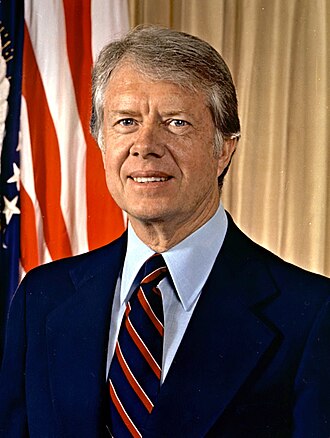 Jimmy Carter
College Level • 1m
EO 12069 Jun 30, 1978
⚖️✨ Zone 2 (Zone of Twilight) Constitutional Neutral
Executive Order 12069—Executive Schedule
📜 Art. II §1: Executive Discretion & Internal Operations
By the authority vested in me as President of the United States of America by Section 5317 of Title 5 of the United States Code, Section 1 of the Executive Order No. 118.61, as amended, placing certain positions in level IV of the Executive Schedule, is further amended by…
Jimmy Carter College Level • 1m
EO 12068 Jun 30, 1978
⚖️✨ Zone 2 (Zone of Twilight) Constitutional Neutral
Executive Order 12068—Litigation Against Public Sector Employers
📜 Art. II §1: Executive Discretion & Internal Operations
1-1. Section 707 Functions of the Attorney General. 1-101. Section 5 of Reorganization Plan Number 1 of 1978 (43 FR 19807) shall become effective on July 1, 1978. 1-102.
Jimmy Carter College Level • 1m
EO 12066 Jun 29, 1978
⚖️✨ Zone 2 (Zone of Twilight) Constitutional Neutral
Executive Order 12066—Inspection of Foreign Assistance Programs
📜 5th Amend: Regulatory Execution with Due Process
1-1. Assignment of Duties and Responsibilities. 1-101. I hereby direct the Secretary of State to assign to the Inspector General, Foreign Service, all duties and responsibilities vested in the Inspector General, Foreign Assistance by Section 624 (d) of the Act (22 U.S.C.…
Jimmy Carter Post-Graduate Legal • 2m
EO 12065 Jun 28, 1978
⚖️✨ Zone 2 (Zone of Twilight) Constitutional Neutral
Executive Order 12065—National Security Information
📜 Art. II §2: Commander-in-Chief Supervisory Authority
Classification Designation. 1-101. Except as provided in the Atomic Energy Act of 1954, as amended, this Order provides the only basis for classifying information. Information may be classified in one of the three designations listed below.
Jimmy Carter Post-Graduate Legal • 31m
EO 12071 Jul 12, 1978
🏛️✅ Zone 1 (Maximum Authority) Fidelity (+0.44)
Executive Order 12071—President's Commission on Pension Policy
📜 5th Amend: Regulatory Execution with Due Process
1-1. Establishment of Commission. 1-101. There is established the President's Commission on Pension Policy. The Commission shall be composed of eleven members. 1-102. The members of the Commission shall be appointed by the President.
Jimmy Carter College Level • 4m
📜
Scholarly & Legal Citations
Exec. Order No. 12,067 (June 30, 1978), https://executiveordersarchive.org/orders/app-executive-order-12067-equal-employment-opportunity-programs.
