By virtue of the authority vested in me by the Peace Corps Act, as amended (22 U.S.C. 2501-2523) and Section 301 of Title 3 of the United States Code, and as President of the United States of America, it is hereby ordered as follows: 1-1. Peace Corps. 1-101. The Peace Corps, which was established as an agency in the Department of State pursuant to Executive Order No. 10924 of March 1, 1961 (26 FR 1789), which was continued in existence in that Department under the Peace Corps Act (the "Act") pursuant to Section 102 of Executive Order No. 11041 of August 6, 1962 (27 FR 7859), and which was transferred to and continued as a component of ACTION by Executive Order No. 11603 of June 30, 1971 (36 FR 12675), shall be an agency within ACTION pursuant to the provisions of this Order. 1-102. All references to the "Director" in Part 1-1 of this Order shall refer to the Director of the Peace Corps for whom provision is made in Section 4(a) of the Act (22 U.S.C. 2503). 1-103. Exclusive of the functions otherwise delegated by or reserved to the President by this Order, and subject to the provisions of this Order, there are hereby delegated to the Director all functions conferred upon the President by the Act and by Section 2 (b) of Reorganization Plan No. 1 of 1971. 1-104. The function of determining the portion of living allowances constituting basic compensation, conferred upon the President by Section 201 (a) of Public Law 87-293 (26 U.S.C. 912(3) ), is hereby delegated to the Director and shall be performed in consultation with the Secretary of the Treasury. 1-105. The functions of prescribing regulations and making determinations (relating to appointment of Peace Corps employees in the Foreign Service System), conferred upon the President by Section 5 of Public Law 89-135 (79 Stat. 551), are hereby delegated to the Director. 1-106. The functions of prescribing conditions, conferred upon the President by the second sentence of Section 5(e), as amended (22 U.S.C. 2504(e)), and the third proviso of Section 6 of the Act (22 U.S.C. 2505) (relating to providing health care in Government facilities) and hereinabove delegated to the Director, shall be exercised in consultation with the head of the United States Government agency responsible for the facility. 1-107. The reports required by Section 11 of the Act, as amended (22 U.S.C. 2510), shall be prepared by the Director and submitted to the Congress through the President. 1-108. Subject to applicable provisions of law, all funds appropriated or otherwise made available to the President for carrying out the provisions of the Act shall be deemed to be allocated without any further action of the President to the Director or to such subordinate officer as the Director may designate. The Director or such officer may allocate or transfer, as appropriate, any of such funds to any United States Government agency or part thereof for obligation or expenditures thereby consistent with applicable law. 1-109. Nothing in this Order shall be deemed to impair or limit the powers or functions vested in the Secretary of State by the Act. 1-110. The negotiation, conclusion, and termination of international agreements pursuant to the Act shall be under the direction of the Secretary of State. 1-111. Any substantial change in policies in effect on the date of this Order for the utilization of the Foreign Service Act of 1946, as amended, pursuant to Section 7 of the Act (22 U.S.C. 2506), shall be coordinated with the Secretary of State. 1-112. The Director shall consult and coordinate with the Director of ACTION to assure that the functions delegated to the Director by this Order are carried out consistently with the functions conferred upon the Director of ACTION by the Domestic Volunteer Service Act of 1973 (42 U.S.C. 4951 et seq.), ("Volunteer Service Act"), Reorganization Plan No. 1 of 1971 and this Order. 1-2. The Peace Corps Advisory Council. 1-201. In accordance with the provisions of the Federal Advisory Committee Act (5 U.S.C. App. I), there is hereby established the Peace Corps Advisory Council. 1-202. The President shall appoint not more than 30 individuals to serve on the Council and shall designate one member as Chairperson. Members shall serve at the pleasure of the President. 1-203. The Council shall advise the President and the Director of the Peace Corps on initiatives needed to promote the purposes of the Peace Corps Act. 1-204. The Council shall submit annually to the President, through the Director of the Peace Corps, a report on its recommendations and activities. 1-205. The Council may request any agency of the United States Government to furnish it with such information as may be useful for the fulfillment of the Council's functions under this Order. Such agencies will, to the extent permitted by law, honor the Council's request. 1-206. The members of the Council shall receive no compensation for service on the Council. Each member of the Council may receive travel expenses, including per diem in lieu of subsistence (5 U.S.C. 5702 and 5703). 1-207. The functions of the President under the Federal Advisory Committee Act which are applicable to the Council, except that of reporting annually to the Congress, shall be performed by the Director of the Peace Corps in accordance with guidelines and procedures established by the Administrator of General Services. 1-208. In accord with the provisions of the Federal Advisory Committee Act (5 U.S.C. App. I), the Council shall terminate on December 31, 1980, unless extended. 1-3. Reservation of functions to the President. 1-301. There are hereby excluded from the delegations made by Section 1-1 of this Order the following powers and functions of the President: (a) All authority conferred by Sections 4(b), 4(c) (2), 4(c) (3), 10(d), and 18 of the Act (22 U.S.C. 2503(b), (c)(2), (G) (3), 2509(d), and 2517). (b) The authority conferred by Section 4(a) of the Act (22 U.S.C. 2503(a) ) to appoint the Director and the Deputy Director of the Peace Corps. (c) The authority conferred on the President by Section 5(f)(1)(B) of the Act (22 U.S.C. 2504(f) (1) (B)). (d) The authority conferred by Section 10(f) of the Act (22 U.S.C. 2509(f)) to direct any agency of the United States Government to provide services, facilities, and commodities to officers carrying out functions under the Act. (e) The authority conferred by Section 19 of the Act (22 U.S.C. 2518) to adopt and alter an official seal or emblem of the Peace Corps. 1-4. Incidental Provisions. 1-401. Persons appointed, employed, or assigned under Section 7(a) of the Act (22 U.S.C. 2506(a)) shall not, unless otherwise agreed by the agency in which such benefits may be exercised, be entitled to the benefits provided by Section 528 of the Foreign Service Act of 1946 (22 U.S.C. 928) in cases in which their service under the appointment, employment, or assignment exceeds thirty months. 1-402. Pursuant to Section 10(d) of the Act (22 U.S.C. 2509(d) ), it is hereby determined to be in furtherance of the purposes of the Act that functions authorized thereby may be performed without regard to the applicable laws specified in Section 1 and 2 of Executive Order No. 11223 of May 12, 1965, and with or without consideration as specified in Section 3 of that Order, but subject to the limitations set forth in that Order. 1-403. As used in this Order, the words "Volunteers," "functions," "United States," and "United States Government agency" shall have the same meanings, respectively, as they have under the Act. 1-5. National Voluntary Action Program. 1-501. The National Voluntary Action Program to encourage and stimulate more widespread and effective voluntary action for solving public domestic problems, established in the Executive Branch of the Government by Section 1 of Executive Order No. 11470 of May 26, 1969, is continued in ACTION. That program shall supplement corresponding action by private and other non-Federal organizations such as the National Center for Voluntary Action. As used in this Order, the term "voluntary action" means the contribution or application of non-governmental resources of all kinds (time, money, goods, services, and skills) by private and other organizations of all types (profit and nonprofit, national and local, occupational, and altruistic) and by individual citizens. 1-6. Director of ACTION. 1-601. In addition to the functions vested in the Director of ACTION by the Domestic Volunteer Service Act of 1973 (42 U.S.C., Section 4951 et seq.), Reorganization Plan No. 1 of 1971, and Section 1-401 of this Order, the Director of ACTION shall: (a) Encourage local, national and international voluntary activities directed toward the solution or mitigation of community problems. (b) Provide for the development and operation of a clearinghouse for information on Government programs designed to foster voluntary action. (c) Initiate proposals for the greater and more effective application of voluntary action in connection with Federal programs, and coordinate, as consistent with law, Federal activities involving such action. (d) Make grants of seed money, as authorized by law, for stimulating the development or deployment of innovative voluntary action program directed toward community problems. 1-602. The head of each Federal department and agency, or a designated representative, when so requested by the Director of ACTION or the Director of the Peace Corps, shall, to the extent permitted by law and funds available, furnish information and assistance, and participate in all ways appropriate to carry out the objectives of this Order, the Domestic Volunteer Service Act of 1973 and Reorganization Plan No. 1 of 1971. 1-603. The head of each Federal department or agency shall, when so requested by the Director of ACTION, designate a senior official to have primary and continuing responsibility for the participation and cooperation-of that department or agency in matters concerning voluntary action. 1-604. The head of each Federal department or agency, or a designated representative, shall keep the Director of ACTION informed of proposed budgets, plans, and programs of that department or agency affecting voluntary action programs. 1-605. Under the direction of the President and subject to the responsibilities of the Secretary of State, the Director of ACTION shall be responsible for the general direction of those ACTION functions, which jointly serve ACTION domestic volunteer components and the Peace Corps, and for advising the Director of the Peace Corps to ensure that the functions delegated under this Order to the Director of the Peace Corps are carried out. 1-7. General Provisions. 1-701. Except to the extent that they may be inconsistent with this Order, all determinations, authorizations, regulations, rulings, certifications, orders, directives, contracts, agreements, and other actions made, issued or entered into with respect to any function affected by this Order and not revoked, superseded, or otherwise made inapplicable before the effective date of this Order shall continue in full force and effect until amended, modified, or terminated by appropriate authority. 1-702. Except as otherwise expressly provided herein, nothing in this Order shall be construed as subjecting any department, establishment, or other instrumentality of the Executive Branch of the Federal Government or the head thereof, or any function vested by law in or assigned pursuant to law to any such agency or head, to the authority of any other agency or head or as abrogating, modifying, or restricting any such function in any manner. 1-703. So much of the personnel, property, records, and unexpended balances or appropriations, allocations, and other funds employed, used, held, available, or to be made available in connection with the functions assigned to the Director of the Peace Corps or to the Director of ACTION by this Order as the Director of the Office of Management and Budget shall determine, shall be transferred to the Director of the Peace Corps or the Director of ACTION at such time or times as the Director of the Office of Management and Budget shall direct. 1-704. To the extent permitted by law, such further measures and dispositions as the Director of the Office of Management and Budget shall deem to be necessary in order to effectuate the provisions of this Order shall be carried out by such agencies as the Director of the Office of Management and Budget shall specify. 1-705. The authority conferred by Sections 1-703 and 1-704 of this Order shall supplement, not limit, the provisions of Section 1-108 of this Order. 1-706. Executive Order Nos. 11041, 11250, 11470 and 11603 are hereby superseded. 1-707. This Order shall become effective May 16, 1979. JIMMY CARTER The White House, May 16, 1979. [Filed with the Office of the Federal Register, 10:55 a.m., May 17, 1979]
Executive Order 12137 Amended 🏛️✅ Zone 1: Maximum Authority Constitutional Fidelity (+0.75)
📜 Art. I §8: Delegated Tariff & Commerce Execution
Executive Order 12137—Peace Corps
Executive Brief • At a Glance
⏱️ 10 min read (2,086 words) •
● Amended
🎯 Primary Mandate
The Peace Corps, which was established as an agency in the Department of State pursuant to Executive Order No. 10924 of March 1, 1961 (26 FR 1789), which was continued in existence in that Department under the Peace Corps Act (the "Act") pursuant to Section 102 of Executive Order No. 11041 of August 6, 1962 (27 FR 7859), and which was transferred to and continued as a component of ACTION by Executive Order No. 11603 of June 30, 1971 (36 FR 12675), shall be an agency within ACTION pursuant to the provisions of this Order. 1-102.
⚖️ Constitutional Footing
🏛️✅ Zone 1: Maximum Authority
Express or Implied Congressional Authorization
📜 Art. I §8: Delegated Tariff & Commerce Execution
🏛️ Scope & Affected Sectors
Sovereign State Governments & Localities Executive Departments & Federal Civil Servants Private Citizens & Property Owners Foreign Nations & International Entities
Legal Status & Amendment History
AmendedActions on this order
- Amended by EO 13724
Source: Office of the Federal Register executive order disposition notes. Orders before 1994 show only actions recorded by later orders.
Plain-English Translation & Framers' Constitutional Analysis
Early Statesman synthesis distilling legal jargon into practical meaning, statutory anchors, and structural constitutional impacts.
Signed by President Jimmy Carter on May 16, 1979, this order concerns Peace Corps. 1-1. Peace Corps. 1-101. The Peace Corps, which was established as an agency in the Department of State pursuant to Executive Order No. 10924 of March 1, 1961 (26 FR 1789), which was continued in existence in that Department under the Peace Corps Act (the "Act") pursuant to Section 102 of Executive Order No. 11041 of August 6, 1962 (27 FR 7859), and which was transferred to and continued as a component of ACTION by…
Constitutional Assessment: This action represents an orderly exercise of Article II administrative discretion, managing the internal machinery and personnel of the executive branch without abridging the ancient liberties of the people.
Key Directives & Operative Actions
▪
The Peace Corps, which was established as an agency in the Department of State pursuant to Executive Order No. 10924 of March 1, 1961 (26 FR 1789), which was continued in existence in that Department under the Peace Corps Act (the "Act") pursuant to Section 102 of Executive Order No. 11041 of August 6, 1962 (27 FR 7859), and which was transferred to and continued as a component of ACTION by Executive Order No. 11603 of June 30, 1971 (36 FR 12675), shall be an agency within ACTION pursuant to the provisions of this Order. 1-102.
▪
All references to the "Director" in Part 1-1 of this Order shall refer to the Director of the Peace Corps for whom provision is made in Section 4(a) of the Act (22 U.S.C. 2503). 1-103.
▪
Exclusive of the functions otherwise delegated by or reserved to the President by this Order, and subject to the provisions of this Order, there are hereby delegated to the Director all functions conferred upon the President by the Act and by Section 2 (b) of Reorganization Plan No. 1 of 1971. 1-104.
▪
The function of determining the portion of living allowances constituting basic compensation, conferred upon the President by Section 201 (a) of Public Law 87-293 (26 U.S.C. 912(3) ), is hereby delegated to the Director and shall be performed in consultation with the Secretary of the Treasury. 1-105.
Constitutional & Societal Entities Impacted
🏛️ Sovereign State Governments & Localities
🏛️ Executive Departments & Federal Civil Servants
🏛️ Private Citizens & Property Owners
🏛️ Foreign Nations & International Entities
🏛️ Financial Institutions & Monetary Authorities
Policy Areas & Topics
🏛️
The Framers' Constitutional Council
1787 PrismEvaluating this order against the constitutional debates of 1787 and the limits of Article II executive power.
🏛️✅ Zone 1 (Maximum Authority)
§
"When the President acts pursuant to an express or implied authorization of Congress, his authority is at its maximum, for it includes all that he possesses in his own right plus all that Congress can delegate."
— Justice Robert H. Jackson, Youngstown Sheet & Tube Co. v. Sawyer (1952) Express or Implied Congressional Authorization
JM
James Madison
Separation of Powers & Legislative Primacy
"The constitutional magistracy was designed not to invent policy, but to be the faithful instrument of the laws passed by the people's representatives." — Speech in the First Congress (1789)
Madison would approve the structural posture of this order. The President acts strictly in subordination to statutory authority granted under Article II, Section 3 ("take Care that the Laws be faithfully executed"). The checks and balances hold firm because the policy origin remains with the legislature.
Madisonian Stance: Concurring (Statutory)
AH
Alexander Hamilton
The Energetic Executive & Unified Command
"The direction of war implies the direction of the common strength; and the power of directing and employing the common strength must be under the direction of the single hand of the Executive." — Federalist No. 74 (1788)
Hamilton would forcefully champion executive discretion here. For foreign entanglements, commerce defense, and national security, deliberative assemblies are too slow and faction-ridden. A unified, energetic Executive exercising swift command is precisely what the Philadelphia Convention intended for national preservation.
Hamiltonian Stance: Supportive of Execution
GM
George Mason
Bill of Rights, Due Process & 10th Amendment
"The president will be surrounded by flatterers and sycophants... and the great powers of the executive will gradually absorb the liberties of the people." — Cato IV (Anti-Federalist, 1787)
The Anti-Federalist prism advises continuous democratic vigilance. Even routine administrative directives aggregate centralized federal power away from town halls and state assemblies toward a distant executive apparatus.
Anti-Federalist Stance: Eternal Vigilance Required
📐
Five Measurable "Constitutional Friction" Dimensions
An objective audit measuring potential separation-of-powers tension against the United States Constitution and established Supreme Court doctrine.
⚖️ Discretionary Twilight Zone
55 / 100 friction index
Dimension 1 • Art. I, §1 & §8
High Friction
Legislative Encroachment & Purse
Touches upon core congressional prerogatives: raises appropriations reallocation, tariff imposition, or statutory preemption questions.
Benchmark: Power of the purse, taxes/tariffs, and rule of law reserved to Congress.
Dimension 2 • Art. II, §1 & §3
Moderate Friction
Executive Scope & Faithfulness
Directs internal executive branch machinery, agency workflows, and federal personnel.
Benchmark: Faithfully execute laws enacted by Congress vs. unilateral decree.
Dimension 3 • 10th Amendment
High Friction
Federalism & State Sovereignty
Creates friction with the Tenth Amendment by conditioning state grants, mandating local compliance, or preempting state police powers.
Benchmark: Police powers and un-delegated responsibilities reserved to the States.
Dimension 4 • 5th & 14th Amendments
Moderate Friction
Due Process & Individual Rights
Applies regulatory or compliance standards to private contractors or commercial entities.
Benchmark: Protection of private property, contracts, liberty, and procedural justice.
Dimension 5 • Separation of Powers
Low Friction
Youngstown Jacksonian Tier
The President operates strictly as the constitutional Chief Executive, carrying out policy established by Congress with strong statutory backing.
Benchmark: Express or Implied Congressional Authorization
⚖️
Audit Synthesis
This order operates within Justice Jackson’s Zone of Twilight, resting upon concurrent presidential authority or congressional silence.
Weighted composite: Art. I (25%), Art. II (25%), Federalism (15%), Due Process (15%), Youngstown (20%).
ℹ️
How to read these dimensions: Executive power expands whenever an administration acts without explicit statutory authorization from Congress (Article I), touches upon police powers historically reserved to the states (Tenth Amendment), or limits private rights and property without judicial process. A low friction score indicates strict concordance with enacted law; a high friction score highlights orders testing the limits of presidential discretion.
Total Words
2,086
12,919 characters
Estimated Read Time
10 min
@ 200 words / min
Flesch-Kincaid
12.5
High School
Text size:
🔗
Referenced By Later Executive Orders (5)
Subsequent presidents who cited, amended, continued, or revoked this directive in later orders.
Barack Obama • 2016-04-08
Ronald Reagan • 1982-12-31
Ronald Reagan • 1981-02-23
Jimmy Carter • 1980-12-31
Jimmy Carter • 1980-10-06
Related Executive Orders
5 orders cited directly in this text, plus related actions from this administration.
EO 10924 Mar 1, 1961
🏛️✅ Zone 1 (Maximum Authority) Constitutional Neutral
Executive Order 10924—Establishment and Administration of the Peace Corps in the Department of State
📜 10th Amend: Intergovernmental Federalism Cooperation
Establishment of the Peace Corps. The Secretary of State shall establish an agency in the Department of State which shall be known as the Peace Corps. The Peace Corps shall be headed by a Director. SEC. 2. Functions of the Peace Corps.
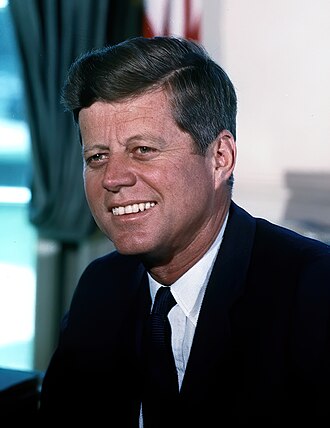 John F. Kennedy
High School • 2m
EO 11041 Aug 6, 1962
🏛️✅ Zone 1 (Maximum Authority) Fidelity (+0.29)
Executive Order 11041—Continuance and Administration of the Peace Corps in the Department of State
📜 Art. I §8: Delegated Tariff & Commerce Execution
Delegation of functions to the Secretary of State. (a) Exclusive of the functions otherwise delegated or reserved to the President by this order, and subject to the provisions of this order, there are hereby delegated to the Secretary of State all functions conferred upon the…
John F. Kennedy College Level • 6m
EO 11603 Jun 30, 1971
🏛️✅ Zone 1 (Maximum Authority) Fidelity (+0.77)
Executive Order 11603—Assigning Additional Functions to the Director of ACTION
📜 Art. I §8: Delegated Tariff & Commerce Execution
PART I—PEACE CORPS—DELEGATION OF FUNCTIONS AND ALLOCATION OF FUNDS SEC. 101. Authority. The Peace Corps, established as an agency in the Department of State pursuant to Executive Order No. 10924 of March 1, 1961 (26 F.R. 1789), and continued in existence in that Department…
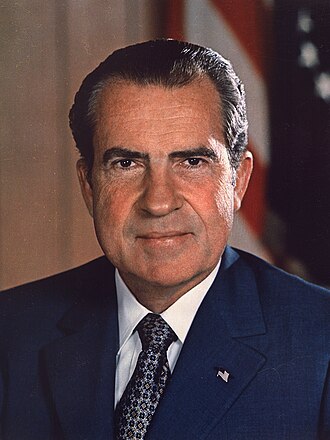 Richard Nixon
College Level • 10m
EO 11223 Amended May 12, 1965
🏛️✅ Zone 1 (Maximum Authority) Constitutional Neutral
Executive Order 11223—Relating to the Performance of Functions Authorized by the Foreign Assistance Act of 1961, as Amended
📜 Art. II §2: Commander-in-Chief Supervisory Authority
For purposes of the tax imposed by section 4911 of the Internal Revenue Code, the following areas are designated as economically less developed countries: (a) All foreign countries (including Trust Territories) in existence on or after the effective date of this order, other…
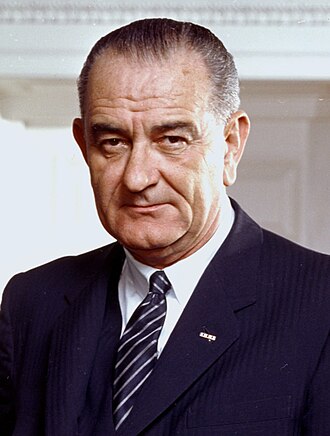 Lyndon B. Johnson
College Level • 5m
EO 11470 May 26, 1969
🏛️✅ Zone 1 (Maximum Authority) Fidelity (+0.47)
Executive Order 11470—Prescribing Arrangements for the Structure and Conduct of a National Program for Voluntary Action
📜 5th Amend: Regulatory Execution with Due Process
There shall be undertaken within the executive branch of the government, as provided in this order, a national voluntary action program to encourage and stimulate more widespread and effective voluntary action for solving public domestic problems.
Richard Nixon Post-Graduate Legal • 4m
EO 12136 May 15, 1979
🏛️✅ Zone 1 (Maximum Authority) Fidelity (+0.29)
Executive Order 12136—President's Commission on Executive Exchange
📜 5th Amend: Regulatory Execution with Due Process
I-1. Establishment of the Commission. 1-101. The President's Commission on Personnel Interchange is continued and renamed the President's Commission on Executive Exchange. 1-102.
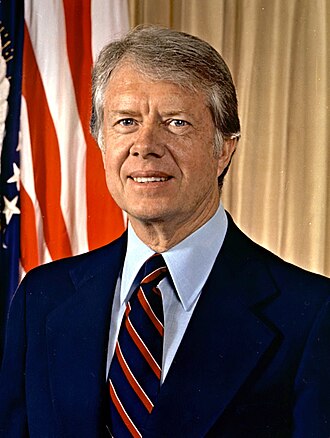 Jimmy Carter
College Level • 2m
📜
Scholarly & Legal Citations
Exec. Order No. 12,137 (May 16, 1979), https://executiveordersarchive.org/orders/app-executive-order-12137-peace-corps.
