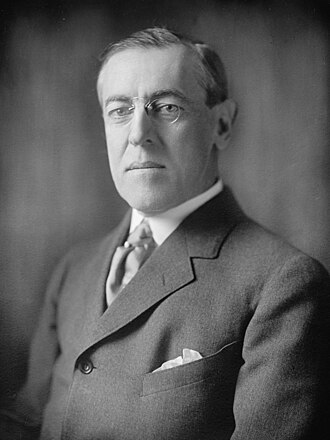
By virtue of the authority vested in me by law, it is hereby ordered that the general conditions of employment governing employees on the Isthmus of Panama, necessary for the completion, care, management, maintenance, sanitation, government and operation of the Panama Canal, the Canal Zone, the Panama Railroad, and other adjuncts, shall be as follows: APPOINTMENT AND COMPENSATION. 1. The salaries or compensation of employees shall in no instance exceed by more than twenty-five per centum the salaries or compensation paid for the same or similar services to persons employed by the Government in Continental United States, as determined by the Governor of the Panama Canal. 2. Service must be satisfactory to the head of the department in which employed, and employees are subject to the regulations of the Governor. 3. The compensation and conditions of employment of persons employed in the United States will be specified in provisional appointments. The compensation of such persons will begin upon date of embarkation at port of departure from the United States, and they will be granted free transportation from port of departure, including meals on the steamer, but no compensation or expenses for the journey to the port; but former employees from the United States whose next preceding service with the Panama Canal was less than one year shall be paid only from date of entry into service on the Isthmus, and will be allowed only such reduced rates of transportation to the Isthmus as may be available for Government employees. Employees appointed at an hourly rate will be paid for the period of transit to the Isthmus on the basis of an eight hour day exclusive of Sundays. Except in case of discharge or other separation from the service beyond the employee's control, payment of salary from date of embarkation to date of arrival on the Isthmus will not be made unless service on the Isthmus continues for thirty days. 4. All officers and employees in the service of the Panama Canal except those who are to perform the duties of clerk, bookkeeper, stenographer, typewriter, surgeon, physician, trained nurse, or draftsman, shall be exempt from examination under Civil Service rules, and appointments to clerical positions on the Isthmus of Panama paying $75.00 per month or less may also be made without examination. Officers and employees now in the service of the Panama Railroad Company on the Isthmus may be transferred to and retained in the service of the Panama Canal without examination, whenever any work now performed independently by the Panama Railroad is consolidated with similar work performed by the Panama Canal. 5. When employees in the present organization are transferred to the permanent organization, they shall retain their seniority as regards questions of Civil Service, quarters, and other privileges or considerations; provided, however, that the seniority granted to employees by this order shall not be operative in any case so as to form any claim involving the payment of funds of the United States. 6. All employees who receive over $75.00 per month or over 40c. per hour must be citizens of the United States or the Republic of Panama, and such citizens will be given preference for employment in all grades. Aliens may not be employed in such grades unless they have occupied similar positions during the construction of the Canal for two years or more, or in case of emergency, in which latter case they must be replaced by citizens of the United States or Republic of Panama as early as practicable. 7. The Governor shall prescribe regulations, when not otherwise fixed in this order, setting forth the qualifications necessary for appointment of the various classes of employees, including physical fitness for work on the Isthmus. The age limit shall in all cases be under 45 years, but the Governor may waive this limit when in his judgment such action is for the good of the service. 8. All appointments shall be made by the Governor of the Panama Canal, or by his authority, except the district judge, district attorney, marshal, clerk of district court and his assistant. 9. Assignment to duty is vested in the respective heads of the departments, and employees will be expected to perform such duties as may properly be assigned to them. The Governor may discharge an employee at any time for cause, and terminate a provisional appointment when the exigencies of the service so require. 10. The Government reserves the right to pay in any money the value or parity of which is guaranteed by the United States. 11. Employees whose salaries are fixed on a monthly or annual basis will receive no pay for overtime work. 12. Employees above the grade of laborer, appointed with rates of pay per hour or per day, will not be employed over eight hours in any one calendar day, except in case of emergency. The time such employees work over eight hours in one calendar day, and time worked on Sundays and regularly authorized holidays, including January 1st, February 22d, May 30th, July 4th, Labor Day, Thanksgiving Day, and December 25th, shall be considered overtime, for which time and one-half will be allowed. Such employees who work on the days prior and subsequent to the holidays specifically named above will be allowed their regular pay for eight hours for such days, in addition to pay for any work performed. 13. An employee whose compensation while on duty carries with it subsistence will not be entitled to same or commutation thereof while on leave of absence, and no commutation of quarters shall be paid. TRANSPORTATION. 14. Employees and dependent members of their families will be granted the regular Government rate upon commercial steamship lines with which arrangements for such rates can be made. While the United States operates a steamship line, either directly or through the Panama Railroad Company, employees and the dependent members of their families will be granted transportation at the same rates and under the same conditions as are at present in effect. The rates and conditions are subject to change at any time in the discretion of the Governor. 15. After three years' service, employees who are citizens of the United States will be entitled to free transportation for themselves only, on termination of service, to any port of the United States, except that when such transportation costs the Government more than $40.00 the employee must pay the excess. 16. Employees on the gold roll will be granted one complimentary round-trip pass on the Panama Railroad each calendar month. Mileage books for use of such employees and dependent members of their families or relatives temporarily residing with them, will be furnished at one-half regular tariff rates. QUARTERS. 17. Where practicable, such bachelor quarters on the Isthmus as may be available from time to time will be assigned all employees desiring them. Family quarters, when available, will be assigned under such rules as may be prescribed by the Governor. A charge will be made for rent, fuel, and electric current at such time and in accordance with such regulations as the President may hereafter establish. MEDICAL CARE. 18. Employees injured will be compensated in accordance with such regulations as are prescribed by law. 19. All employees in cases of illness or injury will receive free medical care and attendance in the hospitals, except in cases of alcoholism or venereal disease. If medical attendance is furnished in quarters, a charge may be made under regulations to be prescribed by the Governor. Employees will be charged for medical care and attendance furnished members of their families at the hospitals and at their quarters at such rates and under such regulations as may be prescribed by the Governor. LEAVE REGULATIONS. 20. All employees who are citizens of the United States, and aliens whose compensation is more than $75.00 per month or 40c. per hour, shall be entitled to leave privileges. 21. Leave will be divided into three classes, viz.: (1) annual leave, (2) cumulative leave, and (3) travel leave. ANNUAL LEAVE. 22. Twenty-four days annual leave will be allowed each employee for each year after entry into service and, if not granted prior to the close of the year, is forfeited and may not be accumulated, except that any annual leave remaining to an employee's credit in a year in which he is granted cumulative leave may be added to the cumulative leave if taken within two months after the close of his service year. 23. The service year shall date from the day on which an employee's pay in the permanent organization begins. 24. Absences of one-half day or more, when regularly authorized, will be charged against annual leave; also absences on account of illness or injury, upon the certificate of an authorized physician in the service of the Panama Canal, except that in the following classes of cases no payment shall be made for time lost, but the time shall be charged against the annual leave: a. Illness due to the fault of the employee, as venereal disease and alcoholism. b. Injury due to the employee's wilful intention to bring about the injury or death of himself or another. c. Elective surgical operations to relieve conditions existing prior to service on the Isthmus. 25. In the case of hourly or per diem employees annual leave on account of sickness or injury shall be based upon a day of eight hours. 26. Not more than fourteen days annual leave may be taken during the first six months of a service year. In case of illness or injury in the first six months, to cover which no annual leave remains to the employee's credit, the time lost will be charged against the annual leave remaining for the year, and payment will be made after completing ten months of the service year. After the entire twenty-four days annual leave has been used, additional leave in that service year on account of illness or injury will be deducted from the cumulative leave for that year and when the cumulative leave becomes due the employee will be paid. 27. After exhausting both annual and cumulative leave for the year, additional absence on account of illness or injury will be without pay, except such compensation as may be prescribed by law for employees receiving personal injuries. CUMULATIVE LEAVE. 28. Thirty days cumulative leave will be allowed each employee paid on a monthly or annual basis for each year of his service, and twenty days to each employee paid on an hourly basis. This leave will be due after completing ten months' service each year and may be taken when the employee's service can be spared. It may be taken annually or left to accumulate to the credit of the employee, provided, however, that leave may not be accumulated for more than three years. If it is not desired to take the entire leave accumulated, the leave earned for the first year, or the first and second years, may be taken, provided that no employee, except at termination of service, may be granted more than ninety days leave with pay at one time. Employees will be paid for cumulative leave at the rate earned when the leave became due at the end of the tenth month of each respective year. 29. In case an employee serves part of a year on the monthly or annual basis and part on the hourly basis, he will be allowed twenty days cumulative leave, except that if he has served eight months or more on the monthly or annual basis during the year he will be granted thirty days cumulative leave. TRAVEL LEAVE. 30. Employees who travel to points outside the tropics, when on cumulative leave, will be allowed seven days additional leave (or travel leave) with full pay. Travel leave may be allowed approximately once a year and is not cumulative. 31. Employees will be compensated for travel leave and annual leave taken in conjunction with cumulative leave at the rate earned when cumulative leave last became due. 32. After accumulating leave for three years, an employee ceases to earn additional cumulative leave until he is granted all or part of the cumulative leave already earned, unless he shall enter on cumulative leave within two months after completing the third year, or be ordered by the Governor to defer taking leave for official reasons. 33. When an employee's services are terminated on account of misconduct or unsatisfactory service, any annual leave due and travel leave will be forfeited, and cumulative leave will also be forfeited unless written notification has been given that the employee has accumulated the leave, or the four months period within which the employee may enter on leave has passed. Such written notice must be given by employees as soon as possible after cumulative leave becomes due. 34. When an employee's service is terminated, a cash payment in commutation of leave will be made to him for the number of days' cumulative leave due, plus the annual leave due. In the event of his death his estate will be paid the sum due. 35. Employees must enter on cumulative leave within four months after the date when it becomes due, except when accumulated, or unless otherwise authorized by the Governor. 36. Employees must report from leave within one week after the authorized leave expires or forfeit pay for the leave. In case of unavoidable delay, the Governor will decide whether the circumstances warrant an exception to this rule. 37. No restrictions are placed on the localities where leave may be spent. 38. Any employee transferred from the present force to the permanent operating force will be paid at the time of transfer, in addition to his regular compensation, the amount he would have received in payment for leave had he been separated from the service at the time of transfer. 39. Leave may be taken only at the convenience of heads of departments, who may direct an employee to accumulate his leave if necessary for the conduct of the work. 40. Leave without pay may be granted by the Governor to all employees, including laborers, for such period as may be prescribed by him. OFFICE HOURS AND HOURS OF LABOR. 41. Office hours and hours of labor will be fixed by the Governor within the limits prescribed by law. 42. This order shall take effect from and after the 1st day of April, 1914. WOODROW WILSON
THE WHITE HOUSE, #signature
February 2, 1914.
