By virtue of the authority vested in me by section 81 of title 2 of the Canal Zone Code, as amended by section 3 of the act of July 9, 1937, 50 Stat. 487, it is hereby ordered as follows:
Sec. 1. #sec-1
Sections 20 to 42 of Executive Order No. 1888 of February 2, 1914, as amended are amended to comprise sections 20 to 40, readings as follows: "LEAVE OF ABSENCE GENERALLY "20. What employees entitled to leave privileges under sections 20 to 38. All full-time employees, with the exception of alien employees who are paid in accordance with local native prevailing wage rates for the area including the Canal Zone and adjacent territory, shall be entitled to leave privileges [sic] under sections 20 to 38 of this order: Provided, That this amendment shall not operate to deprive of leave privileges under sections 20 to 38 of this order any alien employee receiving comparable privileges on the date of this order, and that the right of any such employee to a continuation of privileges under sections 20 to 38 of this order shall be determined as though this amendment had not be prescribed. "21. Classes of leave. Leave with pay shall be divided into two classes, namely, annual leave and travel leave, the former to serve both as vacation leave and sick leave. "The provisions of section 21 to 36 of this order, insofar as concerns their application to policemen and firemen, and to teachers, shall be subject to the special provisions contained in sections 37 an 38 of this order, respectively. "22. Accrual of leave. An employee shall be entitled to 324 hours of annual leave each service year, which shall accrue and be credited in such manner as the Governor shall by regulations prescribe. An employee's service year shall begin on the date, or anniversary thereof, whereon his pay in the organization began or shall begin. Leave shall accrue to an employee while in a leave-with-pay status provided he returns to duty, but shall not accrue to an employee while on terminal leave whether by separation or termination. "23. Reduction of leave credits for absences in nonpay status. For each aggregate period of 80 hours during which an employee is absent in a nonpay status, including suspensions, during his service year, his leave credits shall be reduced 13 hours. For the purposes of this section absences shall be regarded only if they occur during the hours prescribed as the basic workweek and during service months for which leave has been or is being credited to the employee. "24. Accumulation of leave. Annual leave accruing to an employee during his service year and not taken by him before the beginning of his succeeding service year shall be accumulated for use in succeeding service years until it totals not exceeding 720 hours: Provided, That, in order to permit an orderly transition to the new leave system established by this order, the limitation on accumulation contained in this section shall be suspended as to each employee until he has completed one full service year under such new system. "25. What absences chargeable to leave. Leave shall be charged only for absences occurring during the hours prescribed as the basis workweek and shall be exclusive of holidays: Provided, That when a holiday is declared by general administrative order to be a work day, an employee who absents himself from work without permission on that day shall be subject to a deduction of one day's pay. The minimum charge for leave shall be such as the Governor shall by regulation prescribe. "26. When leave may be granted. After leave has accrued it may be granted at such times, in the interests of the service, as the Governor may prescribe. "27. Absences for illness or injury. Absences on account of illness or injury may be charged to leave subject to such regulations as the Governor may prescribe. Such regulations may also authorize a reasonable advance of leave for illness or injury to cover which no leave exists or remains to an employee's credit. "28. Commutation of leave upon separation. When an employee is separated from the service, including separation by transfer to an agency under a different leave system as covered by section 3 of the act of December 21, 1944 (5 U. S. Code, section 61 d), he shall be paid compensation in a lump sum for all accumulated and current accrued leave to which he is entitled under this order: Provided, That if such employee is reemployed prior to the expiration of the period covered by such leave payment, he shall refund an amount equal to the compensation covering the period between the date of reemployment and the expiration of such leave period, and the amount of leave represented by such refund shall be credited to him: Provided, further, That the lump-sum payment herein authorized shall not be regarded, except for purposes of taxation, as salary or compensation and shall not be subject to retirement deductions. "29. Commutation of leave upon death. Upon the death of an employee compensation for all of his accumulated and current accrued leave shall be paid in a lump sum, upon the establishment of a valid claim therefor, to the estate of such deceased employee. "30" Travel leave. An employee who, while in the leave-with-pay status, travels to points outside the tropics and remains thereat for a period of 30 calendar days or more, inclusive of the time required to travel to and from such points shall be entitled to 40 hours of travel leave with pay; but such leave shall not be credited to an employee more often than twice in any two successive service years, and shall not be credited unless the employee returns to duty. "31. Limitation on amount of leave granted. The maximum amount of leave with pay, inclusive of travel leave, which may be granted at any one time shall be 720 hours: Provided, That this limitation may be waived in case of serious illness or disability of an employee, established to the satisfaction of the Governor or such officers as he may designate. "32. Rate of pay for leave. Payment for leave, whether taken by the employee or commuted into a lump-sum payment, shall be at the same rate as that which the employee would have received had he remained on duty during the period of leave: Provided, That the Governor may by regulation provide that in making payment for extended leave in the case of an employee having more than one rate of pay, including night pay differential, the current rate of pay for the class of work upon which the employee was preponderantly employed for a substantial prescribed period preceding the taking or commutation of leave shall be deemed to be the rate which the employee would have received had he remained on duty. "33. Reporting from leave. An employee who fails to report from authorized leave within one week after the expiration of such leave shall be subject either to disciplinary action or termination unless it is determined that the delay was not reasonably avoidable and was therefore excusable. "34. Leave without pay. Leave of absence without pay may be granted subject to such regulations as may be prescribed by the Governor. "35. Conversion of present leave credit. As of the effective date of this order, the leave credit of each employee shall be adjusted and converted in the manner provided in this section for the purpose of establishing the employee's new leave credit. Each employee shall have added to his leave credit a proportionate share of the allowance of annual and cumulative leave for the whole of his current service year, under the regulations in force prior to the effective date of this order, in lieu of any other credit for such allowance, and consisting of one-twelfth of such allowance for each complete month of service performed by the employee during such service year, less such number of days' leave as have previously been charged against such allowance. Each employee's' leave credit thus determined shall thereupon be converted by multiplying the number of days' leave credit by five-sevenths in the case of an employee whose cumulative-leave allowance was thirty days per year or by six sevenths in the case of an employee whose cumulative-leave allowance was twenty days per year, to conform to the new method of charging leave, and by multiplying the product in all cases by eight in order to express the new credit in terms of hours: Provided, That when an employee, who on the effective date of this order has completed ten months of his current service year, is separated from the service prior to the completion of such service year, the leave credit of such employee shall be readjusted as of the time of his separation so that his leave credit for conversion in the manner hereinbefore provided shall in no event be less than the leave which would have been due him on separation had this amendatory order not been promulgated. "36. Regulations of Governor. The Governor is granted continuing authority to make such additional regulations, not inconsistent with the provisions of this order, as he shall deem necessary for the completion, operation and administration of the leave system established by this order. "37. Leave of policemen and firemen. The provisions of sections 21 to 36 of this order shall apply to and govern the leave of policemen and firemen, except that in view of the longer workweeks of such employees and the consequent greater charge for absences of such employees on leave, the Governor shall by regulations applicable to such employees, respectively, modify the provisions of said sections 21 to 36 to such extent as may be necessary to accord such employees the same leave privileges, as nearly as is reasonably practicable, as are accorded to other employees. To that end the Governor may in such regulations establish and adjust the amount of leave to which such employees shall be entitled, the reduction of their leave credits for absences in any nonpay status, their maximum accumulation of leave, the absences chargeable to leave, the advance of leave for illness or injury, the travel leave, the limitation on the amount of leave which may be granted at any one time, the method of conversion of their present leave credits, and any other element of their leave the adjustment of which is necessary. "The Governor is further authorized to provide for the adjustment and conversion, consistently with the provisions of this order, of the leave credits of an employee as of the effective date of the transfer of such employee between the police and fire forces, or between either of such forces and any other class of employment in the organization. "38. Sick leave of teachers. A teacher employed only during the school year may be granted not to exceed 15 days of leave with pay during the school year to cover illness or injury, but shall not be entitled to any other leave with pay. Such leave shall be chargeable only for absence upon days during which the employee would otherwise work and receive pay, shall be exclusive of holidays, and shall be paid for at the rate prescribed in section 32 of this order. Such leave which is unused at the end of a school year shall be accumulated for use in succeeding school years until it totals not exceeding 45 days. Such leave shall be accorded and administered as prescribed in such regulations, not inconsistent with this section, as may be prescribed by the Governor. "LEAVE FOR EXCEPTED ALIEN EMPLOYEES "39. Sick and rest leave for excepted alien employees. The Governor is authorized to grant, under such regulations as he may prescribe, sick and rest leave to such alien employees as are excepted by section 20 of this order from entitlement to leave privileges under sections 20 to 38 of the order: Provided, That the combined sick and rest leave which may be granted to any such employee shall not exceed 24 days in any one year, and that such leave shall not be cumulative in excess of 60 days. "OFFICE HOURS AND HOURS OF LABOR "40. Office hours and hours of labor. Office hours and hours of labor shall be fixed by the Governor within the limits prescribed by law." Sec 2. Executive Order No. 9039 of January 24, 1941, as amended by section 1 of Executive Order No. 9497 of November 6, 1944, authorizing sick and rest leave for alien employees of The Panama Canal and The Panama Railroad Company, is revoked.
Sec. 3. #sec-3
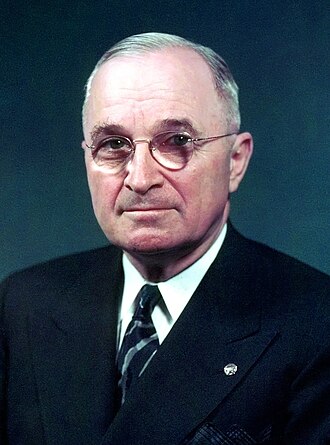
This order shall take effect immediately. HARRY S. TRUMAN
THE WHITE HOUSE, #signature
June 20, 1946