To the Heads of Departments in the Service of the General Government: I deem this a proper time to especially warn all subordinates in the several Departments and all officeholders under the General Government against the use of their official positions in attempts to control political movements in their localities. Officeholders are the agents of the people, not their masters. Not only is their time and labor due to the Government, but they should scrupulously avoid in their political action, as well as in the discharge of their official duty, offending by a display of obtrusive partisanship their neighbors who have relations with them as public officials. They should also constantly remember that their party friends from whom they have received preferment have not invested them with the power of arbitrarily managing their political affairs. They have no right as officeholders to dictate the political action of their party associates or to throttle freedom of action within party lines by methods and practices which pervert every useful and justifiable purpose of party organization. The influence of Federal officeholders should not be felt in the manipulation of political primary meetings and nominating conventions. The use by these officials of their positions to compass their selection as delegates to political conventions is indecent and unfair; and proper regard for the proprieties and requirements of official place will also prevent their assuming the active conduct of political campaigns. Individual interest and activity in political affairs are by no means condemned. Officeholders are neither disfranchised nor forbidden the exercise of political privileges, but their privileges are not enlarged nor is their duty to party increased to pernicious activity by office holding. A just discrimination in this regard between the things a citizen may properly do and the purposes for which a public office should not be used is easy in the light of a correct appreciation of the relation between the people and those intrusted with official place and a consideration of the necessity under our form of government of political action free from official coercion. You are requested to communicate the substance of these views to those for whose guidance they are intended. GROVER CLEVELAND
Presidential Order
🏛️✅ Zone 1: Maximum Authority Constitutional Neutral (+0.02)
📜 Art. I §8: Delegated Tariff & Commerce Execution
Executive Order
Executive Brief • At a Glance
⏱️ 2 min read (362 words) •
● In Effect
🎯 Primary Mandate
The use by these officials of their positions to compass their selection as delegates to political conventions is indecent and unfair; and proper regard for the proprieties and requirements of official place will also prevent their assuming the active conduct of political campaigns.
⚖️ Constitutional Footing
🏛️✅ Zone 1: Maximum Authority
Express or Implied Congressional Authorization
📜 Art. I §8: Delegated Tariff & Commerce Execution
🏛️ Scope & Affected Sectors
Executive Departments & Federal Civil Servants Private Citizens & Property Owners
Plain-English Translation & Framers' Constitutional Analysis
Early Statesman synthesis distilling legal jargon into practical meaning, statutory anchors, and structural constitutional impacts.
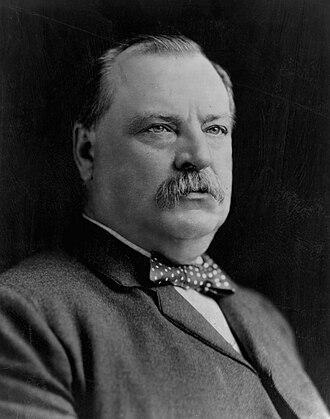
Signed by President Grover Cleveland on July 14, 1886, this order reads: To the Heads of Departments in the Service of the General Government: I deem this a proper time to especially warn all subordinates in the several Departments and all officeholders under the General Government against the use of their official positions in attempts to control political movements in their localities. Officeholders are the agents of the people, not their masters.
Constitutional Assessment: This action represents an orderly exercise of Article II administrative discretion, managing the internal machinery and personnel of the executive branch without abridging the ancient liberties of the people.
Key Directives & Operative Actions
▪
The use by these officials of their positions to compass their selection as delegates to political conventions is indecent and unfair; and proper regard for the proprieties and requirements of official place will also prevent their assuming the active conduct of political campaigns.
Constitutional & Societal Entities Impacted
🏛️ Executive Departments & Federal Civil Servants
🏛️ Private Citizens & Property Owners
Policy Areas & Topics
🏛️
The Framers' Constitutional Council
1787 PrismEvaluating this order against the constitutional debates of 1787 and the limits of Article II executive power.
🏛️✅ Zone 1 (Maximum Authority)
§
"When the President acts pursuant to an express or implied authorization of Congress, his authority is at its maximum, for it includes all that he possesses in his own right plus all that Congress can delegate."
— Justice Robert H. Jackson, Youngstown Sheet & Tube Co. v. Sawyer (1952) Express or Implied Congressional Authorization
JM
James Madison
Separation of Powers & Legislative Primacy
"The constitutional magistracy was designed not to invent policy, but to be the faithful instrument of the laws passed by the people's representatives." — Speech in the First Congress (1789)
Madison would approve the structural posture of this order. The President acts strictly in subordination to statutory authority granted under Article II, Section 3 ("take Care that the Laws be faithfully executed"). The checks and balances hold firm because the policy origin remains with the legislature.
Madisonian Stance: Concurring (Statutory)
AH
Alexander Hamilton
The Energetic Executive & Unified Command
"The direction of war implies the direction of the common strength; and the power of directing and employing the common strength must be under the direction of the single hand of the Executive." — Federalist No. 74 (1788)
Hamilton would forcefully champion executive discretion here. For foreign entanglements, commerce defense, and national security, deliberative assemblies are too slow and faction-ridden. A unified, energetic Executive exercising swift command is precisely what the Philadelphia Convention intended for national preservation.
Hamiltonian Stance: Supportive of Execution
GM
George Mason
Bill of Rights, Due Process & 10th Amendment
"The president will be surrounded by flatterers and sycophants... and the great powers of the executive will gradually absorb the liberties of the people." — Cato IV (Anti-Federalist, 1787)
The Anti-Federalist prism advises continuous democratic vigilance. Even routine administrative directives aggregate centralized federal power away from town halls and state assemblies toward a distant executive apparatus.
Anti-Federalist Stance: Eternal Vigilance Required
📐
Five Measurable "Constitutional Friction" Dimensions
An objective audit measuring potential separation-of-powers tension against the United States Constitution and established Supreme Court doctrine.
🛡️ High Constitutional Concordance
30 / 100 friction index
Dimension 1 • Art. I, §1 & §8
Moderate Friction
Legislative Encroachment & Purse
Administers commerce or fiscal programs requiring ongoing statutory delegation and legislative oversight.
Benchmark: Power of the purse, taxes/tariffs, and rule of law reserved to Congress.
Dimension 2 • Art. II, §1 & §3
Low Friction
Executive Scope & Faithfulness
Exercises standard supervisory executive authority to faithfully execute existing statutes.
Benchmark: Faithfully execute laws enacted by Congress vs. unilateral decree.
Dimension 3 • 10th Amendment
Low Friction
Federalism & State Sovereignty
Confined strictly to internal federal jurisdiction, federal property, or direct military command.
Benchmark: Police powers and un-delegated responsibilities reserved to the States.
Dimension 4 • 5th & 14th Amendments
Moderate Friction
Due Process & Individual Rights
Applies regulatory or compliance standards to private contractors or commercial entities.
Benchmark: Protection of private property, contracts, liberty, and procedural justice.
Dimension 5 • Separation of Powers
Low Friction
Youngstown Jacksonian Tier
The President operates strictly as the constitutional Chief Executive, carrying out policy established by Congress with strong statutory backing.
Benchmark: Express or Implied Congressional Authorization
⚖️
Audit Synthesis
This order operates in close harmony with statutory authority and standard Article II supervisory execution.
Weighted composite: Art. I (25%), Art. II (25%), Federalism (15%), Due Process (15%), Youngstown (20%).
ℹ️
How to read these dimensions: Executive power expands whenever an administration acts without explicit statutory authorization from Congress (Article I), touches upon police powers historically reserved to the states (Tenth Amendment), or limits private rights and property without judicial process. A low friction score indicates strict concordance with enacted law; a high friction score highlights orders testing the limits of presidential discretion.
Total Words
362
2,316 characters
Estimated Read Time
2 min
@ 200 words / min
Flesch-Kincaid
18.3
Post-Graduate Legal
Text size:
Related Executive Orders
Other executive actions signed by Grover Cleveland around this period.
Order
Jul 3, 1886
⚖️✨ Zone 2 (Zone of Twilight) Constitutional Neutral
Executive Order
📜 Art. II §1: Executive Discretion & Internal Operations
The several Executive Departments, the Department of Agriculture, and the Government Printing Office be closed on Monday the 5th instant. GROVER CLEVELAND
 Grover Cleveland
Post-Graduate Legal • 1m
Order
Aug 13, 1886
🏛️✅ Zone 1 (Maximum Authority) Constitutional Neutral
Executive Order
📜 Art. I §8: Delegated Tariff & Commerce Execution
In the exercise of the power vested in the President by the Constitution, and by virtue of the seventeen hundred and fifty-third section of the Revised Statutes and of the civil-service act approved January 16, 1883, the following rule for the regulation and improvement of the…
Grover Cleveland College Level • 1m
Order
May 20, 1886
⚖️✨ Zone 2 (Zone of Twilight) Constitutional Neutral
Executive Order
📜 Art. II §1: Executive Discretion & Internal Operations
The several Executive Departments, the Department of Agriculture, and the Government Printing Office be closed on Monday, the 31st instant, to enable the employees to participate in the decoration of the graves of the soldiers who fell during the rebellion. GROVER CLEVELAND
Grover Cleveland Post-Graduate Legal • 1m
Order
May 4, 1886
⚖️✨ Zone 2 (Zone of Twilight) Constitutional Neutral
Executive Order—Establishment of Duck Valley Reservation Extension
📜 Art. II §1: Executive Discretion & Internal Operations
The following-described lands in the Territory of Idaho, viz: Township 15 south, ranges 1, 2, and 3, east of the Boise meridian, be, and the same are hereby, withdrawn from sale and settlement and set apart as an addition to the Duck Valley Reservation, for the use and…
Grover Cleveland Post-Graduate Legal • 1m
Order
Oct 1, 1886
⚖️✨ Zone 2 (Zone of Twilight) Constitutional Neutral
Executive Order—Chehalis Land Returned Back to Indian Use
📜 Art. II §1: Executive Discretion & Internal Operations
The following tract of country in Washington Territory, reserved for the use and occupation of the Chehalis Indians, by order of the Secretary of the Interior, dated July 8, 1864, be, and the same is hereby, restored to the public domain: Beginning at the post-corner to…
Grover Cleveland High School • 2m
Order
Apr 24, 1886
⚖️✨ Zone 2 (Zone of Twilight) Constitutional Neutral
Executive Order—Adding Land to Navajo Reservation
📜 Art. II §1: Executive Discretion & Internal Operations
The following-described tract of country in the Territory of New Mexico, viz, all those portions of townships 29 north, ranges 14, 15, and 16 west of the New Mexico principal meridian, south of the San Juan River, be, and the same is hereby, withdrawn from sale and settlement…
Grover Cleveland Post-Graduate Legal • 1m
📜
Scholarly & Legal Citations
Exec. Order (July 14, 1886), https://executiveordersarchive.org/orders/app-executive-order-273.
