★
Executive Orders Historical Archive
Cite
Executive Order 3594 🏛️✅ Zone 1: Maximum Authority Constitutional Neutral (+0.02) 📜 Art. I §8: Delegated Tariff & Commerce Execution

Executive Order 3594—Transfer of Certain Historical Papers From the Department of State to the Library of Congress

•
Monday, December 19, 1921
•
5 min read (1,018 words)

Executive Brief • At a Glance

⏱️ 5 min read (1,018 words) • ● In Effect
🎯 Primary Mandate

Whereas, an Executive Order of March 9, 1903, of President Roosevelt directed that certain historical archives in the Department of State, known as the Revolutionary Archives, being the papers of the Continental Congress, George Washington, James Madison, Thomas Jefferson, Alexander Hamilton, James Monroe, and Benjamin Franklin, be transferred from the Department of State to the custody of the Library of Congress by authority of the Act approved February 25, 1903, entitled, "An Act making appropriations for the legislative, executive and judicial expenses of the government for the fiscal year ending June 30, 1904, and for other purposes"; And whereas, the said order authorized the Secretary of State to retain such papers in each of the…

⚖️ Constitutional Footing
🏛️✅ Zone 1: Maximum Authority
Express or Implied Congressional Authorization
📜 Art. I §8: Delegated Tariff & Commerce Execution
🏛️ Scope & Affected Sectors
Sovereign State Governments & Localities Executive Departments & Federal Civil Servants Financial Institutions & Monetary Authorities

Plain-English Translation & Framers' Constitutional Analysis

Early Statesman synthesis distilling legal jargon into practical meaning, statutory anchors, and structural constitutional impacts.

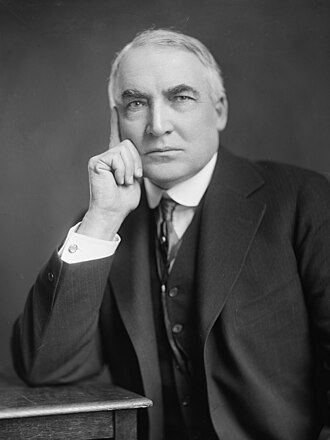
Signed by President Warren G. Harding on December 19, 1921, this order concerns Transfer of Certain Historical Papers From the Department of State to the Library of Congress. Whereas, an Executive Order of March 9, 1903, of President Roosevelt directed that certain historical archives in the Department of State, known as the Revolutionary Archives, being the papers of the Continental Congress, George Washington, James Madison, Thomas Jefferson, Alexander Hamilton, James Monroe, and Benjamin Franklin, be transferred from the Department of State to the custody of the Library of Congress…

Constitutional Assessment: This action represents an orderly exercise of Article II administrative discretion, managing the internal machinery and personnel of the executive branch without abridging the ancient liberties of the people.

Key Directives & Operative Actions

▪

Whereas, an Executive Order of March 9, 1903, of President Roosevelt directed that certain historical archives in the Department of State, known as the Revolutionary Archives, being the papers of the Continental Congress, George Washington, James Madison, Thomas Jefferson, Alexander Hamilton, James Monroe, and Benjamin Franklin, be transferred from the Department of State to the custody of the Library of Congress by authority of the Act approved February 25, 1903, entitled, "An Act making appropriations for the legislative, executive and judicial expenses of the government for the fiscal year ending June 30, 1904, and for other purposes"; And whereas, the said order authorized the Secretary of State to retain such papers in each of the…

Constitutional & Societal Entities Impacted

🏛️ Sovereign State Governments & Localities 🏛️ Executive Departments & Federal Civil Servants 🏛️ Financial Institutions & Monetary Authorities
🏛️

The Framers' Constitutional Council

1787 Prism

Evaluating this order against the constitutional debates of 1787 and the limits of Article II executive power.

🏛️✅ Zone 1 (Maximum Authority)
§

"When the President acts pursuant to an express or implied authorization of Congress, his authority is at its maximum, for it includes all that he possesses in his own right plus all that Congress can delegate."

— Justice Robert H. Jackson, Youngstown Sheet & Tube Co. v. Sawyer (1952) Express or Implied Congressional Authorization
JM

James Madison

Separation of Powers & Legislative Primacy

"The constitutional magistracy was designed not to invent policy, but to be the faithful instrument of the laws passed by the people's representatives." — Speech in the First Congress (1789)

Madison would approve the structural posture of this order. The President acts strictly in subordination to statutory authority granted under Article II, Section 3 ("take Care that the Laws be faithfully executed"). The checks and balances hold firm because the policy origin remains with the legislature.

Madisonian Stance: Concurring (Statutory)
AH

Alexander Hamilton

The Energetic Executive & Unified Command

"The direction of war implies the direction of the common strength; and the power of directing and employing the common strength must be under the direction of the single hand of the Executive." — Federalist No. 74 (1788)

Hamilton would forcefully champion executive discretion here. For foreign entanglements, commerce defense, and national security, deliberative assemblies are too slow and faction-ridden. A unified, energetic Executive exercising swift command is precisely what the Philadelphia Convention intended for national preservation.

Hamiltonian Stance: Supportive of Execution
GM

George Mason

Bill of Rights, Due Process & 10th Amendment

"The president will be surrounded by flatterers and sycophants... and the great powers of the executive will gradually absorb the liberties of the people." — Cato IV (Anti-Federalist, 1787)

The Anti-Federalist prism advises continuous democratic vigilance. Even routine administrative directives aggregate centralized federal power away from town halls and state assemblies toward a distant executive apparatus.

Anti-Federalist Stance: Eternal Vigilance Required
📐

Five Measurable "Constitutional Friction" Dimensions

An objective audit measuring potential separation-of-powers tension against the United States Constitution and established Supreme Court doctrine.

⚖️ Discretionary Twilight Zone
38 / 100 friction index
Dimension 1 • Art. I, §1 & §8

Legislative Encroachment & Purse

Moderate Friction

Administers commerce or fiscal programs requiring ongoing statutory delegation and legislative oversight.

Benchmark: Power of the purse, taxes/tariffs, and rule of law reserved to Congress.
Dimension 2 • Art. II, §1 & §3

Executive Scope & Faithfulness

Low Friction

Exercises standard supervisory executive authority to faithfully execute existing statutes.

Benchmark: Faithfully execute laws enacted by Congress vs. unilateral decree.
Dimension 3 • 10th Amendment

Federalism & State Sovereignty

High Friction

Creates friction with the Tenth Amendment by conditioning state grants, mandating local compliance, or preempting state police powers.

Benchmark: Police powers and un-delegated responsibilities reserved to the States.
Dimension 4 • 5th & 14th Amendments

Due Process & Individual Rights

Low Friction

Focuses on internal governmental operations with no direct impairment of private rights or property.

Benchmark: Protection of private property, contracts, liberty, and procedural justice.
Dimension 5 • Separation of Powers

Youngstown Jacksonian Tier

Low Friction

The President operates strictly as the constitutional Chief Executive, carrying out policy established by Congress with strong statutory backing.

Benchmark: Express or Implied Congressional Authorization
⚖️ Audit Synthesis

This order operates within Justice Jackson’s Zone of Twilight, resting upon concurrent presidential authority or congressional silence.

Weighted composite: Art. I (25%), Art. II (25%), Federalism (15%), Due Process (15%), Youngstown (20%).
ℹ️
How to read these dimensions: Executive power expands whenever an administration acts without explicit statutory authorization from Congress (Article I), touches upon police powers historically reserved to the states (Tenth Amendment), or limits private rights and property without judicial process. A low friction score indicates strict concordance with enacted law; a high friction score highlights orders testing the limits of presidential discretion.
Total Words
1,018
6,263 characters
Estimated Read Time
5 min
@ 200 words / min
Flesch-Kincaid
20.2
Post-Graduate Legal
Language Tone Score
+0.02
Constitutional Neutral
How is this scored?
Text size:

Official Archival Text

View Source Document

Whereas, an Executive Order of March 9, 1903, of President Roosevelt directed that certain historical archives in the Department of State, known as the Revolutionary Archives, being the papers of the Continental Congress, George Washington, James Madison, Thomas Jefferson, Alexander Hamilton, James Monroe, and Benjamin Franklin, be transferred from the Department of State to the custody of the Library of Congress by authority of the Act approved February 25, 1903, entitled, "An Act making appropriations for the legislative, executive and judicial expenses of the government for the fiscal year ending June 30, 1904, and for other purposes"; And whereas, the said order authorized the Secretary of State to retain such papers in each of the collections enumerated above as in his discretion might be required for the continuity and completeness of the records and archives of the Department of State; And whereas, the Secretary of State has represented that certain of the papers retained at that time and certain other historical papers now in his custody are not needed for the use of his Department, and recommends that they be transferred to the Library of Congress, to become a part of the historical papers which now constitute the collections in the Manuscript Division of the Library of Congress; It is hereby order that the following papers be transferred from the Department of State to the possession and custody of the Library of Congress, to be there preserved and rendered accessible for historical and other legitimate uses, under such rules and regulations as may from time to time be prescribed by the Librarian of Congress: 1. The Journal, Acts and Proceedings of the Convention which framed the Constitution of the United States. 2. The Articles of Confederation ratified March 1, 1781. 3. Thomas Jefferson's draft of the Declaration of Independence. 4. Papers of the Continental Congress, a detailed list of which is hereunto appended. 5. Certain papers of James Madison, a detailed list of which is hereunto appended. 6. Certain papers of Benjamin Franklin, a detailed list of which is hereunto appended. WARREN G. HARDING

THE WHITE HOUSE, #signature

December 19, 1921. STATEMENT BY STATE DEPARTMENT September 29, 1921. Secretary Hughes has been impressed with the fact that the Declaration of Independence and the Constitution of the United States which are now deposited with the State Department are not in a place of such absolute safety as the importance of the documents requires, as the Department building is always subject to fire risk. Moreover, the State Department has no exhibition room and has been unable for some years past to exhibit these documents under satisfactory conditions, although nearly all visitors to Washington desire to see them. It has seemed that the Library of Congress is the most suitable place for the preservation and exhibition of these muniments, that building being of modern fireproof construction with appropriate exhibition halls and the manuscripts which are in its custody being in charge of expert archivists. On the recommendation of the Secretary of State, President Harding has signed an executive order as follows: The original engrossed Declaration of Independence and the original engrossed Constitution of the United States, now in the Department of State, are, by authority provided by the Act of Congress entitled "An Act making appropriations for the legislative, executive and judicial expenses of the Government for the fiscal year ending June 30, 1904, and for other purposes," approved February 25, 1903, hereby ordered to be transferred from the Department of State to the custody of the Library of Congress, to be there preserved and exhibited under such rules and regulations as may from time to time be prescribed by the Librarian of Congress. This order is issued at the request of the Secretary of State, who has no suitable place for the exhibition of these muniments and whose building is believed to be not as safe a depository for them as the Library of Congress, and for the additional reason that it is desired to satisfy the laudable wish of patriotic Americans to have an opportunity to see the original fundamental documents upon which rest their Independence and their Government. Secretary Hughes' letter to the President recommending the transfer was accompanied by a brief history of these documents. It showed that on July 24th, 1789, Charles Tomson, Secretary of the Continental Congress, having resigned his office, deposited the papers with Mr. Roger Alden, who had been deputy secretary of the Congress, and who, at General Washington's request, took charge of them until the Department of State was created by the Act of September IS, 1789. They have been officially in the custody of the Secretary of State ever since that date. It appears, however, that they have not been continuously in the physical custody of the Secretary of State. On August 20, 1814, just before the capture of Washington by the British, the Declaration of Independence, the Constitution, and the other records of the Department were taken away from Washington and put in an unoccupied grist mill belonging to Edgar Patterson, situated on the Virginia side of the Potomac River, a short distance from the Chain Bridge, two miles above Georgetown. On August 24th, for greater safety, all the papers were moved to Leesburg, twenty-five miles farther away, and placed in an empty house, where they were locked up and the keys intrusted to the Reverend Mr. Littlejohn, who was then, or had been, a collector of Internal Revenue. There the papers remained for several weeks, not being brought back to Washington until the British fleet had left the Chesapeake. In 1841, when the Patent Office (which was then a part of the State Department) went into a new building which was supposed to be fireproof (which was burned some thirty-five years later), the Declaration of Independence was put in that building and there it remained until 1877, except for nine months from May, 1876, to February, 1877, when it was in Independence Hall at Philadelphia. It was transferred in 1877 from the Patent Office to the State Department, which had recently been moved to the building which it now occupies.

📜

Scholarly & Legal Citations

Exec. Order No. 3594 (Dec. 19, 1921), https://executiveordersarchive.org/orders/app-executive-order-3594-transfer-certain-historical-papers-from-the-department-state-the.