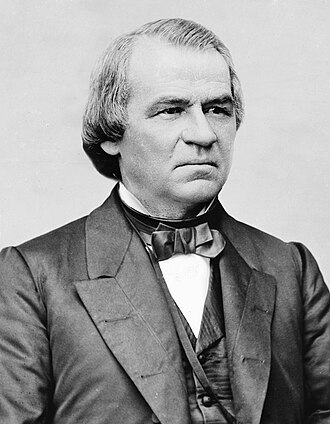
Early Statesman synthesis distilling legal jargon into practical meaning, statutory anchors, and structural constitutional impacts.
This executive order, signed by President Andrew Johnson on 1865-08-25, establishes federal administrative policy concerning "Executive Order." It is a direct, concise executive instruction delivering focused administrative or military commands to department leadership.
Constitutional Assessment: Reviewed under the Tenth Amendment and the principle of dual federalism, this order touches upon domains traditionally reserved to the sovereign States. The Framers would caution against any attempt to commandeer state officers or displace local police powers through federal executive fiat.
Key Directives & Operative Actions
▪Formal executive instruction issued by the President establishing official administrative policy on Executive Order.
Constitutional & Societal Entities Impacted
🏛️ Sovereign State Governments & Localities
🏛️ Executive Departments & Federal Civil Servants
🏛️ Private Citizens & Property Owners
Total Words
109
657 characters
Estimated Read Time
1 min
@ 200 words / min
Flesch-Kincaid
14.2
Post-Grad reading level
Constitutional Polarity
+0.02
Framers' Alignment index
📜
Scholarly & Legal Citations
Exec. Order, "Executive Order," Andrew Johnson (Aug 25, 1865). Available at https://executiveordersarchive.org/orders/app-executive-order-403.
Official Document Text
Source: The American Presidency Project (UCSB Archive)
DEPARTMENT OF STATE Paroled prisoners asking passports as citizens of the United States, and against whom no special charges may be pending, will be furnished with passports upon application therefor to the Department of State in the usual form. Such passports will, however, be issued upon the condition that the applicants do not return to the United States without leave of the President. Other persons implicated in the rebellion who may wish to go abroad will apply to the Department of State for passports, and the applications will be disposed of according to the merits of the several Cases. By the President of the United States: WILLIAM H. SEWARD.