HEADQUARTERS OF THE ARMY, ADJUTANT-GENERAL'S OFFICE, ORDER 46. The Major-General Commanding the Army has received through the War Department the following General Order from the President of the United States: General Order. WASHINGTON, June 21, 1834. Information having been received of the death of General Lafayette, the President considers it due to his own feelings as well as to the character and services of that lamented man to announce the event to the Army and Navy. Lafayette was a citizen of France, but he was the distinguished friend of the United States. In early life he embarked in that contest which secured freedom and independence to our country. His services and sacrifices constitute a part of our Revolutionary history, and his memory will be second only to that of Washington in the hearts of the American people. In his own country and in ours he was the zealous and uniform friend and advocate of rational liberty. Consistent in his principles and conduct, he never during a long life committed an act which exposed him to just accusation or which will expose his memory to reproach. Living at a period of great excitement and of moral and political revolutions, engaged in many of the important events which fixed the attention of the world, and invited to guide the destinies of France at two of the most momentous eras of her history, his political integrity and personal disinterestedness have not been called in question. Happy in such a life, he has been happy in his death. He has been taken from the theater of action with faculties unimpaired, with a reputation unquestioned, and an object of veneration wherever civilization and the rights of man have extended; and mourning, as we may and must, his departure, let us rejoice that this associate of Washington has gone, as we humbly hope, to rejoin his illustrious commander in the fullness of days and of honor. He came in his youth to defend our country. He came in the maturity of his age to witness her growth in all the elements of prosperity, and while witnessing these he received those testimonials of national gratitude which proved how strong was his hold upon the affections of the American people. One melancholy duty remains to be performed. The last major-general of the Revolutionary army has died. Himself a young and humble participator in the struggles of that period, the President feels called on as well by personal as public considerations to direct that appropriate honors be paid to the memory of this distinguished patriot and soldier. He therefore orders that the same honors be rendered upon this occasion at the different military and naval stations as were observed upon the decease of Washington, the Father of his Country, and his contemporary in arms. In ordering this homage to be paid to the memory of one so eminent in the field, so wise in council, so endeared in private life, and so well and favorably known to both hemispheres the President feels assured that he is anticipating the sentiments not of the Army and Navy only, but of the whole American people. ANDREW JACKSON. In obedience to the commands of the President, the following funeral honors will be paid at the several stations of the Army: At daybreak twenty-four guns will be fired in quick succession, and one gun at the interval of every half hour thereafter till sunset. The flags of the several stations will during the day be at half-mast. The officers of the Army will wear crape on the left arm for the period of six months. This order will be carried into effect under the direction of the commanding officer of each post and station the day after its reception. By command of Major-General Macomb, commanding in chief: R. JONES, Adjutant-General. GREEN HILL, October 12, 1834 .
Presidential Order
⚖️✨ Zone 2: Zone of Twilight Constitutional Neutral (+0.02)
📜 Art. II §2: Commander-in-Chief Supervisory Authority
Executive Order
Executive Brief • At a Glance
⏱️ 3 min read (642 words) •
● In Effect
🎯 Primary Mandate
The Major-General Commanding the Army has received through the War Department the following General Order from the President of the United States: General Order.
⚖️ Constitutional Footing
⚖️✨ Zone 2: Zone of Twilight
Concurrent Authority / Congressional Silence
📜 Art. II §2: Commander-in-Chief Supervisory Authority
🏛️ Scope & Affected Sectors
Armed Forces & Military Establishments Executive Departments & Federal Civil Servants Private Citizens & Property Owners
Plain-English Translation & Framers' Constitutional Analysis
Early Statesman synthesis distilling legal jargon into practical meaning, statutory anchors, and structural constitutional impacts.
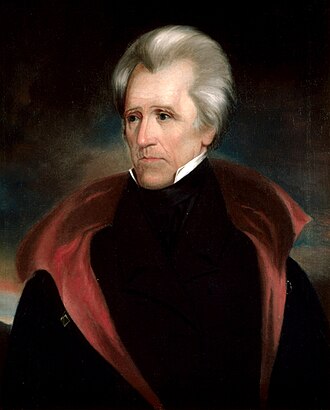
Signed by President Andrew Jackson on June 21, 1834, this order reads: The Major-General Commanding the Army has received through the War Department the following General Order from the President of the United States: General Order. WASHINGTON, June 21, 1834. Information having been received of the death of General Lafayette, the President considers it due to his own feelings as well as to the character and services of that lamented man to announce the event to the Army and Navy.
Constitutional Assessment: Scrutinized through Article II, Section 2, this action exercises the President's constitutional role as Commander in Chief. Early Framers recognized broad executive discretion in commanding military forces during conflict, provided it remains bounded by congressional declarations and respects civilian domestic courts.
Key Directives & Operative Actions
▪
The Major-General Commanding the Army has received through the War Department the following General Order from the President of the United States: General Order.
▪
He has been taken from the theater of action with faculties unimpaired, with a reputation unquestioned, and an object of veneration wherever civilization and the rights of man have extended; and mourning, as we may and must, his departure, let us rejoice that this associate of Washington has gone, as we humbly hope, to rejoin his illustrious commander in the fullness of days and of honor.
▪
Himself a young and humble participator in the struggles of that period, the President feels called on as well by personal as public considerations to direct that appropriate honors be paid to the memory of this distinguished patriot and soldier.
▪
In ordering this homage to be paid to the memory of one so eminent in the field, so wise in council, so endeared in private life, and so well and favorably known to both hemispheres the President feels assured that he is anticipating the sentiments not of the Army and Navy only, but of the whole American people.
Constitutional & Societal Entities Impacted
🏛️ Armed Forces & Military Establishments
🏛️ Executive Departments & Federal Civil Servants
🏛️ Private Citizens & Property Owners
Policy Areas & Topics
🏛️
The Framers' Constitutional Council
1787 PrismEvaluating this order against the constitutional debates of 1787 and the limits of Article II executive power.
⚖️✨ Zone 2 (Zone of Twilight)
§
"When the President acts in absence of either a congressional grant or denial of authority, he can only rely upon his own independent powers, but there is a zone of twilight in which he and Congress may have concurrent authority."
— Justice Robert H. Jackson, Youngstown Sheet & Tube Co. v. Sawyer (1952) Concurrent Authority / Congressional Silence
JM
James Madison
Separation of Powers & Legislative Primacy
"Power is of an encroaching nature, and it ought to be effectually restrained from passing the limits assigned to it." — Federalist No. 48 (1788)
Madison would view this order with watchful scrutiny. Operating in the 'Zone of Twilight' where Congress is silent, each such directive establishes an administrative precedent that steadily expands the executive perimeter at the expense of legislative primacy.
Madisonian Stance: Vigilant / Cautionary
AH
Alexander Hamilton
The Energetic Executive & Unified Command
"The direction of war implies the direction of the common strength; and the power of directing and employing the common strength must be under the direction of the single hand of the Executive." — Federalist No. 74 (1788)
Hamilton would forcefully champion executive discretion here. For foreign entanglements, commerce defense, and national security, deliberative assemblies are too slow and faction-ridden. A unified, energetic Executive exercising swift command is precisely what the Philadelphia Convention intended for national preservation.
Hamiltonian Stance: Strong Prerogative Support
GM
George Mason
Bill of Rights, Due Process & 10th Amendment
"The president will be surrounded by flatterers and sycophants... and the great powers of the executive will gradually absorb the liberties of the people." — Cato IV (Anti-Federalist, 1787)
The Anti-Federalist prism advises continuous democratic vigilance. Even routine administrative directives aggregate centralized federal power away from town halls and state assemblies toward a distant executive apparatus.
Anti-Federalist Stance: Eternal Vigilance Required
📐
Five Measurable "Constitutional Friction" Dimensions
An objective audit measuring potential separation-of-powers tension against the United States Constitution and established Supreme Court doctrine.
⚖️ Discretionary Twilight Zone
48 / 100 friction index
Dimension 1 • Art. I, §1 & §8
Moderate Friction
Legislative Encroachment & Purse
Administers commerce or fiscal programs requiring ongoing statutory delegation and legislative oversight.
Benchmark: Power of the purse, taxes/tariffs, and rule of law reserved to Congress.
Dimension 2 • Art. II, §1 & §3
Low Friction
Executive Scope & Faithfulness
Exercises standard supervisory executive authority to faithfully execute existing statutes.
Benchmark: Faithfully execute laws enacted by Congress vs. unilateral decree.
Dimension 3 • 10th Amendment
High Friction
Federalism & State Sovereignty
Creates friction with the Tenth Amendment by conditioning state grants, mandating local compliance, or preempting state police powers.
Benchmark: Police powers and un-delegated responsibilities reserved to the States.
Dimension 4 • 5th & 14th Amendments
Moderate Friction
Due Process & Individual Rights
Applies regulatory or compliance standards to private contractors or commercial entities.
Benchmark: Protection of private property, contracts, liberty, and procedural justice.
Dimension 5 • Separation of Powers
Moderate Friction
Youngstown Jacksonian Tier
The order relies on inherent Article II executive discretion, civil service management, or foreign diplomacy where Congress has neither expressly approved nor prohibited action.
Benchmark: Concurrent Authority / Congressional Silence
⚖️
Audit Synthesis
This order operates within Justice Jackson’s Zone of Twilight, resting upon concurrent presidential authority or congressional silence.
Weighted composite: Art. I (25%), Art. II (25%), Federalism (15%), Due Process (15%), Youngstown (20%).
ℹ️
How to read these dimensions: Executive power expands whenever an administration acts without explicit statutory authorization from Congress (Article I), touches upon police powers historically reserved to the states (Tenth Amendment), or limits private rights and property without judicial process. A low friction score indicates strict concordance with enacted law; a high friction score highlights orders testing the limits of presidential discretion.
Total Words
642
3,773 characters
Estimated Read Time
3 min
@ 200 words / min
Flesch-Kincaid
13.9
College Level
Text size:
Related Executive Orders
Other executive actions signed by Andrew Jackson around this period.
Order
Aug 7, 1836
🏛️✅ Zone 1 (Maximum Authority) Fidelity (+0.33)
Executive Order
📜 Art. II §2: Commander-in-Chief Supervisory Authority
HERMITAGE, August 7, 1836 . C. A. HARRIS, Esq., Acting Secretary of War. SIR: I reached home on the evening of the 4th, and was soon surrounded with the papers and letters which had been sent here in anticipation of my arrival.
 Andrew Jackson
College Level • 5m
Order
Feb 15, 1837
⚖️✨ Zone 2 (Zone of Twilight) Constitutional Neutral
Executive Order
📜 Art. II §2: Commander-in-Chief Supervisory Authority
February 15, 1837 . Major-General ALEXANDER MACOMB, President of the Court of Inquiry, etc SIR: I have the honor to inclose a copy of the opinion of the President of the United States on the proceedings of the court of inquiry of which you are president, relative to the…
Andrew Jackson Post-Graduate Legal • 7m
Order
Feb 18, 1837
⚖️✨ Zone 2 (Zone of Twilight) Constitutional Neutral
Executive Order
📜 Art. II §2: Commander-in-Chief Supervisory Authority
The proceedings of the court of inquiry recently assembled and still sitting at Frederick by virtue of Orders Nos. 65 and 68, so far as the same relate to the causes of the failure of the campaign of Major-General Scott against the Seminole Indians in 1836, were heretofore…
Andrew Jackson Post-Graduate Legal • 2m
Order
Aug 6, 1831
⚖️✨ Zone 2 (Zone of Twilight) Constitutional Neutral
Executive Order
📜 Art. II §2: Commander-in-Chief Supervisory Authority
ACTING SECRETARY OF WAR. SIR: You will, after the receipt of this, report to the President for dismissal every clerk in your office who shall avail himself of the benefit of the insolvent debtors act for debts contracted during my Administration.
Andrew Jackson High School • 1m
Order
Jun 12, 1830
⚖️✨ Zone 2 (Zone of Twilight) Constitutional Neutral
Executive Order
📜 Art. II §2: Commander-in-Chief Supervisory Authority
The following general order has been received from the War Department. It is published for the information of all concerned: DEPARTMENT OF WAR, Washington, June 12, 1830.
Andrew Jackson High School • 1m
Order
Apr 8, 1829
⚖️✨ Zone 2 (Zone of Twilight) Constitutional Neutral
Executive Order
📜 Art. II §2: Commander-in-Chief Supervisory Authority
In all applications by any invalid to obtain a pension in consequence of any disability incurred, no payment therefore shall commence until proof shall be filed in the Department and the decision of the Secretary had thereon; and no pension will be allowed to anyone while…
Andrew Jackson Post-Graduate Legal • 1m
📜
Scholarly & Legal Citations
Exec. Order (June 21, 1834), https://executiveordersarchive.org/orders/app-executive-order-412.
