WAR DEPARTMENT, February 15, 1837 . Major-General ALEXANDER MACOMB, President of the Court of Inquiry, etc SIR: I have the honor to inclose a copy of the opinion of the President of the United States on the proceedings of the court of inquiry of which you are president, relative to the campaign against the Creek Indians, and, in compliance with the direction at the close thereof, to transmit herewith those proceedings, with the documentary evidence referred to therein, for the further action of the court. Very respectfully, your most obedient servant, B. F. BUTLER, Secretary of War ad interim. P. S.--The proceedings and a portion of the documents accompany this. The balance of the documents (except Nos. 204 and 209, which will be sent to-morrow) are in a separate package, and sent by the same mail. WASHINGTON, February 14, 1837. The President has carefully examined the proceedings of the court of inquiry recently held at the city of Frederick, by virtue of Orders Nos. 65 and 68, so far as the same relate to the causes of the delay in opening and prosecuting the campaign in Georgia and Alabama against the hostile Creek Indians in the year 1836, and has maturely considered the opinion of the court on this part of the subject referred to it. The order constituting the court directs it, among other things-- To inquire and examine into the causes of the delay in opening and prosecuting the campaign in Georgia and Alabama against the hostile Creek Indians in the year 1836, and into every subject connected with the military operations in the campaign aforesaid, and, after fully investigating the same, to report the facts, together with its opinion on the whole subject, for the information of the President. It appears from the proceedings that after the testimony of nine witnesses had been received by the court, and after more than one hundred documents bearing on the subject had also been produced in evidence, and after Major-General Scott had addressed the court on the subject, the court proceeded to pronounce its opinion, as follows: Upon a careful examination of the abundant testimony taken in the foregoing case the court is of opinion that no delay which it was practicable to have avoided was made by Major-General Scott in opening the campaign against the Creek Indians. On the contrary, it appears that he took the earliest measures to provide arms, munitions, and provisions for his forces, who were found almost wholly destitute; and as soon as arms could be put into the hands of the volunteers they were, in succession, detached and placed in position to prevent the enemy from retiring upon Florida, and whence they could move against the main body of the enemy as soon as equipped for offensive operations. From the testimony of the governor of Georgia, of Major-General Sanford, commander of the Georgia volunteers, and many other witnesses of high rank and standing who were acquainted with the topography of the country and the position and strength of the enemy, the court is of opinion that the plan of campaign adopted by Major-General Scott was well calculated to lead to successful results, and that it was prosecuted by him, as far as practicable, with zeal and ability, until recalled from the command upon representations made by Major-General Jesup, his second in command, from Fort Mitchell, in a letter bearing date the 20th of June, 1836, addressed to F. P. Blair, Esq., at Washington, marked "private," containing a request that it be shown to the President; which letter was exposed and brought to light by the dignified and magnanimous act of the President in causing it to be placed on file in the Department of War as an official document, and which forms part of the proceedings. (See Document No. 214. ) Conduct so extraordinary and inexplicable on the part of Major-General Jesup, in reference to the character of said letter, should, in the opinion of the court, be investigated. The foregoing opinion is not accompanied by any report of the facts in the case, as required by the order constituting the court; on the contrary, the facts are left to be gathered from the mass of oral and documentary evidence contained in the proceedings, and thus a most important part of the duty assigned to the court remains unexecuted. Had the court stated the facts of the case as established to its satisfaction by the evidence before it, the President, on comparing such state of facts found by the court with its opinion, would have distinctly understood the views entertained by the court in respect to the degree of promptitude and energy which ought to be displayed in a campaign against Indians--a point manifestly indispensable to a correct appreciation of the opinion, and one which the President's examination of the evidence has not supplied, inasmuch as he has no means of knowing whether the conclusions drawn by him from the evidence agree with those of the court. The opinion of the court is also argumentative, and wanting in requisite precision, inasmuch as it states that "no delay which it was practicable to have avoided was made by Major-General Scott in opening the campaign against the Creek Indians," etc.; thus leaving it to be inferred, but not distinctly finding, that there was some delay, and that it was made by some person other than Major-General Scott, without specifying in what such delay consisted, when it occurred, how long it continued, nor by whom it was occasioned. Had the court found a state of facts, as required by the order constituting it, the uncertainty now existing in this part of the opinion would have been obviated and the justice of the opinion itself readily determined. That part of the opinion of the court which animadverts on the letter addressed by Major-General Jesup to F. P. Blair, Esq., bearing date the 20th of June, 1836, and which presents the same as a subject demanding investigation, appears to the President to be wholly unauthorized by the order constituting the court, and by which its jurisdiction was confined to an inquiry into the causes of the delay in opening and prosecuting the campaign against the hostile Creeks and into such subjects as were connected with the military operations in that campaign. The causes of the recall of Major-General Scott from the command and the propriety or impropriety of the conduct of General Jesup in writing the letter referred to were not submitted to the court as subjects of inquiry. The court itself appears to have been of this opinion, inasmuch as no notice was given to General Jesup of the pendency of the proceedings, nor had he any opportunity to cross-examine and interrogate the witnesses, nor to be heard in respect to his conduct in the matter remarked on by the court. For the several reasons above assigned, the President disapproves the opinion of the court, and remits to it the proceedings in question, to the end that the court may resume the consideration of the evidence and from the same, and from such further evidence as shall be taken (in case the court shall deem it necessary to take further evidence), may ascertain and report with distinctness and precision, especially as to time, place, distances, and other circumstances, all the facts touching the opening and prosecuting of the campaign in Georgia and Alabama against the hostile Creek Indians in the year 1836, and the military operations in the said campaign, and touching the delay, if any there was, in the opening or prosecuting of said campaign, and the causes of such delay; and to the end, also, that the court, whilst confining its opinion to the subject-matters submitted to it, may fully and distinctly express its opinion on those matters for the information of the President. The Secretary of War ad interim will cause the proceedings of the court on the subject of the campaign against the Creek Indians, with the documentary evidence referred to therein and a copy of the foregoing opinion, to be transmitted to Major-General Alexander Macomb, president of the court, for the proper action thereon. ANDREW JACKSON.
Presidential Order
⚖️✨ Zone 2: Zone of Twilight Constitutional Neutral (+0.02)
📜 Art. II §2: Commander-in-Chief Supervisory Authority
Executive Order
Executive Brief • At a Glance
⏱️ 7 min read (1,363 words) •
● In Effect
🎯 Primary Mandate
The order constituting the court directs it, among other things-- To inquire and examine into the causes of the delay in opening and prosecuting the campaign in Georgia and Alabama against the hostile Creek Indians in the year 1836, and into every subject connected with the military operations in the campaign aforesaid, and, after fully investigating the same, to report the facts, together with its opinion on the whole subject, for the information of the President.
⚖️ Constitutional Footing
⚖️✨ Zone 2: Zone of Twilight
Concurrent Authority / Congressional Silence
📜 Art. II §2: Commander-in-Chief Supervisory Authority
🏛️ Scope & Affected Sectors
Armed Forces & Military Establishments Sovereign State Governments & Localities Executive Departments & Federal Civil Servants
Plain-English Translation & Framers' Constitutional Analysis
Early Statesman synthesis distilling legal jargon into practical meaning, statutory anchors, and structural constitutional impacts.
Signed by President Andrew Jackson on February 15, 1837, this order reads: February 15, 1837 . Major-General ALEXANDER MACOMB, President of the Court of Inquiry, etc SIR: I have the honor to inclose a copy of the opinion of the President of the United States on the proceedings of the court of inquiry of which you are president, relative to the campaign against the Creek Indians, and, in compliance with the direction at the close thereof, to transmit herewith those proceedings, with the…
Constitutional Assessment: Scrutinized through Article II, Section 2, this action exercises the President's constitutional role as Commander in Chief. Early Framers recognized broad executive discretion in commanding military forces during conflict, provided it remains bounded by congressional declarations and respects civilian domestic courts.
Key Directives & Operative Actions
▪
The order constituting the court directs it, among other things-- To inquire and examine into the causes of the delay in opening and prosecuting the campaign in Georgia and Alabama against the hostile Creek Indians in the year 1836, and into every subject connected with the military operations in the campaign aforesaid, and, after fully investigating the same, to report the facts, together with its opinion on the whole subject, for the information of the President.
▪
From the testimony of the governor of Georgia, of Major-General Sanford, commander of the Georgia volunteers, and many other witnesses of high rank and standing who were acquainted with the topography of the country and the position and strength of the enemy, the court is of opinion that the plan of campaign adopted by Major-General Scott was well calculated to lead to successful results, and that it was prosecuted by him, as far as practicable, with zeal and ability, until recalled from the command upon representations made by Major-General Jesup, his second in command, from Fort Mitchell, in a letter bearing date the 20th of June, 1836, addressed to F. P. Blair, Esq., at Washington, marked "private," containing a request that it be…
▪
The foregoing opinion is not accompanied by any report of the facts in the case, as required by the order constituting the court; on the contrary, the facts are left to be gathered from the mass of oral and documentary evidence contained in the proceedings, and thus a most important part of the duty assigned to the court remains unexecuted.
▪
Had the court stated the facts of the case as established to its satisfaction by the evidence before it, the President, on comparing such state of facts found by the court with its opinion, would have distinctly understood the views entertained by the court in respect to the degree of promptitude and energy which ought to be displayed in a campaign against Indians--a point manifestly indispensable to a correct appreciation of the opinion, and one which the President's examination of the evidence has not supplied, inasmuch as he has no means of knowing whether the conclusions drawn by him from the evidence agree with those of the court.
Constitutional & Societal Entities Impacted
🏛️ Armed Forces & Military Establishments
🏛️ Sovereign State Governments & Localities
🏛️ Executive Departments & Federal Civil Servants
Policy Areas & Topics
🏛️
The Framers' Constitutional Council
1787 PrismEvaluating this order against the constitutional debates of 1787 and the limits of Article II executive power.
⚖️✨ Zone 2 (Zone of Twilight)
§
"When the President acts in absence of either a congressional grant or denial of authority, he can only rely upon his own independent powers, but there is a zone of twilight in which he and Congress may have concurrent authority."
— Justice Robert H. Jackson, Youngstown Sheet & Tube Co. v. Sawyer (1952) Concurrent Authority / Congressional Silence
JM
James Madison
Separation of Powers & Legislative Primacy
"Power is of an encroaching nature, and it ought to be effectually restrained from passing the limits assigned to it." — Federalist No. 48 (1788)
Madison would view this order with watchful scrutiny. Operating in the 'Zone of Twilight' where Congress is silent, each such directive establishes an administrative precedent that steadily expands the executive perimeter at the expense of legislative primacy.
Madisonian Stance: Vigilant / Cautionary
AH
Alexander Hamilton
The Energetic Executive & Unified Command
"The direction of war implies the direction of the common strength; and the power of directing and employing the common strength must be under the direction of the single hand of the Executive." — Federalist No. 74 (1788)
Hamilton would forcefully champion executive discretion here. For foreign entanglements, commerce defense, and national security, deliberative assemblies are too slow and faction-ridden. A unified, energetic Executive exercising swift command is precisely what the Philadelphia Convention intended for national preservation.
Hamiltonian Stance: Strong Prerogative Support
GM
George Mason
Bill of Rights, Due Process & 10th Amendment
"The president will be surrounded by flatterers and sycophants... and the great powers of the executive will gradually absorb the liberties of the people." — Cato IV (Anti-Federalist, 1787)
The Anti-Federalist prism advises continuous democratic vigilance. Even routine administrative directives aggregate centralized federal power away from town halls and state assemblies toward a distant executive apparatus.
Anti-Federalist Stance: Eternal Vigilance Required
📐
Five Measurable "Constitutional Friction" Dimensions
An objective audit measuring potential separation-of-powers tension against the United States Constitution and established Supreme Court doctrine.
⚖️ Discretionary Twilight Zone
45 / 100 friction index
Dimension 1 • Art. I, §1 & §8
Moderate Friction
Legislative Encroachment & Purse
Administers commerce or fiscal programs requiring ongoing statutory delegation and legislative oversight.
Benchmark: Power of the purse, taxes/tariffs, and rule of law reserved to Congress.
Dimension 2 • Art. II, §1 & §3
Low Friction
Executive Scope & Faithfulness
Exercises standard supervisory executive authority to faithfully execute existing statutes.
Benchmark: Faithfully execute laws enacted by Congress vs. unilateral decree.
Dimension 3 • 10th Amendment
High Friction
Federalism & State Sovereignty
Creates friction with the Tenth Amendment by conditioning state grants, mandating local compliance, or preempting state police powers.
Benchmark: Police powers and un-delegated responsibilities reserved to the States.
Dimension 4 • 5th & 14th Amendments
Low Friction
Due Process & Individual Rights
Focuses on internal governmental operations with no direct impairment of private rights or property.
Benchmark: Protection of private property, contracts, liberty, and procedural justice.
Dimension 5 • Separation of Powers
Moderate Friction
Youngstown Jacksonian Tier
The order relies on inherent Article II executive discretion, civil service management, or foreign diplomacy where Congress has neither expressly approved nor prohibited action.
Benchmark: Concurrent Authority / Congressional Silence
⚖️
Audit Synthesis
This order operates within Justice Jackson’s Zone of Twilight, resting upon concurrent presidential authority or congressional silence.
Weighted composite: Art. I (25%), Art. II (25%), Federalism (15%), Due Process (15%), Youngstown (20%).
ℹ️
How to read these dimensions: Executive power expands whenever an administration acts without explicit statutory authorization from Congress (Article I), touches upon police powers historically reserved to the states (Tenth Amendment), or limits private rights and property without judicial process. A low friction score indicates strict concordance with enacted law; a high friction score highlights orders testing the limits of presidential discretion.
Total Words
1,363
8,087 characters
Estimated Read Time
7 min
@ 200 words / min
Flesch-Kincaid
22.7
Post-Graduate Legal
Text size:
Related Executive Orders
Other executive actions signed by Andrew Jackson around this period.
Order
Feb 18, 1837
⚖️✨ Zone 2 (Zone of Twilight) Constitutional Neutral
Executive Order
📜 Art. II §2: Commander-in-Chief Supervisory Authority
The proceedings of the court of inquiry recently assembled and still sitting at Frederick by virtue of Orders Nos. 65 and 68, so far as the same relate to the causes of the failure of the campaign of Major-General Scott against the Seminole Indians in 1836, were heretofore…
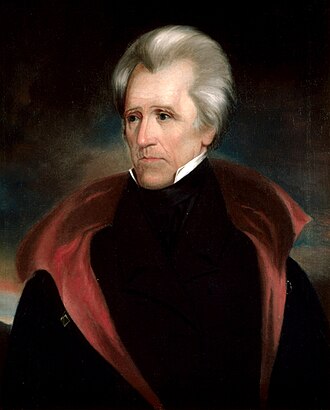 Andrew Jackson
Post-Graduate Legal • 2m
Order
Aug 7, 1836
🏛️✅ Zone 1 (Maximum Authority) Fidelity (+0.33)
Executive Order
📜 Art. II §2: Commander-in-Chief Supervisory Authority
HERMITAGE, August 7, 1836 . C. A. HARRIS, Esq., Acting Secretary of War. SIR: I reached home on the evening of the 4th, and was soon surrounded with the papers and letters which had been sent here in anticipation of my arrival.
Andrew Jackson College Level • 5m
Order
Jun 21, 1834
⚖️✨ Zone 2 (Zone of Twilight) Constitutional Neutral
Executive Order
📜 Art. II §2: Commander-in-Chief Supervisory Authority
The Major-General Commanding the Army has received through the War Department the following General Order from the President of the United States: General Order. WASHINGTON, June 21, 1834.
Andrew Jackson College Level • 3m
Order
Aug 6, 1831
⚖️✨ Zone 2 (Zone of Twilight) Constitutional Neutral
Executive Order
📜 Art. II §2: Commander-in-Chief Supervisory Authority
ACTING SECRETARY OF WAR. SIR: You will, after the receipt of this, report to the President for dismissal every clerk in your office who shall avail himself of the benefit of the insolvent debtors act for debts contracted during my Administration.
Andrew Jackson High School • 1m
Order
Jun 12, 1830
⚖️✨ Zone 2 (Zone of Twilight) Constitutional Neutral
Executive Order
📜 Art. II §2: Commander-in-Chief Supervisory Authority
The following general order has been received from the War Department. It is published for the information of all concerned: DEPARTMENT OF WAR, Washington, June 12, 1830.
Andrew Jackson High School • 1m
Order
Apr 8, 1829
⚖️✨ Zone 2 (Zone of Twilight) Constitutional Neutral
Executive Order
📜 Art. II §2: Commander-in-Chief Supervisory Authority
In all applications by any invalid to obtain a pension in consequence of any disability incurred, no payment therefore shall commence until proof shall be filed in the Department and the decision of the Secretary had thereon; and no pension will be allowed to anyone while…
Andrew Jackson Post-Graduate Legal • 1m
📜
Scholarly & Legal Citations
Exec. Order (Feb. 15, 1837), https://executiveordersarchive.org/orders/app-executive-order-494.
