The Consular Regulations are hereby amended as follows: 368. Admissible classes. Only such persons of the Chinese race as are admissible under the provisions of the treaty between the United States and China, signed on November 17, 1880, the Chinese exclusion laws, the immigration laws, and chapter X of the Executive order of September 25, 1925, No. 4314, relating to the exclusion of Chinese from the Panama Canal Zone, are allowed to enter the United States or territory under its jurisdiction. Paragraph 530 is amended to read as follows: 530. Numbering and recording fees. Consular fees must be numbered and recorded fully and clearly in the record of fees provided for the purpose by the Department of State. For convenience fees are numbered in two groups, each group beginning with number 1 at the commencement of each calendar year and continuing consecutively throughout the year. Fees for the certification of consular invoices constitute the first group, and must be numbered in a separate consecutive series of numbers, corresponding numbers being placed on the invoices or certificates. All other fees collected constitute the second group, and must be numbered consecutively in a separate series, corresponding numbers being placed on the documents at the point indicated, or just beneath the fee stamp. Paragraph 533 is amended to read as follows: 533. Tariff of United States Consular Fees. The following Tariff of United States Consular Fees is prescribed by the President under authority of Section 1745, Revised Statutes, as amended by the Acts of April 5, 1906, c. 1366, Sections 7, 8 and 9, 34 Stat. 101, and June 4, 1920, c. 223, Sections 1 and 2, 41 Stat. 750, to be charged by consular officers for official services. All charges for such services must be in strict accordance with this tariff, and be collected in the coin of the United States or at its representative value in exchange. No fee or compensation will be collected for any service not covered by this tariff. The fees in this tariff are not prescribed for American vessels and seamen, because they are exempted by law from the payment of consular fees. Consular agents will make the fees in this tariff a basis of collection from the Treasury for services to such vessels. Foreign-built vessels, unregistered, owned by American citizens, and vessels documented under the laws of the Philippine Islands are not exempt from the payment of the fees prescribed herein. Services, except those for which fees are fixed in items 8, 9 and 10, under this tariff shall be rendered free of charge when performed: (a) in connection with the settlement of the estate of any employee of the United States dieing abroad while on official duty; (b) for the use of any person in the collection of claims from the United States or from any State for compensation, pensions, backpay, bounty, bonus, property loss in the service of the United States; (c) for obtaining the return of property held by the Alien Property Custodian; and (d) for the official use of the United States Veterans' Bureau. Consular officers must require all fees to be paid in advance and before the stamps are canceled, except in case of attendance out of office or of commissions, when the amount can not be determined until the service is performed. Advance deposits to cover fees in such latter cases may be accepted but in no other. This tariff is effective July 1, 1929, and should be posted in a conspicuous place in consular offices as required by Section 1731, Revised Statutes. Item No. Nature of Service Fee MISCELLANEOUS SERVICES 1. Certification of invoice in such number of copies as will meet the requirements of the regulations and instructions and provide the shipper with one copy (in addition to duplicate) for his own use, including any additional declaration or certificate not otherwise provided for which is required by law or regulations for use in connection with the entry of the wares or the forwarding of the same in bond (see Item No. 37). $2.50 2. Invoice of returned American goods 1.00 3. Certificates and declarations as above described, when issued for a shipment not covered by a consular invoice, including declaration of foreign shipper of articles exported for exhibition and returned (Form 204) and immigrant's oath regarding teams and vehicles (Form 128), and in connection with quarantine regulations, but excluding certificate for food and drug products or insecticides (Form 197 and 217) 1.00 4. Certificate to extra copies of invoices, each 1.00 5. Certificate of disinfection in such number of copies as will meet the requirements of the regulations and instructions and provide the shipper with one copy for his own use 2.50 6. Discontinued. 7. Sealing cars coming from Canada or Mexico, for each manifest in quintuplicate with the consul's certificate including sealing of each car, vessel, bale, barrel, box, or package 1.00 8. Executing application for passport (no exceptions) 1.00 Issue of passport 9.00 Exceptions— (a) Officers or employees of the United States traveling on official business or members of their immediate families. No fee (b) Seamen No fee (c) Widows, children, parents, brothers, and sisters of American soldiers, sailors, or marines buried abroad, whose journey is for the purpose of visiting graves of such soldiers, sailors, or marines No fee Amendment, extension, or verification of an American passport No fee Execution of application for registration No fee Issue of certificate of identity and registration $1.00 Execution of affidavit in regard to American birth in connection with application for registration or for passport No fee 9. Visa services for aliens: Preparation and acknowledgment of declaration or application for passport or immigration visa, except where reciprocal agreements for other fees have been made $1.00 Issue of passport visa or immigration visa, except where reciprocal agreements for other fees have been made 9.00 Exceptions— (a) Any officer of any foreign Government or members of his immediate family No fee (b) Any officer of the armed forces of any Government or members of his immediate family No fee (c) Any officer of any state, district, or municipality of any foreign Government or members of his immediate family. No fee Certificate to a copy of a visa declaration or application previously taken $1.00 Visa of alien crew list 2.00 Supplemental visa of alien crew list No fee 10. Visaing a Chinese passport or certificate. (Except no fee for persons included in a, b, and c of Fee No. 9) $9.00 11. Marriage certificate, in duplicate, Form No. 87 1.00 12. For taking into possession the personal estate of any citizen who shall die within the limits of a consulate, inventorying, selling, and finally settling and preparing or transmitting, according to law, the balance due thereon, $2. for each $100. of market value or fraction thereof, except that no fee shall be charged on securities not negotiable by the consular officer, and evidences of debt not due and payable in the country where the decedent died. No charge will be made for placing the official seal upon the personal property or effects of such deceased citizen, or for breaking or removing the seals. 13. For each certificate of protection, semsar, or certificate of employment issued at Tangier $2.00 SERVICES TO VESSELS AND SEAMEN 14. Bill of health, in duplicate 5.00 (Foreign war vessels are exempt from payment of fees for bills of health.) 15. Discontinued. 16. For receiving and delivering ship's register and papers, including consular certificates, as prescribed in Forms Nos. 13 and 14, $1. for each 100 tons or fraction thereof, registered measurement (net), of the vessel for which the service is performed, if under 1,000 tons; but for American vessels running regularly by weekly or monthly trips, or otherwise, to or between foreign ports, this tonnage fee will not be charged for more than four trips in a year; and tonnage fees shall not be exacted for any vessel touching at or near ports in Canada on her regular voyage from one port to another within the United States, unless some official service required by law shall be performed. 17. And for every additional 100 tons net or fraction thereof .50 18. Shipping or discharging seamen, including the certificates thereof attached to crew list and shipping articles and given to seamen 2.00 19. Authentication of copies of protests or other necessary documents for vessels or seamen not otherwise provided for 2.00 20. Preparation and acknowledgment for vessels or seamen of any oath or declaration for which a form is given in the Consular Regulations, or a similar necessary service not otherwise provided for. See Fee No. 9 for visa of alien crew lists 2.00 21. Preparation and execution for vessels or seamen of any certificate for which a form is given in the Consular Regulations, or similar necessary service not otherwise provided for 2.00 22. Orders or letters for vessels or seamen for which forms are given in the Consular Regulations, or other similar necessary service not otherwise provided for 2.00 23. Recording, when necessary, for vessels or seamen any document covered by the provisions of the Consular Regulations, for every 100 words or fraction thereof .50 24. Noting marine protest—Form No. 37 2.00 25. Extending marine protest—Form No. 38 3.00 If it exceeds 200 words, for every additional 100 words .50 26. Protest of master against charterers or freighters—Form No. 39 2.00 27. Clearence when issued by the consul, as at free ports 2.00 28. Attending an appraisement of vessel's goods or effects, for each day's attendance 5.00 29. Attending sale of vessel's goods, for each day's attendance during which the sale continues 5.00 30. Attendance at a shipwreck, or for the purpose of assisting a ship in distress, or of saving wrecked goods or property, over and above traveling expenses, whenever the consul's interposition is required by the parties interested, for each day 5.00 NOTARIAL AND OTHER SERVICES 31. Administering an oath and certificate thereof 2.00 32. Discontinued. 33. Acknowledgment of a deed or power of attorney, or similar service, including one or more signatures, with certificate thereof, for each copy 2.00 34. Administering any and all oaths required to be made by pensioners and their witnesses in the execution of their pension vouchers, or by persons presenting claims for pensions or increase of pensions, or claims for insurance or insurance allowances, or allotments, or certifying to the competency of a local official before whom said papers were executed, or for other services in relation thereto No fee 35. Acknowledgments and authentications connected with the assigment or transfer of United States bonds or of powers of attorney therefor or to collect interest thereon No fee 36. Administering oaths or taking acknowledgments of officials or employees of the United States Government , or of any corporation in which the United States or its representatives shall own the entire outstanding capital stock, in connection with their official business or accounts No fee 37. For rendering notarial services to officials of foreign Governments who render gratuitously reciprocal courtesies to American diplomatic and consular officers, or for certification of invoices of shipments of official supplies and equipment from foreign Governments to their diplomatic and consular officers and of shipments of personal effects to such officers in the United States when such foreign Government renders gratuitously reciprocal services to the United States Government No fee 38. Certifying to official character of a foreign notary or other official $2.00 Exception— Authentications under authority of the United States Quarantine Regulations, in the form prescribed by the Department of State, certifying to official character of officials signing foreign deratization certificates No fee 39. For taking depositions, executing commissions or letters rogatory, where the record of testimony including caption and certificate does not exceed 500 words $10.00 For each additional 100 words or fraction thereof .50 The foregoing fee shall cover the administration of the oath and all services of the consul as commissioner, but shall not include services of clerk, stenographer, or typewriter, which shall be additional at the rate prescribed herein for copying. 40. Copies (carbon copies to be charged for at the same rate as originals, and including the typing of official forms where requested and where such service is not included in any other item of this tariff): For the first 100 words or fraction thereof .50 For every additional 100 words or less .25 41. For certifying to the correctness of a copy of, or extract from, any document, official or private 2.00 Each copy certified is to be considered an original, and a fee charged for the certification. 42. Additional fee for all services contemplated by fees numbered 31, 33, 38, 39, when rendered elsewhere than at the consular office at the request of the interested parties, for each hour or fraction thereof 1.00 In connection with any service rendered outside of the consular office at the request of private individuals, the exact amount of the expenses actually and necessarily incurred by the person rendering the service shall be collected from the persons for whom the service is performed in addition to the fee or fees prescribed therefor, but no amount in excess of the fee or fees prescribed and such actual and necessary expenses shall be charged or accepted. 43. Recording unofficial documents in consulate upon request: For the first 100 words or fraction .50 For every additional 100 words or less .25 44. Any and all services indicated in the tariff of fees and performed upon written orders of the Department of State for the official use of the Government of the United States No fee 45. Any and all services in connection with the execution of tax returns, federal, state, territorial, municipal and insular No fee 46. License for the practice of pharmacy and the sale of poisons in the consular districts of the United States in China $2.00 47. Discontinued. 48. Presenting a bill of exchange or other negotiable instrument for acceptance, payment, or protest, for each hour or fraction thereof outside of the consular office $1.00 49. Noting and certifying to protest of a bill of exchange or other negotiable instrument and giving notice thereof to drawer and indorsers when requested to do so 2.00 50. Discontinued. 51. Any and all services performed for American citizens while outside the United States in preparation of ballots to be used in any primary, general, or other public elections in the United States, its territories, or possessions, whether federal, state, territorial, county, town, or municipal No fee Paragraph 604 is amended to read as follows: 604. Record books at consulates. The following record books are to be kept at consular offices: At inland consulates: (1) A record of fees in which shall be recorded daily in the order in which received all fees for services, including gratis services, authorized by the Tariff of United States Consular Fees, the serial number, date, and amount of each fee, the nature of the Service, and the person for whom performed. (2) A fee stamp ledger, in which shall be kept a daily record of the kinds and values of all fee stamps received and canceled, or otherwise expended. (3) A miscellaneous record book, in which shall be kept such records as the Department may from time to time direct, as well as records of all official matters pertaining to the office that require to be recorded and for which no other book is provided. At seaport consulates: In addition to the foregoing, the following record books will be kept at seaport consulates: (1) A register of shipping and seamen. (2) A record of American seamen relieved, in which shall be recorded the number and names of all seamen relieved, from what vessel discharged, date and cause of discharge, date of leaving the consulate, and a detailed statement of the amounts disbursed on account of each. (3) A marine note of protest book, for the entry of marine notes of protest, in accordance with Form No. 37. (4) A marine extended protest book, for the entry of extended notes of protest, in accordance with Form No. 38. Paragraph 605 is amended to read as follows: (605) Record books at consular agencies. —The following record books are required to be kept at consular agencies; At inland consular agencies: (1) A record of fees. (2) A fee stamp ledger. (3) A miscellaneous record book. At seaport consular agencies: In addition to the foregoing, the following record books will be kept at seaport consular agencies. (1) A register of shipping and seamen. (2) A record of American seamen relieved. (3) A marine note of protest book. (4) A marine extended protest book. (5) A record of official services to American vessels and seamen, in which shall be recorded an itemized statement of the official services actually and necessarily rendered to American vessels and seamen. HERBERT HOOVER The White House, May 13, 1929.
Executive Order 5110 🏛️✅ Zone 1: Maximum Authority Constitutional Fidelity (+0.38)
📜 Art. II §2: Commander-in-Chief Supervisory Authority
Executive Order 5110—Amending Consular Regulations
Executive Brief • At a Glance
⏱️ 14 min read (2,817 words) •
● In Effect
🎯 Primary Mandate
The Consular Regulations are hereby amended as follows: 368.
⚖️ Constitutional Footing
🏛️✅ Zone 1: Maximum Authority
Express or Implied Congressional Authorization
📜 Art. II §2: Commander-in-Chief Supervisory Authority
🏛️ Scope & Affected Sectors
Armed Forces & Military Establishments Merchants, Importers & Commercial Enterprises Sovereign State Governments & Localities Executive Departments & Federal Civil Servants
Plain-English Translation & Framers' Constitutional Analysis
Early Statesman synthesis distilling legal jargon into practical meaning, statutory anchors, and structural constitutional impacts.
Signed by President Herbert Hoover on May 13, 1929, this order concerns Amending Consular Regulations. The Consular Regulations are hereby amended as follows: 368. Admissible classes. Only such persons of the Chinese race as are admissible under the provisions of the treaty between the United States and China, signed on November 17, 1880, the Chinese exclusion laws, the immigration laws, and chapter X of the Executive order of September 25, 1925, No. 4314, relating to the exclusion of Chinese from the Panama Canal…
Constitutional Assessment: Scrutinized through Article II, Section 2, this action exercises the President's constitutional role as Commander in Chief. Early Framers recognized broad executive discretion in commanding military forces during conflict, provided it remains bounded by congressional declarations and respects civilian domestic courts.
Key Directives & Operative Actions
▪
The Consular Regulations are hereby amended as follows: 368.
▪
Paragraph 530 is amended to read as follows: 530.
▪
Paragraph 533 is amended to read as follows: 533.
▪
The following Tariff of United States Consular Fees is prescribed by the President under authority of Section 1745, Revised Statutes, as amended by the Acts of April 5, 1906, c. 1366, Sections 7, 8 and 9, 34 Stat. 101, and June 4, 1920, c. 223, Sections 1 and 2, 41 Stat. 750, to be charged by consular officers for official services.
Constitutional & Societal Entities Impacted
🏛️ Armed Forces & Military Establishments
🏛️ Merchants, Importers & Commercial Enterprises
🏛️ Sovereign State Governments & Localities
🏛️ Executive Departments & Federal Civil Servants
🏛️ Private Citizens & Property Owners
Policy Areas & Topics
🏛️
The Framers' Constitutional Council
1787 PrismEvaluating this order against the constitutional debates of 1787 and the limits of Article II executive power.
🏛️✅ Zone 1 (Maximum Authority)
§
"When the President acts pursuant to an express or implied authorization of Congress, his authority is at its maximum, for it includes all that he possesses in his own right plus all that Congress can delegate."
— Justice Robert H. Jackson, Youngstown Sheet & Tube Co. v. Sawyer (1952) Express or Implied Congressional Authorization
JM
James Madison
Separation of Powers & Legislative Primacy
"The constitutional magistracy was designed not to invent policy, but to be the faithful instrument of the laws passed by the people's representatives." — Speech in the First Congress (1789)
Madison would approve the structural posture of this order. The President acts strictly in subordination to statutory authority granted under Article II, Section 3 ("take Care that the Laws be faithfully executed"). The checks and balances hold firm because the policy origin remains with the legislature.
Madisonian Stance: Concurring (Statutory)
AH
Alexander Hamilton
The Energetic Executive & Unified Command
"The direction of war implies the direction of the common strength; and the power of directing and employing the common strength must be under the direction of the single hand of the Executive." — Federalist No. 74 (1788)
Hamilton would forcefully champion executive discretion here. For foreign entanglements, commerce defense, and national security, deliberative assemblies are too slow and faction-ridden. A unified, energetic Executive exercising swift command is precisely what the Philadelphia Convention intended for national preservation.
Hamiltonian Stance: Strong Prerogative Support
GM
George Mason
Bill of Rights, Due Process & 10th Amendment
"The president will be surrounded by flatterers and sycophants... and the great powers of the executive will gradually absorb the liberties of the people." — Cato IV (Anti-Federalist, 1787)
The Anti-Federalist prism advises continuous democratic vigilance. Even routine administrative directives aggregate centralized federal power away from town halls and state assemblies toward a distant executive apparatus.
Anti-Federalist Stance: Eternal Vigilance Required
📐
Five Measurable "Constitutional Friction" Dimensions
An objective audit measuring potential separation-of-powers tension against the United States Constitution and established Supreme Court doctrine.
⚖️ Discretionary Twilight Zone
41 / 100 friction index
Dimension 1 • Art. I, §1 & §8
Moderate Friction
Legislative Encroachment & Purse
Administers commerce or fiscal programs requiring ongoing statutory delegation and legislative oversight.
Benchmark: Power of the purse, taxes/tariffs, and rule of law reserved to Congress.
Dimension 2 • Art. II, §1 & §3
Low Friction
Executive Scope & Faithfulness
Exercises standard supervisory executive authority to faithfully execute existing statutes.
Benchmark: Faithfully execute laws enacted by Congress vs. unilateral decree.
Dimension 3 • 10th Amendment
High Friction
Federalism & State Sovereignty
Creates friction with the Tenth Amendment by conditioning state grants, mandating local compliance, or preempting state police powers.
Benchmark: Police powers and un-delegated responsibilities reserved to the States.
Dimension 4 • 5th & 14th Amendments
Moderate Friction
Due Process & Individual Rights
Applies regulatory or compliance standards to private contractors or commercial entities.
Benchmark: Protection of private property, contracts, liberty, and procedural justice.
Dimension 5 • Separation of Powers
Low Friction
Youngstown Jacksonian Tier
The President operates strictly as the constitutional Chief Executive, carrying out policy established by Congress with strong statutory backing.
Benchmark: Express or Implied Congressional Authorization
⚖️
Audit Synthesis
This order operates within Justice Jackson’s Zone of Twilight, resting upon concurrent presidential authority or congressional silence.
Weighted composite: Art. I (25%), Art. II (25%), Federalism (15%), Due Process (15%), Youngstown (20%).
ℹ️
How to read these dimensions: Executive power expands whenever an administration acts without explicit statutory authorization from Congress (Article I), touches upon police powers historically reserved to the states (Tenth Amendment), or limits private rights and property without judicial process. A low friction score indicates strict concordance with enacted law; a high friction score highlights orders testing the limits of presidential discretion.
Total Words
2,817
17,186 characters
Estimated Read Time
14 min
@ 200 words / min
Flesch-Kincaid
13
College Level
Text size:
🔗
Referenced By Later Executive Orders (1)
Subsequent presidents who cited, amended, continued, or revoked this directive in later orders.
Herbert Hoover • 1930-08-04
Related Executive Orders
Other executive actions signed by Herbert Hoover around this period.
EO 5111 May 13, 1929
⚖️✨ Zone 2 (Zone of Twilight) Constitutional Neutral
Executive Order 5111—Amending Civil Service Rules, Regulation VIII Pertaining to Reinstatement
📜 Art. II §2: Commander-in-Chief Supervisory Authority
The regulations for the appointment of unclassified laborers are hereby amended so that Regulation VIII, Reinstatement, shall read as follows: REGULATION VIII.—REINSTATEMENT A person separated without delinquency or misconduct from an unclassified position may be reinstated to…
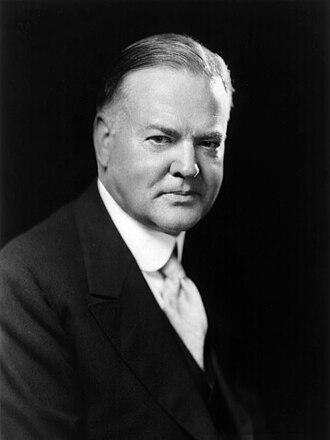 Herbert Hoover
Post-Graduate Legal • 2m
EO 5109 May 13, 1929
⚖️✨ Zone 2 (Zone of Twilight) Constitutional Neutral
Executive Order 5109—Reserving Certain Described Lands Pending Resurvey, Colorado
📜 Art. II §1: Executive Discretion & Internal Operations
The public lands in T. 49 N., R. 5 E., N.M.P.M. and Ts. 10 and 11 N., R. 85 W., 6th P.M., Colorado, be and the same are hereby withdrawn from settlement, location, sale, entry and all forms of appropriation, pending a resurvey of said townships under the act of March 3, 1909…
Herbert Hoover Grade 8 • 1m
EO 5113 May 14, 1929
⚖️✨ Zone 2 (Zone of Twilight) Constitutional Neutral
Executive Order 5113-A—Delegating Further Authority to the Alien Property Custodian Under the Trading with the Enemy Act
📜 5th Amend: Regulatory Execution with Due Process
I hereby make the following order, rule and regulation: I hereby vest in the Alien Property Custodian, and in the event of his death, resignation, absence or disability, in the General Counsel, and in the event of his death, resignation, absence or disability during his period…
Herbert Hoover Post-Graduate Legal • 1m
EO 5113 May 14, 1929
⚖️✨ Zone 2 (Zone of Twilight) Constitutional Neutral
Executive Order 5113—Approving Recommendation for Appointment of Mrs. Marie Crossette Without Regard to Civil Service Rules
📜 5th Amend: Regulatory Execution with Due Process
Mrs. Marie Crossette may be appointed to an appropriate position in the Department of Commerce without regard to the civil-service rules. Mrs. Crossette is the widow of Louis F. Crossette, who rendered exceptional service in the Bureau of Foreign and Domestic Commerce of the…
Herbert Hoover High School • 1m
EO 5112 May 14, 1929
⚖️✨ Zone 2 (Zone of Twilight) Constitutional Neutral
Executive Order 5112—Approving Recommendation for Appointment of Mrs. Juliette V. Harring Without Regard to Civil Service Rules
📜 Art. II §3: Administrative Management & Civil Service
Mrs. Juliette V. Harring may be appointed to an appropriate position in the Department of Commerce without regard to the civil service rules.
Herbert Hoover College Level • 1m
EO 5116 May 15, 1929
⚖️✨ Zone 2 (Zone of Twilight) Constitutional Neutral
Executive Order 5116—Reserving Certain Described Lands Pending Resurvey, Arkansas
📜 Art. II §1: Executive Discretion & Internal Operations
The public lands in T. 1 N., R. 26 W., 5th P.M., Arkansas, be and the same are hereby withdrawn from settlement, location, sale, entry and all forms of appropriation, pending a resurvey of said township under the act of March 3, 1909 (35 Stat. 845).
Herbert Hoover High School • 1m
📜
Scholarly & Legal Citations
Exec. Order No. 5110 (May 13, 1929), https://executiveordersarchive.org/orders/app-executive-order-5110-amending-consular-regulations.
