For the purpose of bringing the Consular Regulations of 1896 into conformity with the Statutes of the United States and in order to establish simplified administrative methods, the following amendments are ordered: 1. Items 8 and 14 of the Tariff of the United States Consular Fees, as established by Executive Order No. 5110, of May 13, 1929, are amended to read as follows: 8. Executing application for passport (no exceptions). $1.00 Issue of passport. 5.00 Exceptions— ( a ) Officers or employees of the United States traveling on official business, or members of their immediate families. No fee ( b ) Seamen No fee ( c ) Widows, children, parents, brothers, and sisters of American soldiers, sailors, or marines buried abroad, whose journey is for the purpose of visiting graves of such soldiers, sailors, or marines. No fee Amendment or verification of an American passport No fee Renewal of an American passport. $2.00 Exceptions— Same as respects issue of passports if bearer of passport has status held by him at time of issue of passport. Execution of application for registration.. No fee Issue of certificate of identity and registration. $1.00 Execution of affidavit in regard to American birth in connection with application for registration or for passport. No fee 9. Visa services for aliens. Immigration visa: Furnishing and verifying application for immigration visa $1.00 Issue of immigration visa 9.00 Passport visa (see exceptions below): Preparation and ackowledgment of declaration or application for passport visas, except where reciprocal agreements for other fees have been made. 1.00 Issue of passport visa except where reciprocal agreements for other fees have been made 9.00 Exceptions (passport visa and application therefor)— ( a ) Any officer of any foreign government or members of his immediate family- No fee ( b ) Any officer of the armed forces of any foreign government or members of his immediate family- No fee ( c ) Any officer of any state, district, or municipality of any foreign government or members of his immediate family - No fee Certificate to a copy of a visa declaration or application previously taken $1.00 Visa of alien crew list 2.00 Supplemental visa of alien crew list.. No fee 14. Bill of health, in duplicate $5. 00 (Foreign government-owned or chartered vessels engaged exclusively in official duties are exempt from payment of fees for bills of health.) 2. Section 140 of the Consular Regulations is amended to read as follows: 140. Naturalization and citizenship of married women. It is provided by an act of Congress of September 22, 1922 (42 Stat. 1021), as amended by two acts of Congress approved July 3, 1930 (Public, Nos. 499, 508-71st Cong.): 1. That the right of any woman to become a naturalized citizen of the United States shall not be denied or abridged because of her sex or because she is a married woman. 2. That any woman who marries a citizen of the United States after the passage of the Act, or any woman whose husband is naturalized after the passage of the Act, shall not become a citizen of the United States by reason of such marriage or naturalization; but, if eligible to citizenship, she may be naturalized upon full and complete compliance with all requirements of the naturalization laws, with the following exceptions: ( a ) No declaration of intention shall be required; ( b ) In lieu of the five-year period of residence within the United States and the one-year period of residence within the State or Territory where the naturalization court is held, she shall have resided continuously in the United States, Hawaii, Alaska, or Porto Rico for at least one year immediately preceding the filing of the petition. 3. That a woman citizen of the United States shall not cease to be a citizen of the United States by reason of her marriage after the passage of the Act unless she makes a formal renunciation of her citizenship before a court having jurisdiction over naturalization of aliens: Provided , That any woman citizen who marries an alien ineligible to citizenship shall cease to be a citizen of the United States. 4. Provision is made in section 2 of the act of July 3, 1930, for the naturalization of women who have lost their United States citizenship by reason of their marriage to aliens, as follows: "Sec. 2. ( a ) Section 4 of such Act of September 22, 1922, is amended to read as follows: "'4. ( a ) A woman who has lost her United States citizenship by reason of her marriage to an alien eligible to citizenship or by reason of the loss of United States citizenship by her husband may, if eligible to citizenship and if she has not acquired any other nationality by affirmative act, be naturalized upon full and complete compliance with all requirements of the naturalization laws, with the following exceptions: (1) No declaration of intention and no certificate of arrival shall be required, and no period of residence within the United States or within the county where the petition is filed shall be required; (2) The petition need not set forth that it is the intention of the petitioner to reside permanently within the United States; (3) The petition may be filed in any court having naturalization jurisdiction, regardless of the residence of the petitioner; (4) If there is attached to the petition, at the time of filing, a certificate from a naturalization examiner stating that the petitioner has appeared before him for examination, the petition may be heard at any time after filing. ( b ) After her naturalization such woman shall have the same citizenship status as if her marriage, or the loss of citizenship by her husband, as tho case may be, had taken place after this section, as amended, takes effect.' "( b ) The amendment made by this section to section 4 of such Act of September 22, 1922, shall not terminate citizenship acquired under such section 4 before such amendment." 5. That no woman whose husband is not eligible to citizenship shall be naturalized during the continuance of the marital status. 6. That section 1994 of the Revised Statutes, which reads as follows: "Any woman who is now or may hereafter be married to a citizen of the United States, and who might herself be lawfully naturalized, shall be deemed a citizen." and section 4 of the Expatriation Act of March 2, 1907 (34 Stat. 1229), which reads as follows: "That any foreign woman who acquires American citizenship by marriage to an American shall be assumed to retain the same after the termination of the marital relation if she continue to reside in the United States, unless she makes formal renunciation thereof before a court having jurisdiction to naturalize aliens, or if she resides abroad she may retain her citizenship by registering as such before a United States consul within one year after the termination of such marital relation." are repealed. Such repeal shall not terminate citizenship acquired or retained under either of such sections, nor restore citizenship lost under the latter. 7. That section 3 of the Expatriation Act of March 2, 1907 (34 Stat. 1228), which reads as follows: "That any American woman who marries a foreigner shall take the nationality of her husband. At the termination of the marital relation she may resume her American citizenship, if abroad, by registering as an American citizen within one year with a consul of the United States, or by returning to reside in the United States, or, if residing in the United States at the termination of the marital relation, by continuing to reside therein." is repealed. Such repeal shall not restore citizenship lost nor terminate citizenship resumed under this section. A woman who has resumed under such section citizenship lost by marriage shall, upon the passage of this act, have for all purposes the same citizenship status as immediately preceding her marriage. 3. Section 167 of the Consular Regulations is amended to read as follows: 167. Fees. A fee of $1 must be collected for executing every application for a passport, and a fee of $5 must be collected for every passport issued with the following exceptions: No fee should be collected for passports issued to officials or employees of the United States proceeding abroad in the discharge of their official duties or to members of their immediate families, or to seamen, or to widows, children, parents, brothers, and sisters of American soldiers, sailors, or marines buried abroad, whose journey is undertaken for the purpose and with the intent of visiting the graves of such soldiers, sailors, or marines, which facts shall be made a part of the application for a passport. A fee of $2 must be collected for the renewal of every passport, except in the cases of persons mentioned in the preceding paragraph who maintain the same status as held by them at the time of the issue of their passports without fee and who are abroad for the same purpose for which their passports were issued.— Act of June 4, 1920 (41 Stat. 750); act of July 3, 1926, as amended by the act of July 1, 1930 (Public, No. 488-71st Cong.) HERBERT HOOVER The White House, August 4, 1930.
Executive Order 5417 ⚖️✨ Zone 2: Zone of Twilight Constitutional Neutral (+0.02)
📜 Art. II §2: Commander-in-Chief Supervisory Authority
Executive Order 5417—Amendments to Consular Regulations
Executive Brief • At a Glance
⏱️ 8 min read (1,547 words) •
● In Effect
🎯 Primary Mandate
For the purpose of bringing the Consular Regulations of 1896 into conformity with the Statutes of the United States and in order to establish simplified administrative methods, the following amendments are ordered: 1.
⚖️ Constitutional Footing
⚖️✨ Zone 2: Zone of Twilight
Concurrent Authority / Congressional Silence
📜 Art. II §2: Commander-in-Chief Supervisory Authority
🏛️ Scope & Affected Sectors
Armed Forces & Military Establishments Merchants, Importers & Commercial Enterprises Sovereign State Governments & Localities Executive Departments & Federal Civil Servants
Plain-English Translation & Framers' Constitutional Analysis
Early Statesman synthesis distilling legal jargon into practical meaning, statutory anchors, and structural constitutional impacts.
Signed by President Herbert Hoover on August 4, 1930, this order concerns Amendments to Consular Regulations. For the purpose of bringing the Consular Regulations of 1896 into conformity with the Statutes of the United States and in order to establish simplified administrative methods, the following amendments are ordered: 1. Items 8 and 14 of the Tariff of the United States Consular Fees, as established by Executive Order No. 5110, of May 13, 1929, are amended to read as follows: 8.
Constitutional Assessment: Scrutinized through Article II, Section 2, this action exercises the President's constitutional role as Commander in Chief. Early Framers recognized broad executive discretion in commanding military forces during conflict, provided it remains bounded by congressional declarations and respects civilian domestic courts.
Key Directives & Operative Actions
▪
For the purpose of bringing the Consular Regulations of 1896 into conformity with the Statutes of the United States and in order to establish simplified administrative methods, the following amendments are ordered: 1.
▪
Items 8 and 14 of the Tariff of the United States Consular Fees, as established by Executive Order No. 5110, of May 13, 1929, are amended to read as follows: 8.
▪
Bill of health, in duplicate $5. 00 (Foreign government-owned or chartered vessels engaged exclusively in official duties are exempt from payment of fees for bills of health.) 2.
▪
Of the Consular Regulations is amended to read as follows: 140.
Constitutional & Societal Entities Impacted
🏛️ Armed Forces & Military Establishments
🏛️ Merchants, Importers & Commercial Enterprises
🏛️ Sovereign State Governments & Localities
🏛️ Executive Departments & Federal Civil Servants
🏛️ Private Citizens & Property Owners
Policy Areas & Topics
🏛️
The Framers' Constitutional Council
1787 PrismEvaluating this order against the constitutional debates of 1787 and the limits of Article II executive power.
⚖️✨ Zone 2 (Zone of Twilight)
§
"When the President acts in absence of either a congressional grant or denial of authority, he can only rely upon his own independent powers, but there is a zone of twilight in which he and Congress may have concurrent authority."
— Justice Robert H. Jackson, Youngstown Sheet & Tube Co. v. Sawyer (1952) Concurrent Authority / Congressional Silence
JM
James Madison
Separation of Powers & Legislative Primacy
"Power is of an encroaching nature, and it ought to be effectually restrained from passing the limits assigned to it." — Federalist No. 48 (1788)
Madison would view this order with watchful scrutiny. Operating in the 'Zone of Twilight' where Congress is silent, each such directive establishes an administrative precedent that steadily expands the executive perimeter at the expense of legislative primacy.
Madisonian Stance: Vigilant / Cautionary
AH
Alexander Hamilton
The Energetic Executive & Unified Command
"The direction of war implies the direction of the common strength; and the power of directing and employing the common strength must be under the direction of the single hand of the Executive." — Federalist No. 74 (1788)
Hamilton would forcefully champion executive discretion here. For foreign entanglements, commerce defense, and national security, deliberative assemblies are too slow and faction-ridden. A unified, energetic Executive exercising swift command is precisely what the Philadelphia Convention intended for national preservation.
Hamiltonian Stance: Strong Prerogative Support
GM
George Mason
Bill of Rights, Due Process & 10th Amendment
"The president will be surrounded by flatterers and sycophants... and the great powers of the executive will gradually absorb the liberties of the people." — Cato IV (Anti-Federalist, 1787)
The Anti-Federalist prism advises continuous democratic vigilance. Even routine administrative directives aggregate centralized federal power away from town halls and state assemblies toward a distant executive apparatus.
Anti-Federalist Stance: Eternal Vigilance Required
📐
Five Measurable "Constitutional Friction" Dimensions
An objective audit measuring potential separation-of-powers tension against the United States Constitution and established Supreme Court doctrine.
⚖️ Discretionary Twilight Zone
48 / 100 friction index
Dimension 1 • Art. I, §1 & §8
Moderate Friction
Legislative Encroachment & Purse
Administers commerce or fiscal programs requiring ongoing statutory delegation and legislative oversight.
Benchmark: Power of the purse, taxes/tariffs, and rule of law reserved to Congress.
Dimension 2 • Art. II, §1 & §3
Low Friction
Executive Scope & Faithfulness
Exercises standard supervisory executive authority to faithfully execute existing statutes.
Benchmark: Faithfully execute laws enacted by Congress vs. unilateral decree.
Dimension 3 • 10th Amendment
High Friction
Federalism & State Sovereignty
Creates friction with the Tenth Amendment by conditioning state grants, mandating local compliance, or preempting state police powers.
Benchmark: Police powers and un-delegated responsibilities reserved to the States.
Dimension 4 • 5th & 14th Amendments
Moderate Friction
Due Process & Individual Rights
Applies regulatory or compliance standards to private contractors or commercial entities.
Benchmark: Protection of private property, contracts, liberty, and procedural justice.
Dimension 5 • Separation of Powers
Moderate Friction
Youngstown Jacksonian Tier
The order relies on inherent Article II executive discretion, civil service management, or foreign diplomacy where Congress has neither expressly approved nor prohibited action.
Benchmark: Concurrent Authority / Congressional Silence
⚖️
Audit Synthesis
This order operates within Justice Jackson’s Zone of Twilight, resting upon concurrent presidential authority or congressional silence.
Weighted composite: Art. I (25%), Art. II (25%), Federalism (15%), Due Process (15%), Youngstown (20%).
ℹ️
How to read these dimensions: Executive power expands whenever an administration acts without explicit statutory authorization from Congress (Article I), touches upon police powers historically reserved to the states (Tenth Amendment), or limits private rights and property without judicial process. A low friction score indicates strict concordance with enacted law; a high friction score highlights orders testing the limits of presidential discretion.
Total Words
1,547
9,123 characters
Estimated Read Time
8 min
@ 200 words / min
Flesch-Kincaid
15.8
College Level
Text size:
Related Executive Orders
1 order cited directly in this text, plus related actions from this administration.
EO 5110 May 13, 1929
🏛️✅ Zone 1 (Maximum Authority) Fidelity (+0.38)
Executive Order 5110—Amending Consular Regulations
📜 Art. II §2: Commander-in-Chief Supervisory Authority
The Consular Regulations are hereby amended as follows: 368. Admissible classes. Only such persons of the Chinese race as are admissible under the provisions of the treaty between the United States and China, signed on November 17, 1880, the Chinese exclusion laws, the…
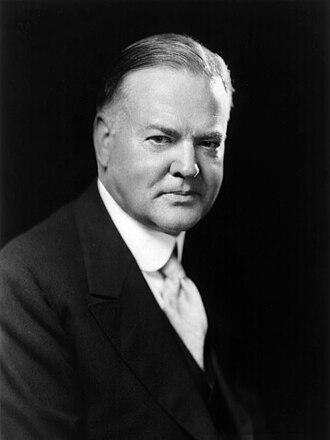 Herbert Hoover
College Level • 14m
EO 5418 Aug 4, 1930
⚖️✨ Zone 2 (Zone of Twilight) Constitutional Neutral
Executive Order 5418—Revocation of Withdrawal of Public Lands for Resurvey
📜 Art. II §1: Executive Discretion & Internal Operations
Executive Order No. 4482, of July 19, 1926, withdrawing, among other lands, the public lands in T. 7 S., R. 101 W., and T. 6 S., R. 100 W., sixth principal meridian, Colorado, pending a resurvey, be, and the same is hereby, revoked as to the above-mentioned townships.
Herbert Hoover College Level • 1m
EO 5416 Aug 4, 1930
⚖️✨ Zone 2 (Zone of Twilight) Constitutional Neutral
Executive Order 5416—Extension of Trust Period on Allotments of Klamath River Indians of California
📜 Art. II §1: Executive Discretion & Internal Operations
Under authority contained in section 5 of the act of February 8, 1887 (24 Stat. 388-389), that the trust period on the allotments made to Indians of the Klamath River Reservation in California, which trust period expires during the calendar year 1930, be, and is hereby…
Herbert Hoover Post-Graduate Legal • 1m
EO 5415 Aug 4, 1930
⚖️✨ Zone 2 (Zone of Twilight) Constitutional Neutral
Executive Order 5415—Extension of Trust Period on Allotments of Kickapoo Indians, Kansas
📜 Art. II §1: Executive Discretion & Internal Operations
Under authority contained in the act of June 21, 1906 (34 Stat. 325-326), that the trust period on the allotments made to members of the Kickapoo Band of Indians in Kansas, which trust period expires during the calendar year 1930, be, and is hereby, extended for a period of ten…
Herbert Hoover Post-Graduate Legal • 1m
EO 5421 Aug 5, 1930
⚖️✨ Zone 2 (Zone of Twilight) Constitutional Neutral
Executive Order 5421—Revocation of Withdrawal of Public Lands for Resurvey
📜 Art. II §1: Executive Discretion & Internal Operations
Executive Order No. 5029, dated January 18, 1929, withdrawing the public lands in Tps. 4 and 5 S., R. 23 E., New Mexico principal meridian, New Mexico, pending a resurvey, be, and the same is hereby, revoked.
Herbert Hoover College Level • 1m
EO 5420 Aug 5, 1930
⚖️✨ Zone 2 (Zone of Twilight) Constitutional Neutral
Executive Order 5420—Revocation of Withdrawal of Public Lands for Resurvey
📜 Art. II §1: Executive Discretion & Internal Operations
Executive Order No. 4322, dated October 15, 1925, withdrawing the public lands in T. 49 N., R. 12 E., New Mexico principal meridian, Colorado, pending a resurvey, be, and the same is hereby, revoked.
Herbert Hoover College Level • 1m
📜
Scholarly & Legal Citations
Exec. Order No. 5417 (Aug. 4, 1930), https://executiveordersarchive.org/orders/app-executive-order-5417-amendments-consular-regulations.
