Whereas , by Executive Order of January 17, 1873, the holding of a state and federal office by the same person at the same time, with certain exceptions, was prohibited; And Whereas , it would materially assist the Director of the Census in the taking of the Fifteenth Decennial Census if he were permitted to appoint certain persons holding state or county offices as supervisors of the Census. In view of the premises, therefore, the President has deemed it advisable in certain instances to permit the appointment of certain state and county officers as supervisors of the Census. The Director of the Census is hereby authorized to appoint state, county and municipal officers as supervisors of the Census if in his opinion the duties of such state, county and municipal officers do not in any manner conflict with the performance of the duties of supervisors of the Census, and where the Director of the Census is satisfied that the appointment of such state, county or municipal officer is for the best interest of the service. HERBERT HOOVER The White House, September 9, 1929.
Executive Order 5187 🏛️✅ Zone 1: Maximum Authority Constitutional Neutral (+0.02)
📜 10th Amend: Intergovernmental Federalism Cooperation
Executive Order 5187—Exempting Census Supervisors from Civil Service Rules Prohibiting Federal Employees from Holding Office Under State, County, or Municipal Government
Executive Brief • At a Glance
⏱️ 1 min read (183 words) •
● In Effect
🎯 Primary Mandate
Whereas , by Executive Order of January 17, 1873, the holding of a state and federal office by the same person at the same time, with certain exceptions, was prohibited; And Whereas , it would materially assist the Director of the Census in the taking of the Fifteenth Decennial Census if he were permitted to appoint certain persons holding state or county offices as supervisors of the Census.
⚖️ Constitutional Footing
🏛️✅ Zone 1: Maximum Authority
Express or Implied Congressional Authorization
📜 10th Amend: Intergovernmental Federalism Cooperation
🏛️ Scope & Affected Sectors
Merchants, Importers & Commercial Enterprises Sovereign State Governments & Localities Executive Departments & Federal Civil Servants
Plain-English Translation & Framers' Constitutional Analysis
Early Statesman synthesis distilling legal jargon into practical meaning, statutory anchors, and structural constitutional impacts.
Signed by President Herbert Hoover on September 9, 1929, this order concerns Exempting Census Supervisors from Civil Service Rules Prohibiting Federal Employees from Holding Office Under State, County, or Municipal Government. Whereas , by Executive Order of January 17, 1873, the holding of a state and federal office by the same person at the same time, with certain exceptions, was prohibited; And Whereas , it would materially assist the Director of the Census in the taking of the Fifteenth Decennial Census if he were permitted to appoint certain persons holding state or county offices as supervisors of the Census.
Constitutional Assessment: Reviewed under the Tenth Amendment and the principle of dual federalism, this order touches upon domains traditionally reserved to the sovereign States. The Framers would caution against any attempt to commandeer state officers or displace local police powers through federal executive fiat.
Key Directives & Operative Actions
▪
Whereas , by Executive Order of January 17, 1873, the holding of a state and federal office by the same person at the same time, with certain exceptions, was prohibited; And Whereas , it would materially assist the Director of the Census in the taking of the Fifteenth Decennial Census if he were permitted to appoint certain persons holding state or county offices as supervisors of the Census.
▪
The Director of the Census is hereby authorized to appoint state, county and municipal officers as supervisors of the Census if in his opinion the duties of such state, county and municipal officers do not in any manner conflict with the performance of the duties of supervisors of the Census, and where the Director of the Census is satisfied that the appointment of such state, county or municipal officer is for the best interest of the service.
Constitutional & Societal Entities Impacted
🏛️ Merchants, Importers & Commercial Enterprises
🏛️ Sovereign State Governments & Localities
🏛️ Executive Departments & Federal Civil Servants
Policy Areas & Topics
🏛️
The Framers' Constitutional Council
1787 PrismEvaluating this order against the constitutional debates of 1787 and the limits of Article II executive power.
🏛️✅ Zone 1 (Maximum Authority)
§
"When the President acts pursuant to an express or implied authorization of Congress, his authority is at its maximum, for it includes all that he possesses in his own right plus all that Congress can delegate."
— Justice Robert H. Jackson, Youngstown Sheet & Tube Co. v. Sawyer (1952) Express or Implied Congressional Authorization
JM
James Madison
Separation of Powers & Legislative Primacy
"The constitutional magistracy was designed not to invent policy, but to be the faithful instrument of the laws passed by the people's representatives." — Speech in the First Congress (1789)
Madison would approve the structural posture of this order. The President acts strictly in subordination to statutory authority granted under Article II, Section 3 ("take Care that the Laws be faithfully executed"). The checks and balances hold firm because the policy origin remains with the legislature.
Madisonian Stance: Concurring (Statutory)
AH
Alexander Hamilton
The Energetic Executive & Unified Command
"A feeble Executive implies a feeble execution of the government; and a government ill executed, whatever it may be in theory, must be, in practice, a bad government." — Federalist No. 70 (1788)
Hamilton would view this directive as the natural and indispensable functioning of administrative leadership. Without the power to coordinate agencies, manage personnel, and resolve operational ambiguities, the modern presidency would be reduced to an impotent figurehead.
Hamiltonian Stance: Supportive of Execution
GM
George Mason
Bill of Rights, Due Process & 10th Amendment
"The powers not delegated to the United States by the Constitution, nor prohibited by it to the States, are reserved to the States respectively, or to the people." — 10th Amendment to the US Constitution (1791)
Mason would scrutinize whether this federal directive intrudes into police powers, land stewardship, or municipal domains historically reserved to local citizens. The Anti-Federalist demand is that federal administration must never supplant state self-governance.
Anti-Federalist Stance: Eternal Vigilance Required
📐
Five Measurable "Constitutional Friction" Dimensions
An objective audit measuring potential separation-of-powers tension against the United States Constitution and established Supreme Court doctrine.
⚖️ Discretionary Twilight Zone
40 / 100 friction index
Dimension 1 • Art. I, §1 & §8
Moderate Friction
Legislative Encroachment & Purse
Administers commerce or fiscal programs requiring ongoing statutory delegation and legislative oversight.
Benchmark: Power of the purse, taxes/tariffs, and rule of law reserved to Congress.
Dimension 2 • Art. II, §1 & §3
Moderate Friction
Executive Scope & Faithfulness
Directs internal executive branch machinery, agency workflows, and federal personnel.
Benchmark: Faithfully execute laws enacted by Congress vs. unilateral decree.
Dimension 3 • 10th Amendment
Moderate Friction
Federalism & State Sovereignty
Engages state and local partners in cooperative federalism programs.
Benchmark: Police powers and un-delegated responsibilities reserved to the States.
Dimension 4 • 5th & 14th Amendments
Moderate Friction
Due Process & Individual Rights
Applies regulatory or compliance standards to private contractors or commercial entities.
Benchmark: Protection of private property, contracts, liberty, and procedural justice.
Dimension 5 • Separation of Powers
Low Friction
Youngstown Jacksonian Tier
The President operates strictly as the constitutional Chief Executive, carrying out policy established by Congress with strong statutory backing.
Benchmark: Express or Implied Congressional Authorization
⚖️
Audit Synthesis
This order operates within Justice Jackson’s Zone of Twilight, resting upon concurrent presidential authority or congressional silence.
Weighted composite: Art. I (25%), Art. II (25%), Federalism (15%), Due Process (15%), Youngstown (20%).
ℹ️
How to read these dimensions: Executive power expands whenever an administration acts without explicit statutory authorization from Congress (Article I), touches upon police powers historically reserved to the states (Tenth Amendment), or limits private rights and property without judicial process. A low friction score indicates strict concordance with enacted law; a high friction score highlights orders testing the limits of presidential discretion.
Total Words
183
1,083 characters
Estimated Read Time
1 min
@ 200 words / min
Flesch-Kincaid
21.9
Post-Graduate Legal
Text size:
Related Executive Orders
Other executive actions signed by Herbert Hoover around this period.
EO 5188 Sep 10, 1929
🏛️✅ Zone 1 (Maximum Authority) Constitutional Neutral
Executive Order 5188—Exempting Indian Service Employees from Civil Service Rules Prohibiting Federal Employees from Holding Office Under State, County, or Municipal Government
📜 10th Amend: Intergovernmental Federalism Cooperation
Executive orders of January 17, and 28, 1873, are further modified as follows: Officers and employees of the Indian Service serving in a medical or sanitary capacity on a part-time basis may, with the consent of the Secretary of the Interior, also hold state, county, or…
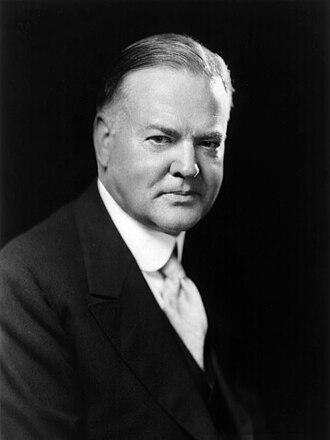 Herbert Hoover
Post-Graduate Legal • 1m
EO 5190 Sep 11, 1929
⚖️✨ Zone 2 (Zone of Twilight) Constitutional Neutral
Executive Order 5190—Reserving Certain Described Lands for Classification and Pending Legislation, Oregon
📜 Art. II §1: Executive Discretion & Internal Operations
The SE¼ Sec. 33, T. 2 S., R. 6 W., and Lots 3 and 4, Sec. 3, T. 3 S., R. 6 W., W.M., Oregon, be, and they are hereby temporarily withdrawn from settlement, location, sale or entry, except as provided in said acts, for classification and in aid of proposed legislation.
Herbert Hoover Grade 8 • 1m
EO 5189 Sep 11, 1929
🏛️✅ Zone 1 (Maximum Authority) Constitutional Neutral
Executive Order 5189—Prescribing Regulations Governing the Administration of the Foreign Service
📜 Art. I §8: Delegated Tariff & Commerce Execution
The President in the exercise of the powers conferred upon him by the Constitution and laws of the United States, makes the following regulations: 1.
Herbert Hoover Post-Graduate Legal • 9m
EO 5186 Sep 7, 1929
⚖️✨ Zone 2 (Zone of Twilight) Constitutional Neutral
Executive Order 5186—Authorizing the Appointment of Ida Elizabeth Henning Without Regard to Civil Service Rules
📜 5th Amend: Regulatory Execution with Due Process
Mrs. Ida Elizabeth Henning may be appointed to an appropriate position in the Department of Agriculture without regard to the Civil Service rules.
Herbert Hoover High School • 1m
EO 5185 Sep 6, 1929
⚖️✨ Zone 2 (Zone of Twilight) Constitutional Neutral
Executive Order 5185—Establishing Colon Naval Radio Station, Canal Zone
📜 Art. II §2: Commander-in-Chief Supervisory Authority
The area of land hereinafter described, to be known as Colon Naval Radio Station, situated in the Canal Zone, is hereby set apart and assigned to the uses and purposes of a naval reservation under the jurisdiction of the Secretary of the Navy; but said area shall be subject to…
Herbert Hoover High School • 1m
EO 5184 Sep 6, 1929
⚖️✨ Zone 2 (Zone of Twilight) Constitutional Neutral
Executive Order 5184—Restoring Certain Reserved Lands Pending Resurvey and Opening Such Lands to Entry, Wyoming
📜 Art. II §2: Commander-in-Chief Supervisory Authority
Executive Order No. 4460 dated June 18, 1926, withdrawing, among other lands, the public lands in T. 43 N., R. 89 W., 6th P.M., Wyoming, pending a resurvey, be and the same is hereby revoked as to the above mentioned township.
Herbert Hoover High School • 1m
📜
Scholarly & Legal Citations
Exec. Order No. 5187 (Sept. 9, 1929), https://executiveordersarchive.org/orders/app-executive-order-5187-exempting-census-supervisors-from-civil-service-rules-prohibiting.
