Whereas, under the provisions of the Act of May 24, 1924, the President is authorized to prescribe certain rules and regulations for administering the Foreign Service on an interchangeable basis, Now, therefore, the President in the exercise of the powers conferred upon him by the Constitution and laws of the United States, makes the following regulations: 1. Vacancies in all classes from 1 to 9 shall be filled by promotion from lower classes, .based upon ability and efficiency as shown in the service. 2. All admissions to the service shall be to the grade of Foreign Service Officer, unclassified. 3. Officers and employees, after five years of continuous service in the Department of State, are eligible for appointment by transfer to any class in the Foreign Service upon the recommendation of the Foreign Service Personnel Board and with the approval of the Secretary of State as hereinafter provided. The Foreign Service Personnel Board. 4. There is hereby constituted a Foreign Service Personnel Board composed as follows: Three Assistant Secretaries of State to be designated by the Secretary of State, one of whom shall be designated as Chairman. 5. It shall be the duty of the Board: (a) From time to time as vacancies arise, to submit to the Secretary of State lists of those Foreign Service Officers whose records of efficiency entitle them to advancement in the Service, and who are therefore recommended for promotion, and the names of those officers and employees in the Department of State who, after five years of continuous service, and because of special ability and merit are recommended for appointment by transfer to the position of Foreign Service Officer. (b) To submit to the Secretary of State the names of those Foreign Service Officers who, in the opinion of the Board, have demonstrated special capacity for promotion to the grade of Minister. Each list thus submitted shall enumerate the names of the officers in the order of merit and shall be complete in itself, superseding all previous lists. A list shall be submitted to the Secretary of State whenever there is a vacancy in the grade of Minister or when requested by the President or the Secretary of State and in no case shall it contain more names than there are vacancies to fill. Each such list, if approved by the Secretary of State, shall be submitted to the President. (c) To submit to the Secretary of State the names of those Foreign Service officers who are recommended for designation as counselors of embassy or legation. (d) To recommend to the Secretary of State the assignment of Foreign Service Officers to posts and the transfer of such officers from one branch of the Service to the other according to the needs of the Service. (e) To consider controversies and delinquencies among the Service personnel and recommend to the Secretary appropriate disciplinary measures where required. 6. Whenever it is determined that the efficiency rating of an officer is poor and below the required standard for the Service, the Personnel Board shall so notify the officer, and if after due notification the rating of such officer continues nevertheless to be unsatisfactory, his name shall be reported to the Secretary of State with a full recital of the circumstances and a recommendation of the Board for separation from the Service. Whenever such recommendation for separation from the Service is made, the Board shall at the same time notify the officer of the action taken. 7. The members of the Board, individually and collectively, shall have authority to examine all records and data relating to the personnel of the Service. 8. All action taken by the Board shall be strictly non-partisan, and based exclusively upon the record of efficiency of the officers concerned. 9. The proceedings of the Board shall be strictly confidential, but the Chairman may, and it is hereby made a part of his duty, within a reasonable time prior to each meeting of the Board for recommending promotions, demotions, or removals, to invite the Chairman of the Senate Committee on Foreign Relations and the Chairman of the House Committee on Foreign Affairs or some committee member designated by the Chairman, to sit with the Board through its deliberations without, however, participating in its decisions. Division of Foreign Service Personnel. 10. There shall be in the Department of State a Division of Foreign Service Personnel to which shall be attached not more than three Personnel Officers, at least one of whom shall be a Foreign Service Officer of high rank, to be chosen by the Secretary of State upon the recommendation of the Personnel Board. The duties of the Division not inconsistent herewith shall be prescribed by the Secretary of State. The Board of Examiners. 11. There is hereby constituted a Board of Examiners composed of the following members, to wit: Three Assistant Secretaries of State to be designated by the Secretary of State, one of the Personnel Officers attached to the Division of Foreign Service Personnel, and the Chief Examiner of the Civil Service Commission or such person as may be designated by him to serve in his stead. The Assistant Secretaries of State may, when necessary, designate other persons to serve for them on the Board. 12. It shall be the duty of the Board of Examiners to formulate rules for and hold examinations of applicants for commission to the Foreign Service and to determine from among the persons designated by the President for examination those who are fitted for appointment. 13. The scope and method of the examinations shall be determined by the Board of Examiners, but among the subjects shall be included the following: at least one modern language other than English (French, Spanish, or German by preference), elements of international law, geography, the natural, industrial, and commercial resources and the commerce of the United States; American history, government and institutions; the history since 1850 of Europe, Latin America and the Far East; elements of political economy, commercial and maritime law. 14. The examinations shall be both written and oral. 15. Examinations shall be rated on a scale of 100, and no person rated at less than 80 shall be eligible for certification. 16. No one shall be certified as eligible who is under twenty-one or over thirty- five years of age, or who is not a citizen of the United States, or who is not of good character and habits and physically, mentally, and temperamentally qualified for the proper performance of the duties of the Foreign Service, or who has not been specially designated by the President for appointment subject to examination and to the occurrence of an appropriate vacancy. 17. Upon the conclusion of the examinations, the names of the candidates who shall have attained upon the whole examination the required rating will be certified by the Board to the Secretary of State as eligible for appointment. 18. The names of candidates will remain on the eligible list for two years, except in the case of such candidates as shall within that period be appointed or shall withdraw their names. Names which have been on the eligible list for two years will be dropped therefrom and the candidates concerned will not again be eligible for appointment unless upon fresh application, designation anew for examination, and the successful passing of such examination. 19. Applicants for appointment who are designated to take an examination and who fail to report therefor, shall not be entitled to take a subsequent examination unless they shall have been specifically designated to take such subsequent examination. 20. In designations for appointment subject to examination and in appointments after examination, due regard will be had to the principle that as between candidates of equal merit, appointments should be made so as to tend to secure proportional representation of all the States and Territories in the foreign service; and neither in the designation for examination nor certification nor appointment after examination will the political affiliations of the candidates be considered. 21. The Board of Examiners is authorized to issue such notices and to make all such rules as it may deem necessary to accomplish the object of this regulation. 22. New appointments to the Service shall be to the grade of Foreign Service Officer, unclassified, and no promotions to a higher grade shall be made except on the recommendation of the Foreign Service Personnel Board, with the approval of the Secretary of State, after the completion of one full term of instruction, or the equivalent thereof in the Foreign Service School hereinafter established. The Foreign Service School. 23. There is hereby established in the Department of State a Foreign Service School for the instruction of new appointees. 24. The Foreign Service School shall be under the direction of a Foreign Service School Board composed of the following members, to wit: Three Assistant Secretaries of State to be designated by the Secretary of State, one of the Personnel Officers attached to the Division of Foreign Service Personnel, and the Chief Instructor of the Foreign Service School. The School Board will act in all matters with the approval of the Secretary of State. 25. The Chief Instructor shall be selected by the other members of the School Board from among the officers of the Foreign Service, with the approval of the Secretary of State. 26. Other instructors shall be selected from among the qualified officers of the Department of State, the Foreign Service, the other executive departments of the Government, and other available sources in the discretion of the School Board. 27. The term of instruction in the Foreign Service School shall be considered a period of probation during which the new appointees are to be judged as to their qualifications for advancement and assignment to duty. At the end of the term, recommendations shall be made to the Secretary of State by the Personnel Board for the dismissal of any who may have failed to meet the required standard of the Service. 28. The Secretary of State is authorized to prescribe rules and regulations for the governance of the Foreign Service School. Authority of the Secretary of State. 29. The Secretary of State is authorized to prescribe rules and regulations not inconsistent herewith for the administration of the Foreign Service. Repeal. 30. The Executive Orders of June 7, 1924, and February 25, 1928, are hereby revoked. Date on Which Foregoing Regulation Shall Become Effective. 31. This order shall take effect on September 16, 1929. HERBERT HOOVER The White House, September 11, 1929.
Executive Order 5189 🏛️✅ Zone 1: Maximum Authority Constitutional Neutral (+0.02)
📜 Art. I §8: Delegated Tariff & Commerce Execution
Executive Order 5189—Prescribing Regulations Governing the Administration of the Foreign Service
Executive Brief • At a Glance
⏱️ 9 min read (1,752 words) •
● In Effect
🎯 Primary Mandate
Vacancies in all classes from 1 to 9 shall be filled by promotion from lower classes, .based upon ability and efficiency as shown in the service. 2.
⚖️ Constitutional Footing
🏛️✅ Zone 1: Maximum Authority
Express or Implied Congressional Authorization
📜 Art. I §8: Delegated Tariff & Commerce Execution
🏛️ Scope & Affected Sectors
Merchants, Importers & Commercial Enterprises Sovereign State Governments & Localities Executive Departments & Federal Civil Servants Private Citizens & Property Owners
Plain-English Translation & Framers' Constitutional Analysis
Early Statesman synthesis distilling legal jargon into practical meaning, statutory anchors, and structural constitutional impacts.
Signed by President Herbert Hoover on September 11, 1929, this order concerns Prescribing Regulations Governing the Administration of the Foreign Service. The President in the exercise of the powers conferred upon him by the Constitution and laws of the United States, makes the following regulations: 1. Vacancies in all classes from 1 to 9 shall be filled by promotion from lower classes, .based upon ability and efficiency as shown in the service. 2. All admissions to the service shall be to the grade of Foreign Service Officer, unclassified. 3.
Constitutional Assessment: This action represents an orderly exercise of Article II administrative discretion, managing the internal machinery and personnel of the executive branch without abridging the ancient liberties of the people.
Key Directives & Operative Actions
▪
Vacancies in all classes from 1 to 9 shall be filled by promotion from lower classes, .based upon ability and efficiency as shown in the service. 2.
▪
All admissions to the service shall be to the grade of Foreign Service Officer, unclassified. 3.
▪
Officers and employees, after five years of continuous service in the Department of State, are eligible for appointment by transfer to any class in the Foreign Service upon the recommendation of the Foreign Service Personnel Board and with the approval of the Secretary of State as hereinafter provided.
▪
There is hereby constituted a Foreign Service Personnel Board composed as follows: Three Assistant Secretaries of State to be designated by the Secretary of State, one of whom shall be designated as Chairman. 5.
Constitutional & Societal Entities Impacted
🏛️ Merchants, Importers & Commercial Enterprises
🏛️ Sovereign State Governments & Localities
🏛️ Executive Departments & Federal Civil Servants
🏛️ Private Citizens & Property Owners
🏛️ Foreign Nations & International Entities
Policy Areas & Topics
🏛️
The Framers' Constitutional Council
1787 PrismEvaluating this order against the constitutional debates of 1787 and the limits of Article II executive power.
🏛️✅ Zone 1 (Maximum Authority)
§
"When the President acts pursuant to an express or implied authorization of Congress, his authority is at its maximum, for it includes all that he possesses in his own right plus all that Congress can delegate."
— Justice Robert H. Jackson, Youngstown Sheet & Tube Co. v. Sawyer (1952) Express or Implied Congressional Authorization
JM
James Madison
Separation of Powers & Legislative Primacy
"The constitutional magistracy was designed not to invent policy, but to be the faithful instrument of the laws passed by the people's representatives." — Speech in the First Congress (1789)
Madison would approve the structural posture of this order. The President acts strictly in subordination to statutory authority granted under Article II, Section 3 ("take Care that the Laws be faithfully executed"). The checks and balances hold firm because the policy origin remains with the legislature.
Madisonian Stance: Concurring (Statutory)
AH
Alexander Hamilton
The Energetic Executive & Unified Command
"The direction of war implies the direction of the common strength; and the power of directing and employing the common strength must be under the direction of the single hand of the Executive." — Federalist No. 74 (1788)
Hamilton would forcefully champion executive discretion here. For foreign entanglements, commerce defense, and national security, deliberative assemblies are too slow and faction-ridden. A unified, energetic Executive exercising swift command is precisely what the Philadelphia Convention intended for national preservation.
Hamiltonian Stance: Supportive of Execution
GM
George Mason
Bill of Rights, Due Process & 10th Amendment
"The president will be surrounded by flatterers and sycophants... and the great powers of the executive will gradually absorb the liberties of the people." — Cato IV (Anti-Federalist, 1787)
The Anti-Federalist prism advises continuous democratic vigilance. Even routine administrative directives aggregate centralized federal power away from town halls and state assemblies toward a distant executive apparatus.
Anti-Federalist Stance: Eternal Vigilance Required
📐
Five Measurable "Constitutional Friction" Dimensions
An objective audit measuring potential separation-of-powers tension against the United States Constitution and established Supreme Court doctrine.
⚖️ Discretionary Twilight Zone
48 / 100 friction index
Dimension 1 • Art. I, §1 & §8
High Friction
Legislative Encroachment & Purse
Touches upon core congressional prerogatives: raises appropriations reallocation, tariff imposition, or statutory preemption questions.
Benchmark: Power of the purse, taxes/tariffs, and rule of law reserved to Congress.
Dimension 2 • Art. II, §1 & §3
Moderate Friction
Executive Scope & Faithfulness
Directs internal executive branch machinery, agency workflows, and federal personnel.
Benchmark: Faithfully execute laws enacted by Congress vs. unilateral decree.
Dimension 3 • 10th Amendment
Moderate Friction
Federalism & State Sovereignty
Engages state and local partners in cooperative federalism programs.
Benchmark: Police powers and un-delegated responsibilities reserved to the States.
Dimension 4 • 5th & 14th Amendments
Moderate Friction
Due Process & Individual Rights
Applies regulatory or compliance standards to private contractors or commercial entities.
Benchmark: Protection of private property, contracts, liberty, and procedural justice.
Dimension 5 • Separation of Powers
Low Friction
Youngstown Jacksonian Tier
The President operates strictly as the constitutional Chief Executive, carrying out policy established by Congress with strong statutory backing.
Benchmark: Express or Implied Congressional Authorization
⚖️
Audit Synthesis
This order operates within Justice Jackson’s Zone of Twilight, resting upon concurrent presidential authority or congressional silence.
Weighted composite: Art. I (25%), Art. II (25%), Federalism (15%), Due Process (15%), Youngstown (20%).
ℹ️
How to read these dimensions: Executive power expands whenever an administration acts without explicit statutory authorization from Congress (Article I), touches upon police powers historically reserved to the states (Tenth Amendment), or limits private rights and property without judicial process. A low friction score indicates strict concordance with enacted law; a high friction score highlights orders testing the limits of presidential discretion.
Total Words
1,752
10,681 characters
Estimated Read Time
9 min
@ 200 words / min
Flesch-Kincaid
18.3
Post-Graduate Legal
Text size:
🔗
Referenced By Later Executive Orders (1)
Subsequent presidents who cited, amended, continued, or revoked this directive in later orders.
Herbert Hoover • 1931-06-08
Related Executive Orders
Other executive actions signed by Herbert Hoover around this period.
EO 5190 Sep 11, 1929
⚖️✨ Zone 2 (Zone of Twilight) Constitutional Neutral
Executive Order 5190—Reserving Certain Described Lands for Classification and Pending Legislation, Oregon
📜 Art. II §1: Executive Discretion & Internal Operations
The SE¼ Sec. 33, T. 2 S., R. 6 W., and Lots 3 and 4, Sec. 3, T. 3 S., R. 6 W., W.M., Oregon, be, and they are hereby temporarily withdrawn from settlement, location, sale or entry, except as provided in said acts, for classification and in aid of proposed legislation.
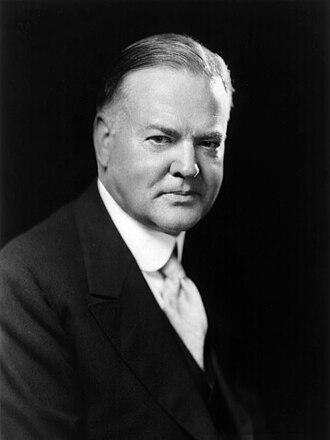 Herbert Hoover
Grade 8 • 1m
EO 5188 Sep 10, 1929
🏛️✅ Zone 1 (Maximum Authority) Constitutional Neutral
Executive Order 5188—Exempting Indian Service Employees from Civil Service Rules Prohibiting Federal Employees from Holding Office Under State, County, or Municipal Government
📜 10th Amend: Intergovernmental Federalism Cooperation
Executive orders of January 17, and 28, 1873, are further modified as follows: Officers and employees of the Indian Service serving in a medical or sanitary capacity on a part-time basis may, with the consent of the Secretary of the Interior, also hold state, county, or…
Herbert Hoover Post-Graduate Legal • 1m
EO 5191 Sep 13, 1929
⚖️✨ Zone 2 (Zone of Twilight) Constitutional Neutral
Executive Order 5191—Restoring Certain Reserved Lands Withdrawn for Classification and Legislation to Permit Homestead Entry, Florida
📜 Art. II §1: Executive Discretion & Internal Operations
Executive Order No. 4262 dated July 3, 1925, withdrawing certain lands in the States of Alabama, Florida and Mississippi under the act of June 25, 1910, (36 Stat. 847) as amended by the act of August 24, 1912 (37 Stat. 497), pending classification and legislation is hereby…
Herbert Hoover High School • 1m
EO 5187 Sep 9, 1929
🏛️✅ Zone 1 (Maximum Authority) Constitutional Neutral
Executive Order 5187—Exempting Census Supervisors from Civil Service Rules Prohibiting Federal Employees from Holding Office Under State, County, or Municipal Government
📜 10th Amend: Intergovernmental Federalism Cooperation
Whereas , by Executive Order of January 17, 1873, the holding of a state and federal office by the same person at the same time, with certain exceptions, was prohibited; And Whereas , it would materially assist the Director of the Census in the taking of the Fifteenth Decennial…
Herbert Hoover Post-Graduate Legal • 1m
EO 5193 Sep 14, 1929
🏛️✅ Zone 1 (Maximum Authority) Constitutional Neutral
Executive Order 5193—Extending Limits of Customs Ports of Entry of Astoria, Portland, and Marshfield, Oregon, and Longview, Washington, for Incorporation in Customs Collection District No. 29
📜 Art. I §8: Delegated Tariff & Commerce Execution
The following changes in the ports of entry in Customs Collection District No. 29 (Oregon) are hereby ordered, effective thirty days from the date of this order: The limits of the port of Astoria, Oregon, are hereby extended to include, in addition to Astoria, Warrenton, Wauna…
Herbert Hoover College Level • 1m
EO 5192 Sep 14, 1929
🏛️✅ Zone 1 (Maximum Authority) Constitutional Neutral
Executive Order 5192—Abolishing Lewiston, New York, as a Customs Port of Entry
📜 Art. I §8: Delegated Tariff & Commerce Execution
By virtue of the authority vested in me by the Act of Congress approved August 1, 1914, Lewiston, New York, is hereby abolished as a port of entry in Customs Collection District No. 9 (Buffalo) with headquarters at Buffalo, New York, effective thirty days from the date of this…
Herbert Hoover High School • 1m
📜
Scholarly & Legal Citations
Exec. Order No. 5189 (Sept. 11, 1929), https://executiveordersarchive.org/orders/app-executive-order-5189-prescribing-regulations-governing-the-administration-the-foreign.
