Sections 117, 118, 149, and 448 of the Consular Regulations of 1896 are hereby amended as follows: 117. Correspondence of subordinates. The official correspondence of Foreign Service officers and consular officers and employees assigned to, or on detail in, consulates general and consulates will be submitted to the examination of the principal officers to whom they are subordinate or to whose offices they are assigned, and the correspondence should be appropriately indorsed by such principal officers before being transmitted to the Department of State. Consular agents are not authorized to address the Department of State directly. Their reports and returns are to be made through their respective superiors. 118. With whom direct correspondence is permitted. As exceptions to the general rule stated in section 114, a consular officer may correspond directly on public matters with the following: 1. American officials stationed or temporarily residing in foreign countries, and officials of insular possessions of the United States. 2. The Comptroller General of the United States, on matters pertaining to accounts only, the correspondence invariably to be forwarded in duplicate through the Department of State . 3. Collectors of customs and appraisers, on matters relating to invoices and prices current. 4. Immigration inspectors, on urgent immigration matters. 5. The Administrator of Veterans' Affairs, on routine pension matters and on routine matters relating to the activities of the Veterans' Administration (except telegrams, which must be transmitted through the Department of State). 6. United States dispatch agents. 7. Officials of the Department of Justice and the Treasury Department charged with the prevention of smuggling, on urgent matters involving attempts to smuggle merchandise and prohibited articles into the United States. 8. United States attorneys, on urgent cases in connection with pending trials. 149. Duties toward American citizens. The powers and duties of consular officers in respect to American citizens depend in a great measure upon the municipal law of the United States. No civil or criminal jurisdiction can be exercised by them over their countrymen without express authority of law or by treaty stipulation with the State in which they reside. Consular officers are particularly cautioned not to enter into any contentions that can be avoided, either with their countrymen or with the authorities or nationals of the country. They should use every endeavor to settle in an amicable manner all disputes in which their countrymen may be concerned, but they should take no part in litigation between citizens. Consular officers should countenance and protect American citizens before the authorities of the country in all cases in which, they may be injured or oppressed; but at the same time they should impress upon such citizens their obligation to respect the laws of the country where they may be residing or traveling. It is the duty of consular officers to endeavor on all occasions to maintain and promote all the rightful interests of American citizens, and to protect them in all privileges that are provided for by treaty or are conceded by usage. If representations are made to the local authorities and fail to secure the proper redress, the case should be reported to the diplomatic mission and to the Department of State. 448. To be returned to local post office. All letters addressed in the care of a consular office should be held at the disposal of the addressees for the period prescribed by the laws of the country in which the consular office is situated. If unclaimed within such period, they should be redelivered, unopened and with stamps intact, to the local post office from which they were received, in order that they may be returned to the country of origin in pursuance of the provisions of the Universal Postal Convention. Consular officers will not return unclaimed letters by masters of vessels. Section 449 of the Consular Regulations, being obsolete, is hereby canceled. The first paragraph of item 42 of the Tariff of United States Consular Fees is amended to read: Additional fee for all services contemplated by fees numbered 31, 33, 38, 39, 40, and 41 when rendered elsewhere than at the consular office at the request of the interested parties, for each hour or fraction thereof . . . The following is established as item 50 of the Tariff of United States Consular Fees: Administering oaths or taking acknowledgments, or authenticating the signatures of foreign officials, in connection with kinsmen's petitions for wages and effects of deceased seamen of the American merchant marine---------No fee. HERBERT HOOVER The White House, January 11, 1932.
Executive Order 5773 🏛️✅ Zone 1: Maximum Authority Constitutional Fidelity (+0.23)
📜 Art. I §8: Delegated Tariff & Commerce Execution
Executive Order 5773—Amendments to the Consular Regulations
Executive Brief • At a Glance
⏱️ 4 min read (750 words) •
● In Effect
🎯 Primary Mandate
Sections 117, 118, 149, and 448 of the Consular Regulations of 1896 are hereby amended as follows: 117.
⚖️ Constitutional Footing
🏛️✅ Zone 1: Maximum Authority
Express or Implied Congressional Authorization
📜 Art. I §8: Delegated Tariff & Commerce Execution
🏛️ Scope & Affected Sectors
Armed Forces & Military Establishments Merchants, Importers & Commercial Enterprises Sovereign State Governments & Localities Executive Departments & Federal Civil Servants
Plain-English Translation & Framers' Constitutional Analysis
Early Statesman synthesis distilling legal jargon into practical meaning, statutory anchors, and structural constitutional impacts.
Signed by President Herbert Hoover on January 11, 1932, this order concerns Amendments to the Consular Regulations. Sections 117, 118, 149, and 448 of the Consular Regulations of 1896 are hereby amended as follows: 117. Correspondence of subordinates. The official correspondence of Foreign Service officers and consular officers and employees assigned to, or on detail in, consulates general and consulates will be submitted to the examination of the principal officers to whom they are subordinate or to whose offices they are…
Constitutional Assessment: This action represents an orderly exercise of Article II administrative discretion, managing the internal machinery and personnel of the executive branch without abridging the ancient liberties of the people.
Key Directives & Operative Actions
▪
Sections 117, 118, 149, and 448 of the Consular Regulations of 1896 are hereby amended as follows: 117.
▪
The official correspondence of Foreign Service officers and consular officers and employees assigned to, or on detail in, consulates general and consulates will be submitted to the examination of the principal officers to whom they are subordinate or to whose offices they are assigned, and the correspondence should be appropriately indorsed by such principal officers before being transmitted to the Department of State.
▪
Consular agents are not authorized to address the Department of State directly.
▪
With whom direct correspondence is permitted.
Constitutional & Societal Entities Impacted
🏛️ Armed Forces & Military Establishments
🏛️ Merchants, Importers & Commercial Enterprises
🏛️ Sovereign State Governments & Localities
🏛️ Executive Departments & Federal Civil Servants
🏛️ Private Citizens & Property Owners
Policy Areas & Topics
🏛️
The Framers' Constitutional Council
1787 PrismEvaluating this order against the constitutional debates of 1787 and the limits of Article II executive power.
🏛️✅ Zone 1 (Maximum Authority)
§
"When the President acts pursuant to an express or implied authorization of Congress, his authority is at its maximum, for it includes all that he possesses in his own right plus all that Congress can delegate."
— Justice Robert H. Jackson, Youngstown Sheet & Tube Co. v. Sawyer (1952) Express or Implied Congressional Authorization
JM
James Madison
Separation of Powers & Legislative Primacy
"The constitutional magistracy was designed not to invent policy, but to be the faithful instrument of the laws passed by the people's representatives." — Speech in the First Congress (1789)
Madison would approve the structural posture of this order. The President acts strictly in subordination to statutory authority granted under Article II, Section 3 ("take Care that the Laws be faithfully executed"). The checks and balances hold firm because the policy origin remains with the legislature.
Madisonian Stance: Concurring (Statutory)
AH
Alexander Hamilton
The Energetic Executive & Unified Command
"The direction of war implies the direction of the common strength; and the power of directing and employing the common strength must be under the direction of the single hand of the Executive." — Federalist No. 74 (1788)
Hamilton would forcefully champion executive discretion here. For foreign entanglements, commerce defense, and national security, deliberative assemblies are too slow and faction-ridden. A unified, energetic Executive exercising swift command is precisely what the Philadelphia Convention intended for national preservation.
Hamiltonian Stance: Supportive of Execution
GM
George Mason
Bill of Rights, Due Process & 10th Amendment
"The president will be surrounded by flatterers and sycophants... and the great powers of the executive will gradually absorb the liberties of the people." — Cato IV (Anti-Federalist, 1787)
The Anti-Federalist prism advises continuous democratic vigilance. Even routine administrative directives aggregate centralized federal power away from town halls and state assemblies toward a distant executive apparatus.
Anti-Federalist Stance: Eternal Vigilance Required
📐
Five Measurable "Constitutional Friction" Dimensions
An objective audit measuring potential separation-of-powers tension against the United States Constitution and established Supreme Court doctrine.
⚖️ Discretionary Twilight Zone
41 / 100 friction index
Dimension 1 • Art. I, §1 & §8
Moderate Friction
Legislative Encroachment & Purse
Administers commerce or fiscal programs requiring ongoing statutory delegation and legislative oversight.
Benchmark: Power of the purse, taxes/tariffs, and rule of law reserved to Congress.
Dimension 2 • Art. II, §1 & §3
Low Friction
Executive Scope & Faithfulness
Exercises standard supervisory executive authority to faithfully execute existing statutes.
Benchmark: Faithfully execute laws enacted by Congress vs. unilateral decree.
Dimension 3 • 10th Amendment
Moderate Friction
Federalism & State Sovereignty
Engages state and local partners in cooperative federalism programs.
Benchmark: Police powers and un-delegated responsibilities reserved to the States.
Dimension 4 • 5th & 14th Amendments
High Friction
Due Process & Individual Rights
Scrutinized under the Bill of Rights for potential impact on private contracts, property rights, or procedural due process.
Benchmark: Protection of private property, contracts, liberty, and procedural justice.
Dimension 5 • Separation of Powers
Low Friction
Youngstown Jacksonian Tier
The President operates strictly as the constitutional Chief Executive, carrying out policy established by Congress with strong statutory backing.
Benchmark: Express or Implied Congressional Authorization
⚖️
Audit Synthesis
This order operates within Justice Jackson’s Zone of Twilight, resting upon concurrent presidential authority or congressional silence.
Weighted composite: Art. I (25%), Art. II (25%), Federalism (15%), Due Process (15%), Youngstown (20%).
ℹ️
How to read these dimensions: Executive power expands whenever an administration acts without explicit statutory authorization from Congress (Article I), touches upon police powers historically reserved to the states (Tenth Amendment), or limits private rights and property without judicial process. A low friction score indicates strict concordance with enacted law; a high friction score highlights orders testing the limits of presidential discretion.
Total Words
750
4,743 characters
Estimated Read Time
4 min
@ 200 words / min
Flesch-Kincaid
14.6
College Level
Text size:
🔗
Referenced By Later Executive Orders (1)
Subsequent presidents who cited, amended, continued, or revoked this directive in later orders.
Franklin D. Roosevelt • 1941-07-11
Related Executive Orders
Other executive actions signed by Herbert Hoover around this period.
EO 5772 Jan 11, 1932
🏛️✅ Zone 1 (Maximum Authority) Fidelity (+0.33)
Executive Order 5772—To Permit Approval of Application Salt Lake City 049347 for a Railroad Right of Way
📜 Art. II §3: Faithful Execution of Statutory Law
Upon recommendation of the Secretary of the Interior, Executive Order No. 5327 of April 15, 1930, temporarily withdrawing certain lands in Utah and other States on account of their possible oil-shale value, is hereby modified to the extent of authorizing the Secretary to…
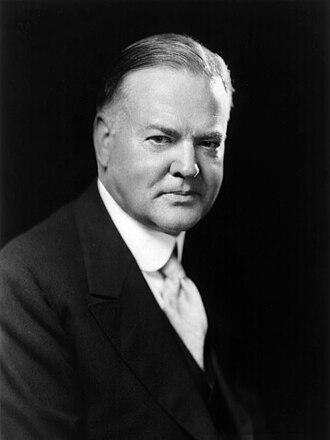 Herbert Hoover
College Level • 1m
EO 5774 Jan 13, 1932
⚖️✨ Zone 2 (Zone of Twilight) Constitutional Neutral
Executive Order 5774—Amendment of Schedule A, Civil-Service Rules, to Permit Appointment of Members of National Homes Without Examination
📜 Art. II §1: Executive Discretion & Internal Operations
Schedule A, Subdivision XVIII, paragraph 12, of the civil-service rules, is hereby amended to read as follows, to permit appointments of members of national homes without examination: 12.
Herbert Hoover College Level • 1m
EO 5775 Jan 15, 1932
⚖️✨ Zone 2 (Zone of Twilight) Constitutional Neutral
Executive Order 5775—Transfer of Miners in the Bureau of Mines, with Their Positions, from the Noncompetitive to the Competitive Service
📜 Art. II §3: Administrative Management & Civil Service
Paragraph 4, Subdivision I, Schedule B, which reads as follows, and which excepts miners in the Bureau of Mines from competitive examination under the civil- service rules, is hereby revoked: 4.
Herbert Hoover College Level • 1m
EO 5776 Jan 18, 1932
⚖️✨ Zone 2 (Zone of Twilight) Constitutional Neutral
Executive Order 5776—Amendment of the Civil-Service Rules Relating to Veterans' Preference
📜 Art. II §2: Commander-in-Chief Supervisory Authority
Rule VI, paragraph 1, is amended to read as follows, the new matter being underlined: Examination papers shall be rated on a scale of 100, and the subjects therein shall be given such relative weights as the commission may prescribe.
Herbert Hoover Post-Graduate Legal • 1m
EO 5771 Jan 4, 1932
⚖️✨ Zone 2 (Zone of Twilight) Constitutional Neutral
Executive Order 5771—Road Right of Way, Schofield Barracks Military Reservation, Hawaii
📜 Art. II §2: Commander-in-Chief Supervisory Authority
Whereas the Territory of Hawaii is desirous of realigning, widening, and improving certain portions of the road right of ways through the Schofield Barracks Military Reservation, which were described as exceptions in Part III of Executive Order No. 2800, the strip of land…
Herbert Hoover Grade 8 • 3m
EO 5778 Jan 19, 1932
⚖️✨ Zone 2 (Zone of Twilight) Constitutional Neutral
Executive Order 5778—Stipulations for the Payment of Prevailing Rate of Wages in Public Building Contracts
📜 5th Amend: Regulatory Execution with Due Process
In all contracts within the terms of said act there shall be added to the stipulation required by said act the following stipulations: It is expressly understood and agreed that the aforesaid wages shall be paid unconditionally in full not less often than once a week and in…
Herbert Hoover Post-Graduate Legal • 2m
📜
Scholarly & Legal Citations
Exec. Order No. 5773 (Jan. 11, 1932), https://executiveordersarchive.org/orders/app-executive-order-5773-amendments-the-consular-regulations.
